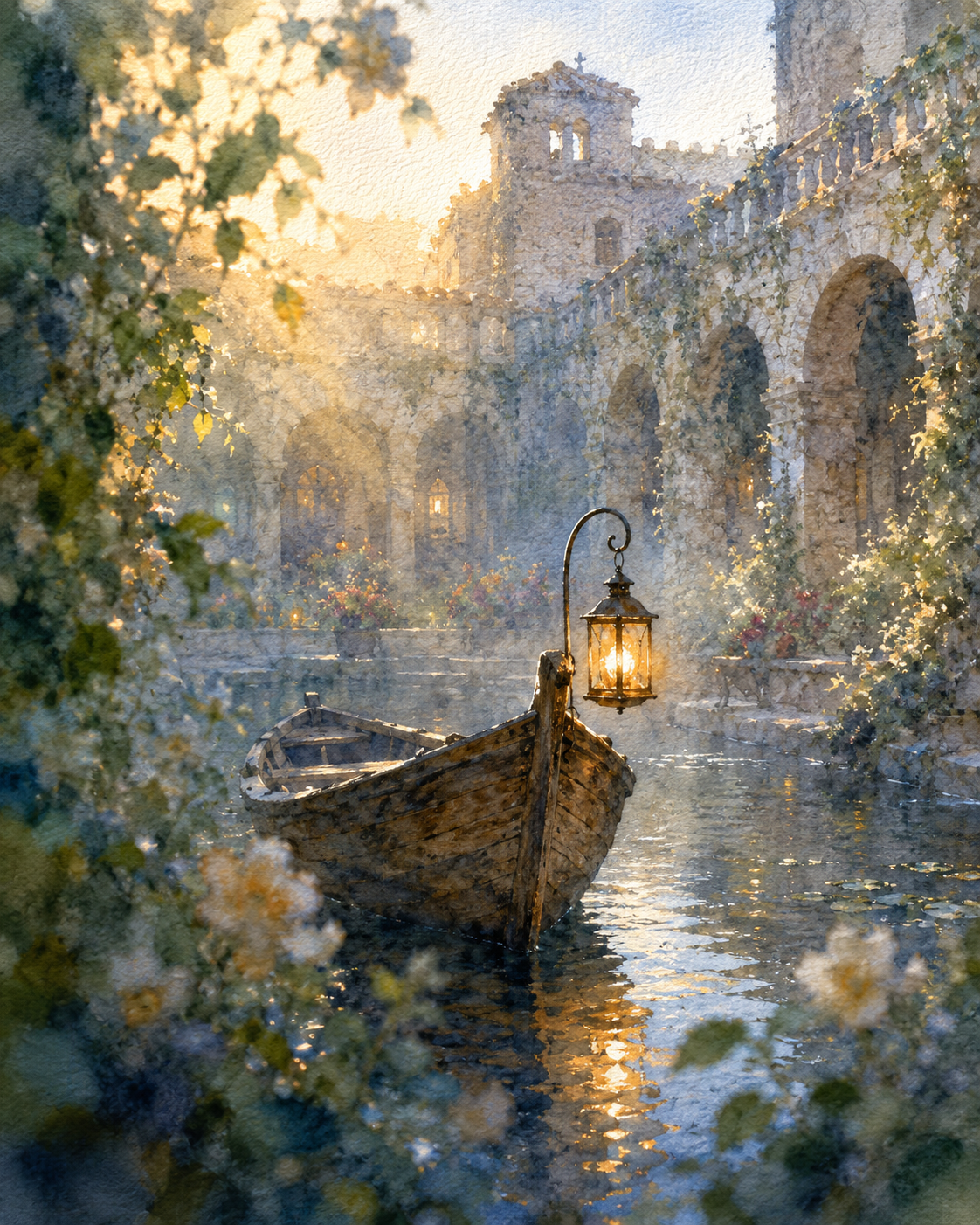
Morning Mooring in the Cloister Canal
Critique
Introduction This sunlit ruin contains a wooden boat in courtyard water, its bow carrying a lantern. Arches, ivy, flowers, tower remnants, and mist surround the craft, making it the still center. Description The boat faces forward near the lower center. Its warped dark planks, ribs, empty benches, and high prow show age. A curved iron hook fixed at the bow suspends a glass lantern with a warm flame. Water reaches the walls and reflects gold beneath the hull. Pale flowers and soft leaves frame the lower corners. Behind, a long arcade rises at right, broken towers stand above, and flowerbeds line terraces under bright haze. Analysis The boat's converging sides create a wedge aimed into the courtyard, while the lantern establishes a bright vertical at its tip. Repeated arches extend the same recession along the right wall. Warm sunlight descends from upper left and reappears in lantern and water; blue-gray shadows retain stone structure. Rough timber, iron, glass, ripples, masonry, ivy, and blurred flowers receive varied edge treatment. Foreground foliage forms a soft screen around the sharper vessel. Interpretation and Evaluation The work places mobility inside a space reclaimed by water and plants. The empty boat suggests passage, yet stillness makes it part of the ruin. Its flame contrasts with damaged wood and walls. Persuasive space, assured diagonals, and the connection among prow, lantern, reflection, and arcade create narrative openness. Conclusion At first the boat seems stranded, but closer viewing makes the flooded courtyard a navigable route. Light marks both destination and companionship. The painting balances abandonment with readiness, allowing decay to contain a quiet possibility of departure.
Same Subcategory
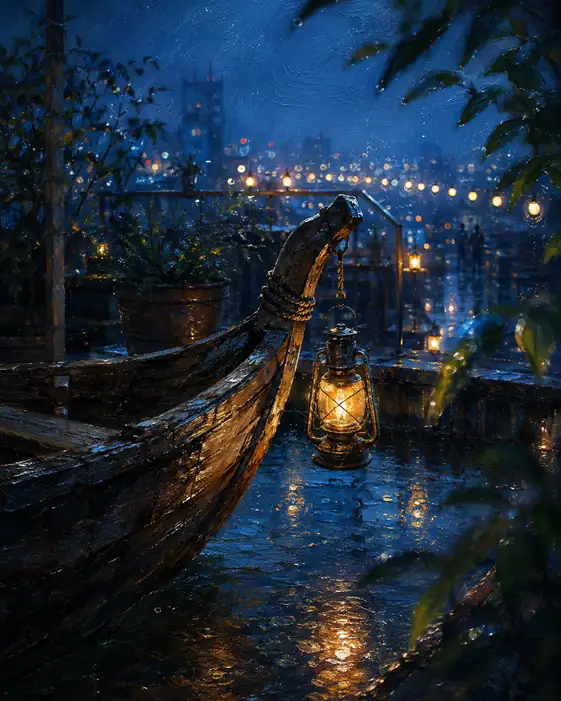 The Rain Boat Moors among a Million Lights
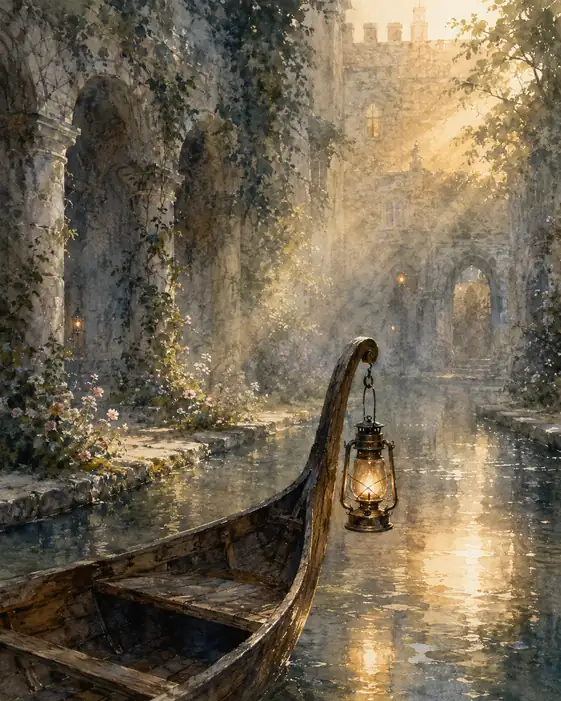 Golden Mist Drifting Through the Canal
Similar Artworks
 Morning Reflections Along the Cherry Path
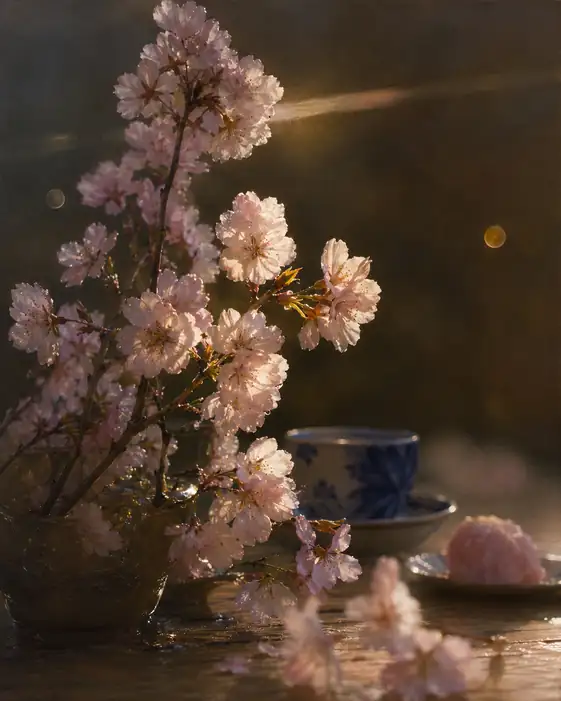 Spring Repast with Cherry and Porcelain
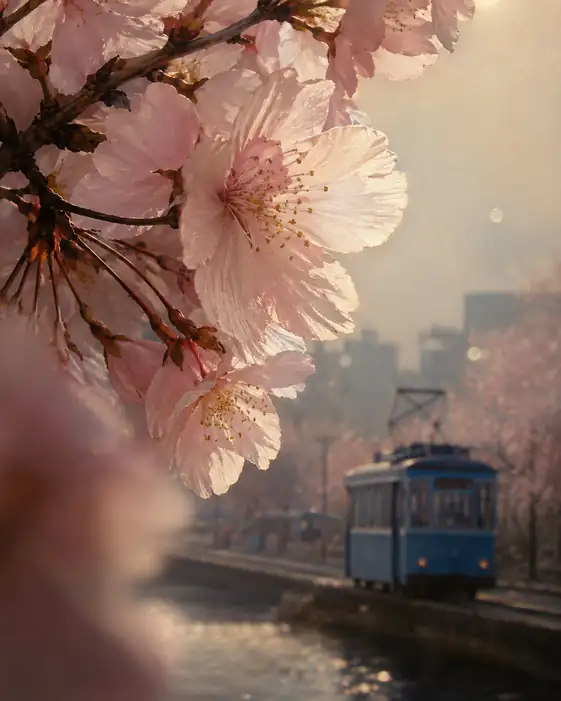 Backlit Petals Framing the Blue Tram
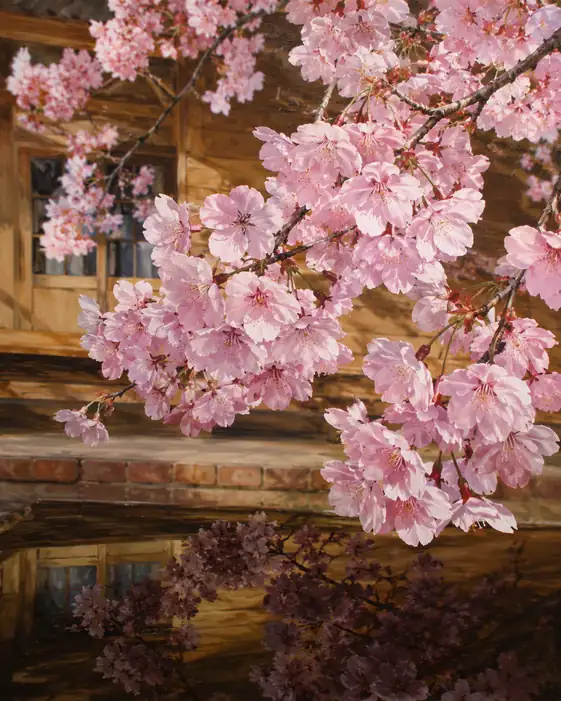 Spring Reflected on Still Water and Timber
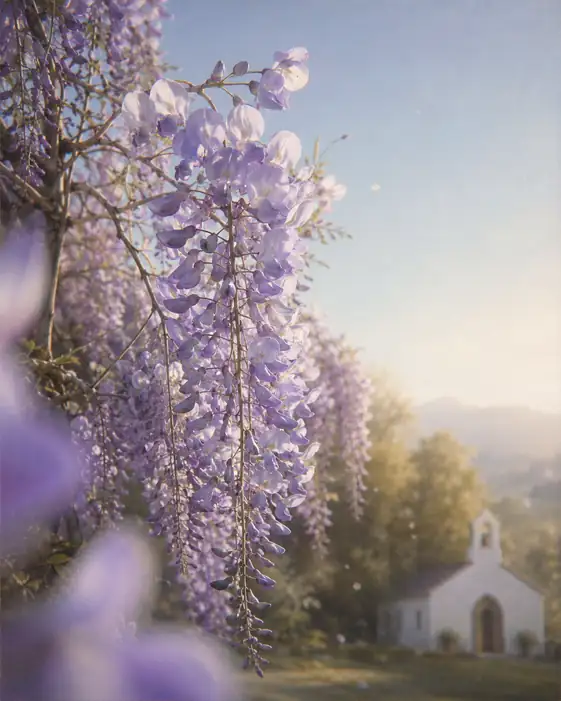 White Chapel Framed in Wisteria
 Morning Tea Beside a Branch of Bloom
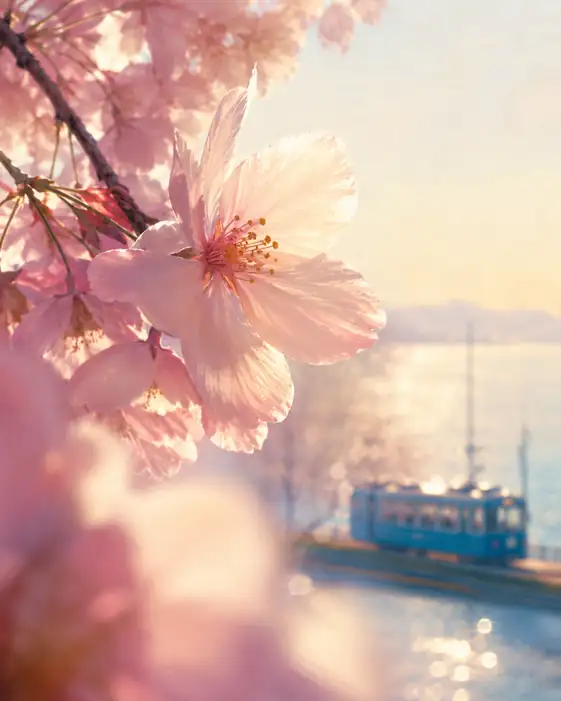 A Single Bloom Above the Coastal Rails
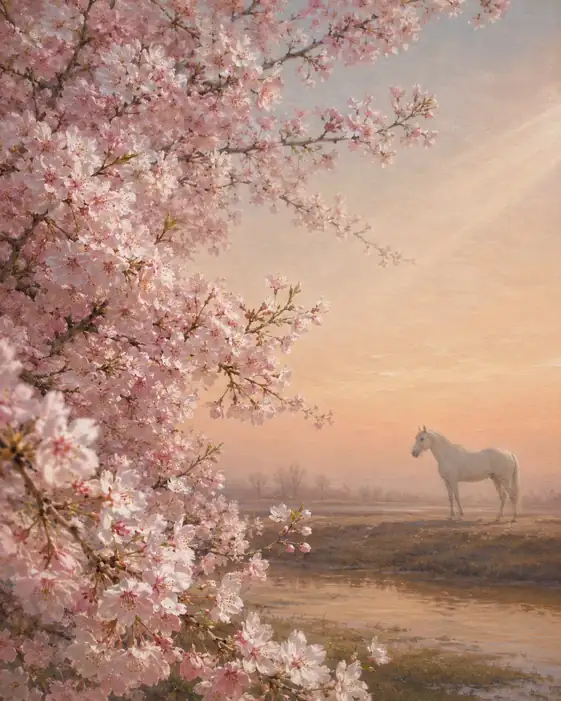 Silent White Horse Across the Cherry Stream
 Prismatic Sunlight in the Azure Shadow
 Gem-Like Blossoms Before the Sacred Peak