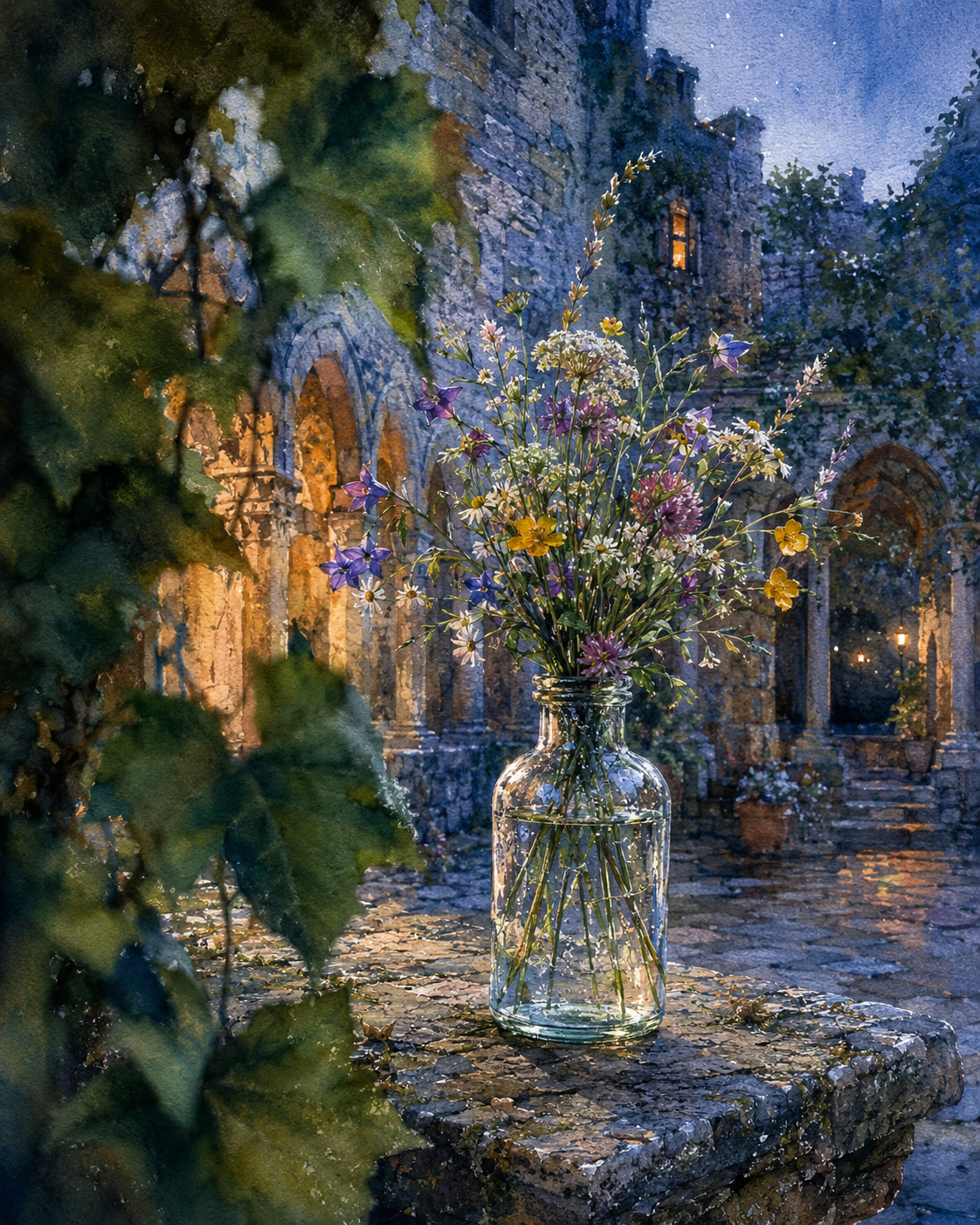
Meadow Blooms in the Abbey Light
Critique
Introduction This still life places a glass bottle of wildflowers on a stone ledge within a ruined courtyard. Blurred leaves conceal the view, making the bouquet seem discovered amid arches, stairs, windows, and lamps. Description The cylindrical bottle stands near center, filled halfway with water through which crossed green stems remain visible. Purple bell-shaped flowers, white daisies, yellow buttercuplike blooms, pink clover, seed heads, and grasses rise in an airy spray. The chipped ledge projects from the lower right. Dark soft leaves occupy the left foreground. Behind, blue-gray stone walls, pointed openings, stairs, a potted plant, and one amber window recede through damp evening light. Analysis The transparent vessel supplies a stable vertical base for stems that diverge irregularly upward. Its rounded shoulders and waterline contrast with the ledge's blocklike edge. Foreground foliage forms a dark screen, while the illuminated ruin opens in layers behind the bouquet. Cool blue dominates stone and air; small yellow flowers, lamps, and window distribute warmth. Glass highlights, submerged stems, thin petals, moss, and masonry receive distinct degrees of sharpness. Interpretation and Evaluation The arrangement suggests careful gathering within weathered stone. Common flowers gain importance through selection, yet loose asymmetry preserves their field character. Glass and stone weight are convincingly opposed. Leafy obstruction prevents stiffness, while restrained color and living stems framed by empty arches give the still life a theme of fragile renewal. Conclusion At first the bouquet seems isolated from the ruin, but sustained viewing reveals matching verticals among stems, arches, and tower walls. The bottle becomes a small architectural chamber for living growth. Intimacy and distance remain balanced through focus, transparency, and layered space.
Same Subcategory
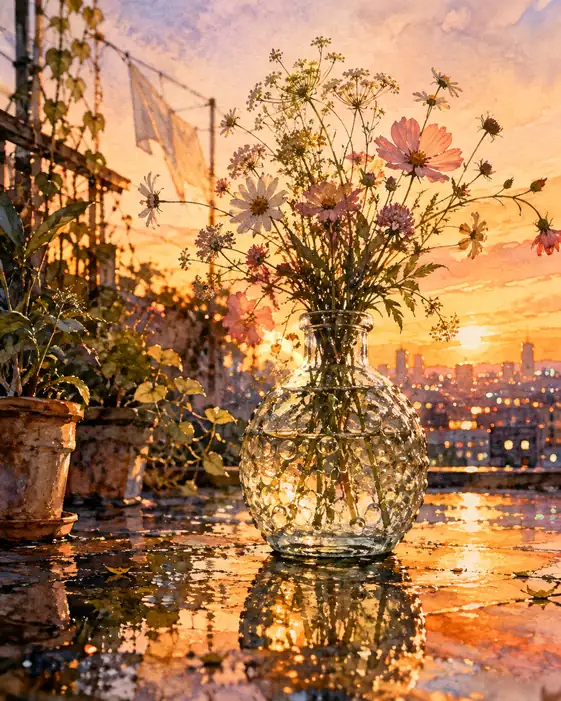 Wildflowers Catch the Last Sun in a Glass Moon
Similar Artworks
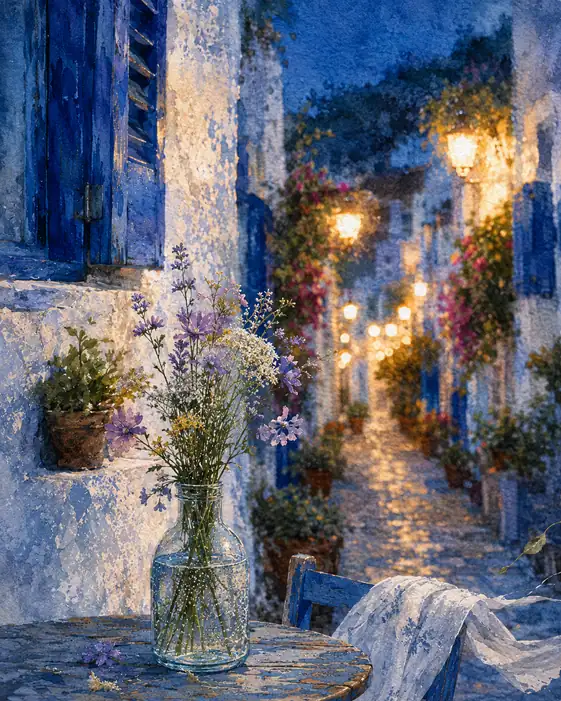 Evening Terrace with Wildflowers and Glowing Lamps
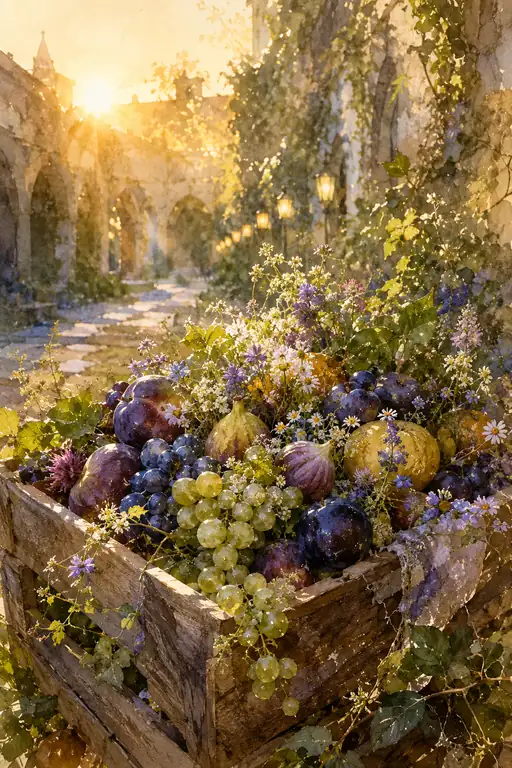 Golden Harvest in the Cloistered Sun
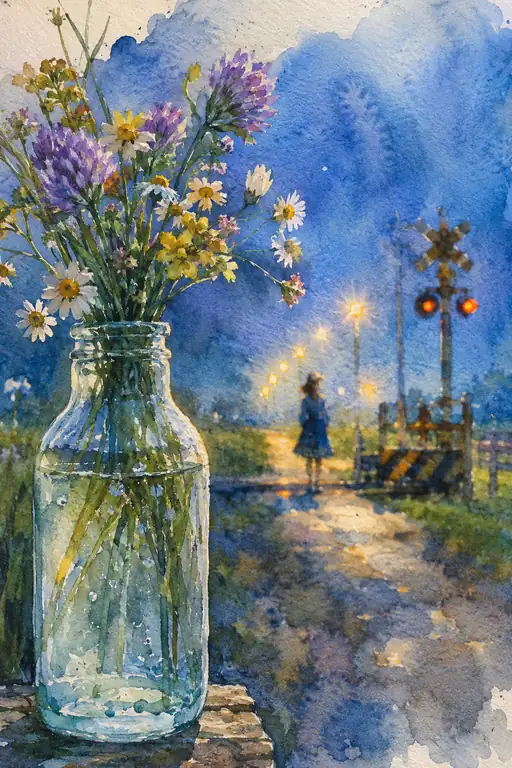 Wildflower Bouquet in the Twilight Lane
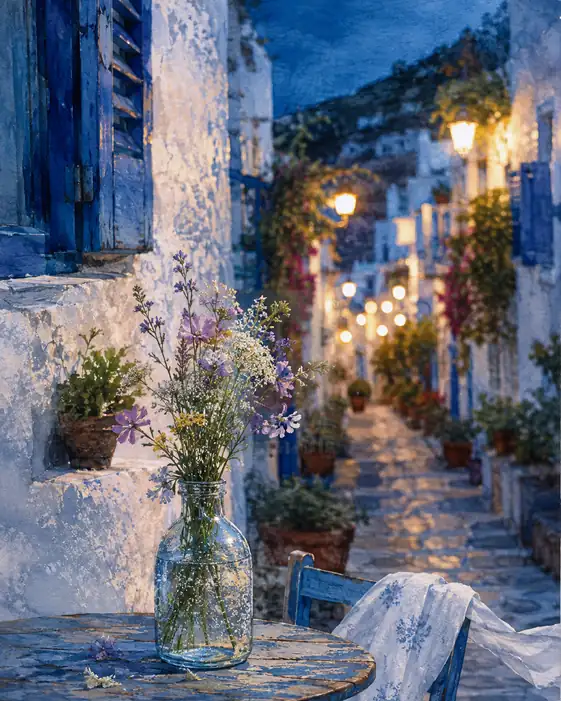 Mediterranean Evening Whispers on the Table
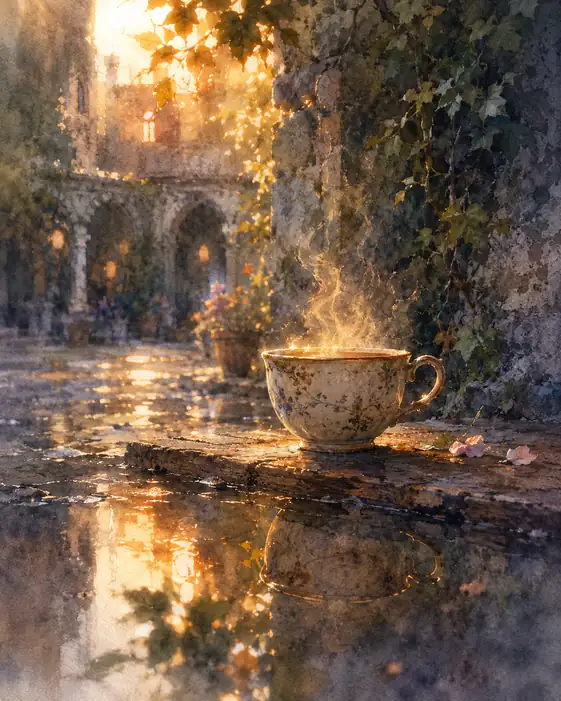 Morning Steam and Sunlit Courtyard
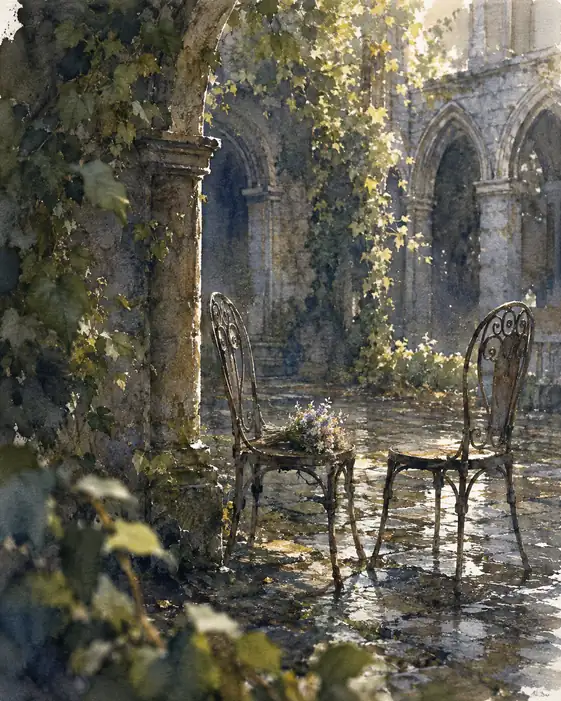 Silent Soliloquy of the Forgotten Garden
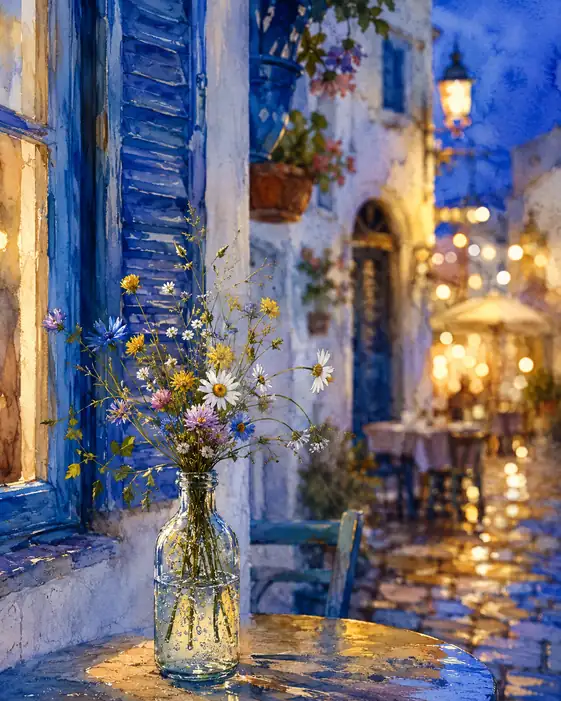 Wild Petals in the Blue Hour
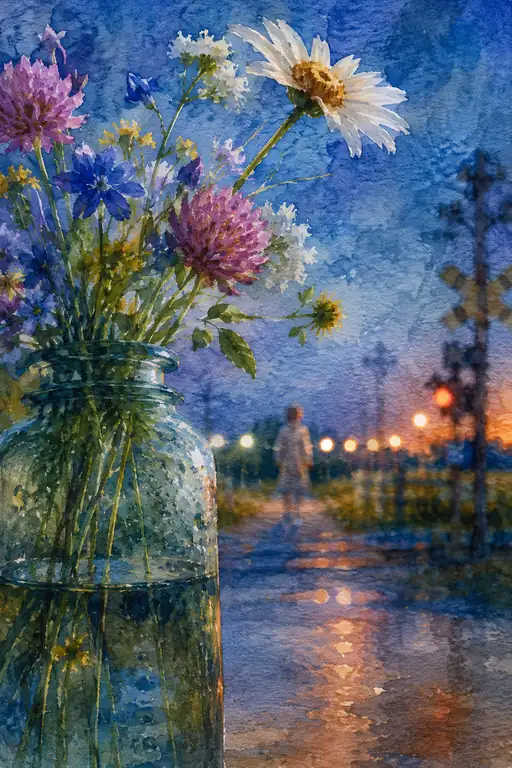 Wildflower Glass and Departing Steps in the Dusk
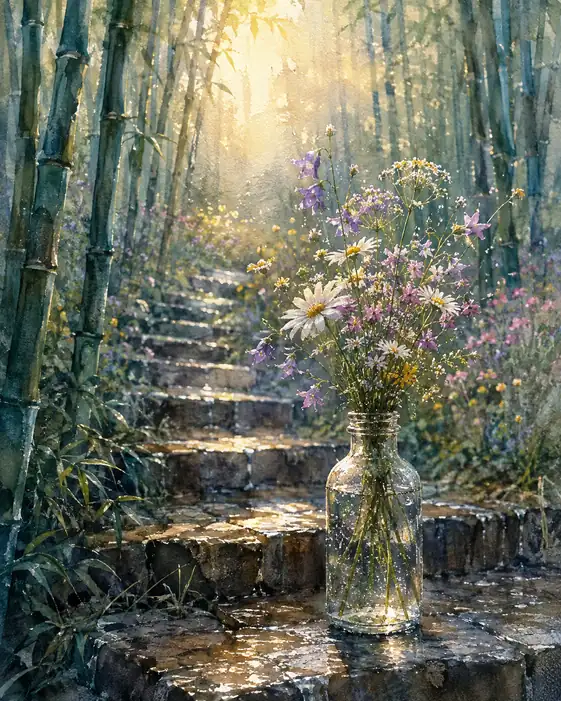 Offering of Wildflowers to the Forest Path
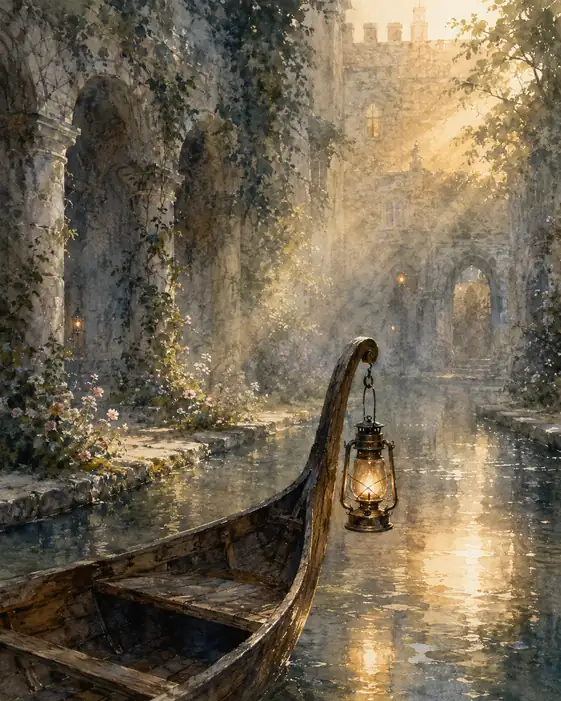 Golden Mist Drifting Through the Canal