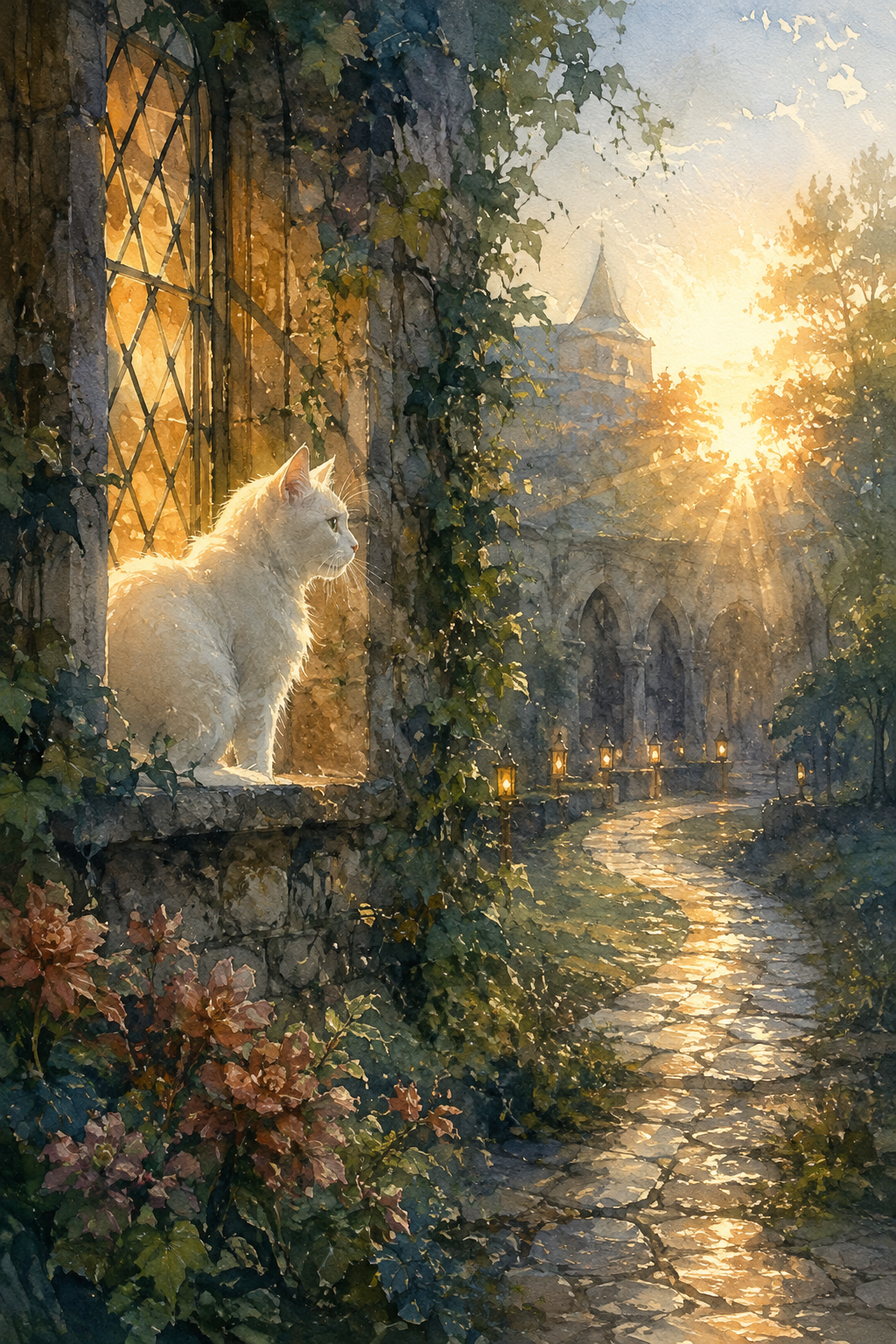
Morning Solitude on an Ancient Window
Critique
Introduction This scene places a white cat on a ledge overlooking an ivy-covered cloister. A wet path leads toward arches and lanterns, while golden light distinguishes fur, glass, leaves, and masonry. Description The cat sits in left profile beside a tall leaded window glowing amber. Its ears, whiskers, chest, and back are rimmed by sunlight as it looks across the courtyard. Ivy climbs the wall and frames a distant tower. Below, pink flowers fill the lower left. A pale stone path curves from the foreground through grass toward pointed arcades. Small black lanterns repeat along the route, and the sun breaks through trees at upper right. Analysis The cat and window establish a strong vertical foreground block, balanced by the brilliant sun and open courtyard on the right. The path forms an S-curve that connects the ledge to the arches. Golden highlights repeat on fur, window, leaves, lamps, and wet stones, while cool green and gray maintain structural shadow. Fine whiskers contrast with rough masonry and broad foliage. Backlighting separates the pale animal without flattening its softly modeled body. Interpretation and Evaluation The work makes observation its subject. The cat mediates between sheltered interior and garden. Its profile directs the viewer outward while the path proposes movement. Fur, glass lattice, ivy, flowers, paving, and arches show confident variety. Assured composition, luminous restrained color, and the animal's placement give the ruin domestic intimacy. Conclusion At first the cat appears to be a charming foreground detail, but sustained viewing makes its gaze organize the entire courtyard. Sunlight links the protected ledge to the distant passage. The scene therefore turns architectural grandeur into a lived place measured by attention, warmth, and possible movement.
Same Subcategory
 The White Cat Watches Rain Carry the Night Home
 Silent Gaze into the Blossomed Night
Similar Artworks
 Morning Sunlight on the Castle Ledge
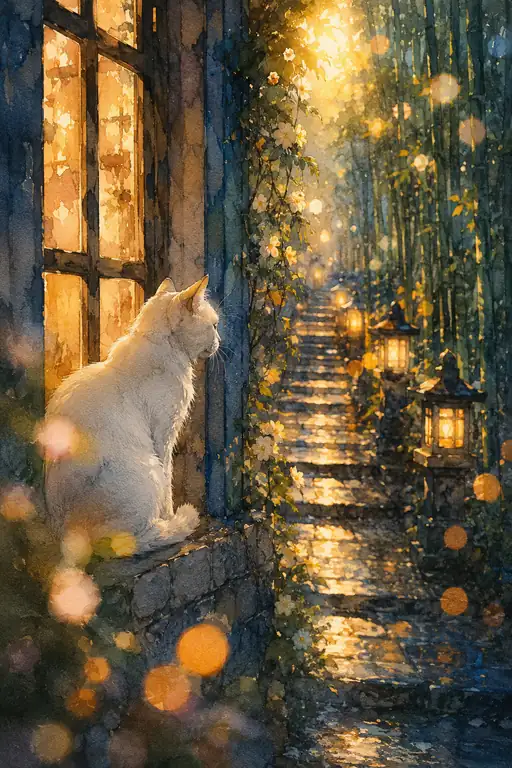 Silent Gaze Beyond the Bamboo Lanterns
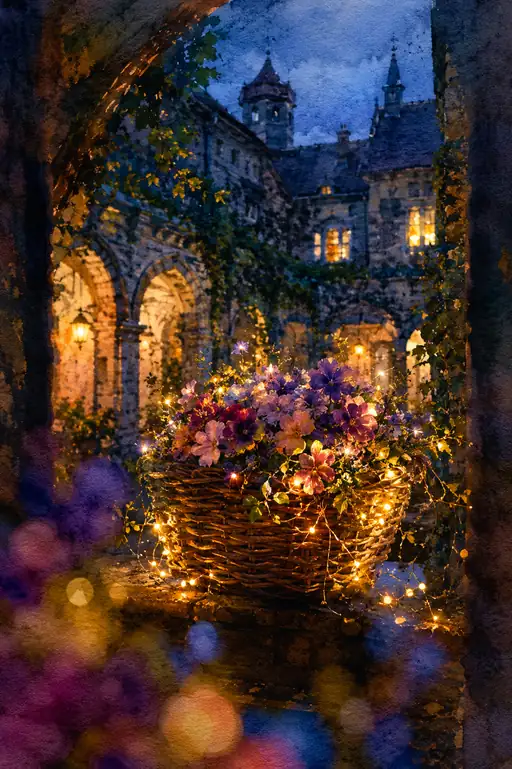 Fairy Lights Amongst the Night Blossoms
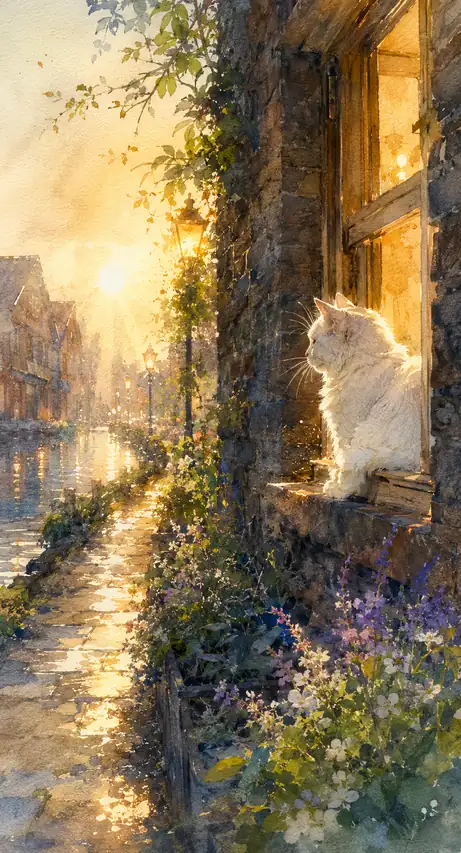 Sunset Finds the Cat at the Canal Window
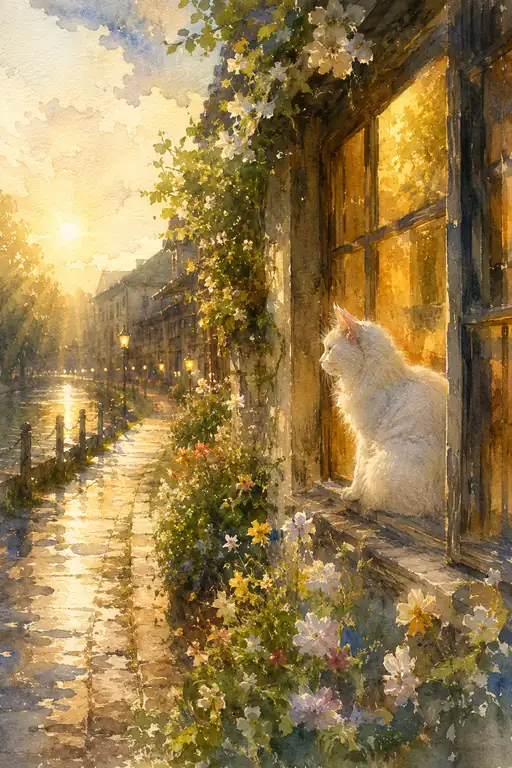 The White Cat Who Watches Morning Arrive
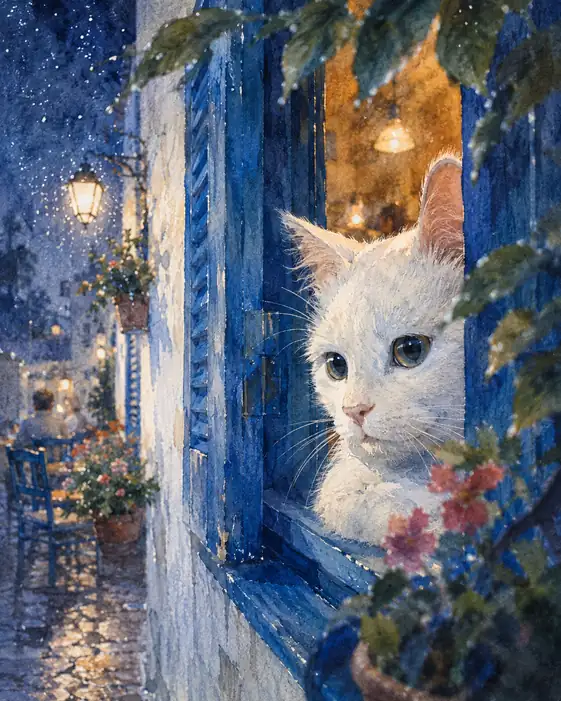 Blue Shutter Curiosity on a Starlit Night
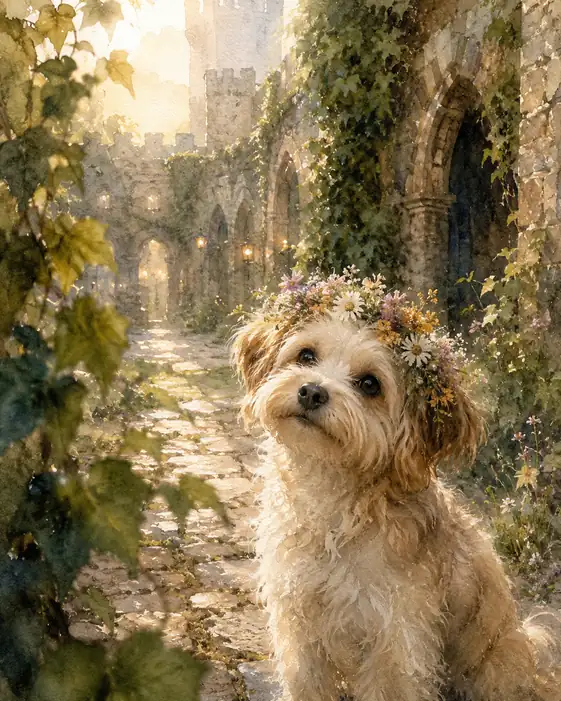 Crown of Wildflowers on the Sunlit Path
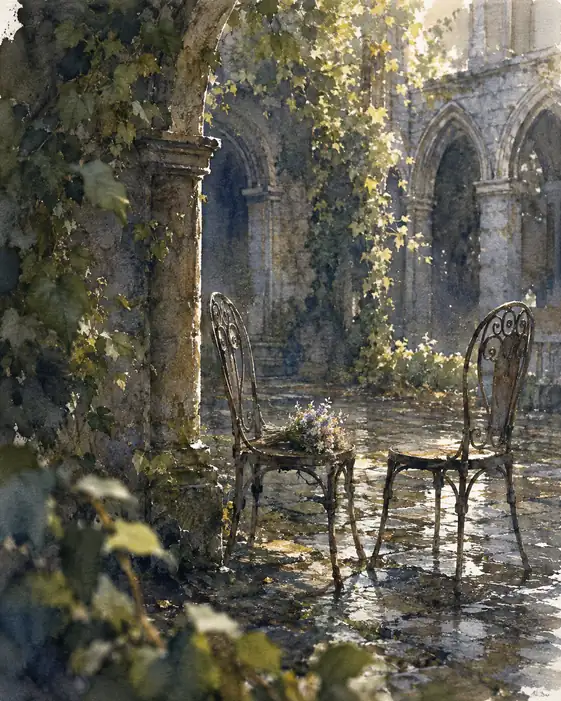 Silent Soliloquy of the Forgotten Garden
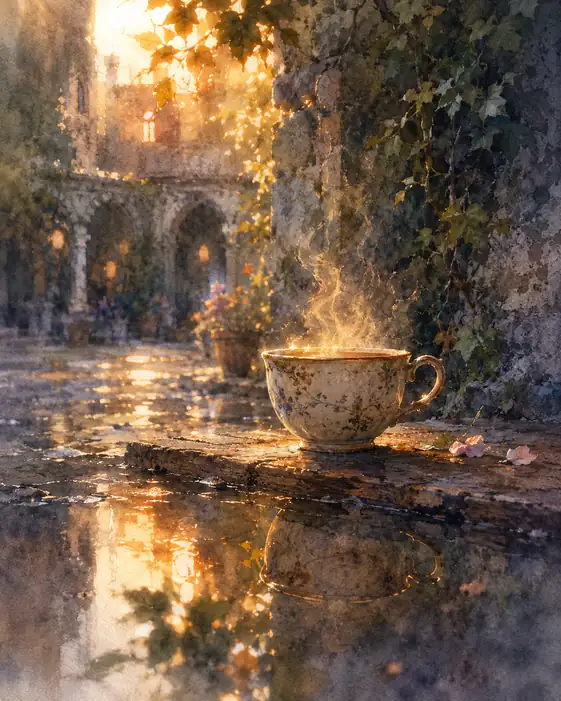 Morning Steam and Sunlit Courtyard
 Golden Mist Drifting Through the Canal