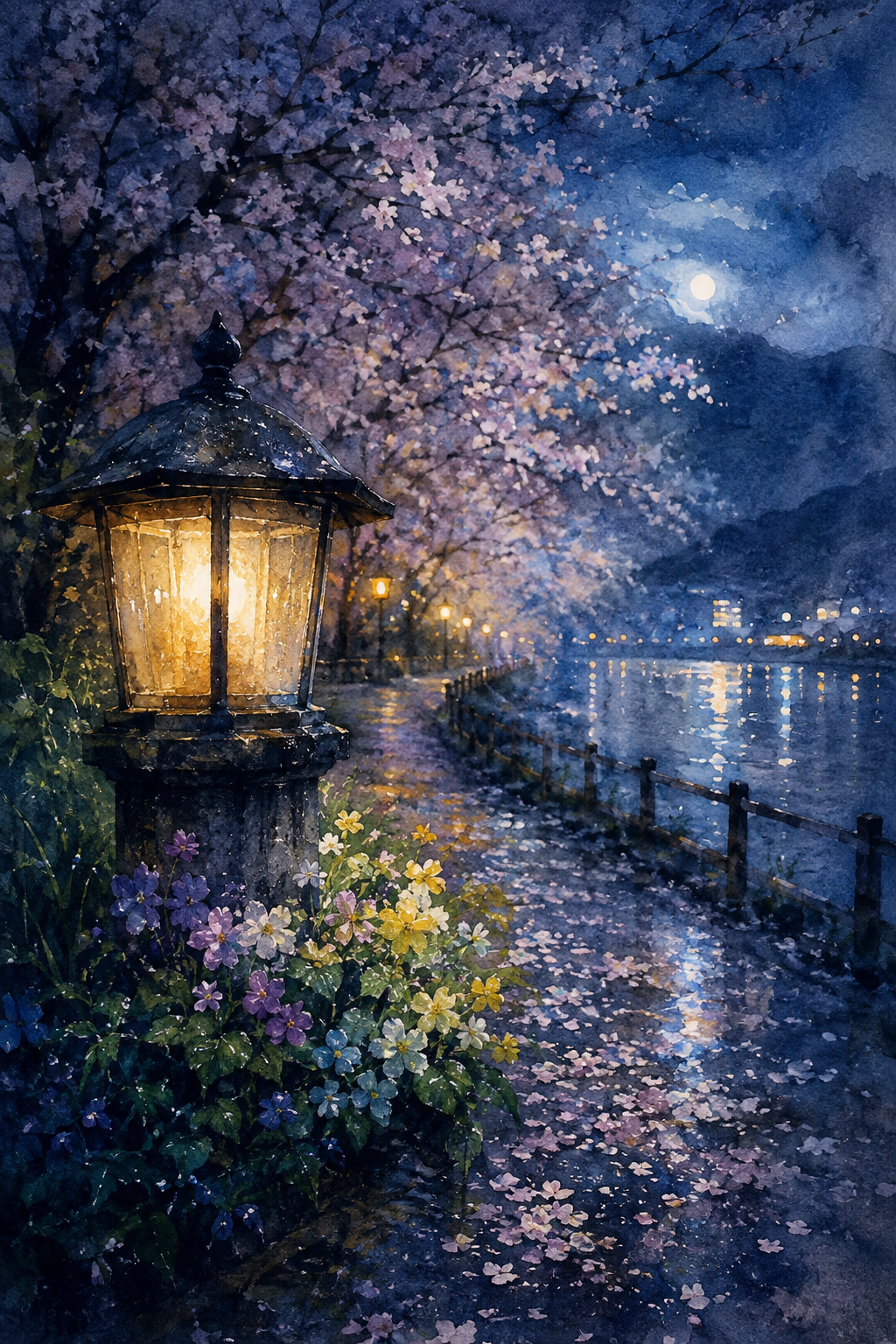
Spring Moon Path Beside the River
Critique
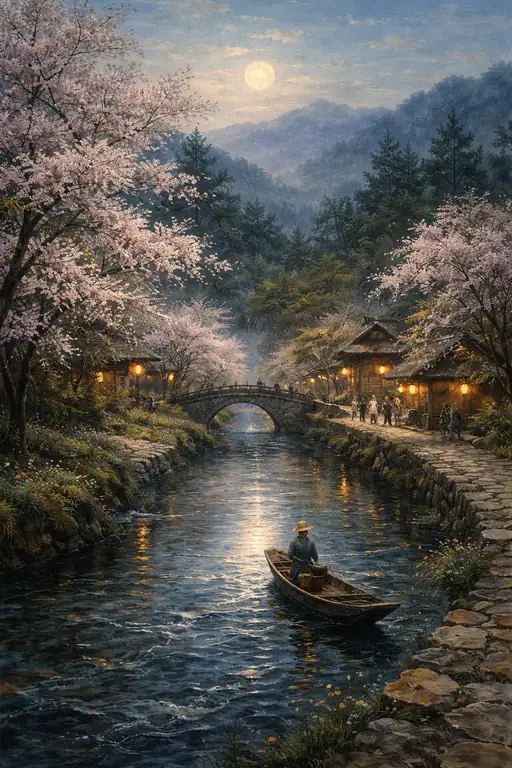
Introduction This moonlit path places a lantern and flowers beneath a cherry tree. Petals cover wet paving, while mountains, buildings, and moon extend the foreground into a cool landscape. Description The lantern occupies the left foreground on a dark pedestal, its faceted glass enclosing a strong amber flame. Purple, blue, white, and yellow flowers cluster around its base among glossy leaves. A railing guides the damp path around the lake toward a sequence of smaller lamps. Pale cherry branches spread across the upper half, and loose petals scatter over the paving. Across the water, lights reflect below dark mountains and a moon partly veiled by cloud. Analysis The large lantern anchors a vertical edge while the railing and lamp chain establish a curving recession. Cherry branches create a broad canopy that lowers the sky and frames the moon. Warm lights repeat from foreground to distance, their scale marking depth through a predominantly blue field. Hard metal bars contrast with soft blossoms; glossy leaves with matte petals; crisp foreground flame with blurred reflections. Scattered petals bridge flower bed, path, tree, and water. Interpretation and Evaluation The painting sets durable guidance against seasonal dispersal. Lamps mark a route while blossoms obscure it. Wet glass, leaves, petals, pavement, cloud, and water show descriptive skill. The moon balances asymmetry, while disciplined amber-blue color and repeated falling and reflected fragments create a meditation on passage. Conclusion At first the foreground lantern seems to be the sole guide, but sustained viewing reveals light distributed along the entire shore. The moon offers a cooler counterpart beyond it. The path becomes a measured transition through blooming, falling, and reflected forms rather than a simple route into distance.
Same Subcategory
Similar Artworks
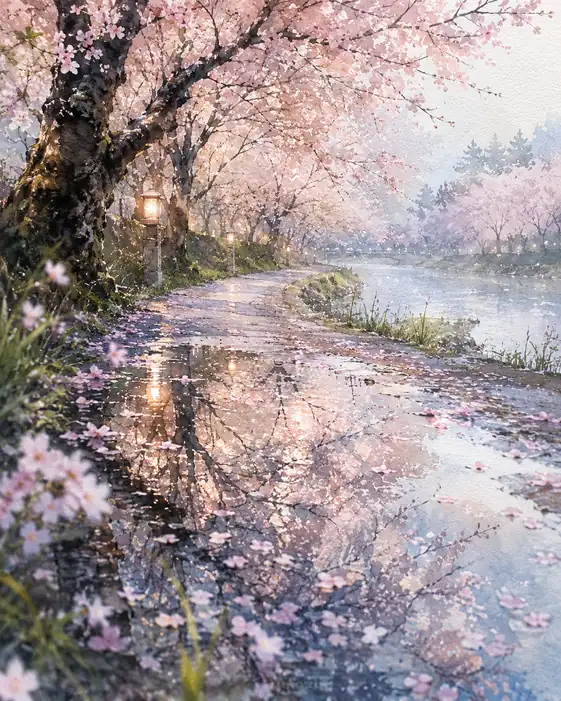 Morning Reflections Along the Cherry Path
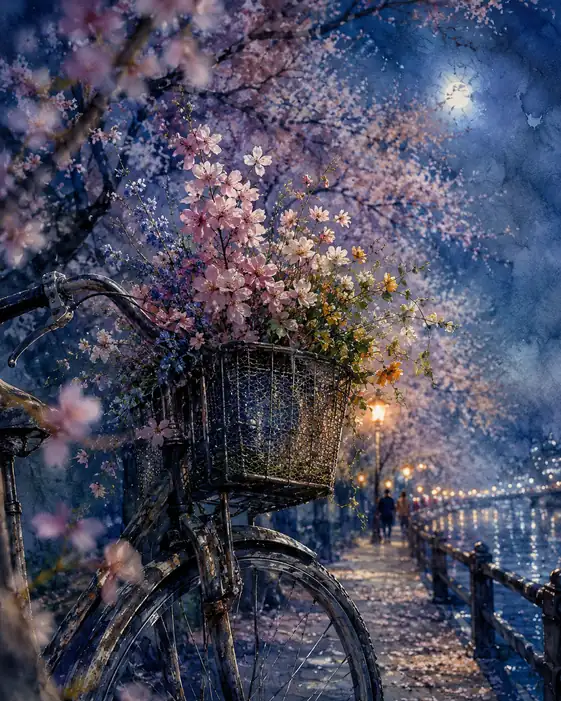 Moonlit Journey with Spring Petals
 Candlelight Vigil Beneath the Blossoming Moon
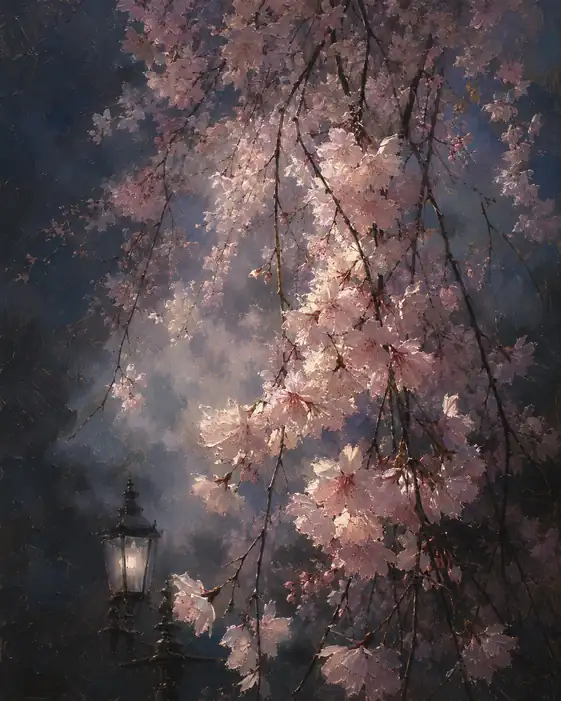 Canopy of Night Cherries Over the Lantern
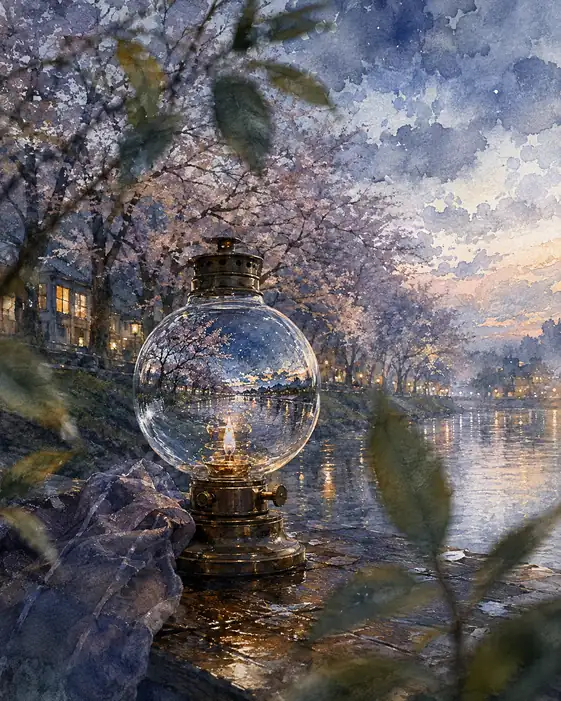 Spring River Mirage Encapsuled in Glass
 Silent Gaze into the Blossomed Night
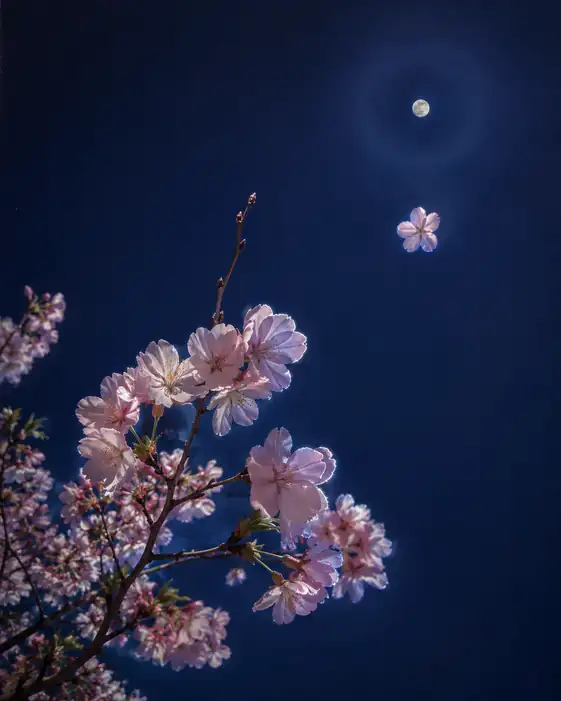 Slender Twigs Reaching for the Moon
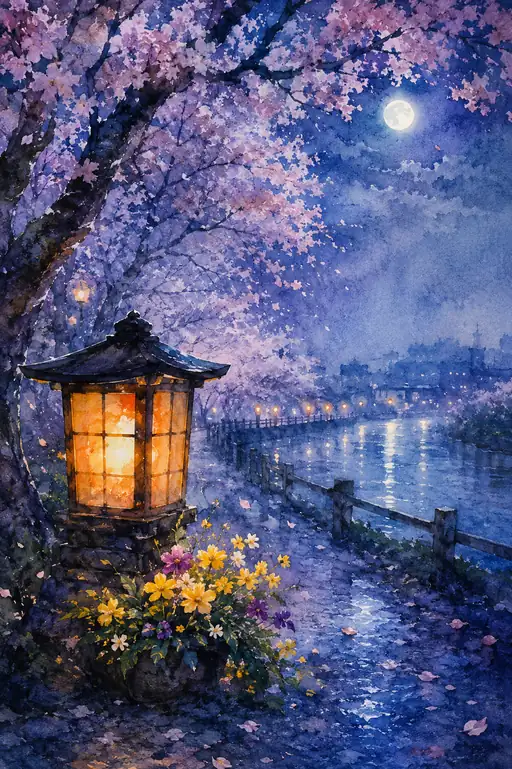 Moonlight Blossoms beside the Riverside Lantern
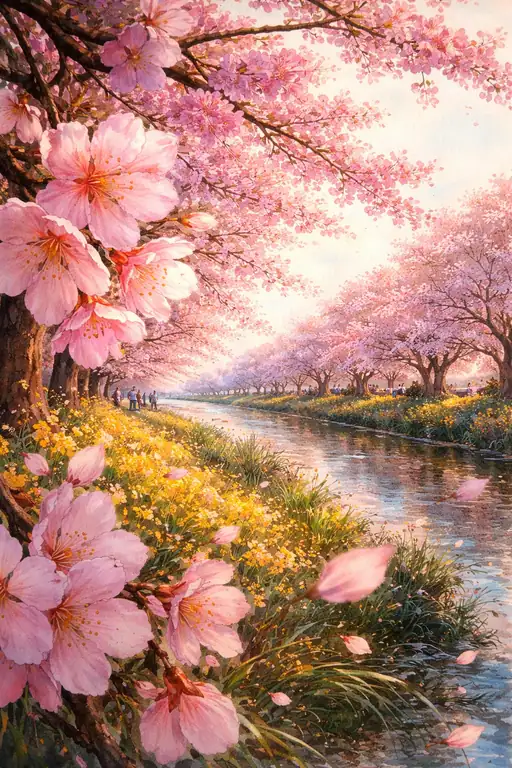 Awakening Spring, A Glimmer of Eternity
 Moonlight Blossom over the Quiet Village