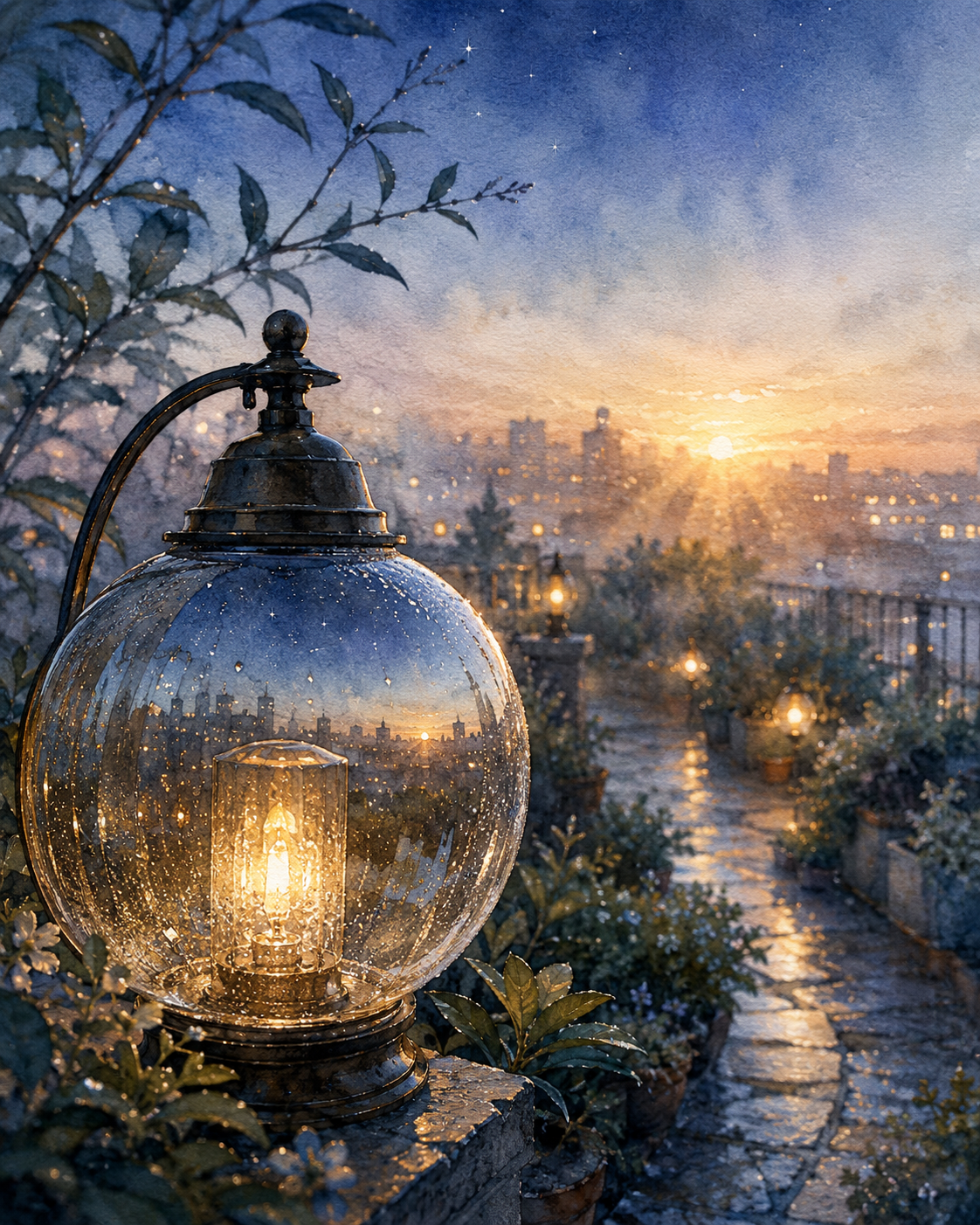
Twilight Encapsuled in Glass and Amber Light
Critique
Introduction This blue-hour view centers on a rain-wet spherical lamp. Its globe contains a protected flame and mirrors a skyline, while a descending path and distant lights connect the object to the city. Description The lamp fills the lower left, its dark metal cap, curved support, and base sharply outlined. Droplets cover the transparent globe, where an inner cylindrical chimney surrounds a bright flame. A dark reflected skyline circles the glass beneath the pale sky. Wet leaves frame the upper left. To the right, a narrow stone walkway recedes between railings, shrubs, and potted plants toward a hazy city under a low golden sun. Analysis The globe supplies a dominant circle against the path's receding diagonals and the city's horizontal band. Its internal lamp creates nested geometric forms, concentrating light inside transparency. Droplets become tiny lenses and echo the soft amber points scattered through the background. Cool blue-gray governs glass, sky, and pavement; restrained gold marks flame, sunset, reflections, and streetlights. Crisp foreground edges gradually dissolve into atmospheric washes, creating convincing depth. Interpretation and Evaluation The work shows a private fixture containing a public city in reflection. The globe becomes a viewing instrument, compressing distance into its curve. Wet glass, metal, foliage, stone, and skyline show descriptive control. Secure asymmetry, subtle complementary color, and nested flame, reflection, town, and sun give the scene conceptual unity. Conclusion At first the lamp appears to illuminate the path, but closer viewing reveals that it also gathers the whole horizon. The path then becomes a route between contained and actual space. Rain, reflection, and recession turn a functional light into a meditation on proximity and belonging.
Same Subcategory
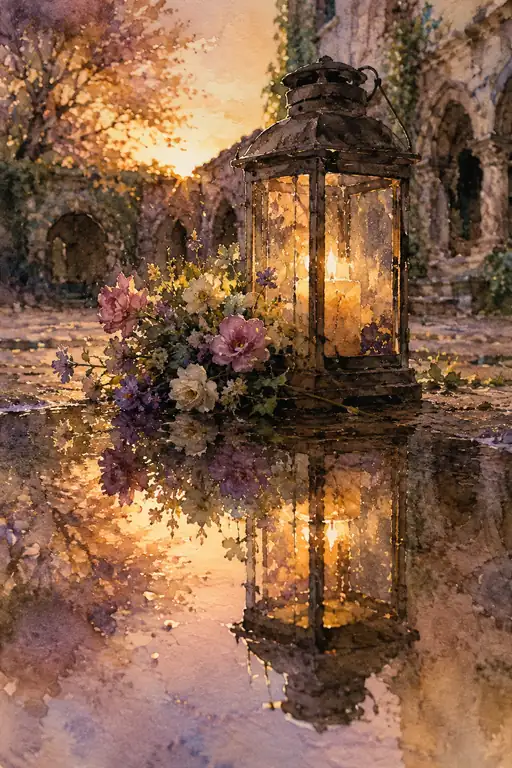 Candle Lantern Reflecting in the Castle Water Mirror and Twilight Floral Offering
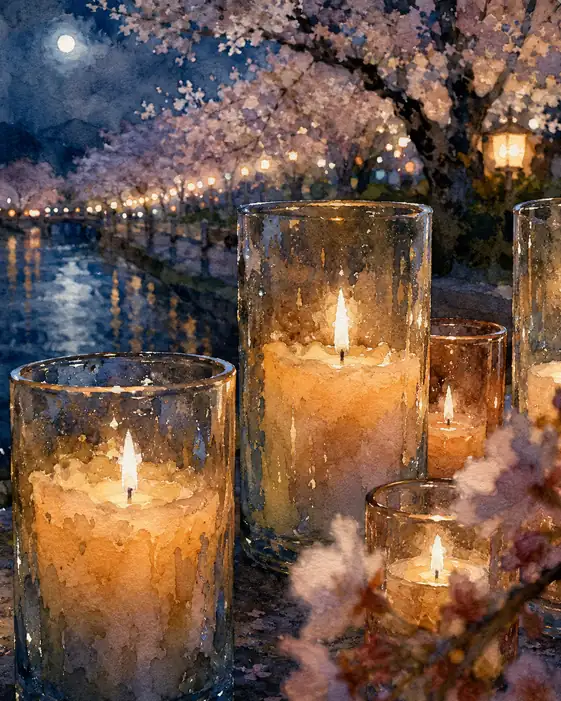 Candlelight Vigil Beneath the Blossoming Moon
Similar Artworks
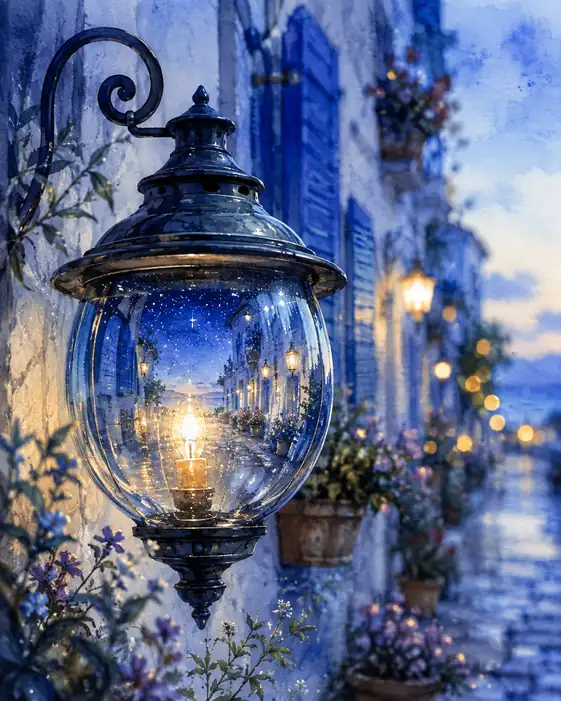 Sanctuary of Starlight in Glass
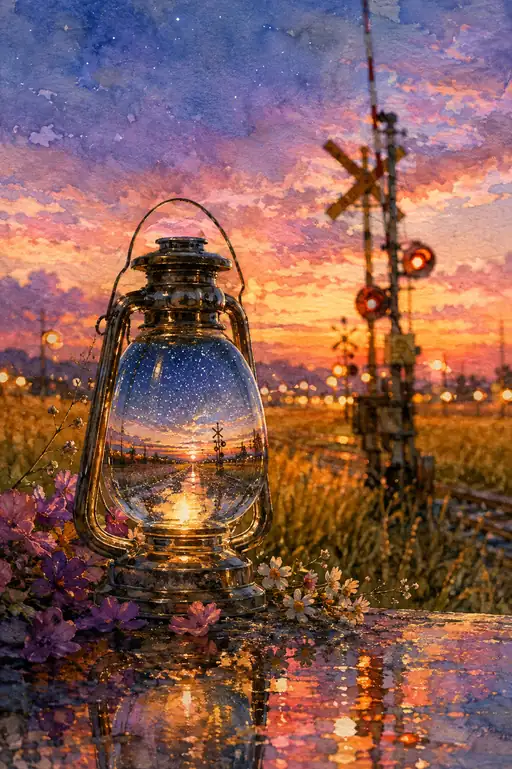 Sunset Train Path Captured in Glass
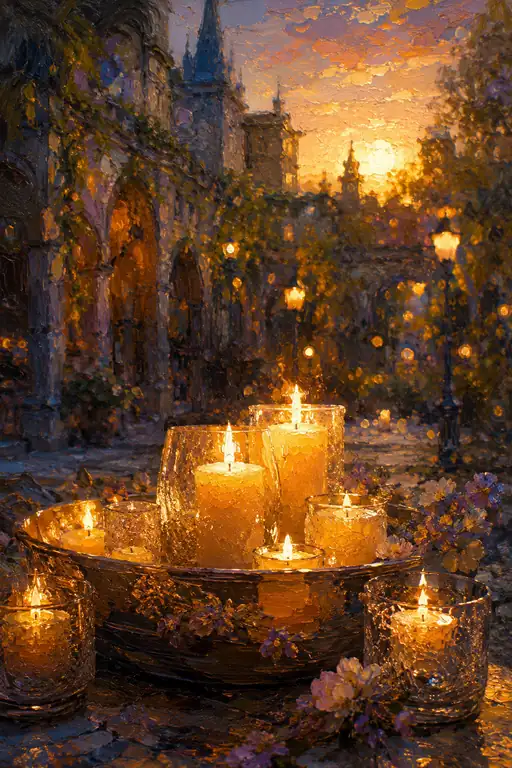 Bowl of Golden Flames in the Twilight Garden
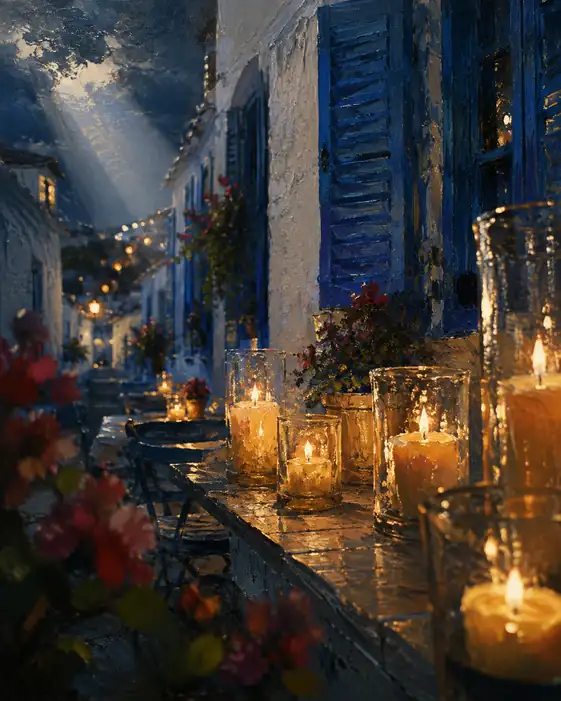 Tender Flame Kept from the Storm
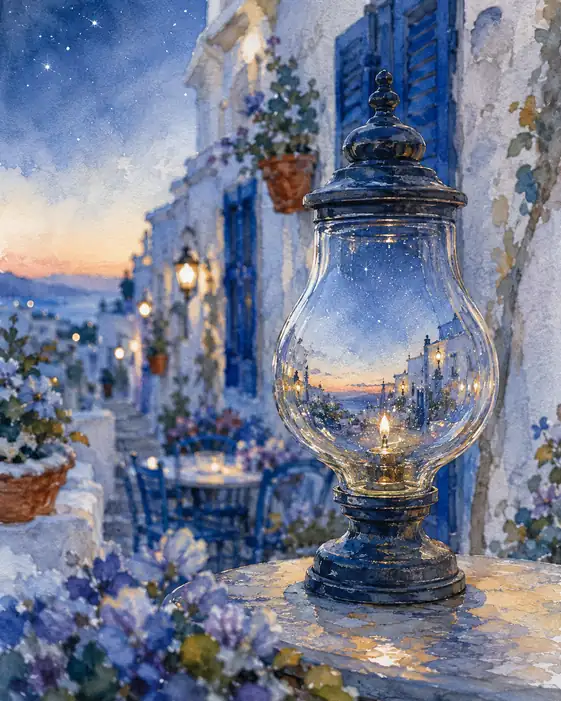 Twilight Captured in a Glass Orb
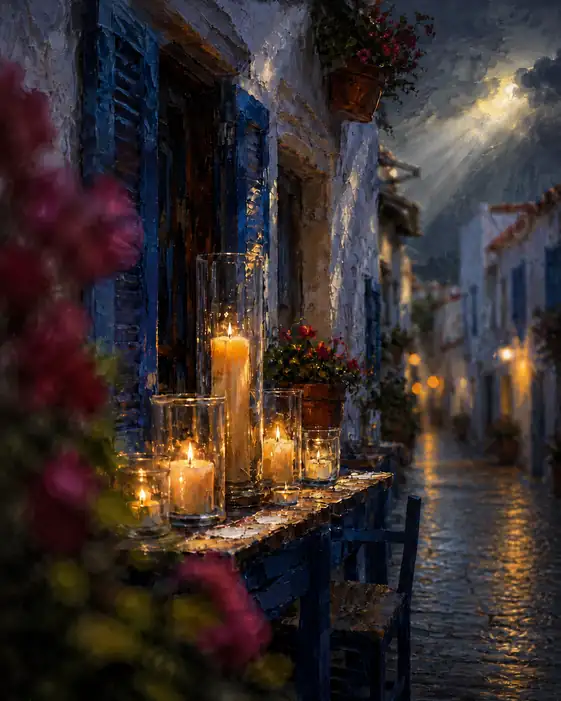 A Quiet Vigil Beneath the Storm
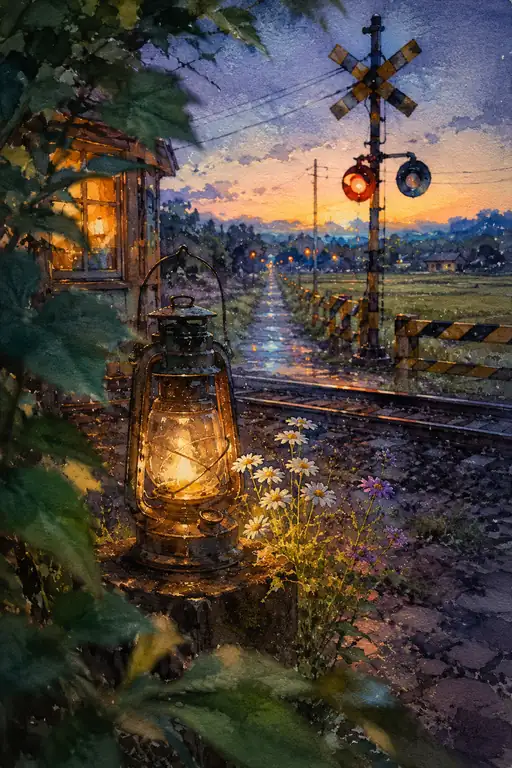 Wild Daisies by the Twilight Crossing
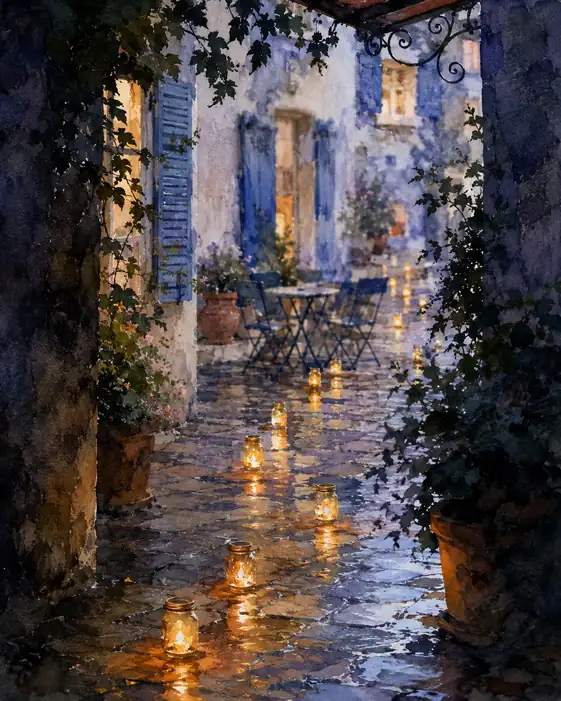 Gentle Step Across Reflected Lanterns
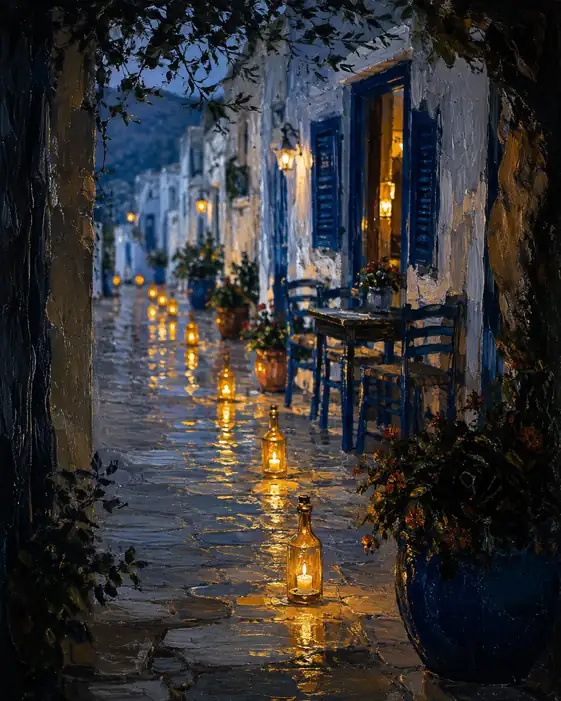 Trail of Small Flames Guided Home
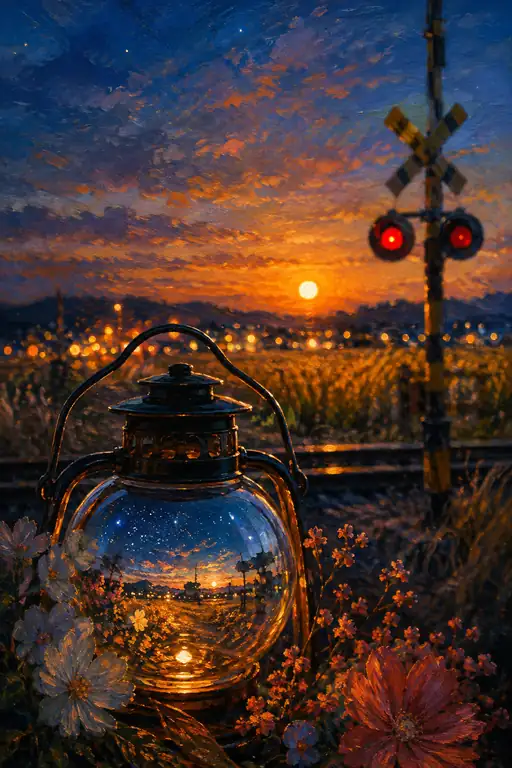 Sunset Cosmos Reflected in the Railroad Lantern