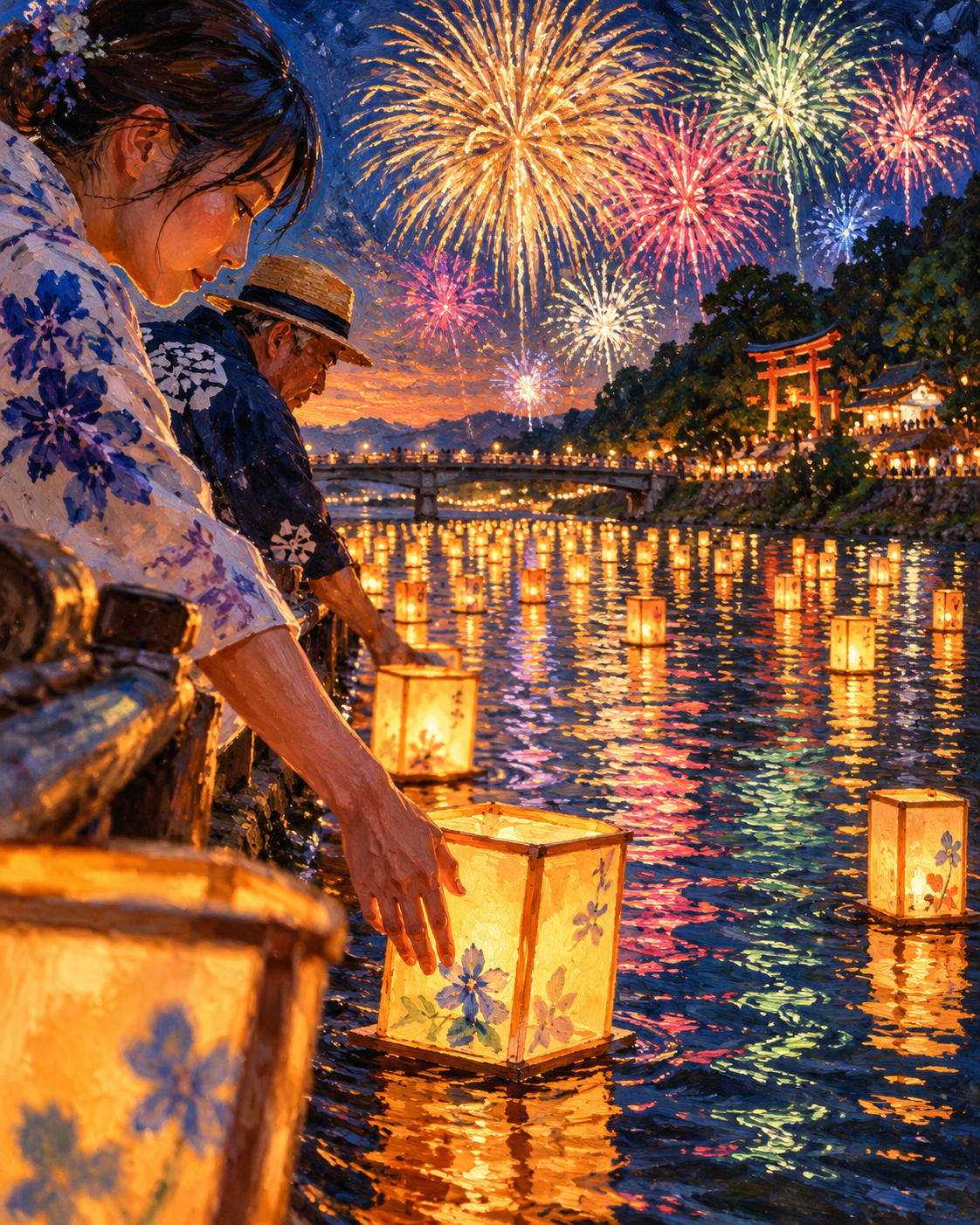
Whispering Prayers Reflected on Night Waters
Critique
Introduction This riverside scene centers on placing illuminated boxes on water beneath fireworks. Two figures lean from the left bank, while lanterns, bridge, shrine buildings, and sky form layers of communal ceremony. Description A woman in a pale floral yukata lowers one hand beside a large glowing lantern decorated with blue flowers. A man in a straw hat bends behind her, attending to another light. Dozens of square lanterns float toward a bridge lined with spectators. Across the river, a red torii and lit pavilions emerge among dark trees. Gold, red, green, and white fireworks fill the blue sky. Analysis The nearest lantern forms a warm geometric anchor against irregular water and figures. Receding lights diminish and converge toward the bridge, establishing depth without a rigid central path. Firework colors reappear as broken vertical reflections, binding sky and river. The bowed profiles at left introduce a slow diagonal, while broad orange highlights on skin and paper contrast with short blue and violet strokes in rippling water. Interpretation and Evaluation The work balances private attention with public spectacle. The careful downward gestures resist the fireworks' outward expansion, giving release and contemplation equal weight. Overlapping arms, railing, lanterns, and distant architecture are described clearly despite dense illumination. The warm-cool palette is controlled, and the inventive correspondence among floral yukata, painted lantern flowers, and colored reflections enriches the ceremony without generic decoration. Conclusion At first the fireworks dominate through scale, but sustained viewing shifts emphasis to the hand meeting the water. The composition transforms a small deliberate action into the source of a broad luminous field. Strong spatial organization and tactile light make remembrance, participation, and celebration coexist.
Same Subcategory
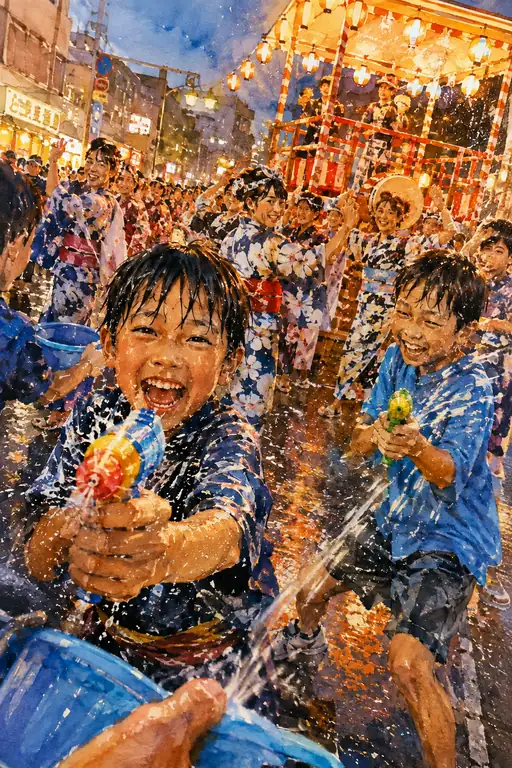 Radiant Smiles in Splashing Waters
Similar Artworks
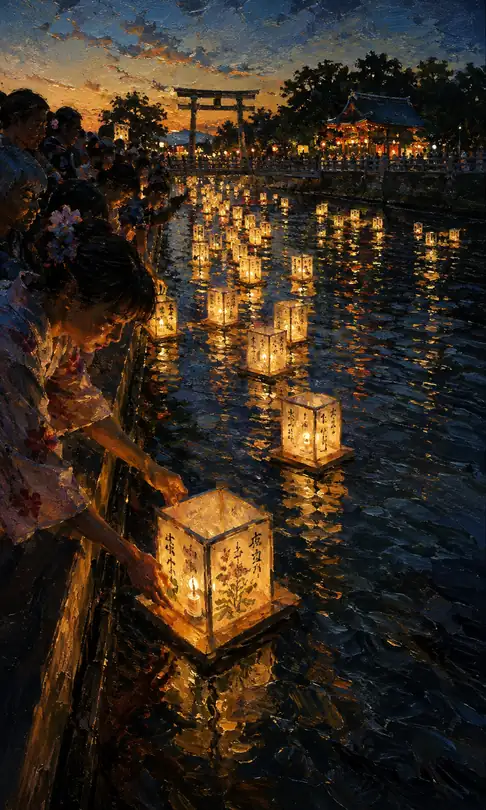 Silent Prayers Floating Past the Sacred Gate
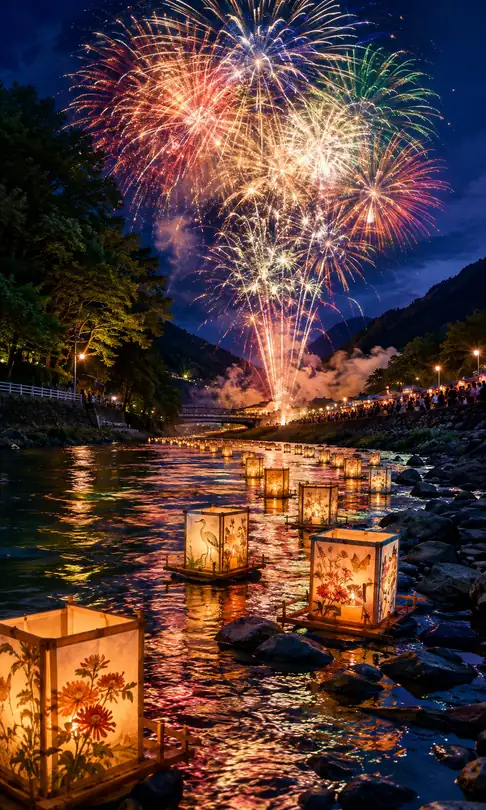 Clear Stream Lanterns and Sky Splendor
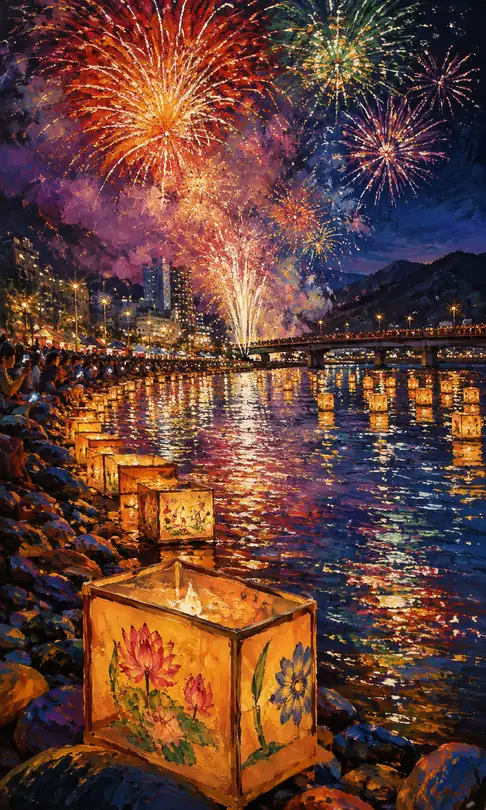 Silent Night Journey Guided by Lotus Lanterns
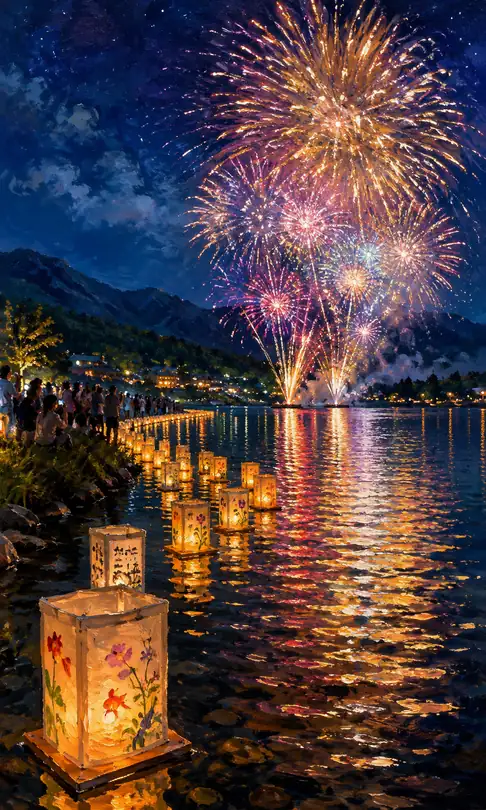 Dreams of Goldfish Lights on the Lake
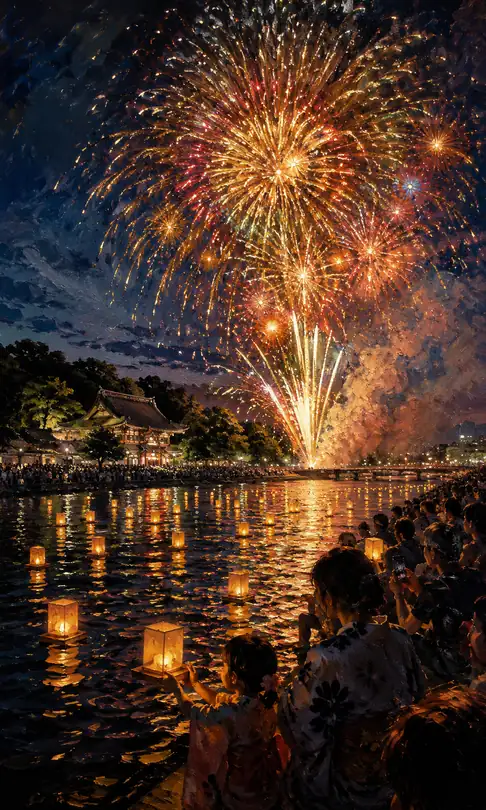 Thousand Prayers Floating on Golden Waters
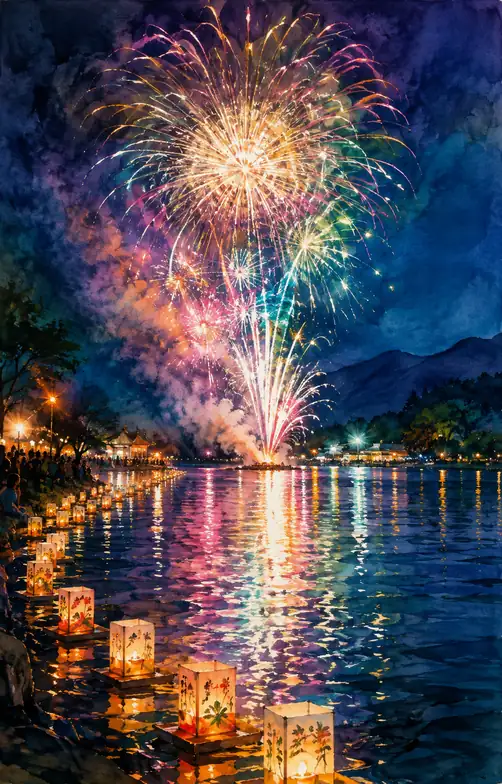 A Thousand Lanterns Drift Home Across a Sea of Fireworks
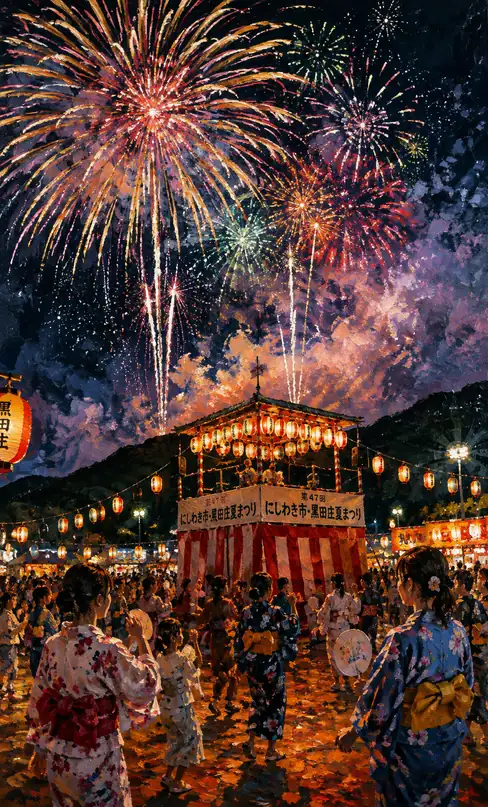 Echoes of Hometown Summer Beats
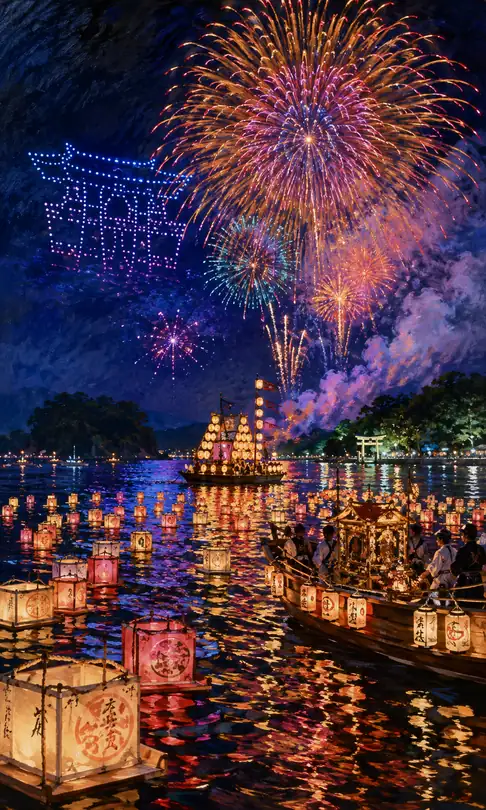 Sacred Waters Under Luminous Skies
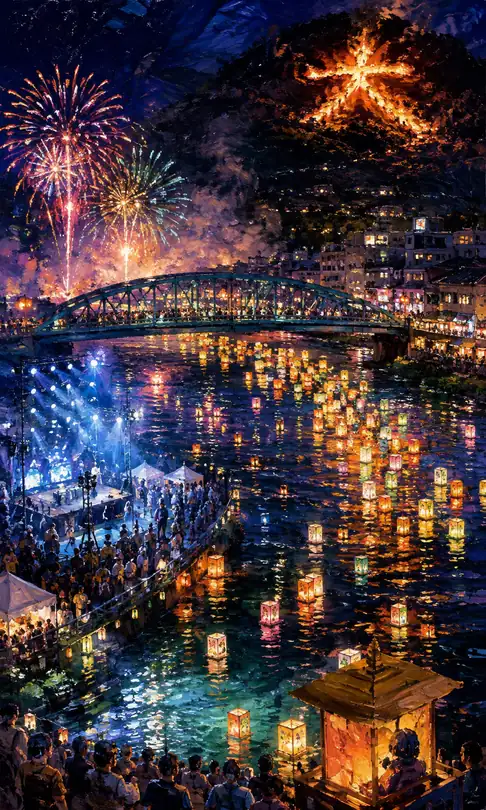 Flames on the Crest, Lights on the Bay
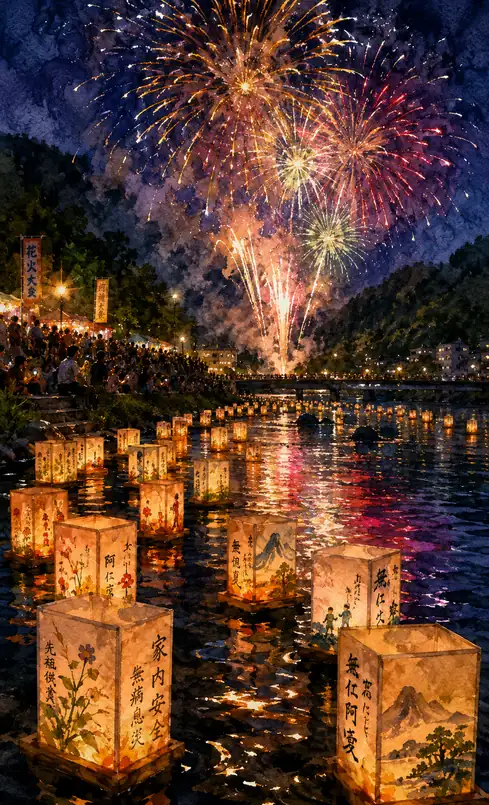 Gentle Prayers Floating Downstream