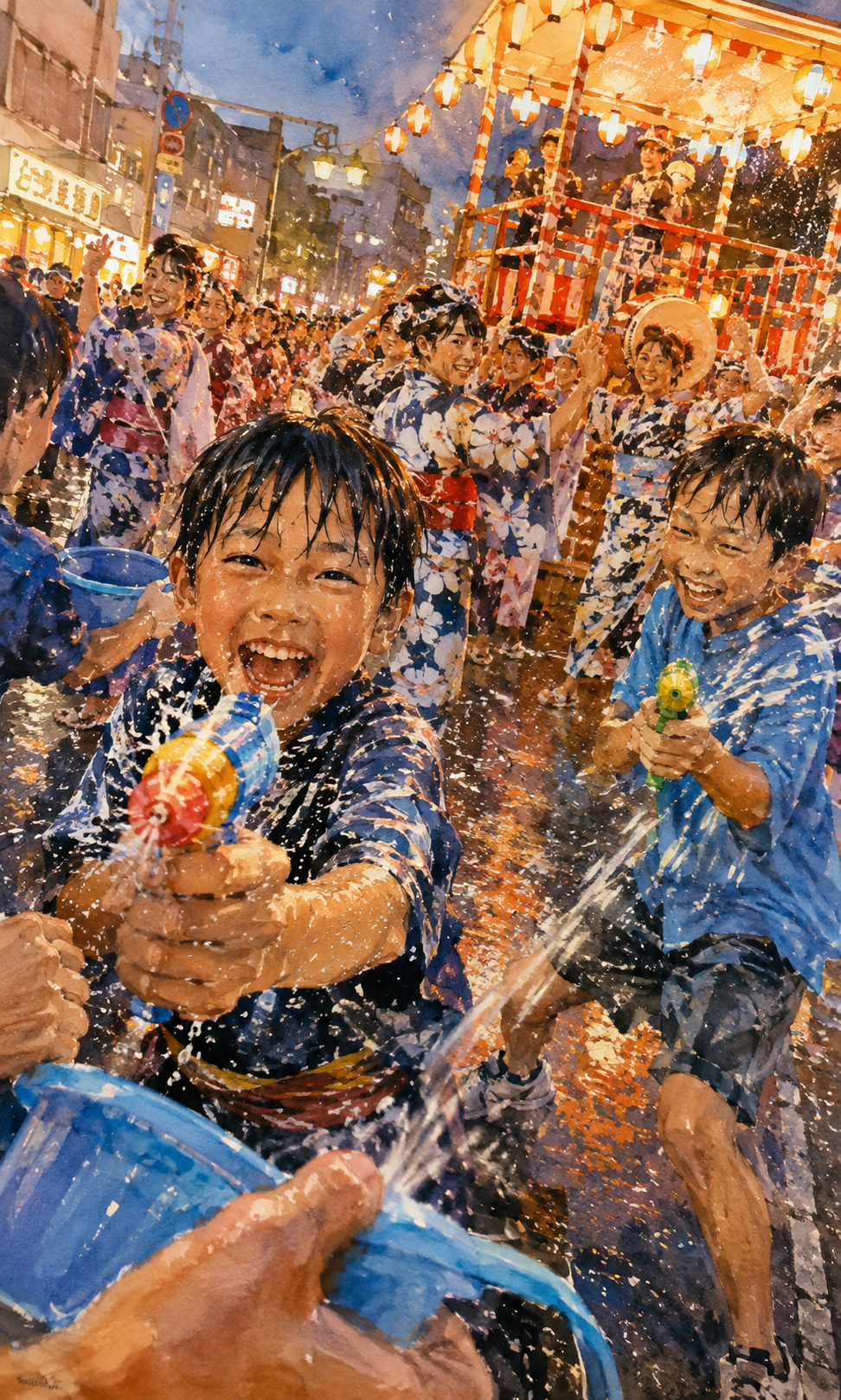
Sparkling Water and Innocent Summer Days
Critique
Introduction This water festival places two laughing boys before the viewer. Toy guns and crossing streams fill the foreground, while dancers, a lantern tower, and wet pavement extend the celebration into the street. Description The central boy in a dark blue coat aims a red, yellow, and blue water pistol directly outward. At right, a second boy in a lighter blue shirt aims a small green pistol diagonally left. A hand holding a blue basin enters from below. Behind them, women in floral yukata smile and raise their arms around a red-and-white tower, where performers stand beneath glowing lanterns. Water droplets cover faces, clothing, and air. Analysis Extreme scale differences turn the foreground boys into a projecting wedge within the crowd. The central gun creates a short frontal axis, whereas a strong stream from lower right cuts across it. Warm lantern reflections run down the wet street between surrounding blues. Faces and garments are described with broad, broken patches, while fine white splashes cross every boundary and visually unite separate bodies. Interpretation and Evaluation The painting dissolves distance between spectator and festival. The boys' gaze, foreshortened hands, and incoming water imply active participation. Overlapping figures remain readable through color grouping and facial direction, demonstrating descriptive and compositional control. Traditional clothing and contemporary toys make a distinctive combination, while reflected light makes play the scene's organizing technique. Conclusion At first the direct water pistol supplies comic immediacy, but closer viewing reveals a carefully layered community behind it. Children, dancers, musicians, and bystanders share the wet street without losing individual gestures. The image turns accidental splashing into a coherent structure of exchange.
Same Subcategory
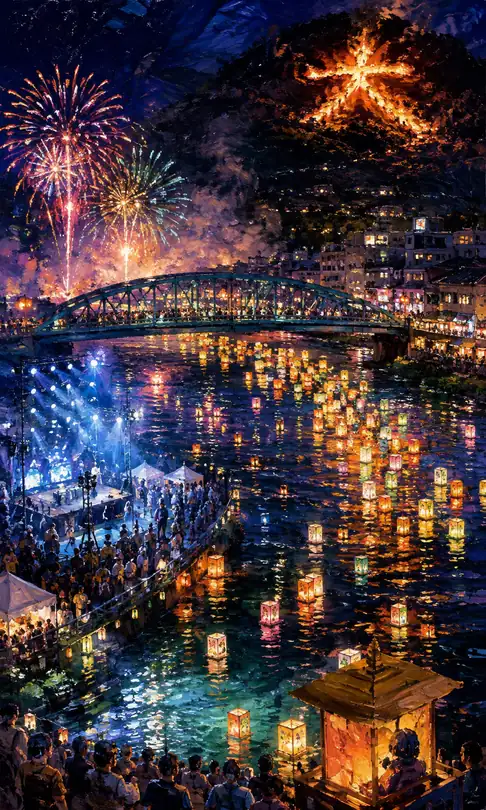 Flames on the Crest, Lights on the Bay
Similar Artworks
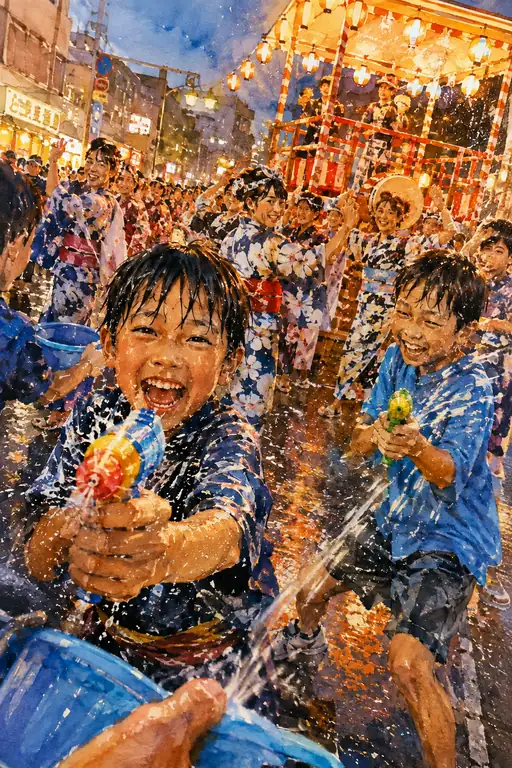 Radiant Smiles in Splashing Waters
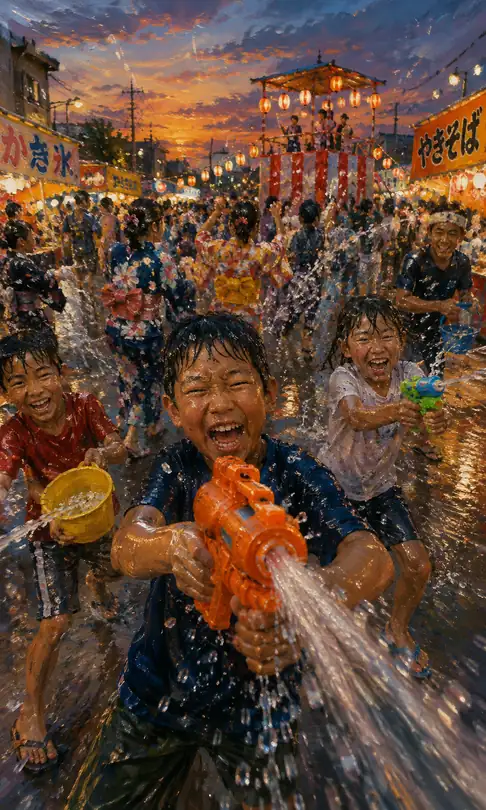 Splashing Droplets of Summer Pure Joy
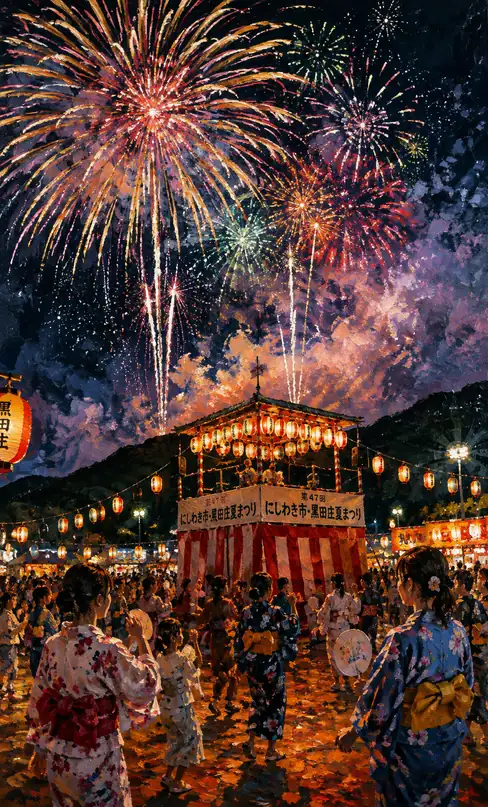 Echoes of Hometown Summer Beats
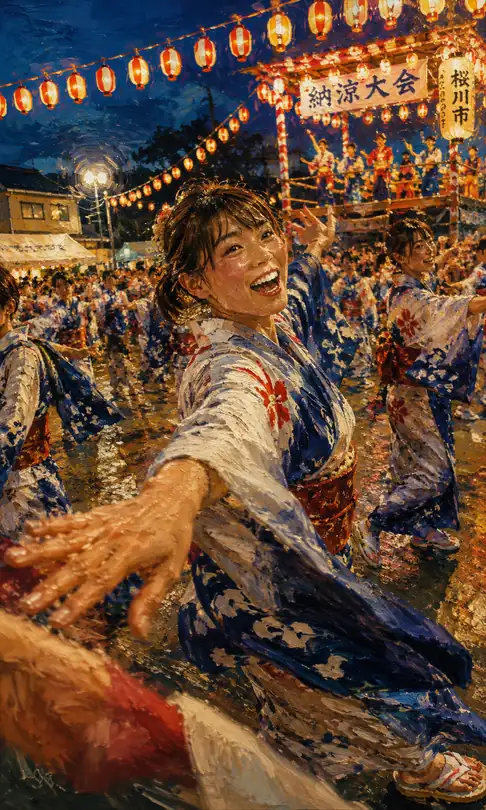 Lantern Lights Binding Eternal Ties
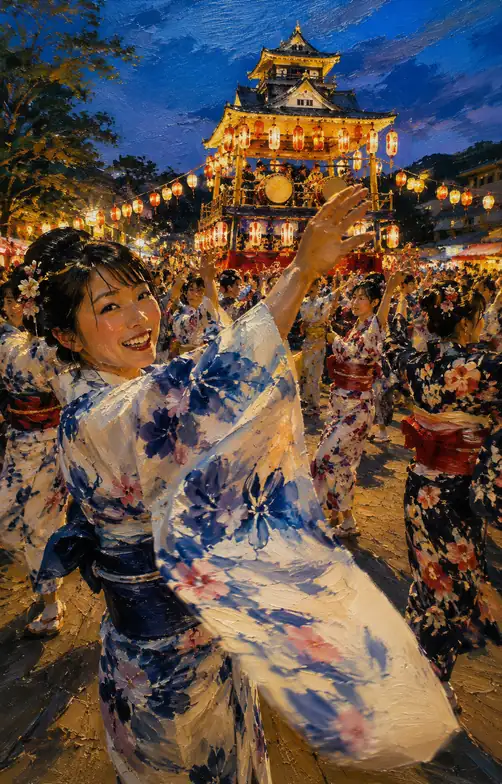 Evening Blooms of the Castle Town Dance
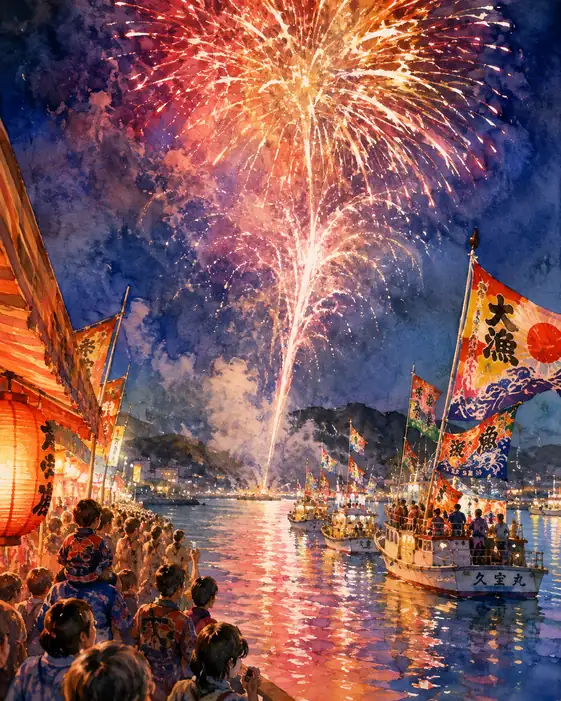 Unforgettable Sky Seen from Fathers Shoulders
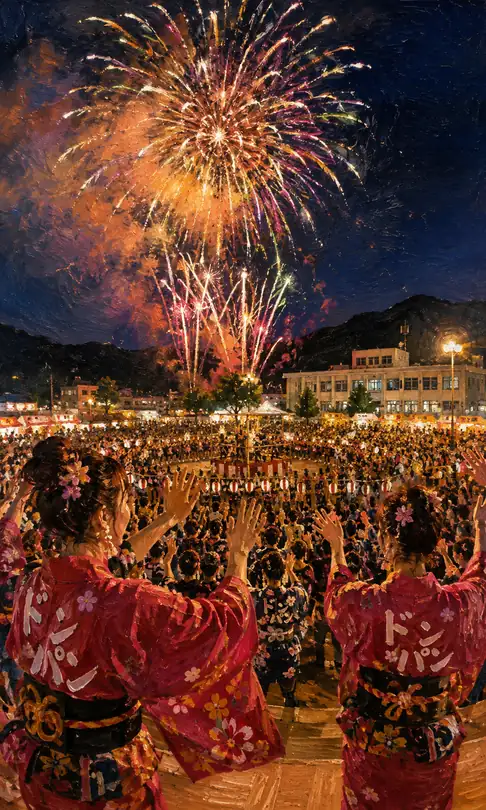 Hands Raised in Festive Jubilation
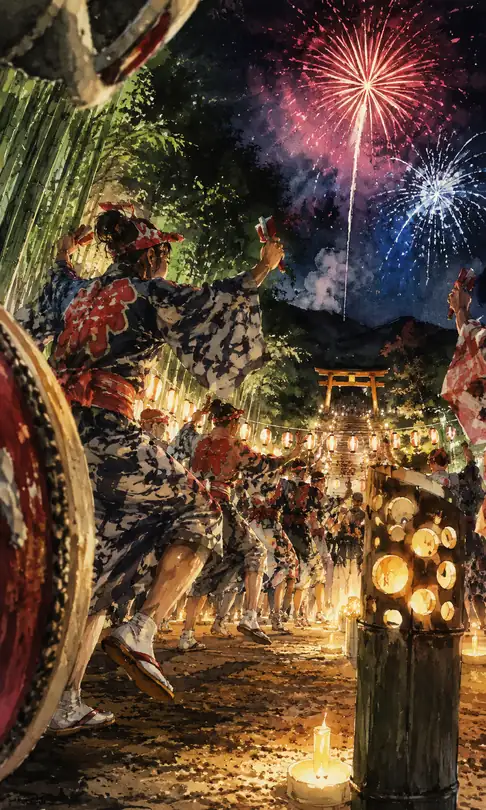 Pathway of Soft Bamboo Illumination
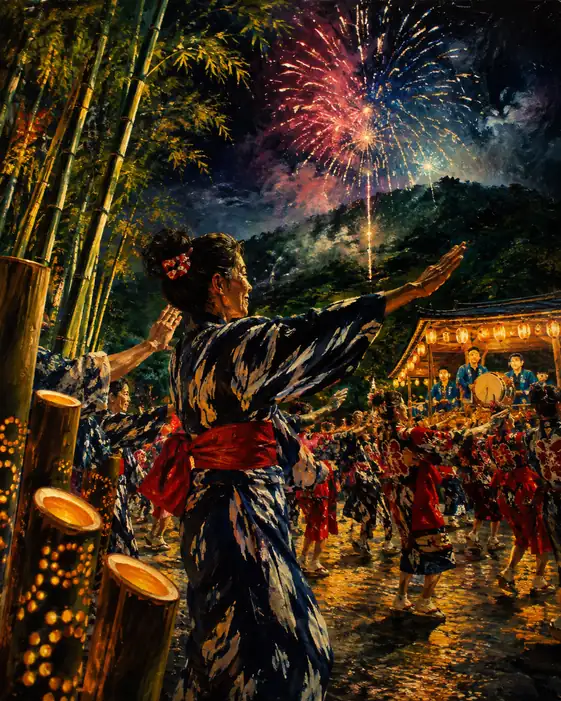 Warmth of Bamboo Illumination and Sky Blooms
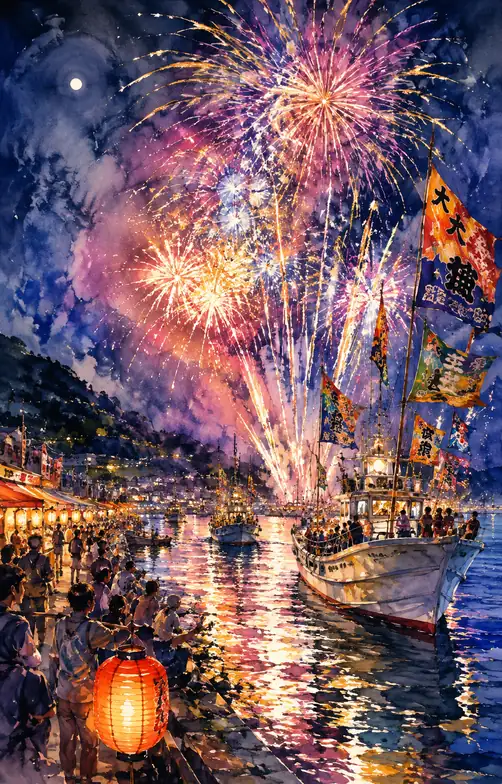 Banners of Abundance Shining on the Sea