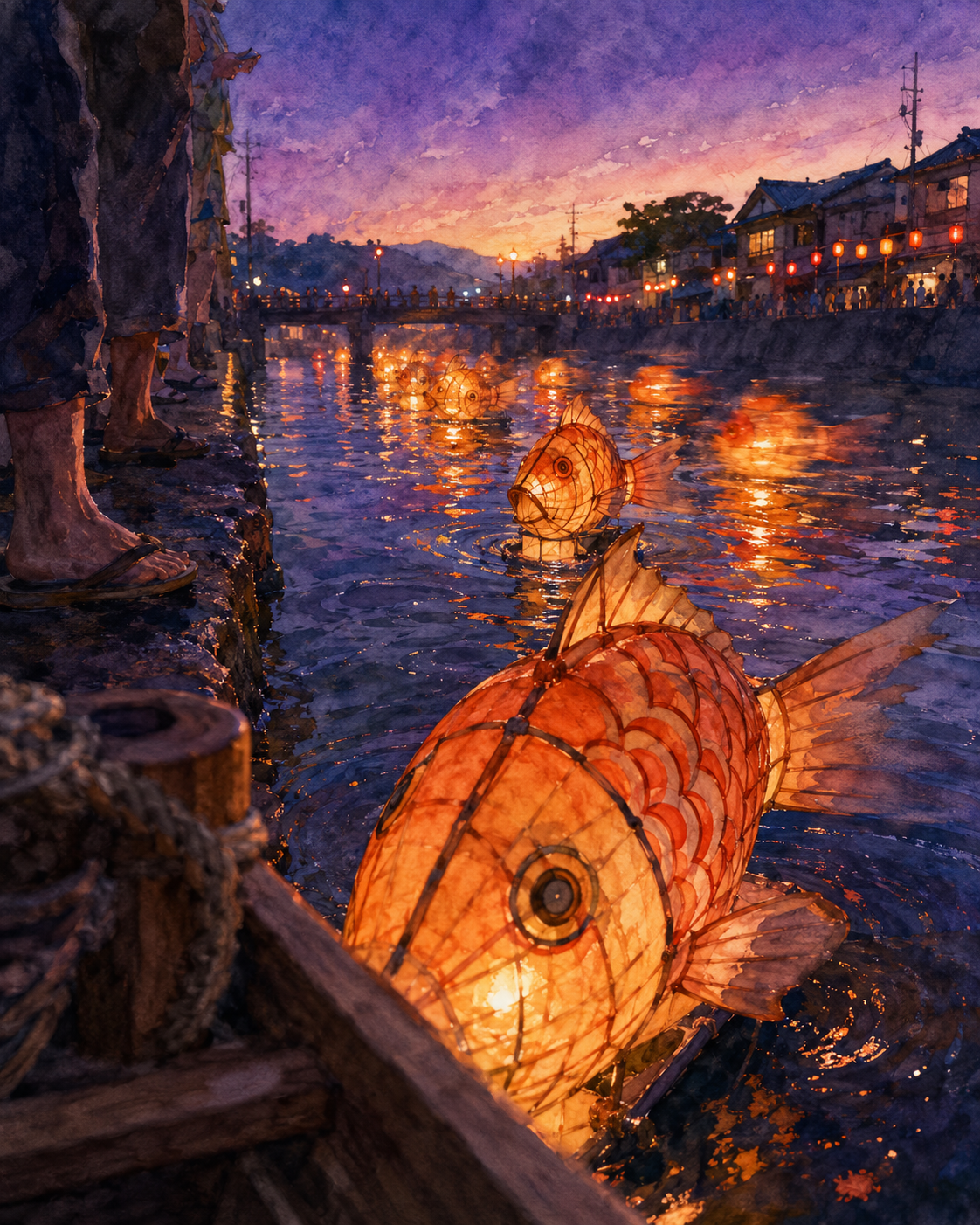
Twilight Stream of Swimming Lanterns
Critique
Introduction This twilight river scene replaces conventional floating boxes with luminous fish-shaped lanterns. The nearest orange fish nearly touches the bank, while smaller forms swim toward a bridge, transforming remembrance into an image of guided movement through water. Description A large paper fish fills the lower right, its circular eye, red scales, ribs, fins, and tail clearly visible around an interior flame. A smaller pale fish faces the viewer at center, followed by a chain of glowing forms. At left, spectators’ legs and sandals stand on the wet stone edge beside a heavy mooring post. Across the river, old houses, red lanterns, utility poles, a bridge, and crowds sit beneath a violet and peach sunset. Analysis The fish diminish along a strong diagonal from foreground to bridge, creating depth and the illusion of a procession. Orange paper and reflections glow against blue-purple water. The nearest lantern’s curved ribs and translucent panels contrast with rough stone, bare legs, and soft distant architecture. Ripples gather around each floating body, making light appear to propel the forms. Interpretation and Evaluation The recognizable fish shape gives the release a gentle animation without obscuring the human act at the bank. Feet rather than faces emphasize participation through physical proximity. Modern poles coexist with traditional roofs, placing the ritual in a lived town. The inventive motif, controlled recession, and sensitive distinction among paper, water, and stone demonstrate strong visual judgment. Conclusion At first the lanterns seem playfully alive, but their measured drift and watching figures introduce a quieter sense of passage. The painting succeeds by joining wonder, locality, and reflection within one carefully directed current.
Same Subcategory
 Treasures of Laughter and Sweet Moments
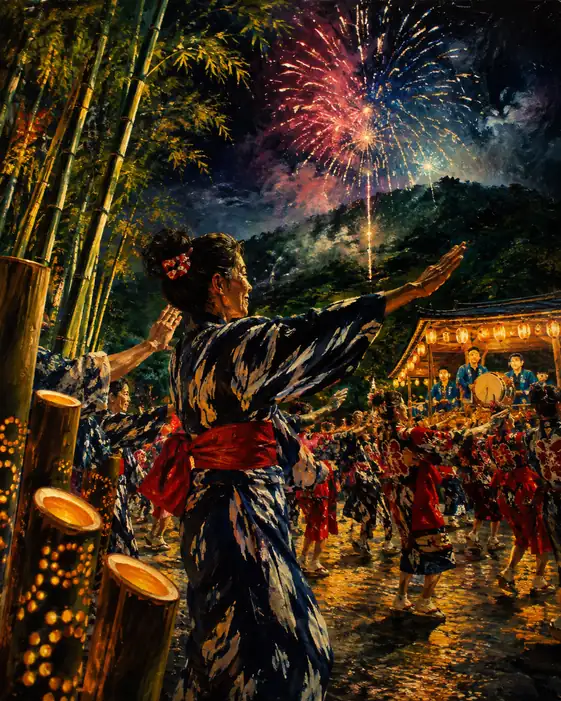 Warmth of Bamboo Illumination and Sky Blooms
Similar Artworks
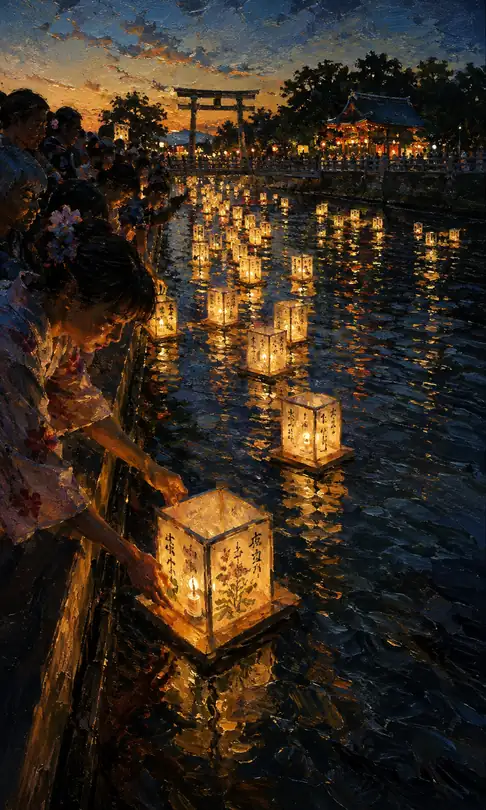 Silent Prayers Floating Past the Sacred Gate
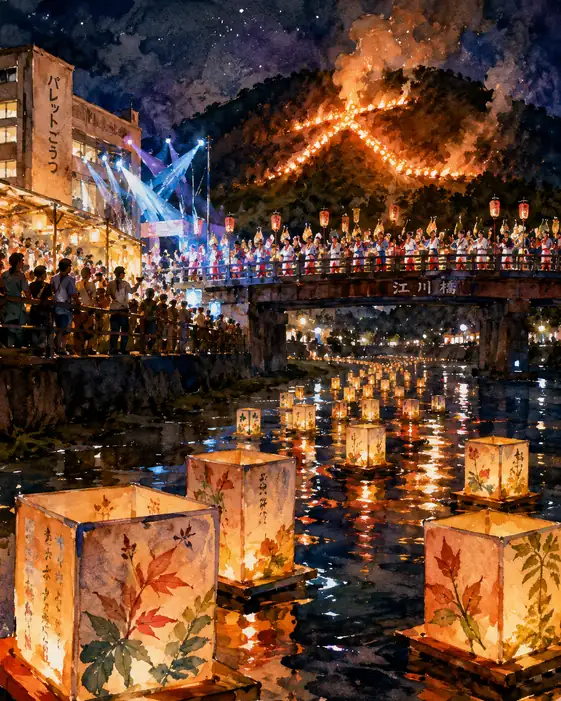 Sacred Flames on the Mountain Ridge
 A Thousand Lanterns Drift Home Across a Sea of Fireworks
 Silent Night Journey Guided by Lotus Lanterns
 Whispering Prayers Reflected on Night Waters
 Luminous Voyage Connecting Time
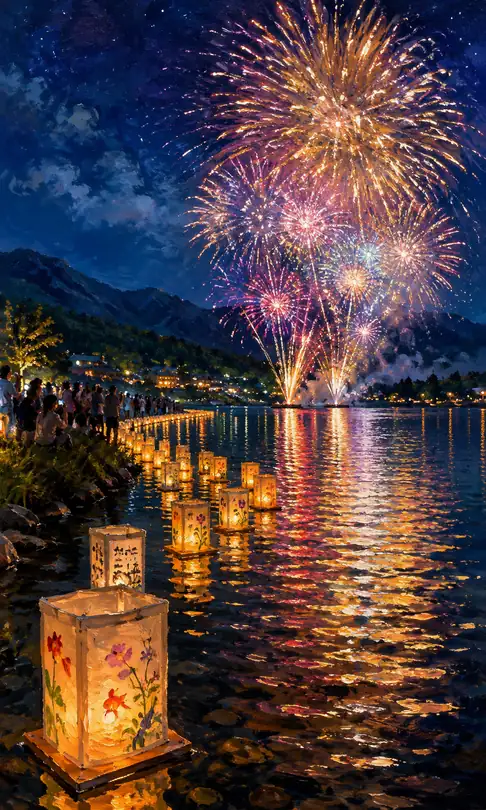 Dreams of Goldfish Lights on the Lake
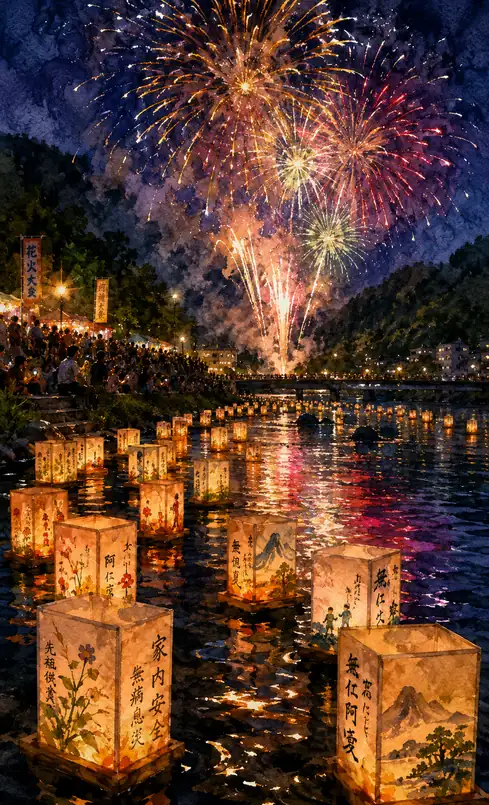 Gentle Prayers Floating Downstream
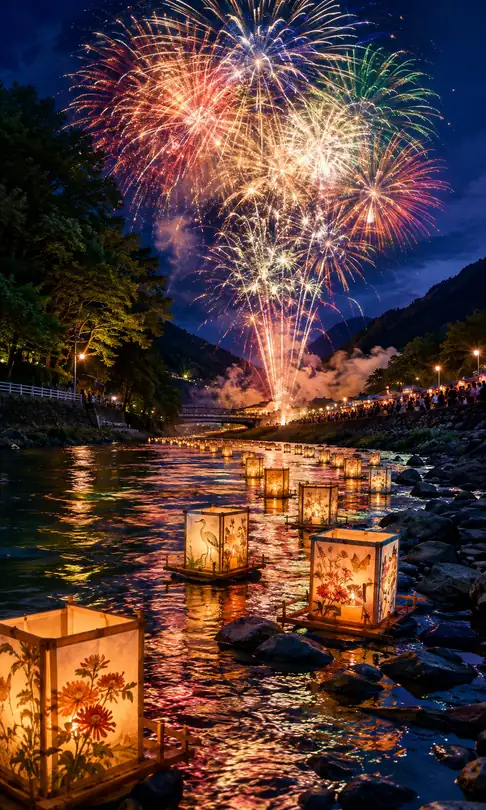 Clear Stream Lanterns and Sky Splendor
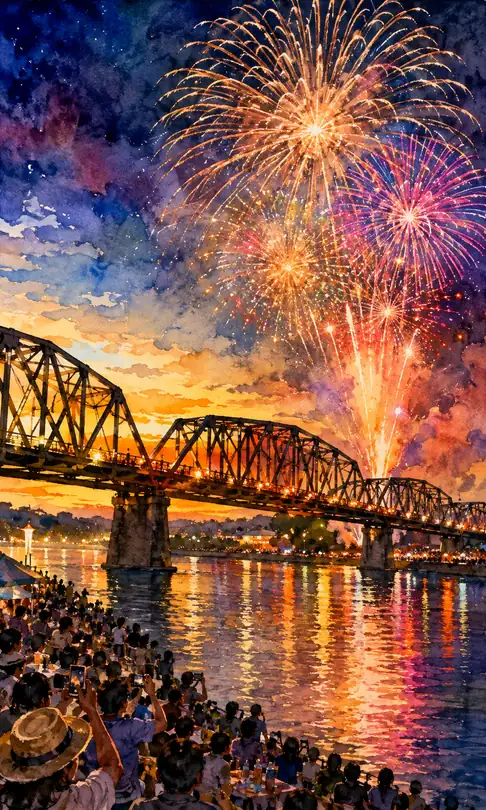 Grand River Reflection and Iron Bridge Silhouette