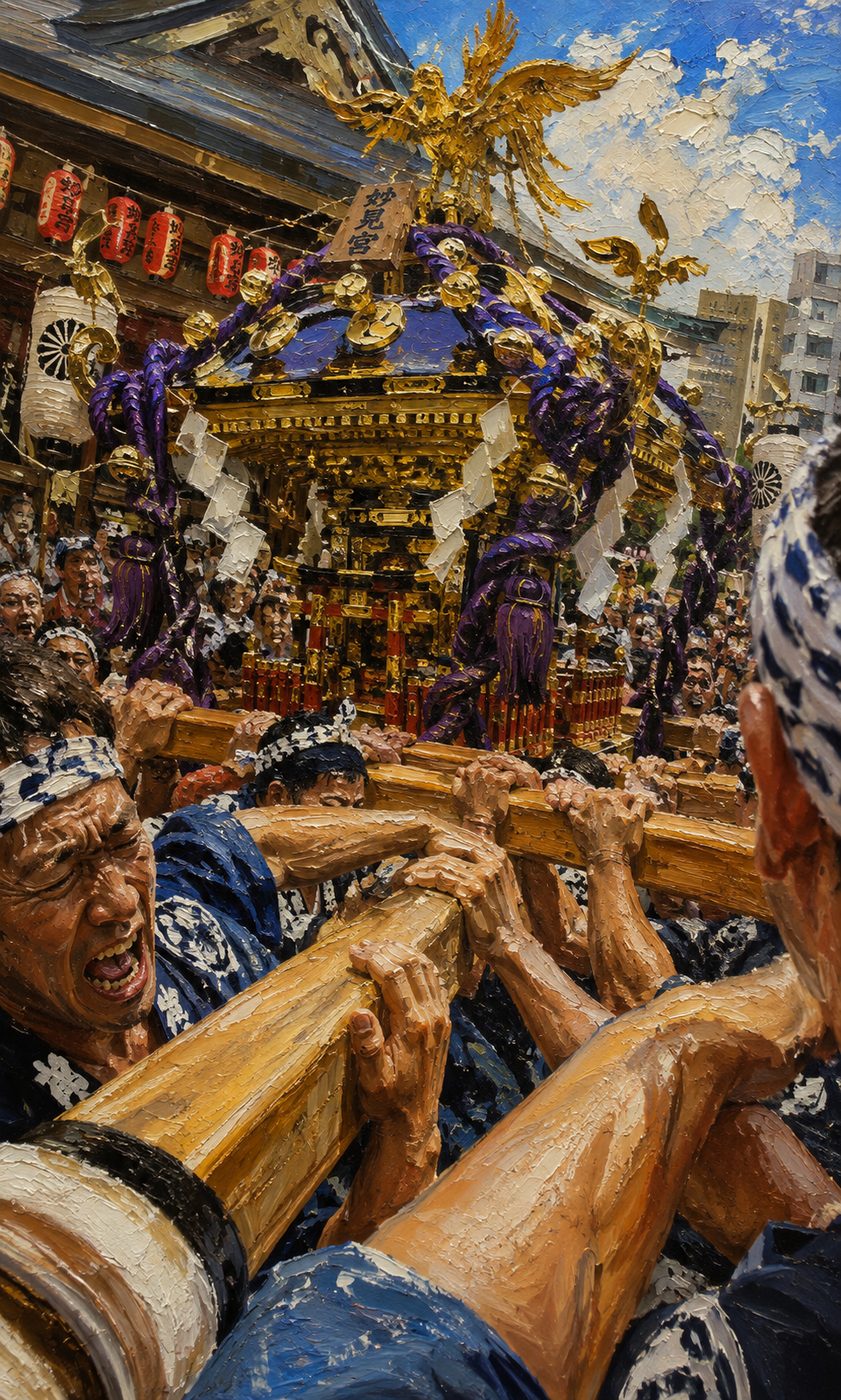
Flight of the Golden Phoenix
Critique
Introduction This daylight procession pushes an ornate portable shrine toward the viewer through a dense lattice of shoulders, arms, and wooden beams. The golden phoenix and purple cords remain visible above, but the extreme proximity makes shared weight the central visual fact. Description Several thick beams intersect across the lower half, gripped by overlapping wet hands. Men in blue-and-white coats press shoulders and forearms beneath them; a shouting face appears at left and the back of a head frames the right. The shrine rises behind in gold, black, blue, and red, wrapped with heavy violet ropes, white paper streamers, bells, and sculpted emblems. A winged gold figure crowns it against blue sky, clouds, tiled eaves, lanterns, and modern buildings. Analysis The crossing beams create a compressed perspective grid that drives attention upward into the shrine. Repeated hands measure both scale and cooperative force. Warm wood and skin occupy the foreground, while purple cords circle the cooler blue roof and gold fittings. Thick directional paint follows grain, muscle, and twisted fiber. Clear daylight produces hard highlights, distinguishing this exertion from a nocturnal lantern spectacle. Interpretation and Evaluation The shrine’s elaborate symbolism depends visibly on ordinary bodies beneath it. Faces, hands, and shoulders differ, yet their pressure converges on the same structure. The crowned bird suggests elevation, while the crowded beams insist on gravity. Dramatic cropping, convincing anatomy, and precise material contrasts make the tension legible without losing decorative richness. Conclusion At first the gold ornament attracts attention, but the work gradually reveals itself as a study of coordinated support. Its achievement lies in making splendor and burden inseparable within a single, forcefully compressed space.
Same Subcategory
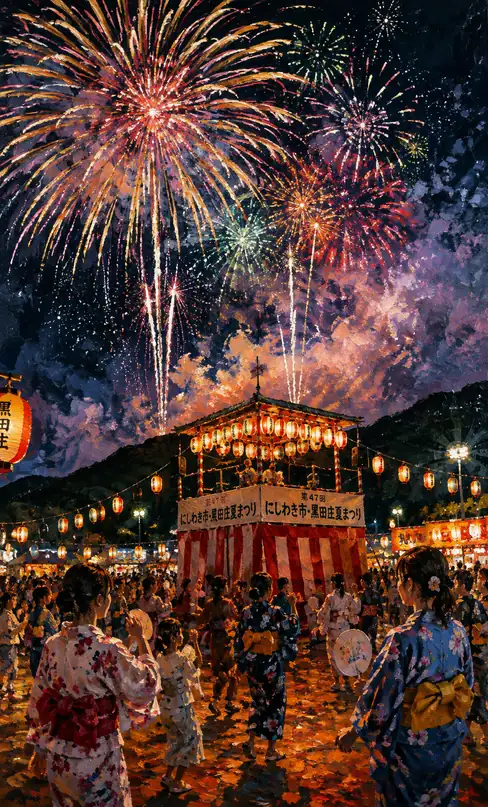 Echoes of Hometown Summer Beats
 Treasures of Laughter and Sweet Moments
Similar Artworks
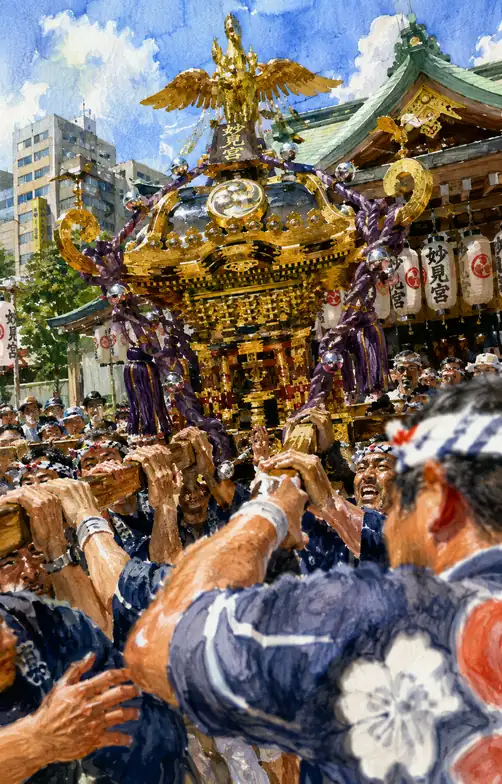 Spirit Unbound Beneath the Blue Sky
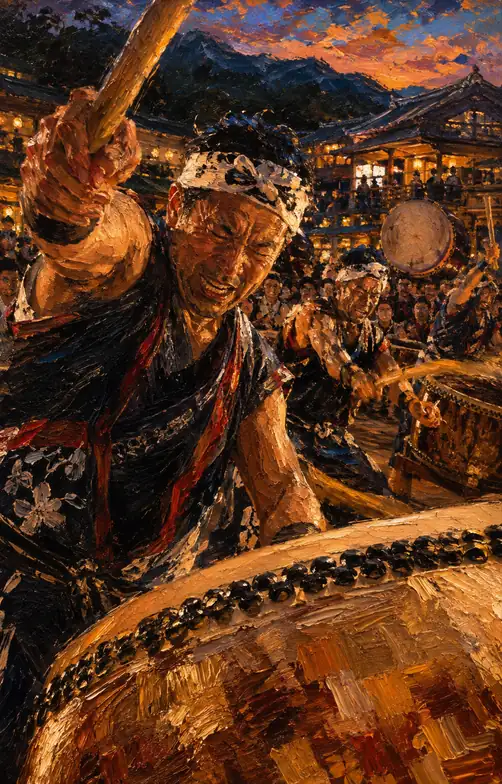 Sacred Rhythm Under Crimson Skies
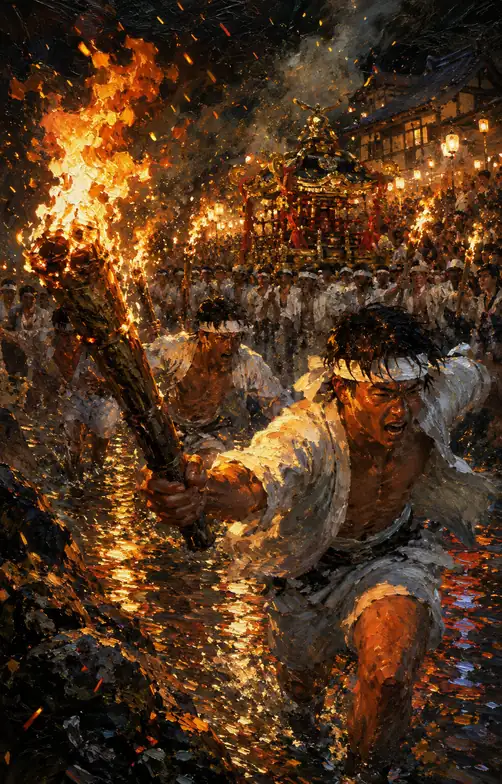 Path of Flames, Spirits Unbound
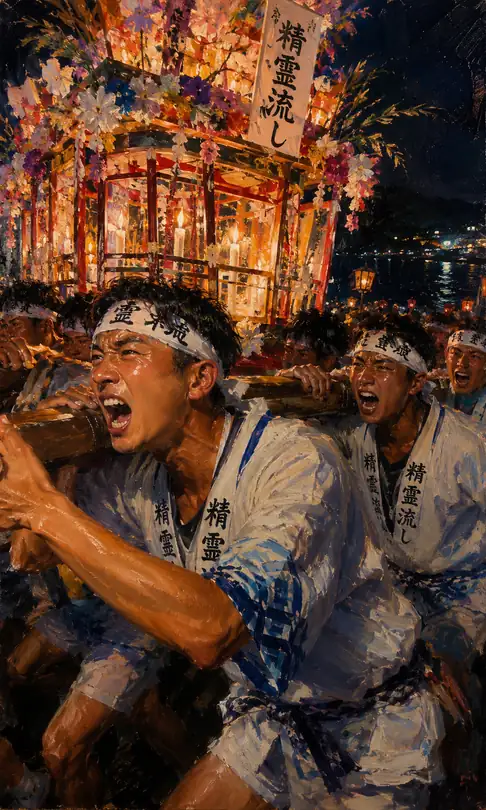 Journey of Souls Amidst Crackling Lights
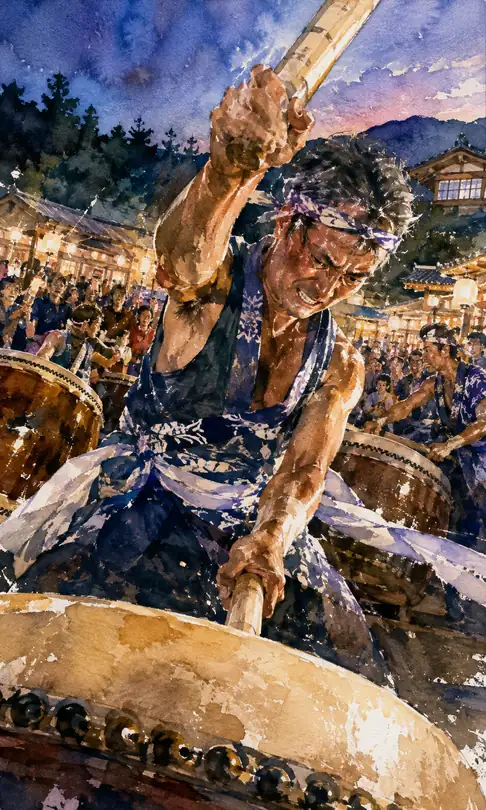 Echoes of the Earth, Resonating into the Night
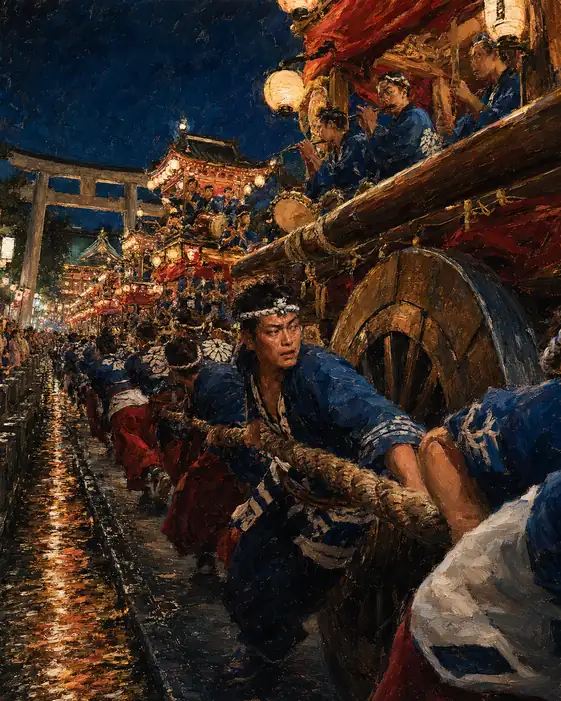 Might of the Historic Wheels
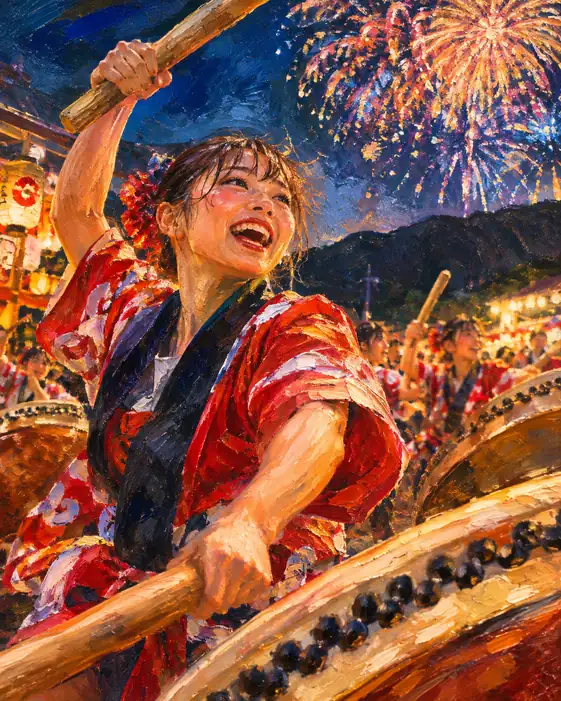 Passionate Beats and Sky Blossoms
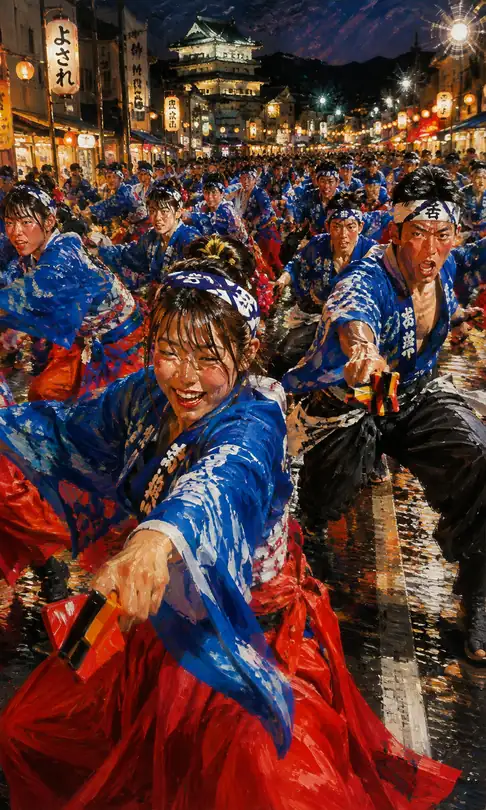 Dancing Footsteps Before the Castle
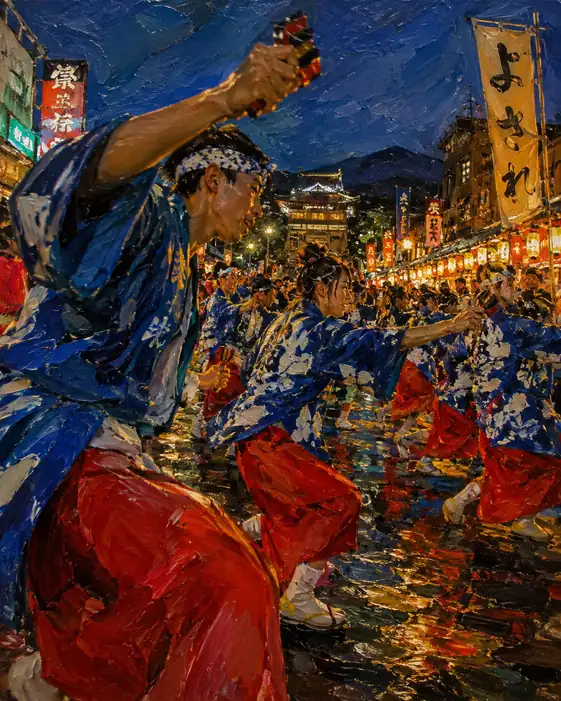 Resonating Naruko, Dance of Pure Joy
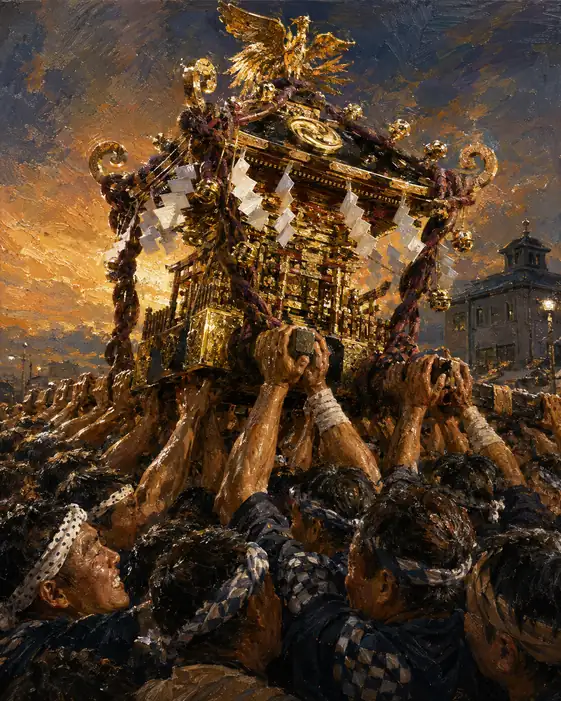 Flash of Sacred Shoulders in Dusk (No. 15)