
Celestial Canvas of Tomorrow
Critique
Introduction This waterfront view contrasts two radically different aerial forms: a fiery orange burst at left and a cool geometric spiral of points at right. Spectators seen from behind occupy the shore, giving human scale to a sky and sea saturated with coordinated light. Description An immense red-gold firework expands beyond the upper left edge, its bright trail descending toward multiple launch fans along the horizon. At upper right, blue, violet, pink, and green points form nested rotating polygons. Smaller colored bursts rise from the waterline. The sea reflects orange, magenta, and blue bands. A group sits behind a rope barrier, while a dark tent edge and standing figure frame the left. Analysis The composition balances organic radiating strokes against precise concentric geometry. Their unequal positions keep the sky dynamic rather than symmetrical. A bright diagonal trail links the largest burst to the central launch point, while horizontal reflections stabilize the lower field. Thick, flame-like marks energize warm explosions; discrete dots articulate the cool spiral. Dark silhouettes and mountain contours prevent the saturated colors from losing spatial depth. Interpretation and Evaluation The paired forms invite comparison between natural-seeming eruption and designed technological order. Viewers’ turned heads and raised devices make wonder a shared, contemporary act. The modest barrier preserves the real distance between audience and display. Inventive juxtaposition, confident complementary color, and differentiated brushwork give the image both spectacle and formal intelligence. Conclusion At first the orange explosion seems dominant, yet the quieter blue spiral gradually claims equal attention through pattern and persistence. The painting transforms a fireworks show into a study of contrasting visual languages, held together by water, horizon, and collective spectatorship.
Same Subcategory
 Might of the Historic Wheels
 Harbor Lights Guiding Dreams
Similar Artworks
 Dreams of Goldfish Lights on the Lake
 Sparkling Night Welcomed on the River Deck
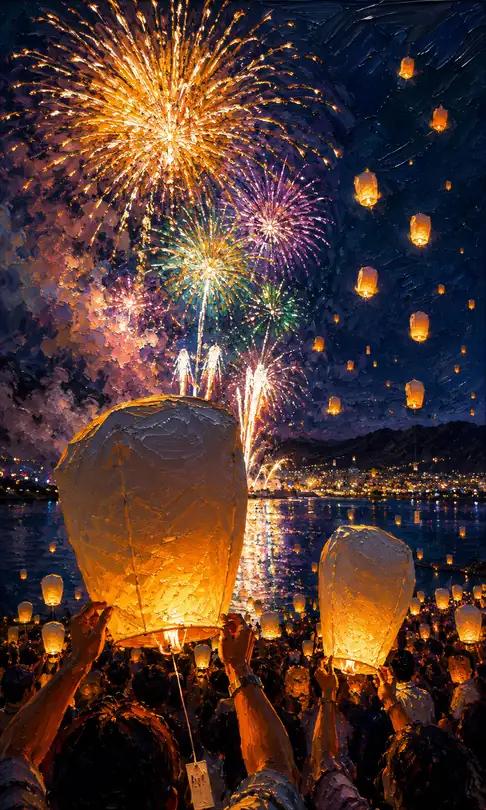 Warmth Held Close, Soaring to the Stars
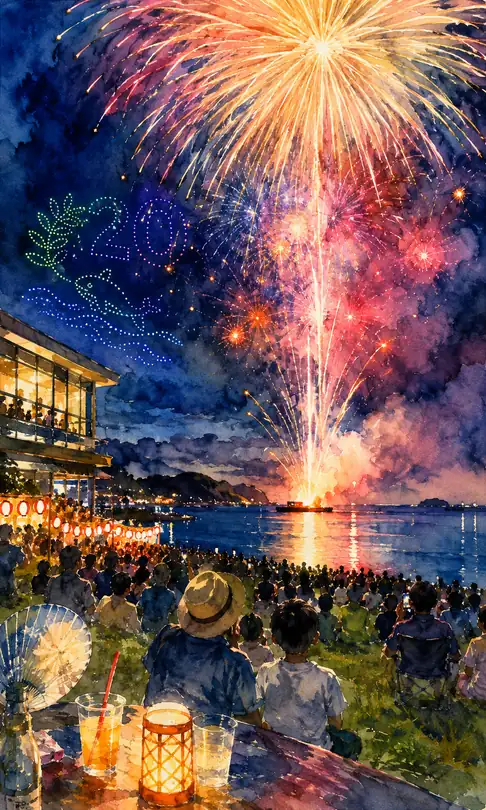 Luminous Dolphins Swimming in Night Waves
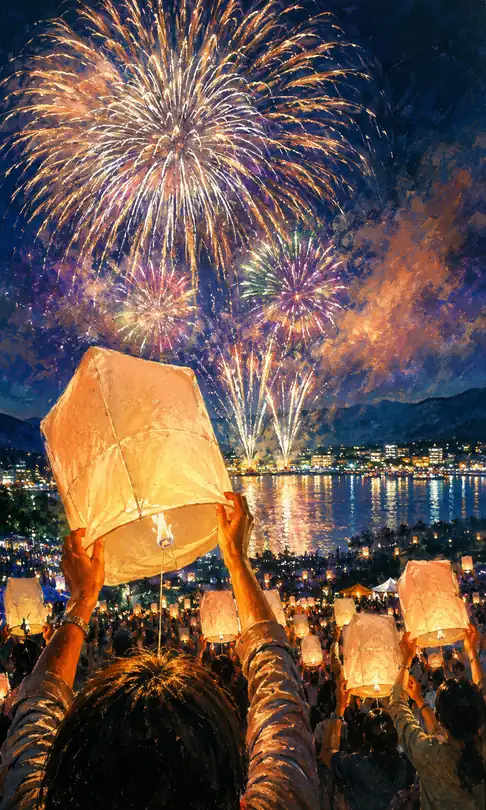 Releasing Infinite Wishes to the Sky
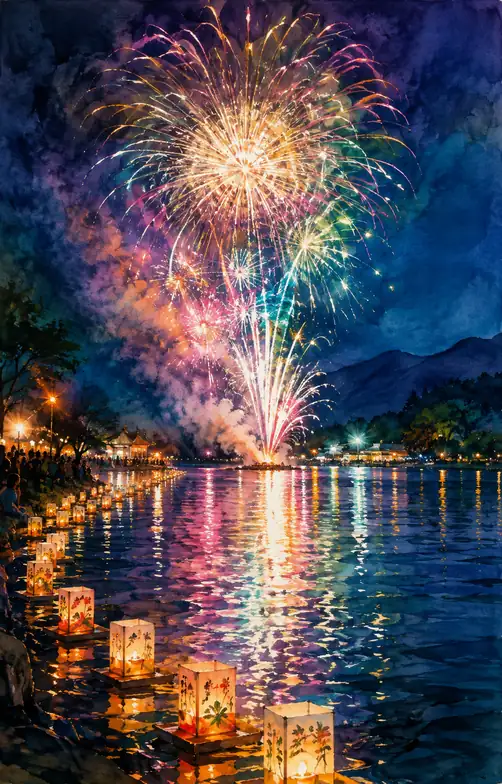 A Thousand Lanterns Drift Home Across a Sea of Fireworks
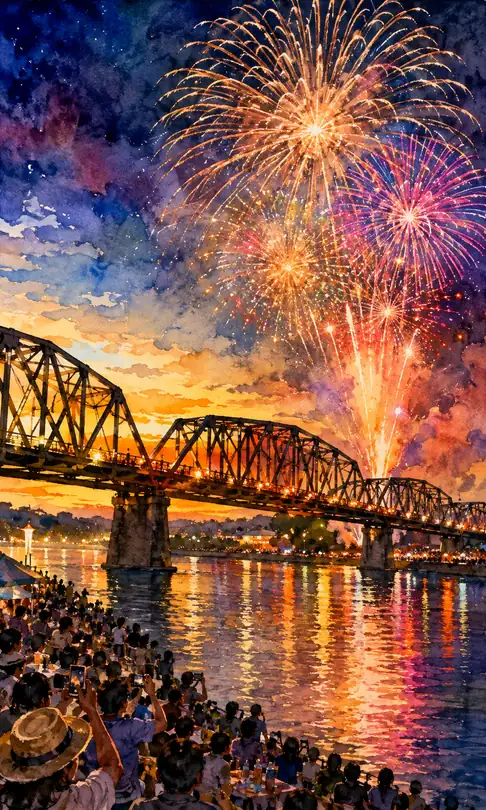 Grand River Reflection and Iron Bridge Silhouette
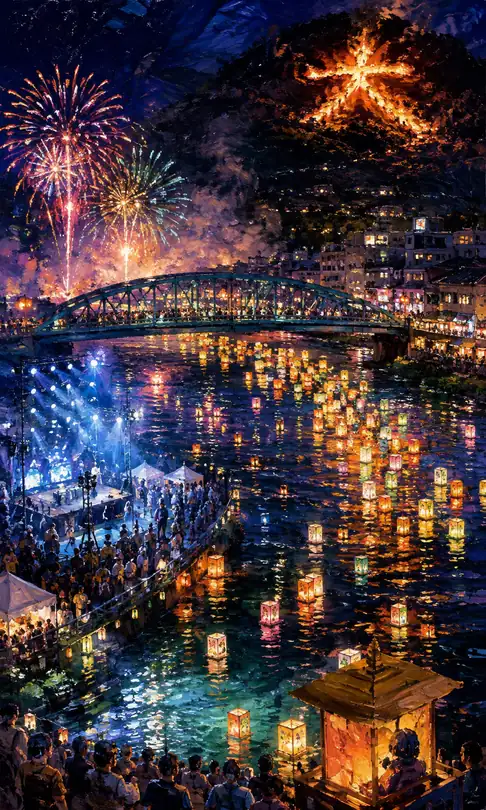 Flames on the Crest, Lights on the Bay
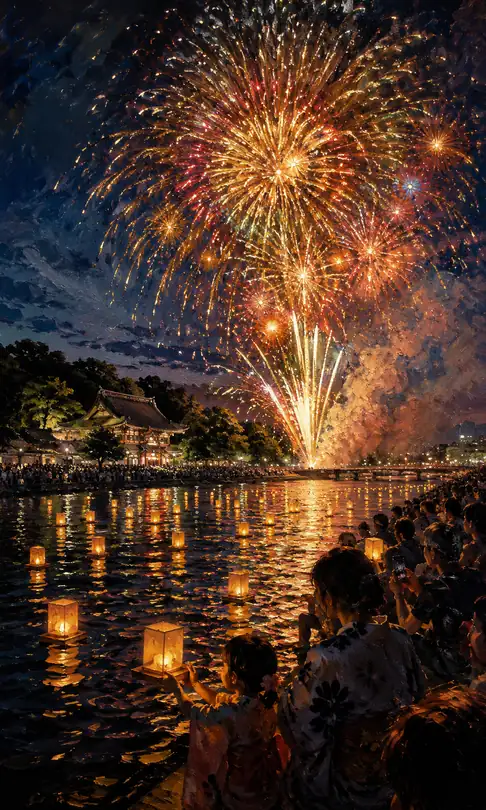 Thousand Prayers Floating on Golden Waters
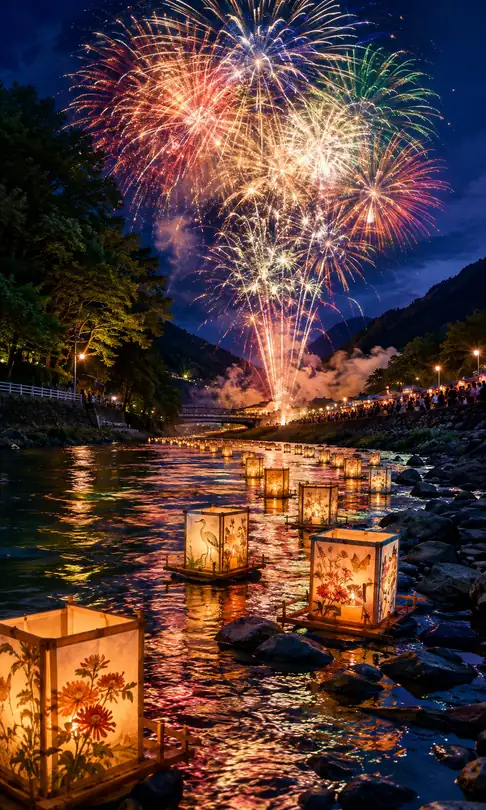 Clear Stream Lanterns and Sky Splendor