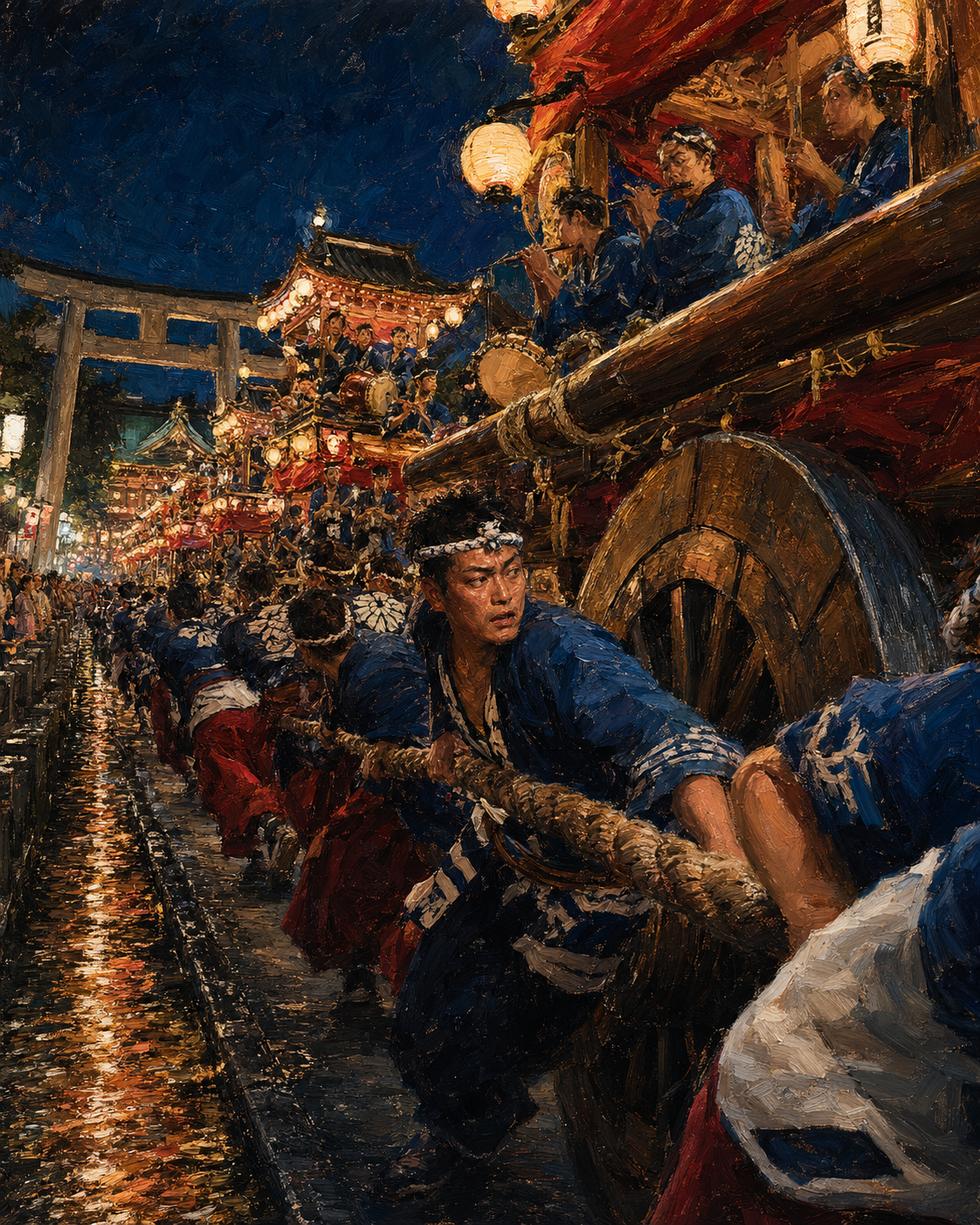
Might of the Historic Wheels
Critique
Introduction This night procession focuses on a man hauling a heavy wheeled float through a rain-darkened street. A massive timber beam and wooden wheel crowd the right foreground, while musicians above and a long sequence of floats behind establish the scale of coordinated labor. Description The principal puller braces low at center, both hands wrapped around a thick rope and his face turned toward the wheel. He wears a dark blue coat, patterned sleeves, and a white headband. Other workers lean in a chain behind him. The float’s huge spoke wheel rises beside his shoulder; lashed beams extend overhead to seated flute and drum players. Lantern-covered platforms repeat toward a distant gate along the left. Analysis Rope, bodies, and roadway converge sharply into depth, while the foreground beam thrusts in the opposite direction. The wheel’s circular mass stabilizes these diagonals and makes the load physically legible. Amber lanterns reflect in a narrow wet gutter, contrasting with deep blue clothing and sky. Dense impasto describes timber grain and soaked fabric; finer lights separate the receding floats and spectators. Interpretation and Evaluation The image gives equal dignity to visible performance and concealed mechanics. Musicians maintain ceremony above, but the puller’s twisted torso, fixed gaze, and taut rope reveal what allows the spectacle to move. The modern street and gate remain part of the event rather than decorative scenery. Strong perspective, convincing weight, and varied material description demonstrate exceptional observational and compositional control. Conclusion At first the illuminated floats seem to define the procession, yet closer viewing transfers attention to rope, wheel, and coordinated bodies. The painting’s achievement is to make effort itself ceremonial, joining music, engineering, and collective timing in one forceful passage.
Same Subcategory
 Celestial Canvas of Tomorrow
Similar Artworks
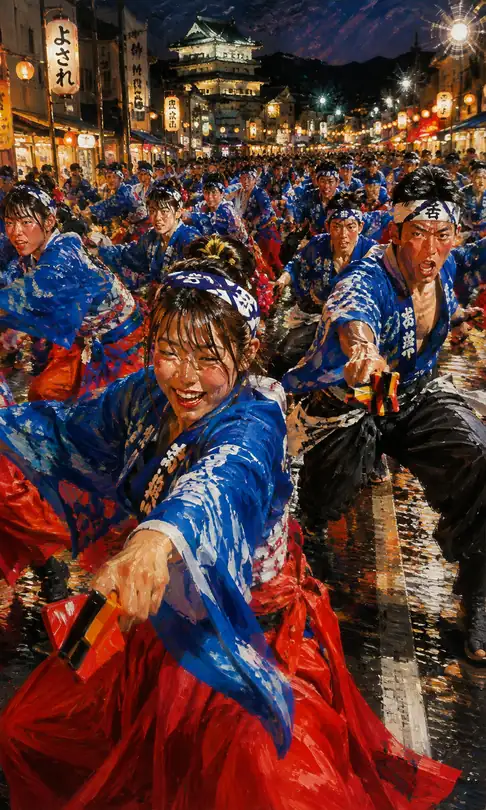 Dancing Footsteps Before the Castle
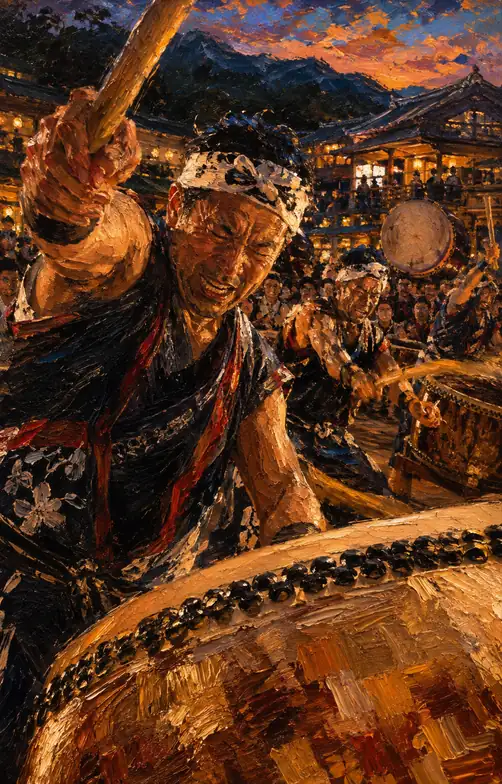 Sacred Rhythm Under Crimson Skies
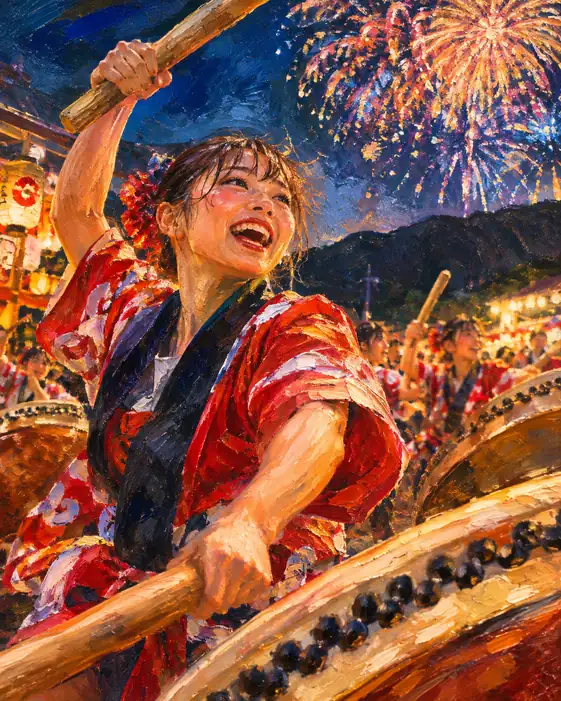 Passionate Beats and Sky Blossoms
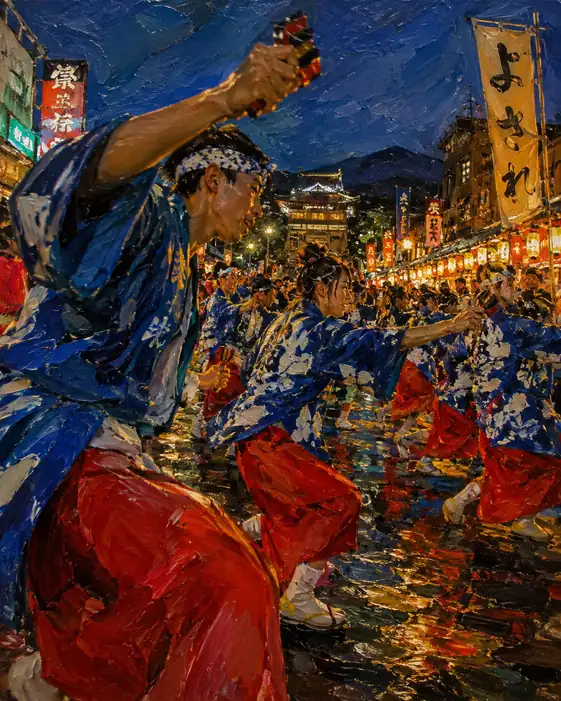 Resonating Naruko, Dance of Pure Joy
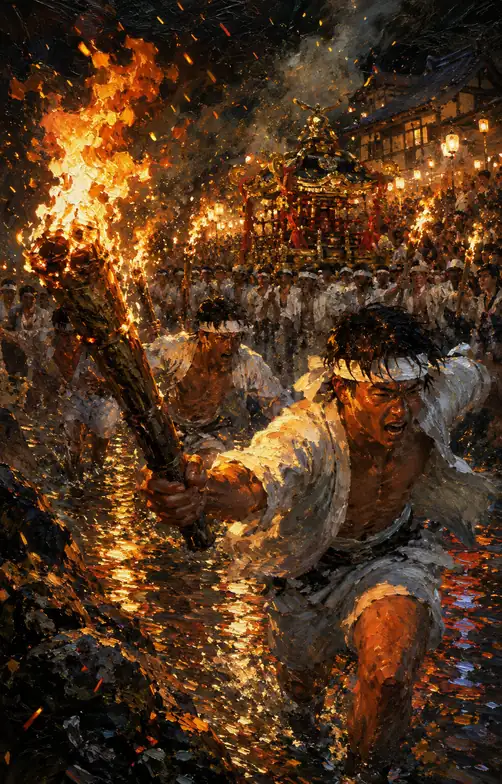 Path of Flames, Spirits Unbound
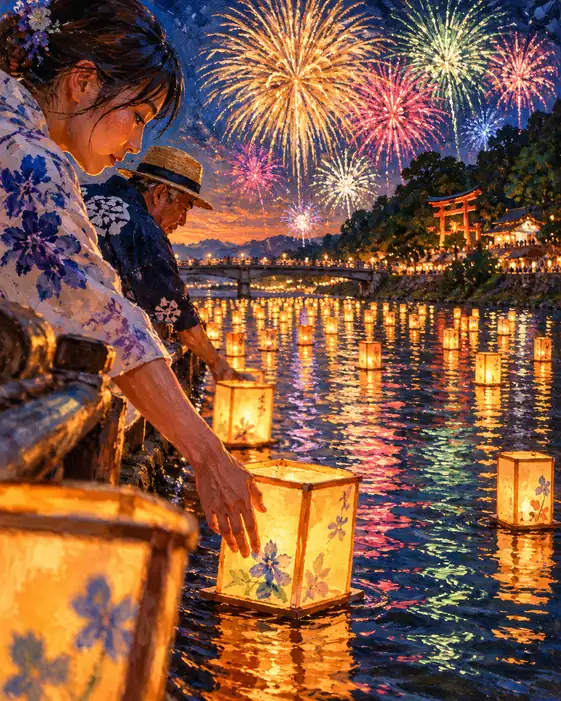 Whispering Prayers Reflected on Night Waters
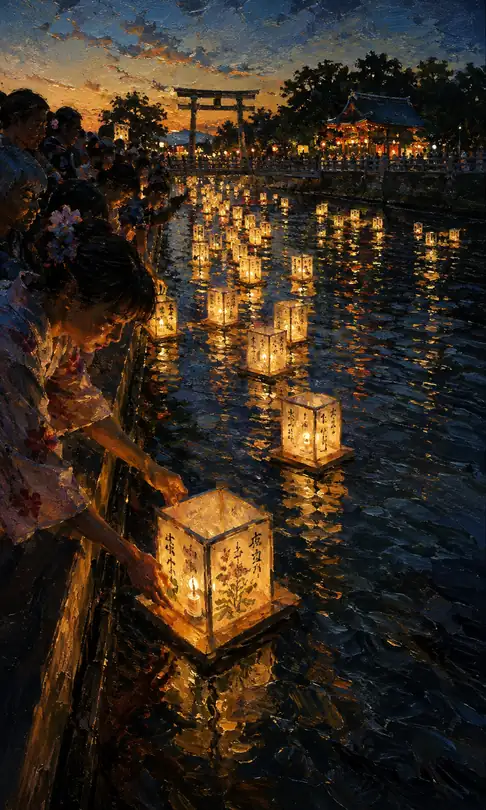 Silent Prayers Floating Past the Sacred Gate
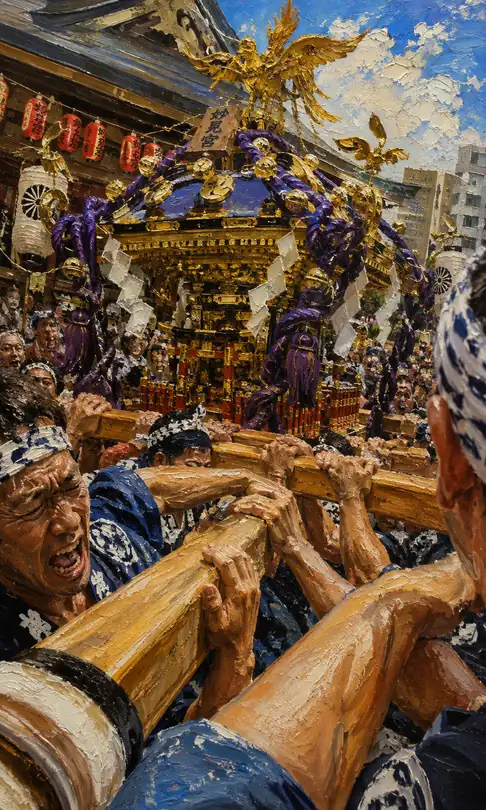 Flight of the Golden Phoenix
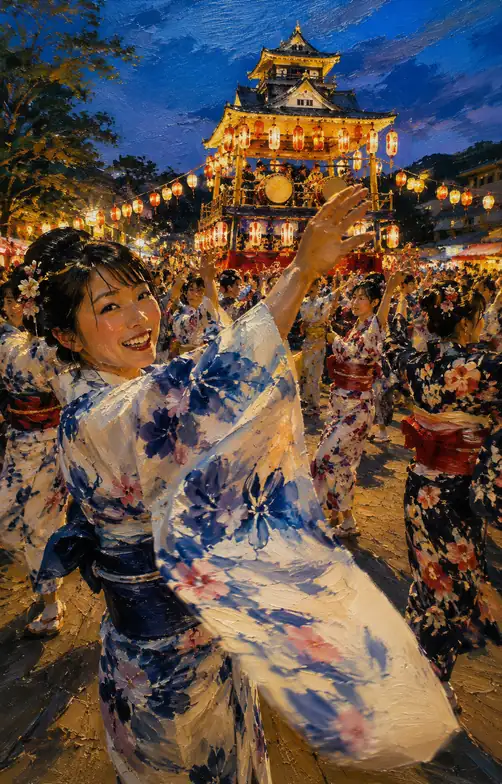 Evening Blooms of the Castle Town Dance
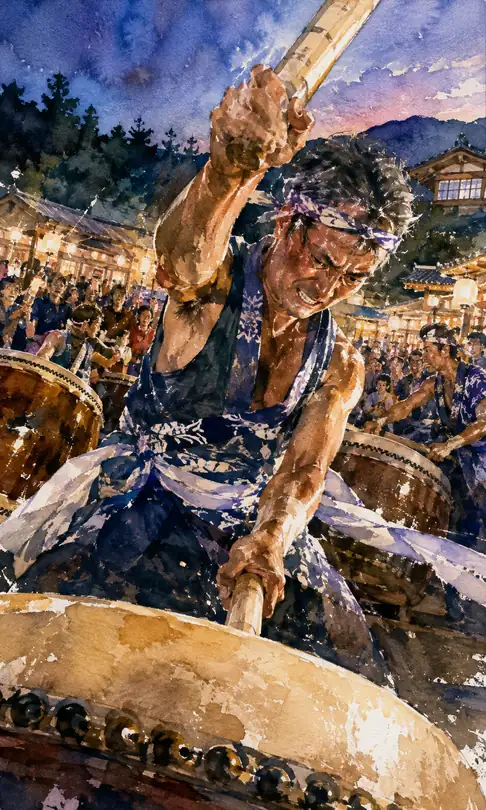 Echoes of the Earth, Resonating into the Night