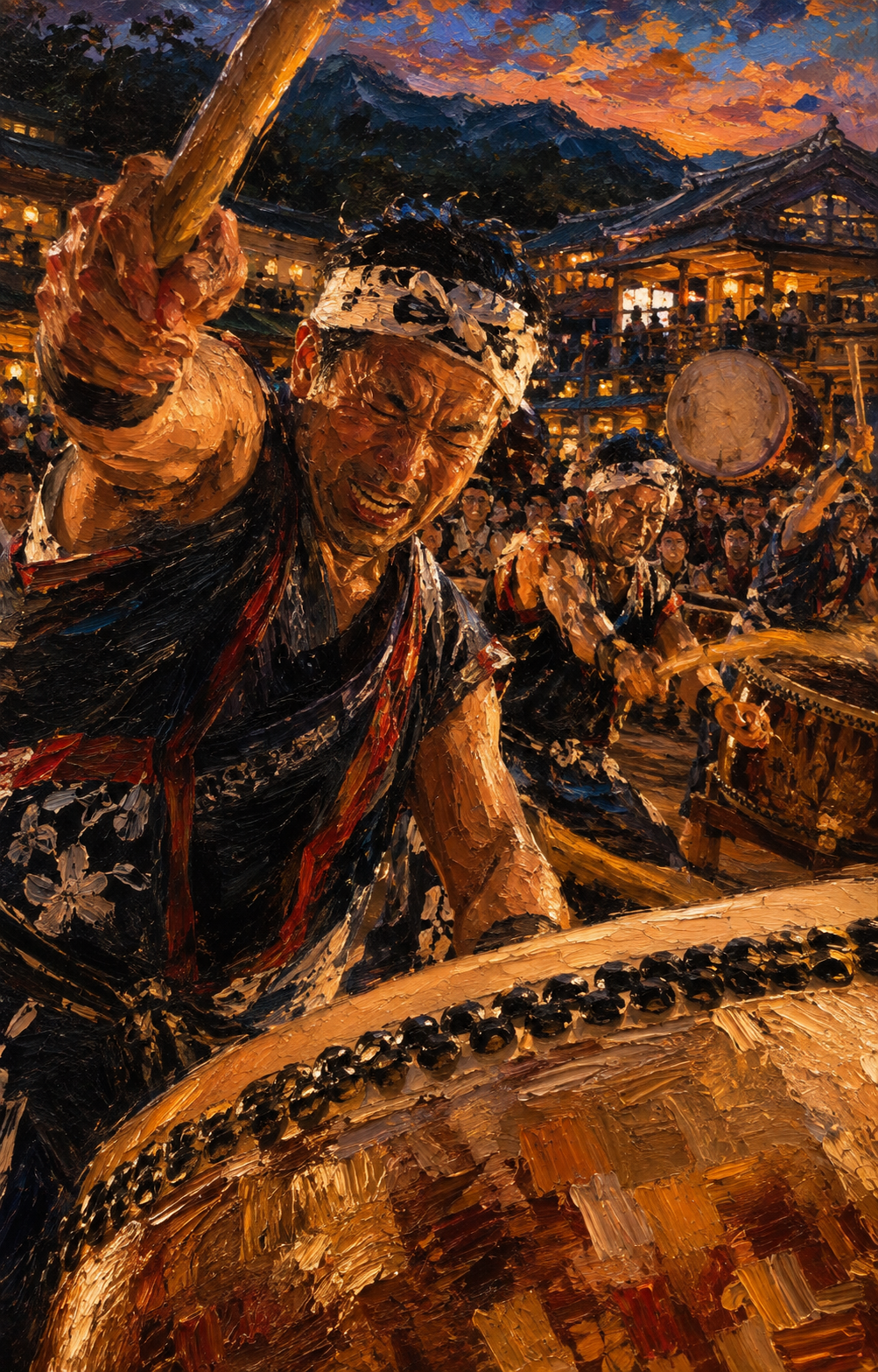
Sacred Rhythm Under Crimson Skies
Critique
Introduction This close view fixes on a drummer leaning over a huge foreground instrument at twilight. His raised stick and downward gaze compress the instant before impact, while another player, spectators, timber buildings, and dark mountains extend the performance into a broader communal setting. Description The principal man wears a black sleeveless robe edged with red and a white patterned headband. One enlarged hand grips a stick near the upper left; his other arm reaches toward the drum that curves across the bottom. A second drummer bends over a smaller instrument at right, and a circular drum stands behind. Warmly lit galleries crowd with onlookers beneath an orange-violet horizon. Analysis The foreground drum forms a broad arc that opposes the angular descent of stick, face, and arm. The main figure’s body creates a dark triangular mass against lit architecture. Amber strokes model skin, wood, and windows, while black-blue fabric and mountains deepen the scene. Thick directional marks follow the grain of the drum and the muscles of the arm; smaller points of light articulate the distant audience. Interpretation and Evaluation The downward gaze conveys concentration rather than display. Although the extreme viewpoint magnifies one player, the responding drummer and packed balconies make the beat socially shared. Sunset above the mountain adds a measured calm to the strenuous foreground. Strong cropping, coherent tonal design, and tactile paint handling give the image both immediacy and structural stability. Conclusion At first the enlarged hand and drum suggest raw force, but closer viewing reveals a carefully balanced relation between effort, response, architecture, and landscape. The painting turns one impending strike into a convincing image of rhythm sustained by an entire place.
Same Subcategory
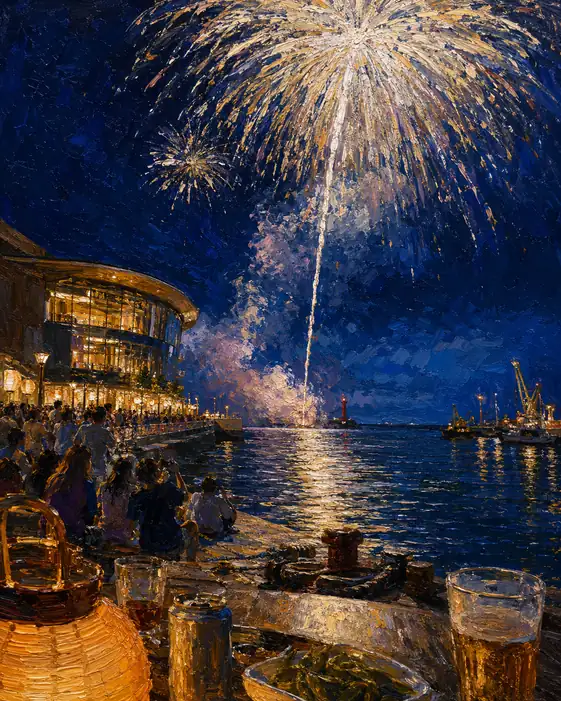 Toasting under the Fireworks-Lit Tide
Similar Artworks
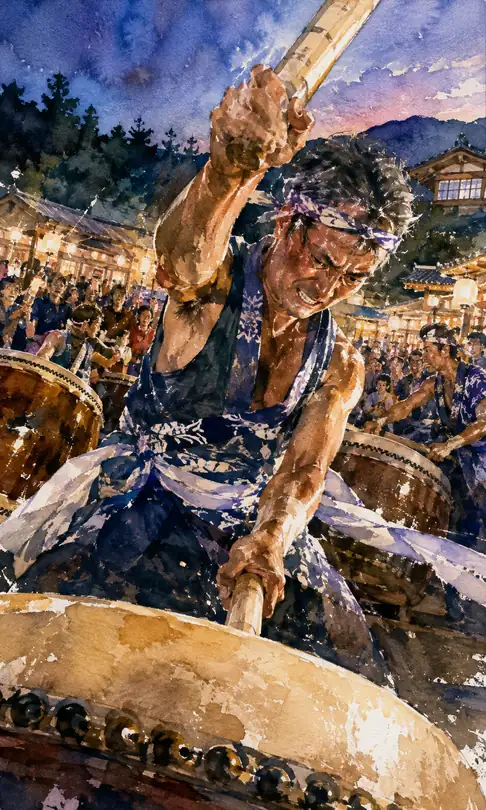 Echoes of the Earth, Resonating into the Night
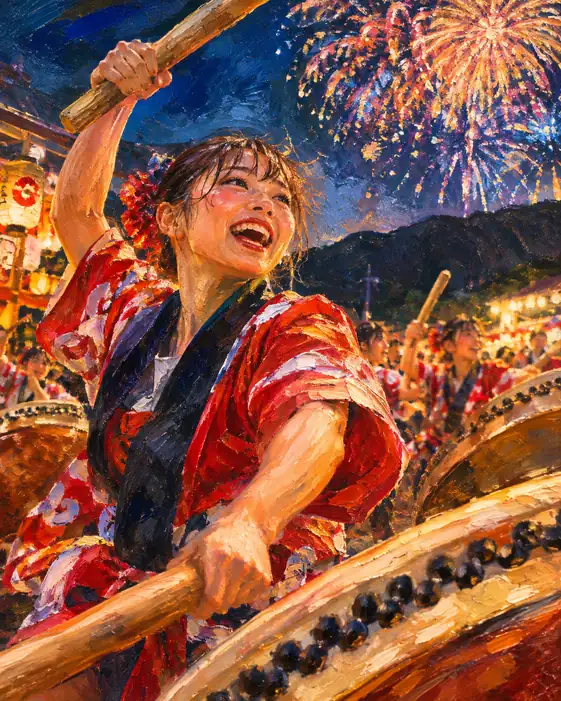 Passionate Beats and Sky Blossoms
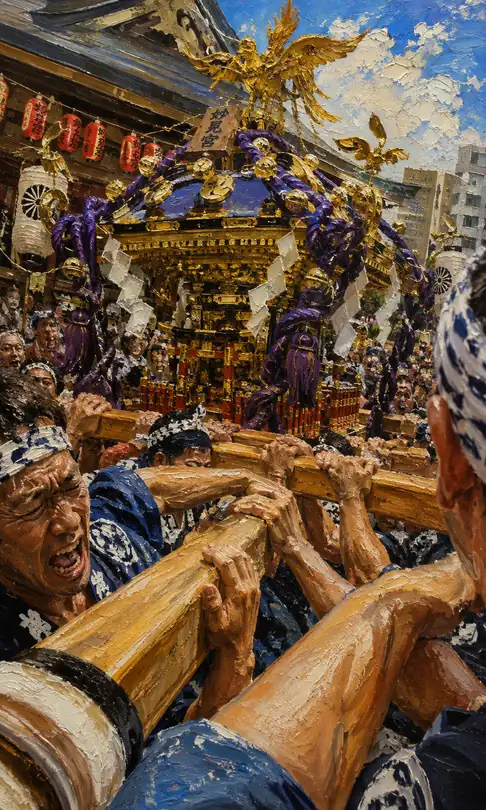 Flight of the Golden Phoenix
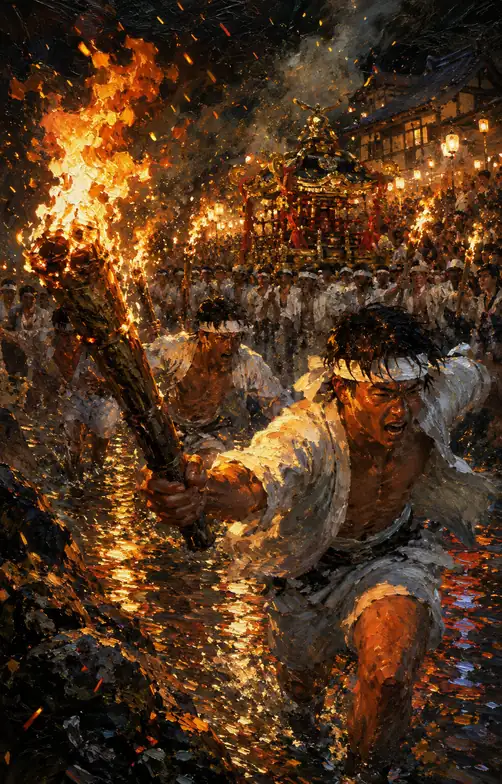 Path of Flames, Spirits Unbound
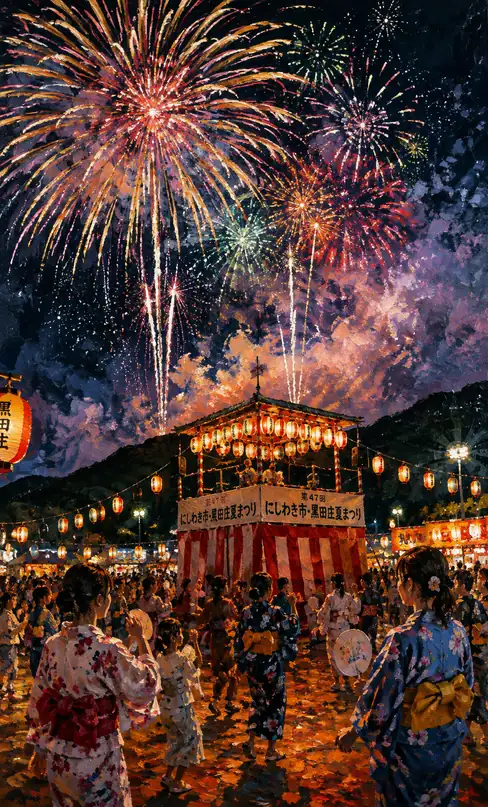 Echoes of Hometown Summer Beats
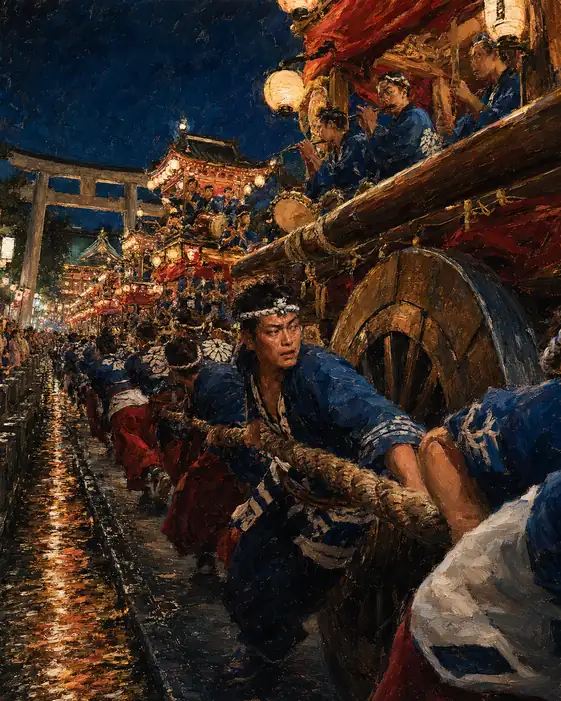 Might of the Historic Wheels
 Resonating Naruko, Dance of Pure Joy
 Whispering Evening Breezes, Dancing Dreams
 Rhythmic Wooden Clogs Echoing Through the Night
 Hands Raised in Festive Jubilation