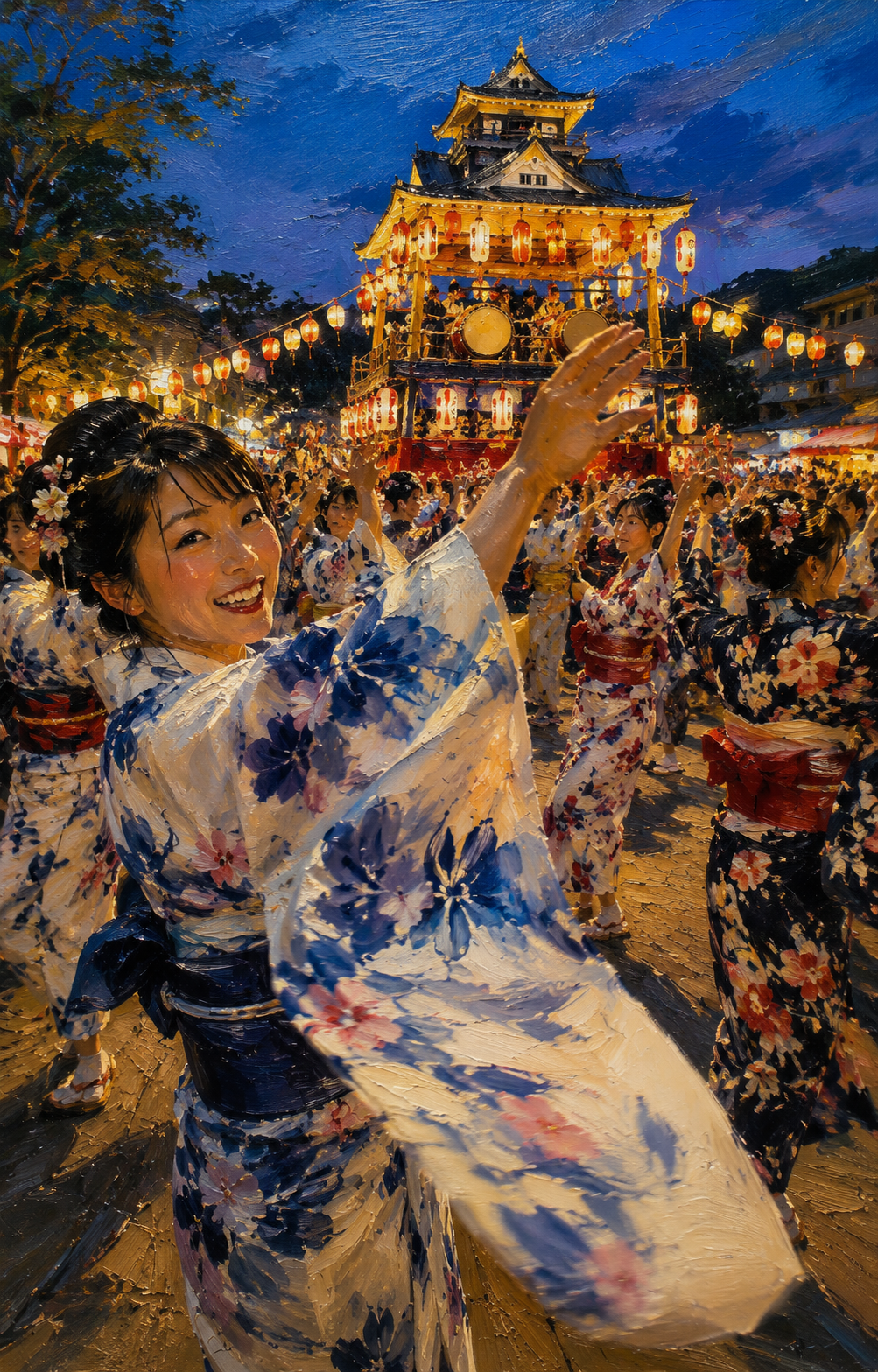
Evening Blooms of the Castle Town Dance
Critique
Introduction This festival image brings a smiling dancer close to the viewer while aligning her raised arms with an illuminated castle and drum tower. The intimate portrait and monumental backdrop occupy the same axis, making personal delight the entry point into a large communal dance. Description The young woman turns toward the viewer at lower left, wearing a white yukata covered with blue and pink flowers and a dark blue obi. One sleeve billows across the lower right; both hands rise toward the central platform. Behind her, women in varied floral robes circle beneath red-and-white lanterns. Two drums and musicians stand on the tower, which visually merges with the roofed castle above. Analysis The sweeping sleeve forms a broad diagonal from the body toward the dance, while the hands frame the drums. Strong central symmetry in the architecture is offset by the woman's turning pose and asymmetrical crop. Blue shadows unify sky, roofs, and fabric; amber illumination models faces and the packed earth. Thick, ridged strokes make the foreground cloth tactile, while smaller broken marks animate the distant crowd and lantern strings. Interpretation and Evaluation The dancer's direct smile transforms the viewer from observer into implied partner. Her enlarged scale does not isolate her, because her gesture points back to musicians and circling participants. The fusion of tower and castle gives tradition an architectural weight, yet vigorous brushwork keeps it alive. Foreshortening, focal clarity, and controlled warm-cool contrast display confident technique. Conclusion At first this seems primarily a joyful portrait, but the aligned hands, drums, lanterns, and roofs reveal a carefully built communal structure. The work succeeds by allowing one open expression to embody the energy of an entire gathering while preserving a convincing sense of place.
Same Subcategory
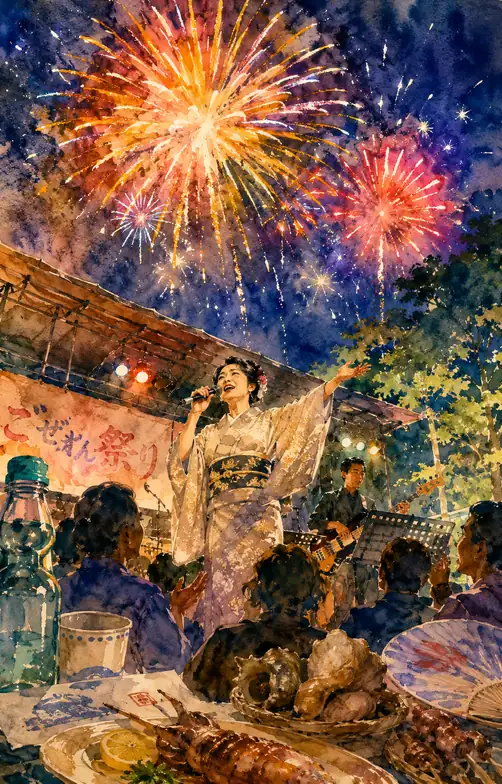 Warmth of Summer Night Festivals
Similar Artworks
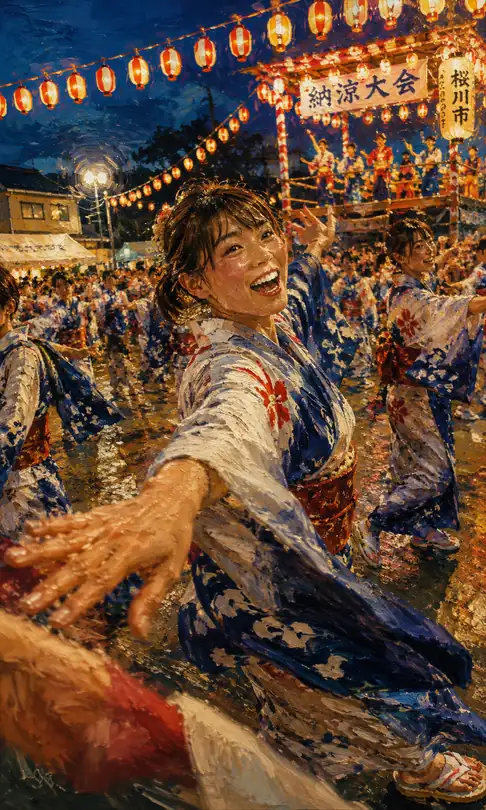 Lantern Lights Binding Eternal Ties
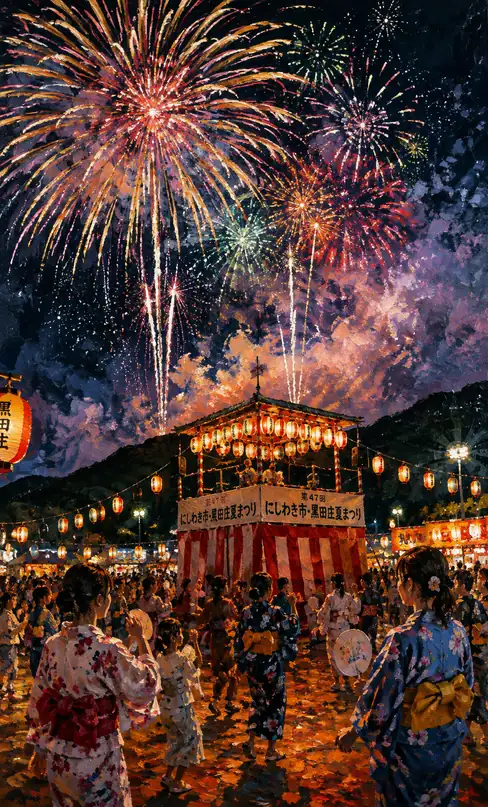 Echoes of Hometown Summer Beats
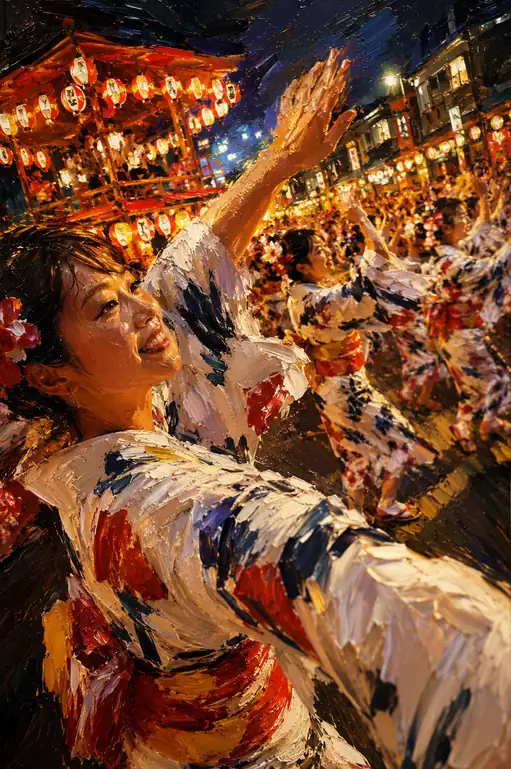 Whispering Evening Breezes, Dancing Dreams
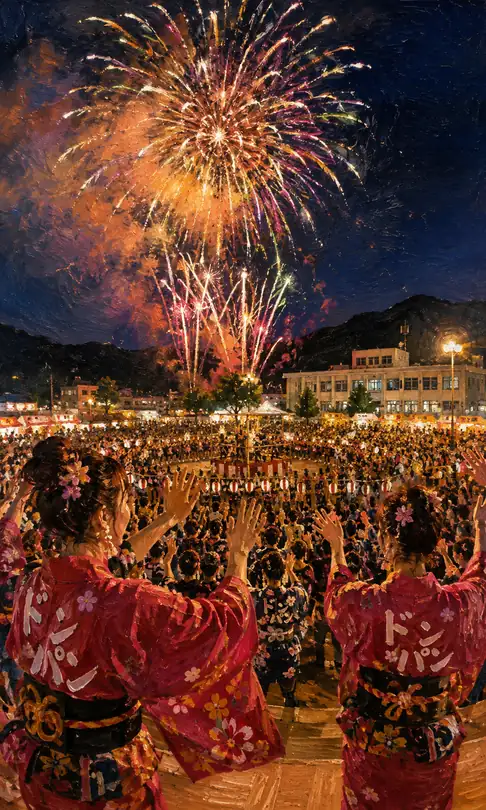 Hands Raised in Festive Jubilation
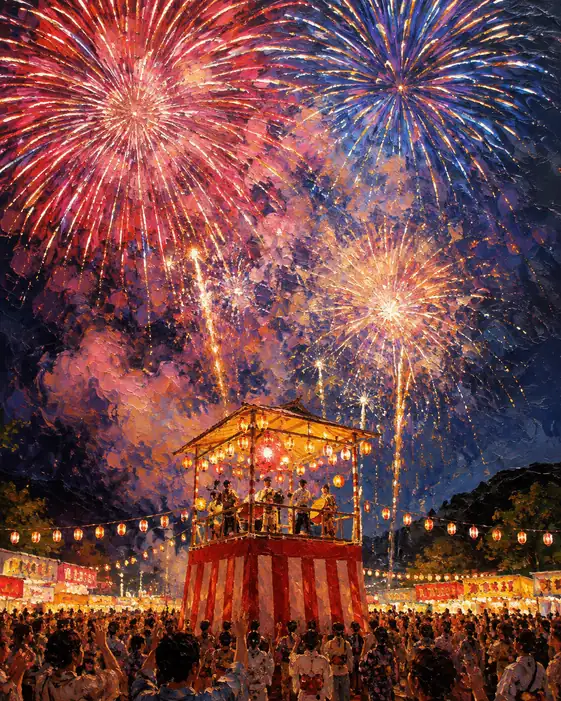 Thunderous Beats and Celestial Blooms
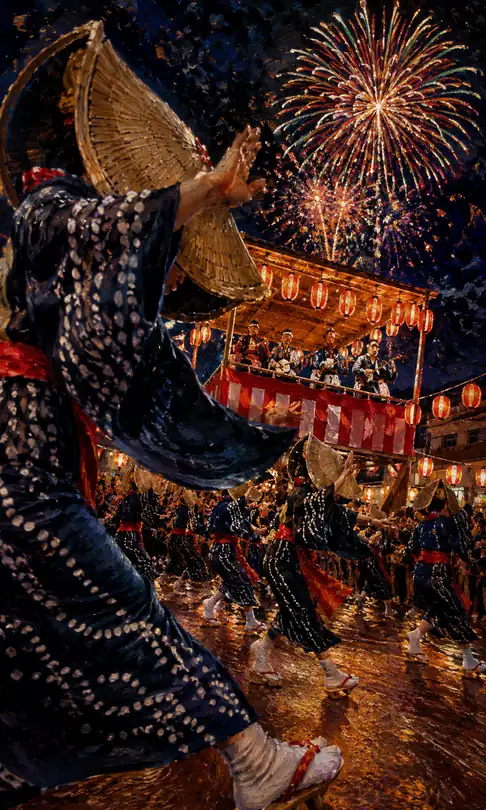 Rhythmic Wooden Clogs Echoing Through the Night
 Passionate Beats and Sky Blossoms
 Warmth of Bamboo Illumination and Sky Blooms
 Dancing Footsteps Before the Castle
 Resonating Naruko, Dance of Pure Joy