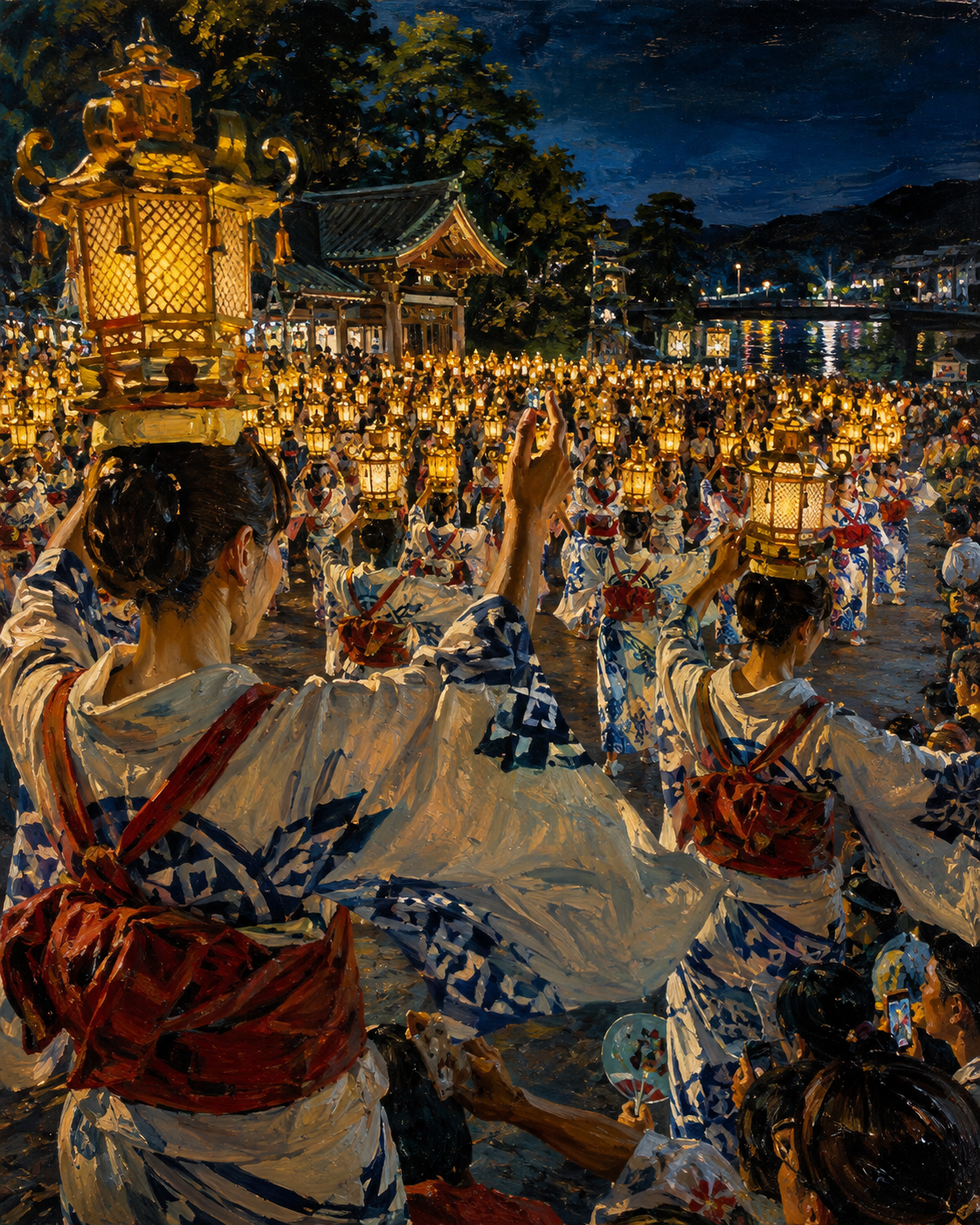
A Thousand Waves of Light Dancing Before the Night Shrine Bearing Golden Lanterns
Critique
Introduction This nocturnal festival scene looks over the shoulders of two dancers toward an immense gathering of lantern bearers beside a shrine and waterway. The elevated breadth of the crowd contrasts with the intimate scale of the foreground gestures, placing the viewer inside the ceremony. Description A woman at left raises both arms beneath a large lantern balanced above her dark hair, while another figure at right extends one sleeve toward the procession. Their white-and-blue robes and deep red sashes fill the lower frame. Hundreds of smaller amber lanterns repeat across the middle ground, with a timber shrine building, trees, a bridge, and wavering reflections visible beyond. Analysis The two foreground bodies form a wide opening through which the eye enters the illuminated crowd. Repeated lanterns create a dense pulse that contracts with distance, while lifted arms echo their vertical supports. Warm golds and reds dominate the people, set against blue-black foliage, sky, and water. Broad strokes model the nearest cloth and skin; smaller, flickering marks dissolve distant faces into communal movement. Strong lantern light catches shoulders and hands, leaving surrounding forms in soft shadow. Interpretation and Evaluation Individual identity yields to coordinated action, yet the close dancers keep the gathering from becoming anonymous spectacle. Their gestures connect the viewer physically to the field of lights, suggesting tradition sustained through repeated bodily participation. The composition handles a large crowd without losing hierarchy, and the warm-cool color structure is especially effective. Varied brushwork also distinguishes fabric, carved architecture, leaves, and reflections while preserving the energy of a single event. Conclusion The first impression of overwhelming illumination develops into an understanding of shared rhythm and continuity. Through scale, repetition, and an immersive viewpoint, the painting turns many separate lanterns and figures into one coherent ceremonial body.
Same Subcategory
Similar Artworks
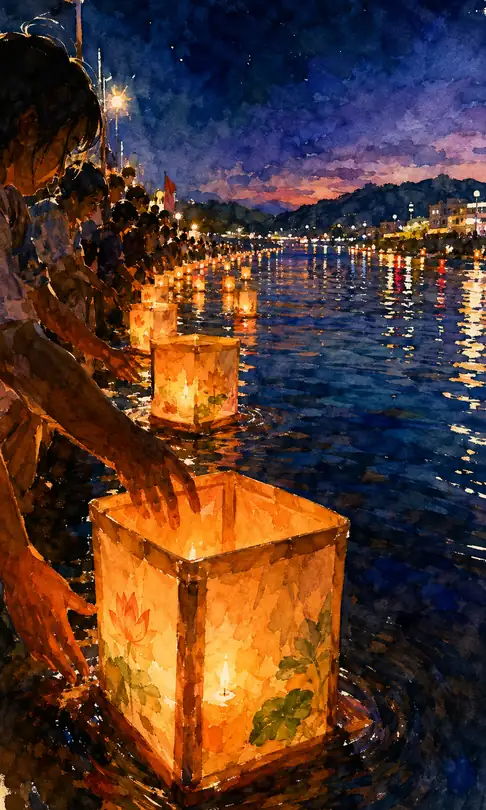 Lotus Lantern of Prayer Entrusted to the Waters and Twilight River Waves
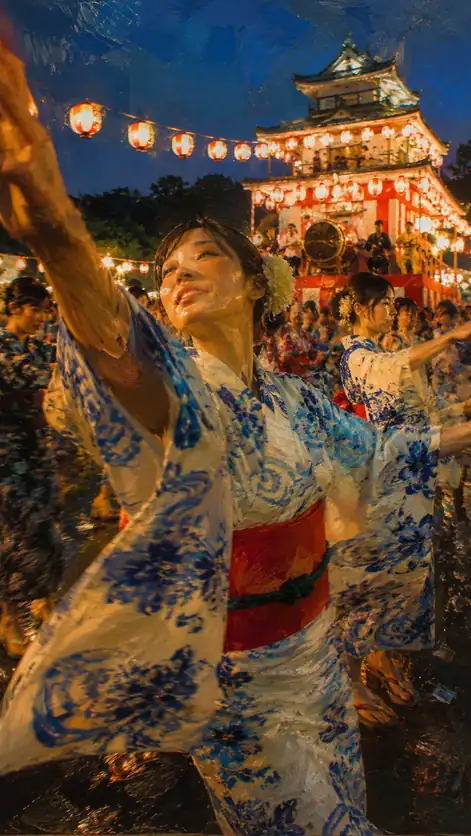 Dancing in Indigo-White Florals Beneath the Lanterns of the Castle Yagura
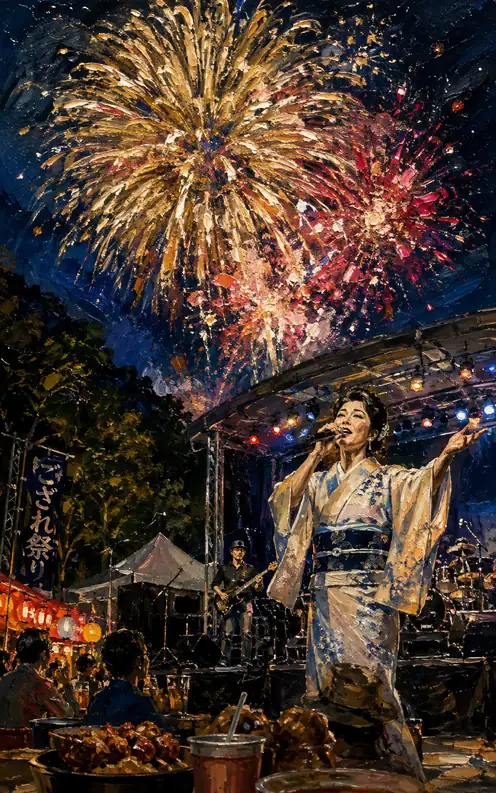 Singing Voice Echoing in the Gozare Festival Night Sky and Golden Blooms
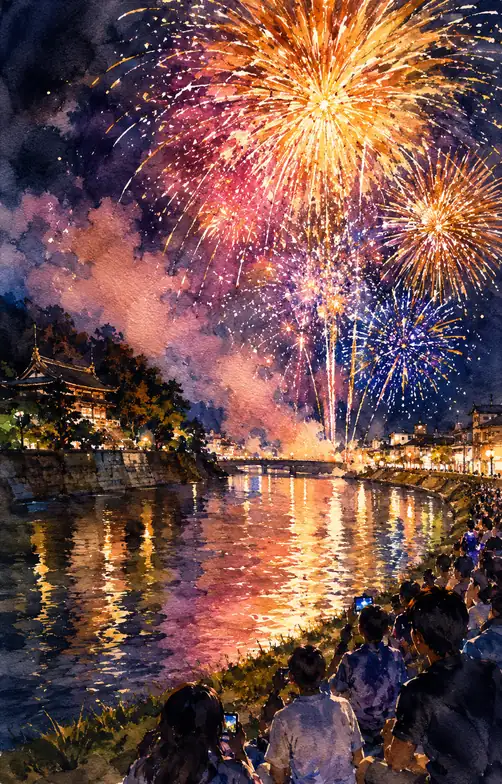 River Waves Illuminating Castle Stone Walls and Great Blooms in the Night Sky
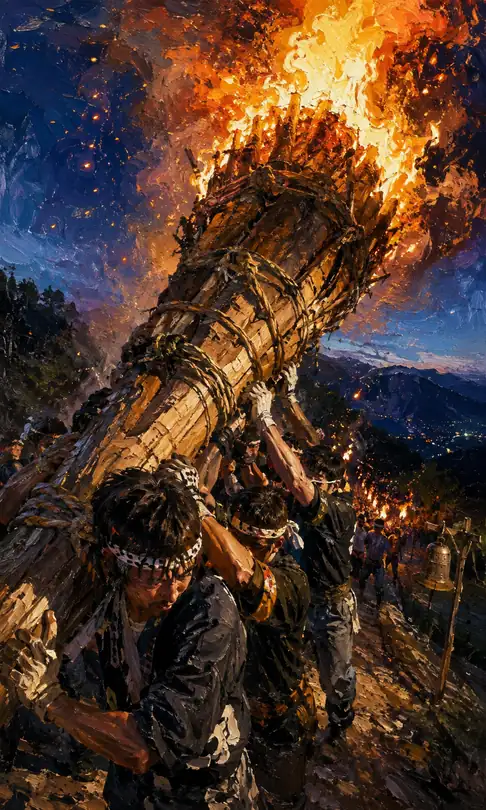 Great Torches Carried Up the Mountain Path and Roaring Flames Scorching the Night Sky
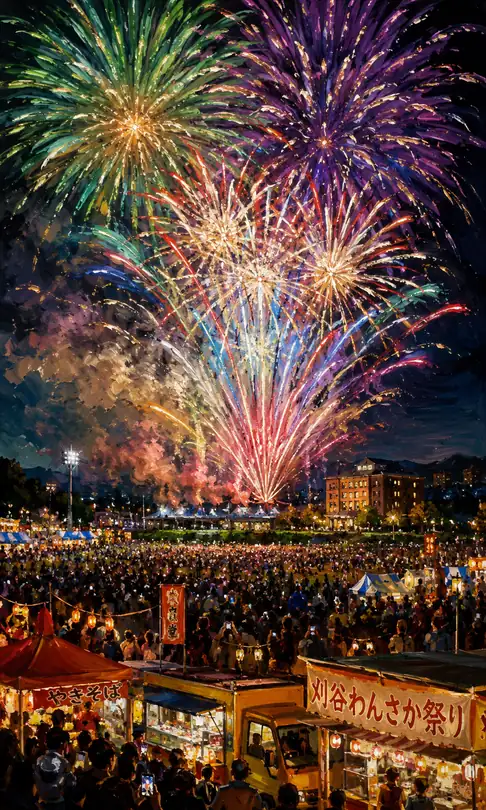 Bustle of Kariya Wansaka and Emerald and Purple Blooms in the Night Sky
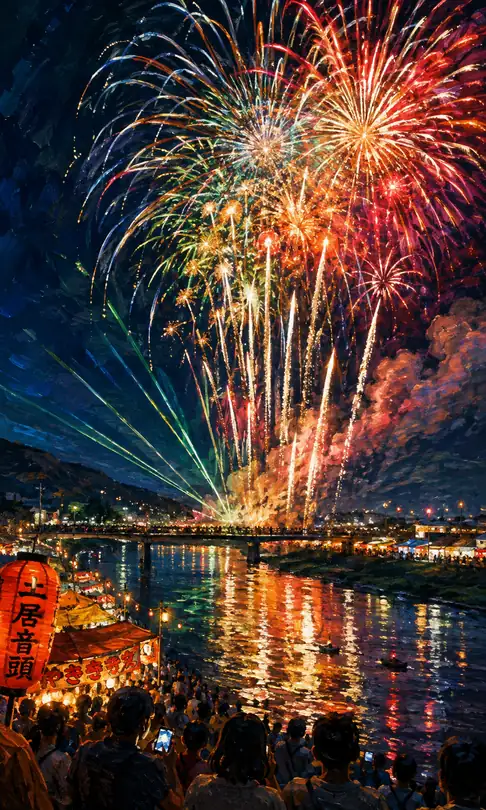 Red Lanterns of Doi Ondo and Blooms of Light Reflecting on the River
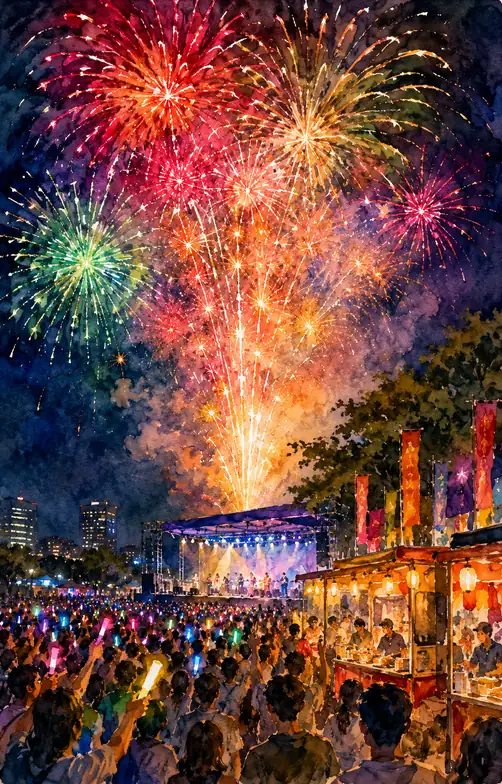 Rays of Light Raised to the Outdoor Stage and Great Blooms in the Night Sky
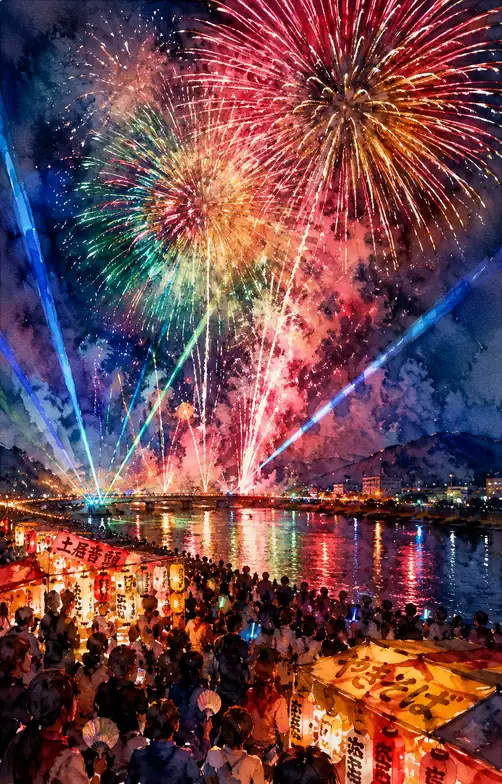 Stall Lights of Doi Ondo and the Great Cascade of Blooms Reflecting on the River
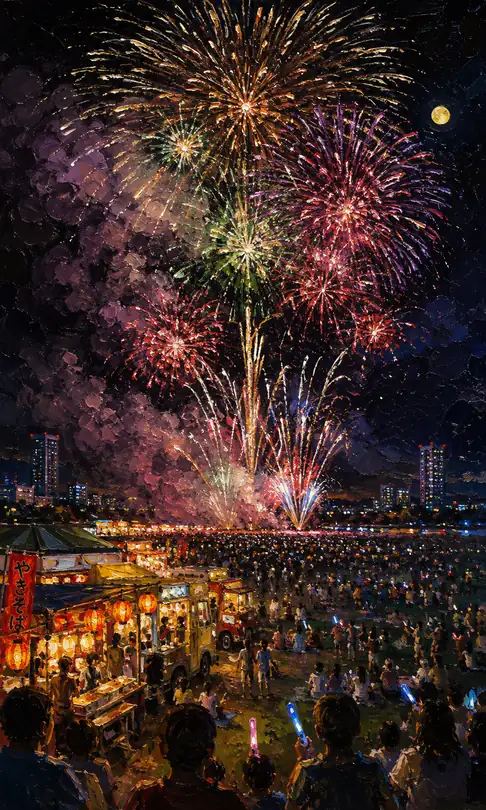 Five-Colored Blooms Under the Full Moon and the Bustle of the Plaza