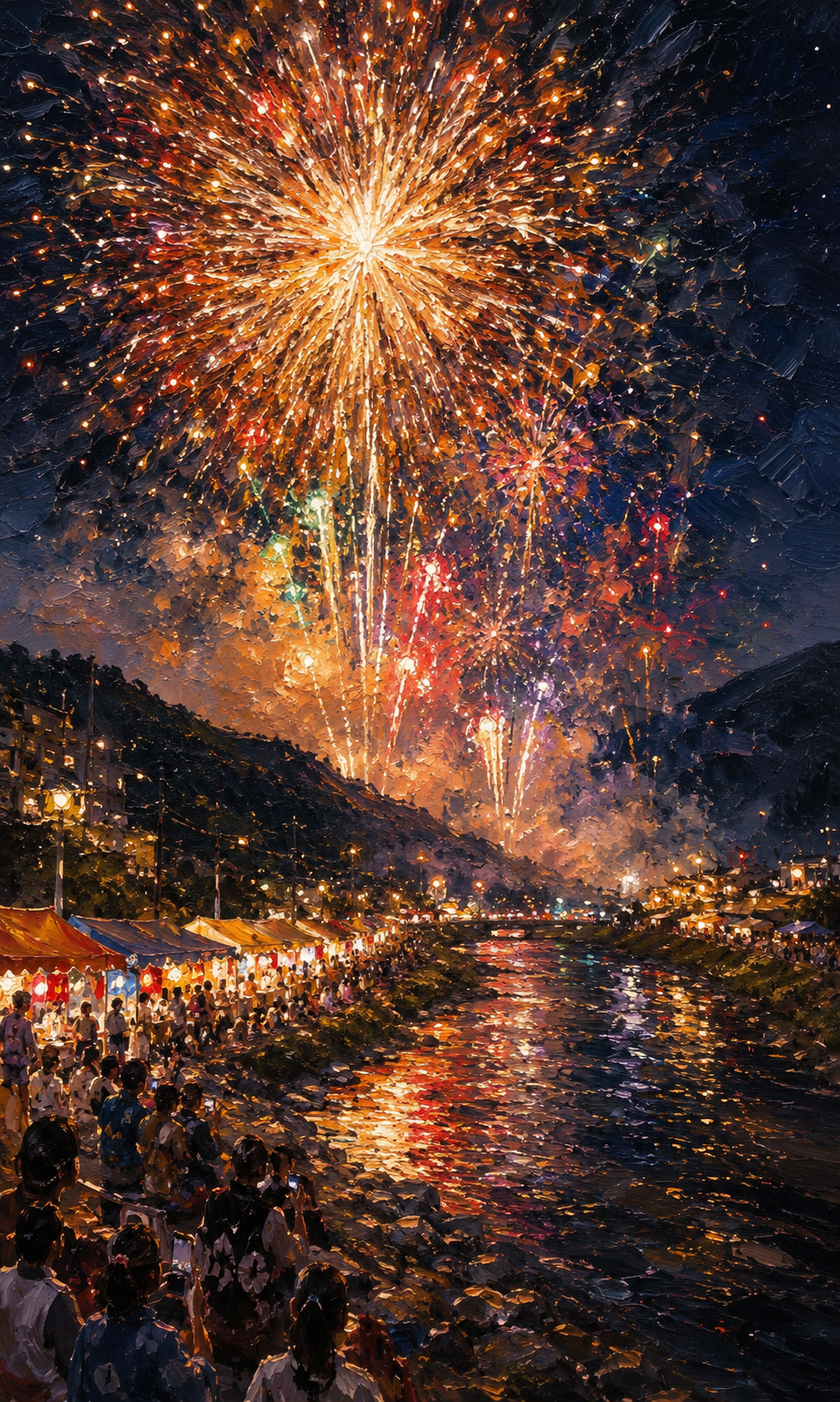
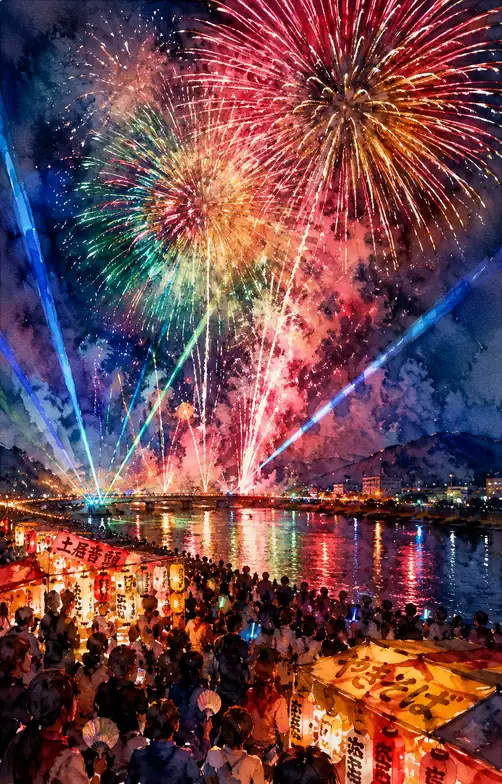
Stalls of Light Illuminating the Valley Stream and Great Blooms of Light
Critique
Introduction This night scene places a river between two festival banks while fireworks fill the valley above. Rather than treating water as background, the painting makes its reflective channel the principal route through which the distant celebration reaches the viewer. Description A monumental amber burst spreads from the upper left, cropped by the frame and trailing pale lines downward. Smaller red, green, and violet explosions cluster over the distant bridge. Crowds and bright awnings line both banks, with the nearer figures concentrated at lower left. The river runs from the foreground center toward the horizon, carrying broken orange, red, and white reflections. Analysis The converging banks create deep recession and counter the broad radial motion overhead. Dark mountain slopes form a V-shaped enclosure, while the large firework answers that geometry with an expanding circle. Thick, faceted marks describe the sky and buildings; shorter horizontal strokes turn the water into a restless mosaic. Warm light is concentrated along the left stalls and river center, held in check by blue-black banks and sky. Interpretation and Evaluation The image links temporary light with continuous movement: fireworks vanish, yet their colors seem prolonged by the current. Its unusual emphasis on the river gives the festival a specific spatial identity and prevents the spectacle from becoming merely decorative. The handling of reflection, recession, and clustered illumination demonstrates strong descriptive skill. Some aerial sparks merge densely, but this compression supports the smoky atmosphere and crowded energy. Conclusion The first impression of an immense golden explosion develops into an appreciation of how light travels through the whole landscape. Composition, color, and textured brushwork unite sky, settlement, spectators, and water in a convincing account of communal celebration.
Same Subcategory
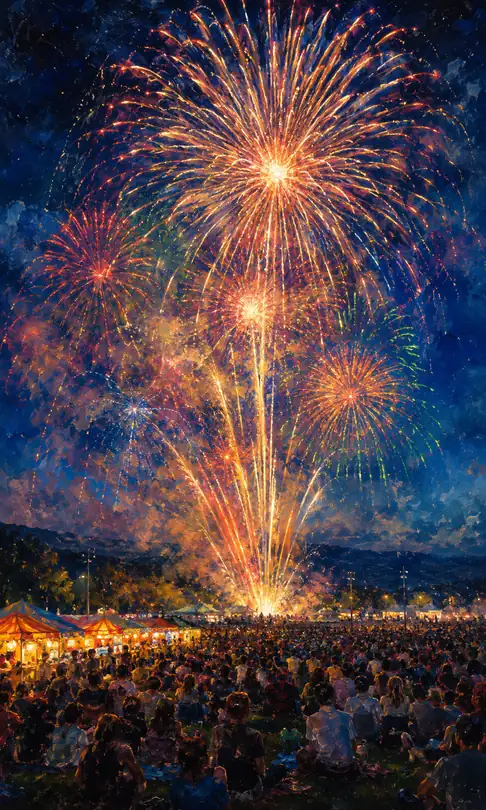 Festival Stalls and Great Blooms Filling the Lawn of Night
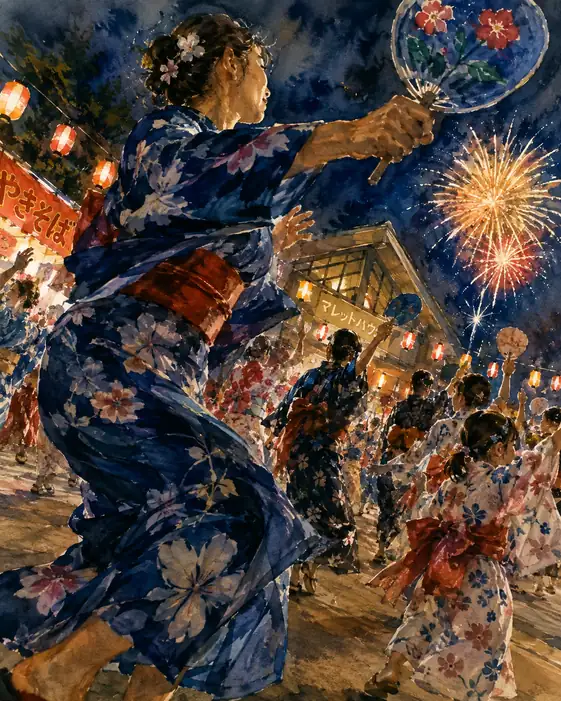 Raising the Fan and Dancing in Indigo Florals to the Night Bloom
Similar Artworks
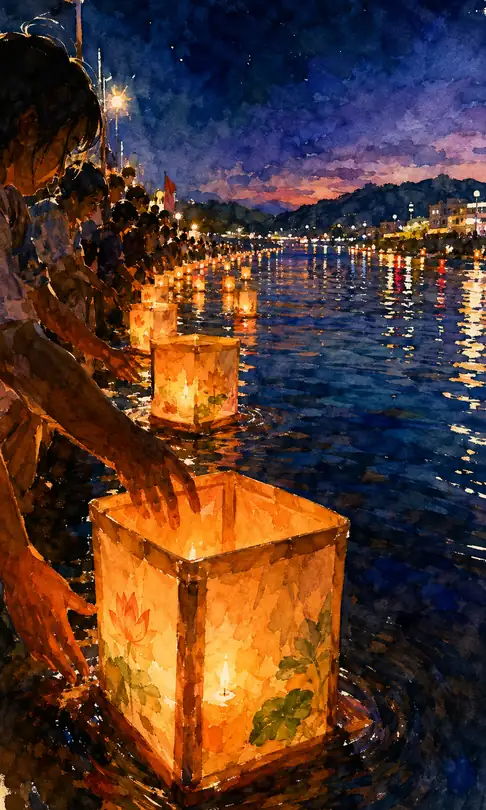 Lotus Lantern of Prayer Entrusted to the Waters and Twilight River Waves
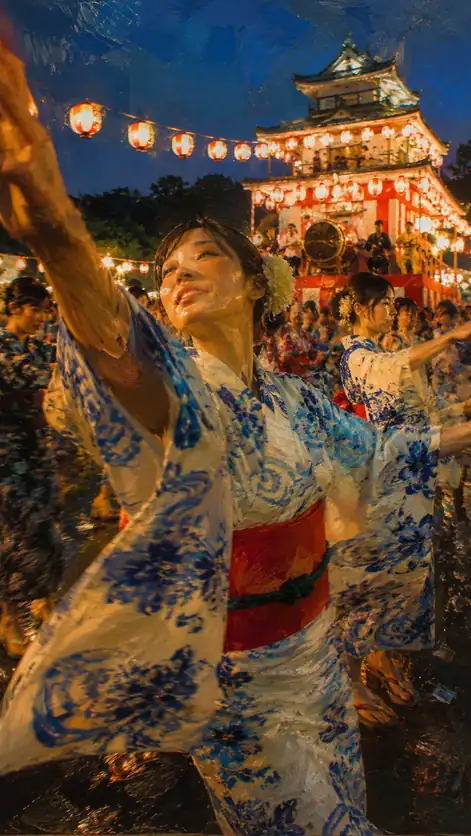 Dancing in Indigo-White Florals Beneath the Lanterns of the Castle Yagura
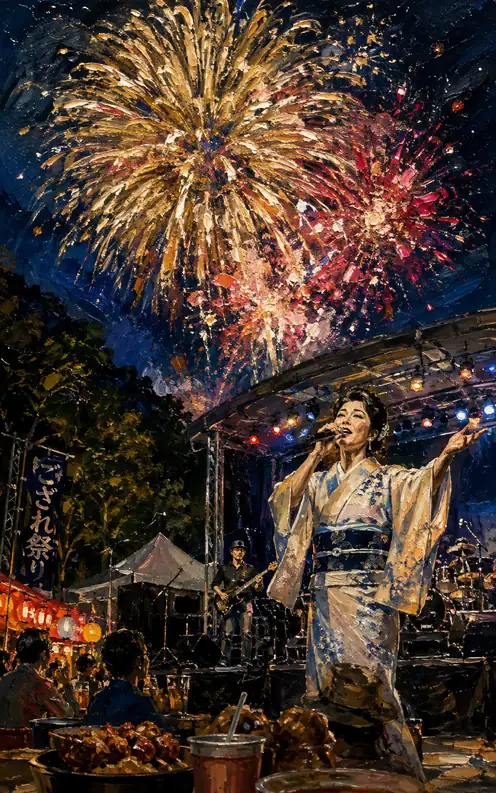 Singing Voice Echoing in the Gozare Festival Night Sky and Golden Blooms
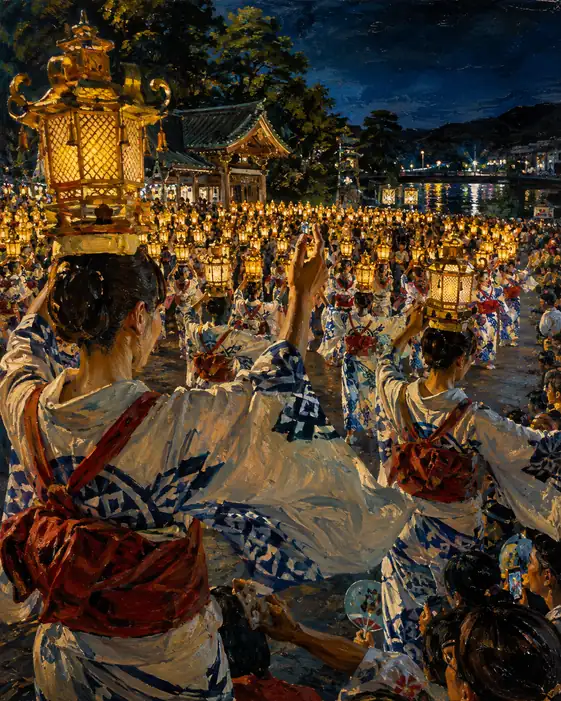 A Thousand Waves of Light Dancing Before the Night Shrine Bearing Golden Lanterns
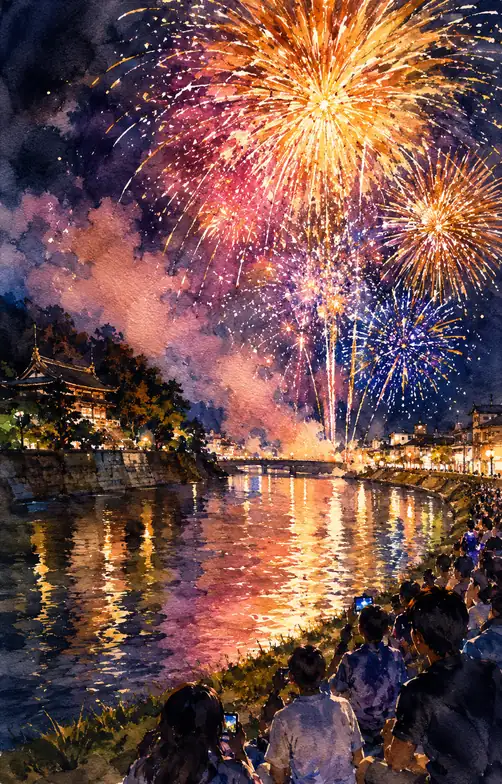 River Waves Illuminating Castle Stone Walls and Great Blooms in the Night Sky
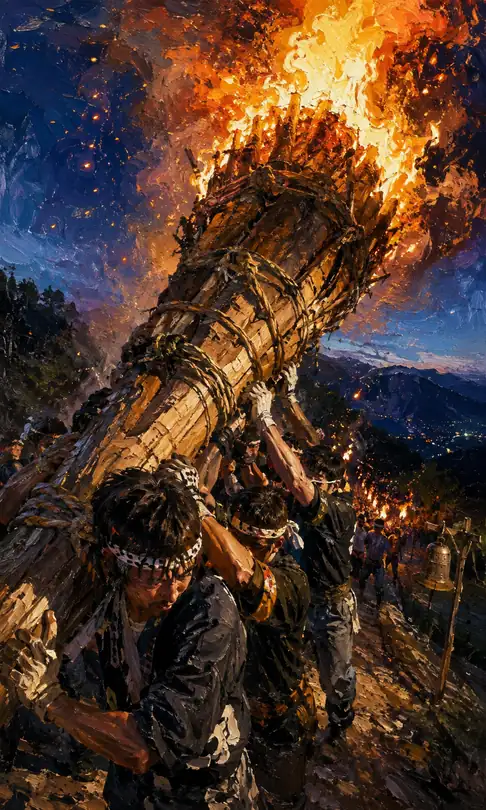 Great Torches Carried Up the Mountain Path and Roaring Flames Scorching the Night Sky
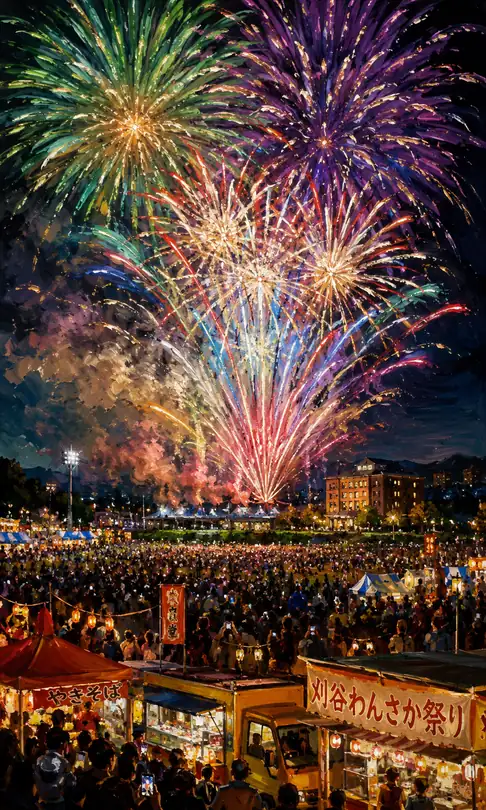 Bustle of Kariya Wansaka and Emerald and Purple Blooms in the Night Sky
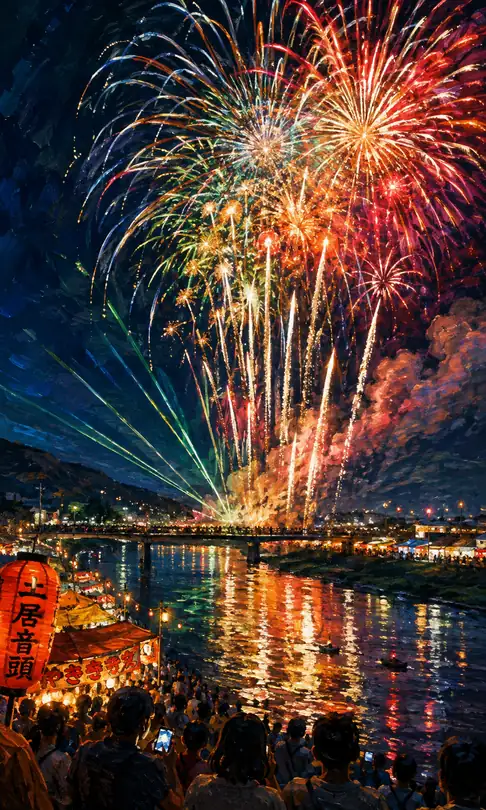 Red Lanterns of Doi Ondo and Blooms of Light Reflecting on the River
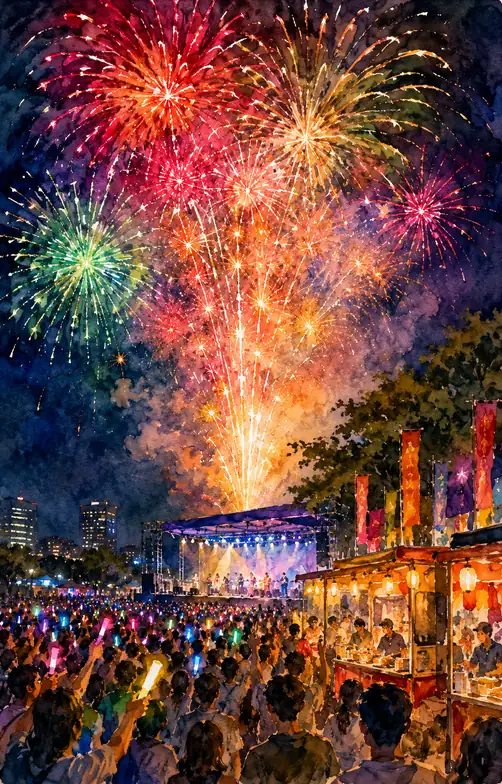 Rays of Light Raised to the Outdoor Stage and Great Blooms in the Night Sky
 Stall Lights of Doi Ondo and the Great Cascade of Blooms Reflecting on the River