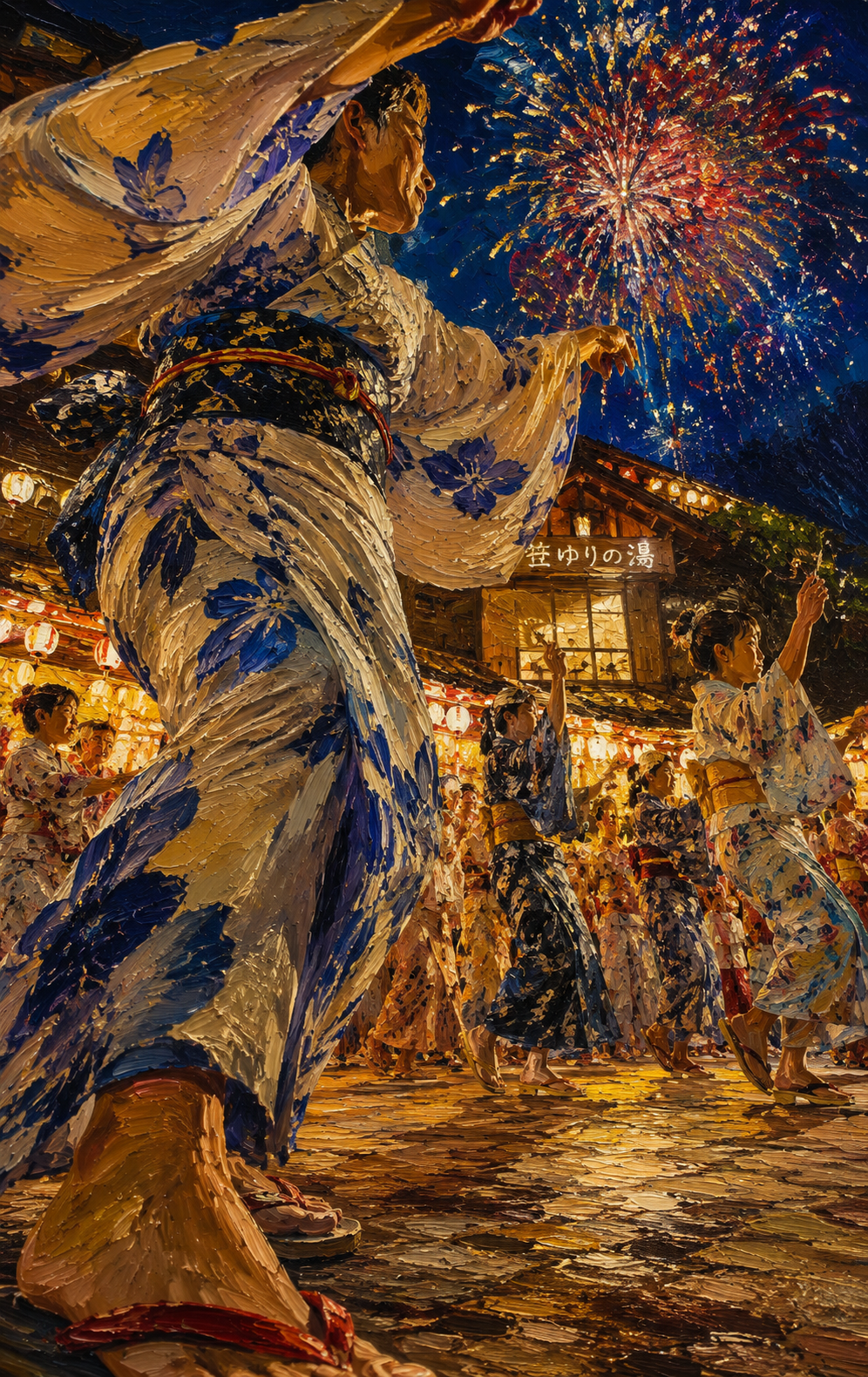
Zori and Great Blooms Dancing Upward Beneath the Eaves of Sasayuri-no-Yu
Critique
Introduction This festival painting places a dancing woman in extreme foreground, seen from a low angle beneath fireworks. It builds the scene around sweeping cloth, lifted arms, and stepping feet. Description The principal dancer's white yukata, patterned with large blue flowers, rises from a cropped sandal at the bottom left and fills most of that side. Her dark obi circles the center, while her sleeves and hands open toward the red-and-gold burst above. Smaller women dance across the illuminated street at right. Behind them, wooden shopfronts, rows of lanterns, and a bright interior window enclose the crowded space. Analysis The unusually low viewpoint enlarges the nearest body and makes the hemline a powerful diagonal leading upward to the face and fireworks. Curving sleeves repeat the dancers' raised wrists, setting a fluid rhythm against the rigid beams of the buildings. Heavy ridges of paint articulate folds, floral motifs, and wet-looking pavement; scattered gold strokes make the ground reflect the lanterns. Cream cloth and amber light glow against saturated cobalt, while the dark obi provides a central anchor. Interpretation and Evaluation Close cropping turns a familiar group dance into an experience of bodily scale and movement. The dancer remains part of a larger sequence, since women across the street echo her gesture. The foreshortened figure is boldly drawn, and the composition converts a crowded setting into a clear upward spiral. Color control and tactile brushwork are effective, while the ground-level perspective supplies originality. Conclusion What initially seems a decorative night festival becomes a study of how one step can organize architecture, crowd, and sky. The image sustains its energy through precise gesture, luminous surface, and a compelling low-angle design.
Same Subcategory
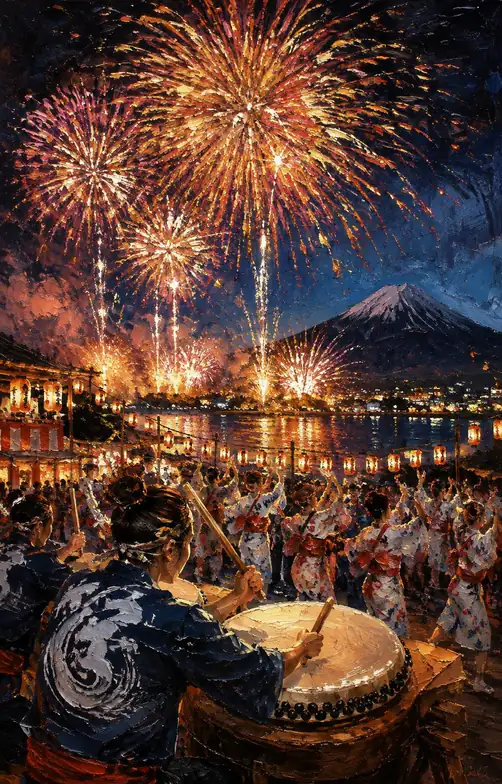 Taiko and Circle Dances Echoing on the Lakeside Gazing at Mount Fuji
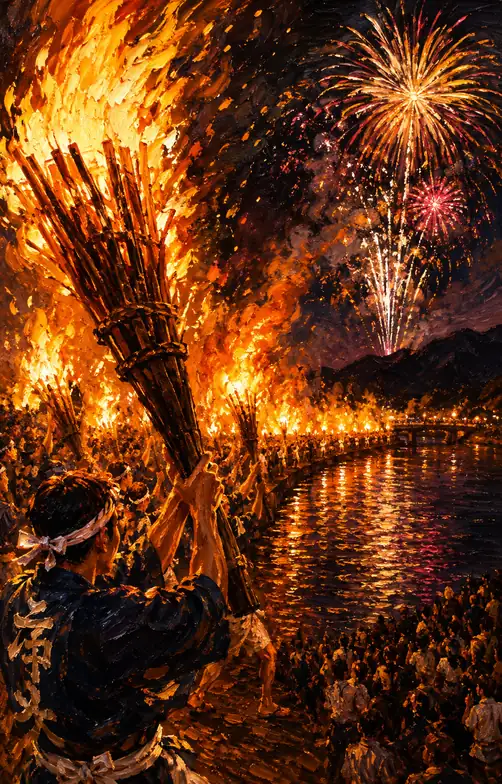 Line of Great Torches Coloring the Riverbanks and Blooms in the Night Sky
Similar Artworks
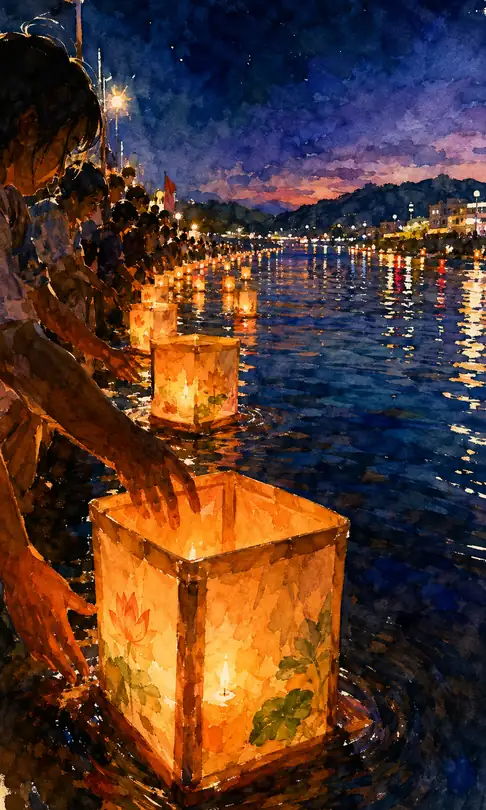 Lotus Lantern of Prayer Entrusted to the Waters and Twilight River Waves
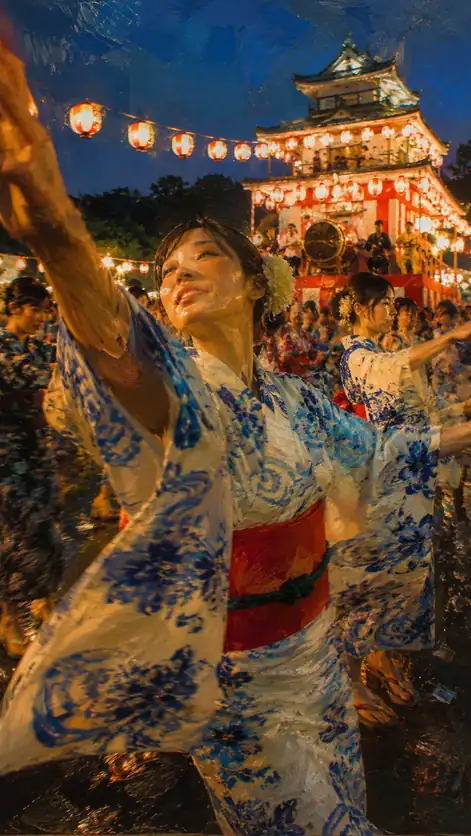 Dancing in Indigo-White Florals Beneath the Lanterns of the Castle Yagura
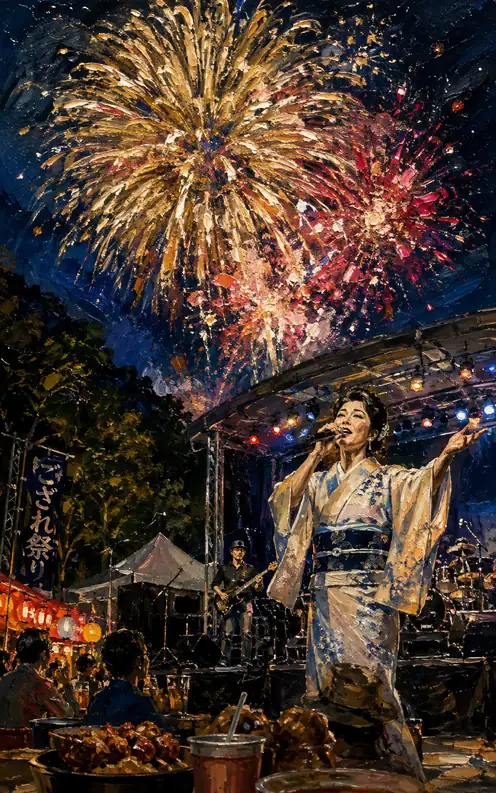 Singing Voice Echoing in the Gozare Festival Night Sky and Golden Blooms
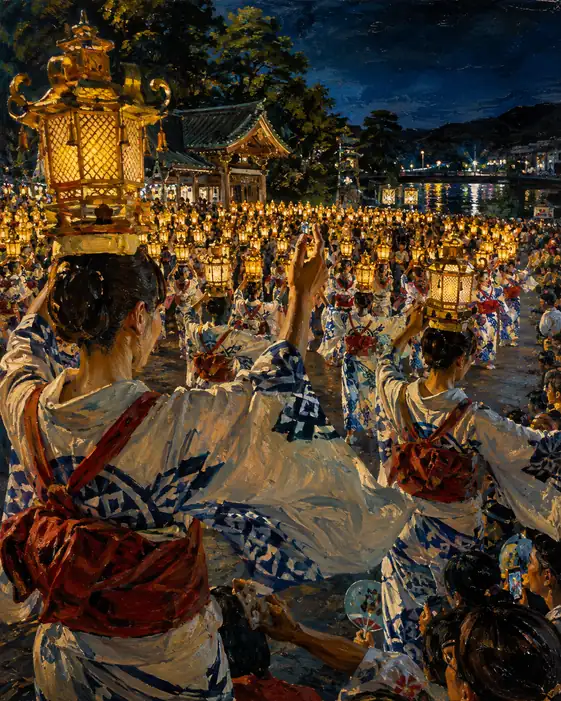 A Thousand Waves of Light Dancing Before the Night Shrine Bearing Golden Lanterns
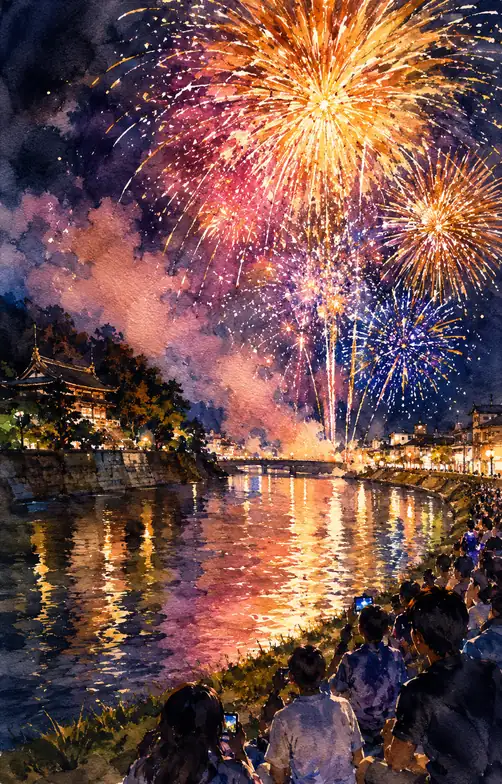 River Waves Illuminating Castle Stone Walls and Great Blooms in the Night Sky
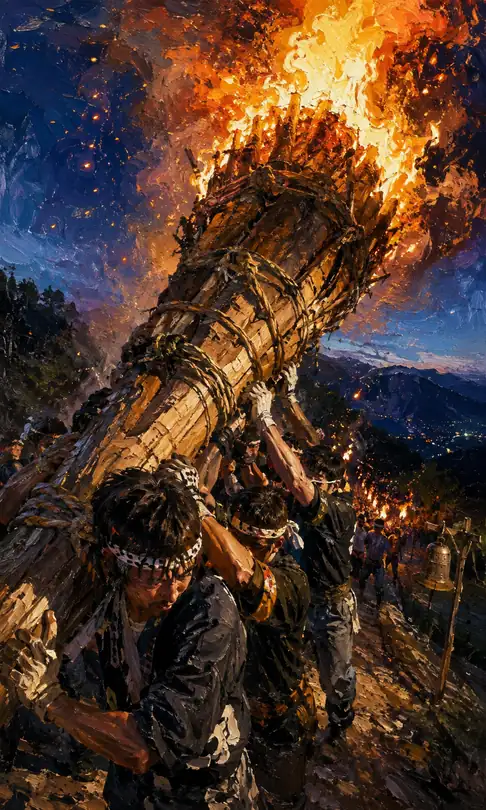 Great Torches Carried Up the Mountain Path and Roaring Flames Scorching the Night Sky
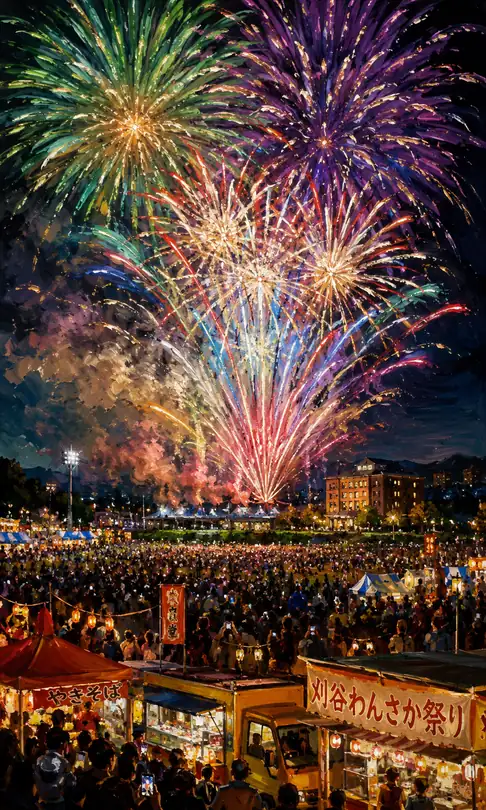 Bustle of Kariya Wansaka and Emerald and Purple Blooms in the Night Sky
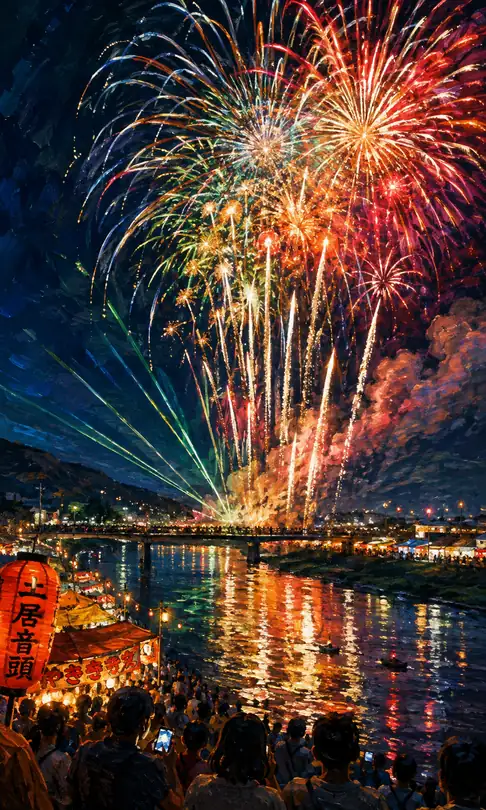 Red Lanterns of Doi Ondo and Blooms of Light Reflecting on the River
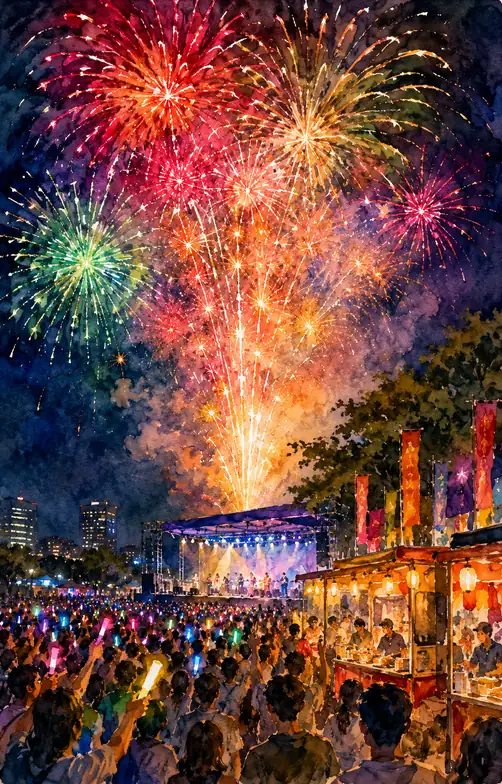 Rays of Light Raised to the Outdoor Stage and Great Blooms in the Night Sky
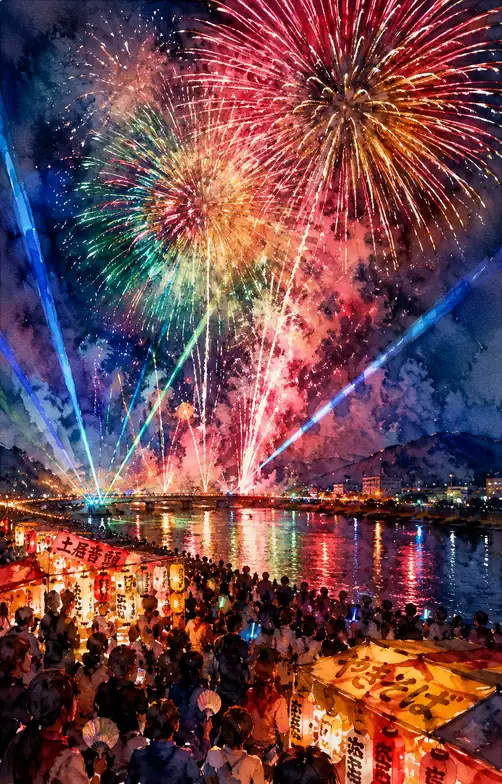 Stall Lights of Doi Ondo and the Great Cascade of Blooms Reflecting on the River