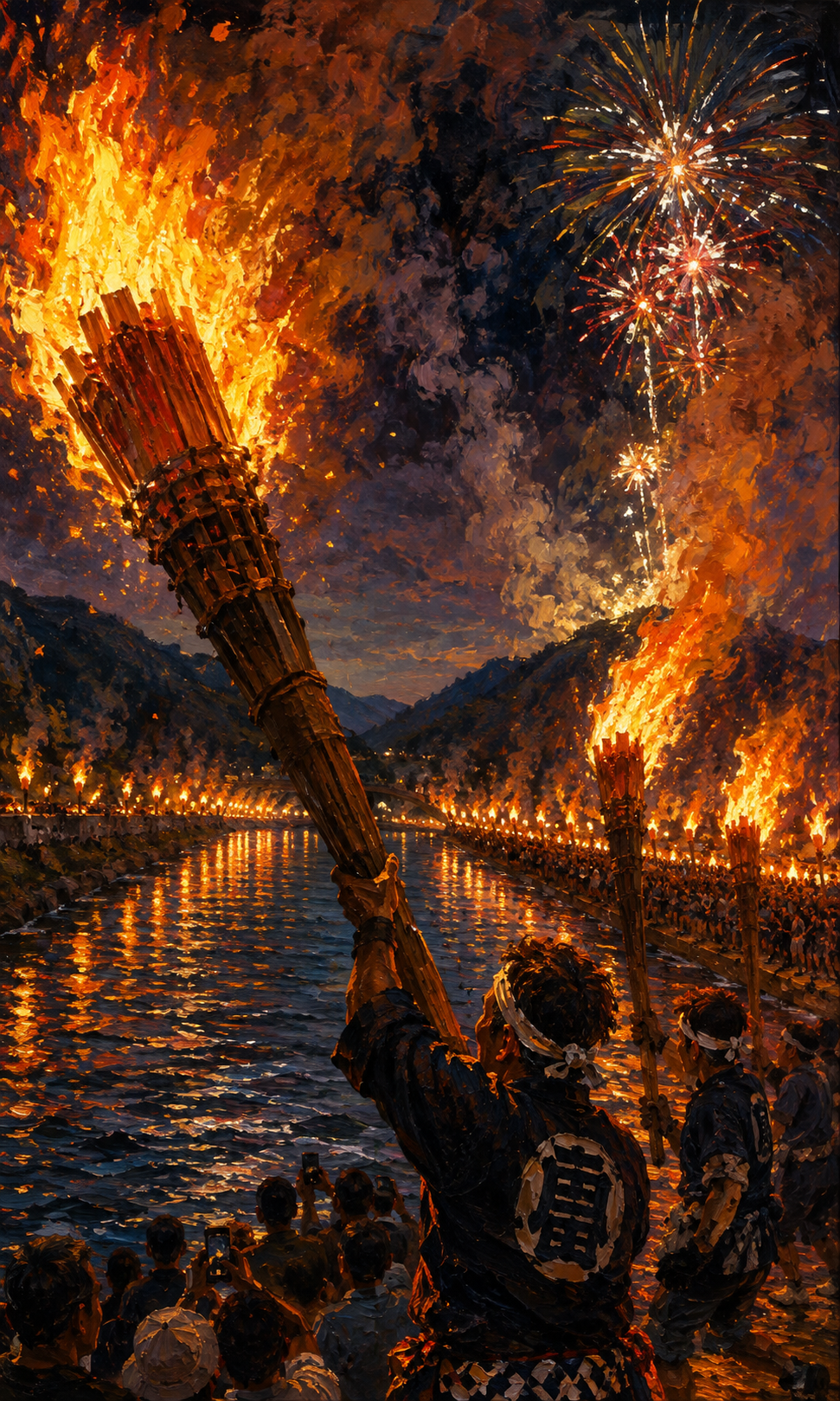
Great Torches Coloring the Riverbanks and Festive Fires in the Night Sky
Critique
Introduction This vertical night scene depicts a torch procession extending along both banks of a mountain river beneath fireworks. Rather than treating flame as a decorative accent, the painting makes it the principal substance of the landscape, reflected, repeated, and carried by human figures. Description An enormous bundled torch rises diagonally from the lower center to the upper left, where its fire spreads beyond the frame. The bearer is seen from behind among spectators and two other torch carriers. Lines of smaller flames trace both banks toward a distant bridge. Orange reflections break across dark water, while compact fireworks occupy the smoky upper right. Analysis The dominant torch divides the composition and establishes a dramatic near-far scale. Its upward diagonal opposes the river’s recession, locking the foreground action to the central vanishing point. Thick orange and yellow strokes describe turbulent fire; cooler blue-black passages preserve the river and mountains as stable intervals. Repeated vertical torches and their wavering reflections produce a measured procession within the apparent blaze. Interpretation and Evaluation The bearer’s turned back redirects attention from individual identity to shared duty and spectacle. Fire appears both controlled within bound reeds and dangerously expansive in the surrounding smoke, creating tension between ceremony and elemental force. The composition, restricted palette, and vigorous handling are highly coherent, while small raised phones place contemporary spectators beside inherited ritual. Conclusion What first seems an overwhelming display of flame gradually reveals an ordered chain of carriers, banks, reflections, and watchers. Through disciplined repetition and bold cropping, the work gives collective ceremony monumental scale without losing the physical weight of a single torch.
Same Subcategory
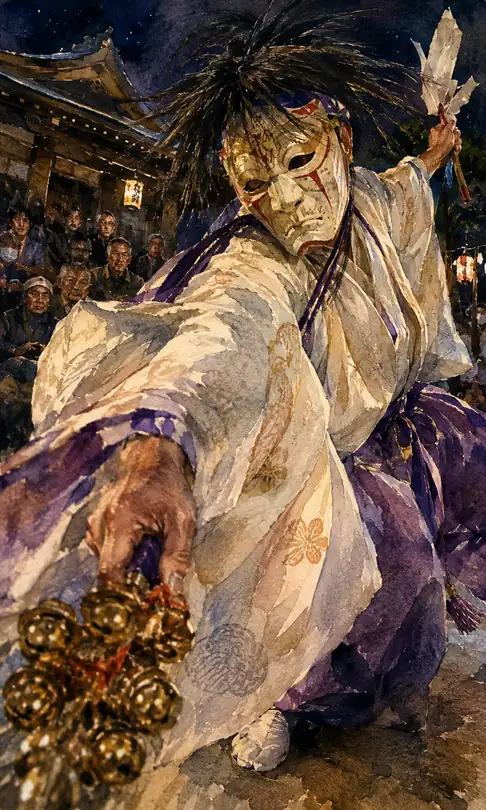 Thrusting the Golden Bell and Divine Mask Approaching the Night Shrine
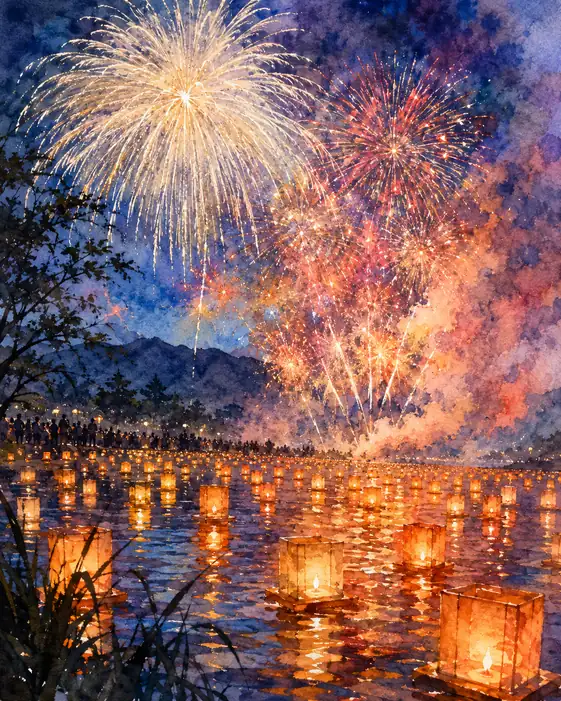 Floating Lanterns Illuminating the Waterside and Great Blooms by the Mountains
Similar Artworks
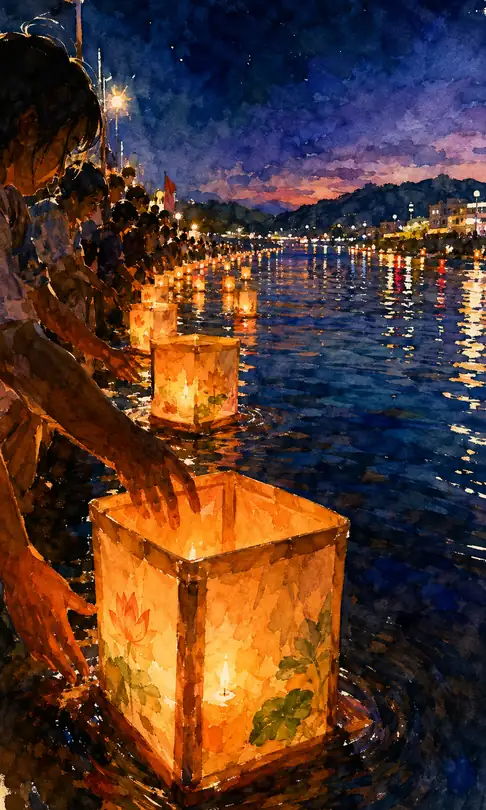 Lotus Lantern of Prayer Entrusted to the Waters and Twilight River Waves
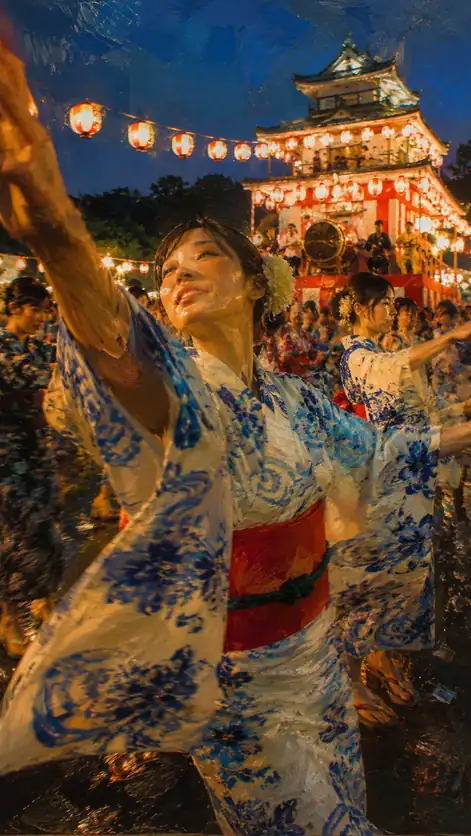 Dancing in Indigo-White Florals Beneath the Lanterns of the Castle Yagura
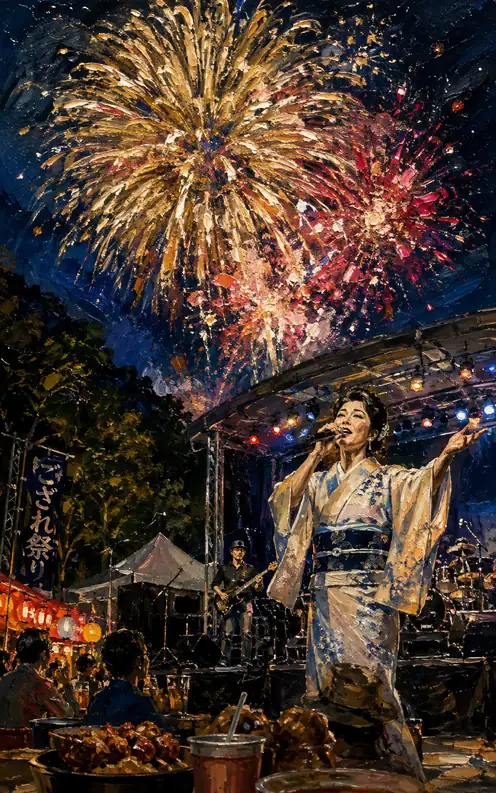 Singing Voice Echoing in the Gozare Festival Night Sky and Golden Blooms
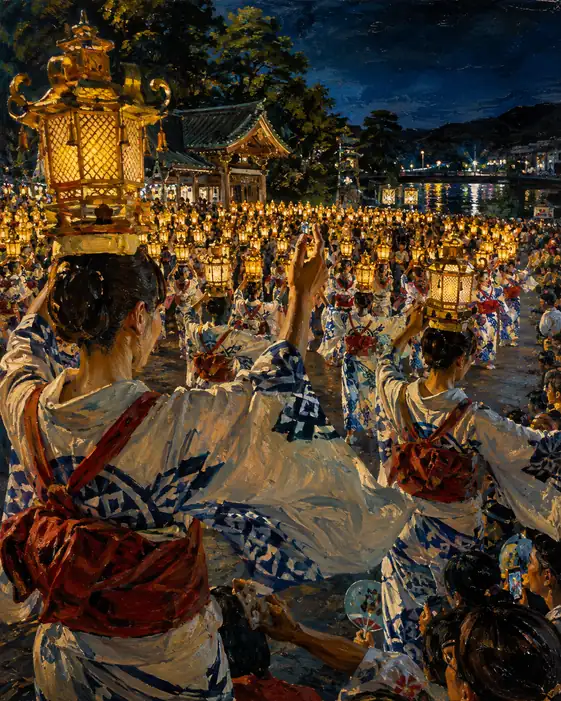 A Thousand Waves of Light Dancing Before the Night Shrine Bearing Golden Lanterns
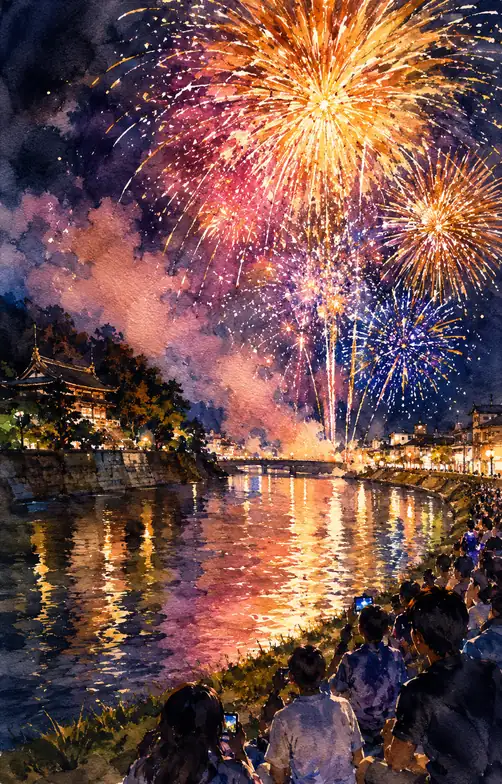 River Waves Illuminating Castle Stone Walls and Great Blooms in the Night Sky
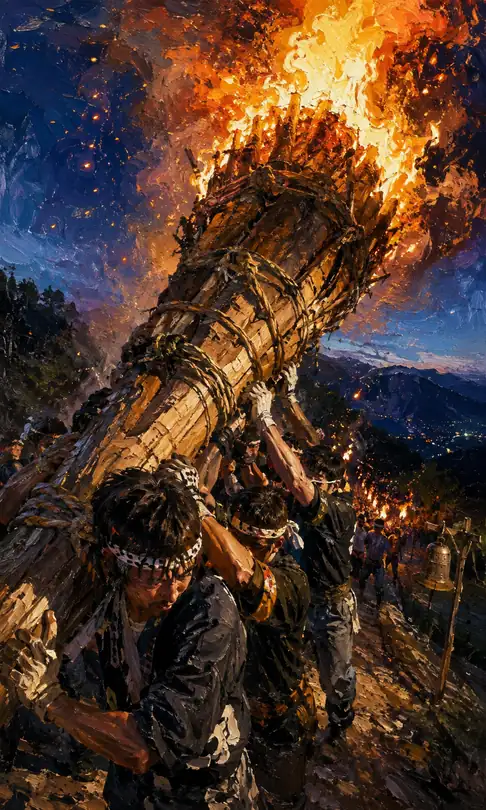 Great Torches Carried Up the Mountain Path and Roaring Flames Scorching the Night Sky
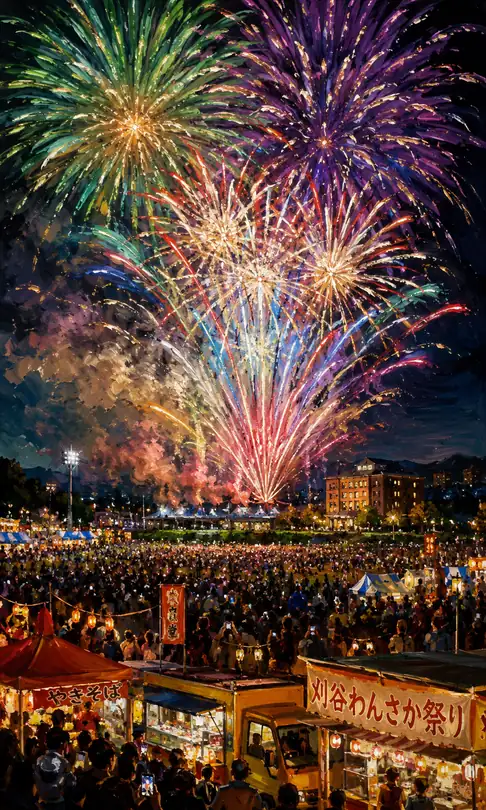 Bustle of Kariya Wansaka and Emerald and Purple Blooms in the Night Sky
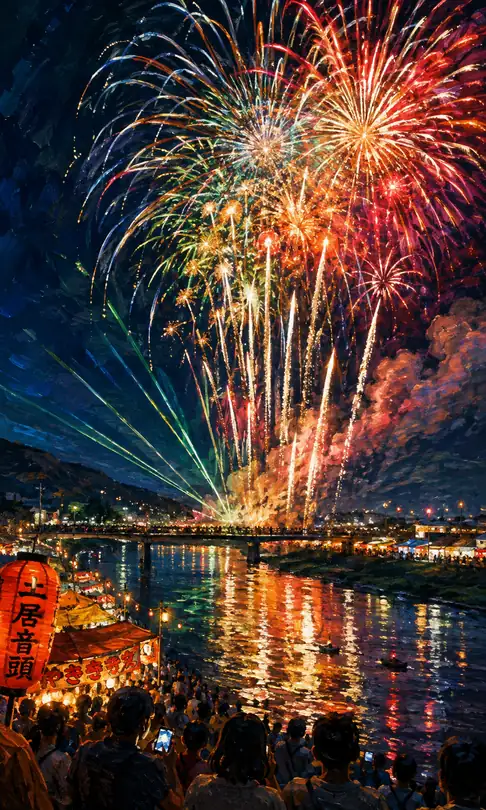 Red Lanterns of Doi Ondo and Blooms of Light Reflecting on the River
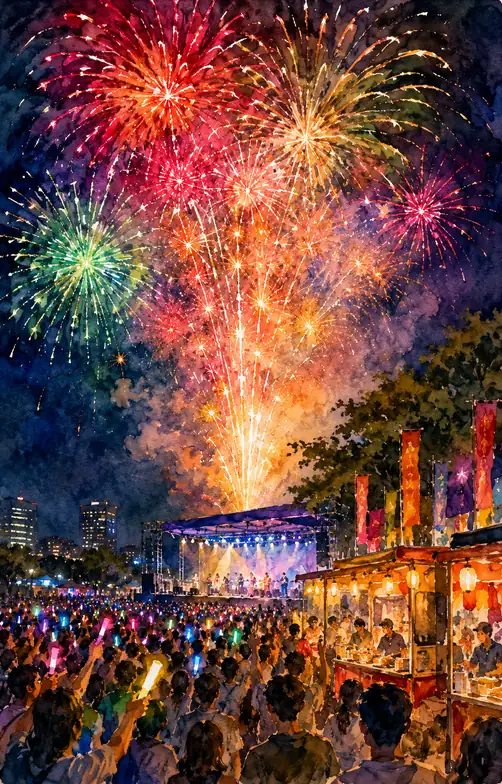 Rays of Light Raised to the Outdoor Stage and Great Blooms in the Night Sky
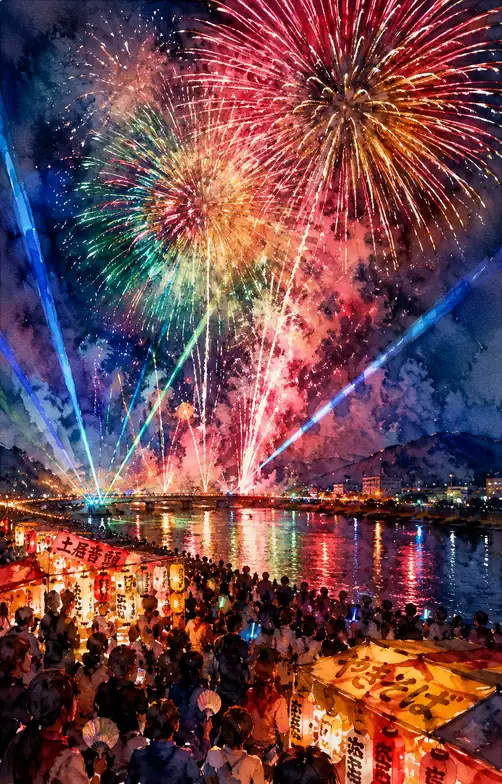 Stall Lights of Doi Ondo and the Great Cascade of Blooms Reflecting on the River