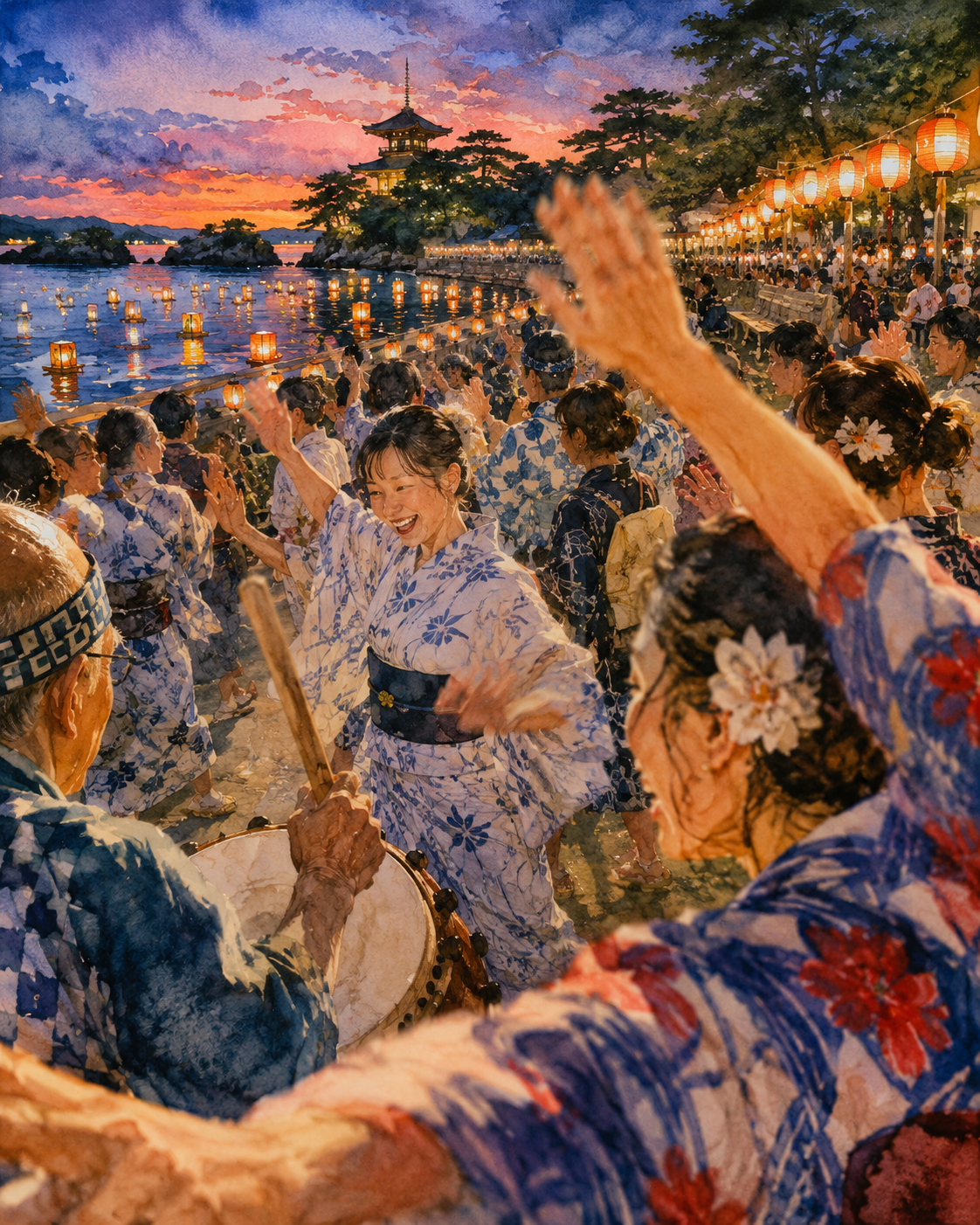
Sea of Twilight Lanterns and Bursting Smiles to the Sound of Taiko
Critique
Introduction This festival image centers on a smiling dancer in a blue-and-white yukata, surrounded by raised arms beside a lantern-lit bay. The close viewpoint turns landscape, music, and dance into one field of participation. Description The central woman leans forward, one arm lifted and the other extended, while a drummer enters from the lower left. A blurred figure arcs across the right foreground, enclosing the dancer. Behind them, patterned robes fill the shore. Floating lights recede toward a tree-covered point and a pagoda against a coral sunset; hanging lanterns repeat along the promenade. Analysis Overlapping bodies create depth without separating performers from spectators. The foreground arm forms a sweeping frame, while the drumstick and central dancer’s gestures establish intersecting diagonals. Cool blues in water and clothing are warmed by skin, sunset, and orange lanterns. Sharp attention to the dancer’s joyful face contrasts with softened near limbs and densely broken background marks, suggesting a turning viewpoint within the crowd. Repeated raised hands make rhythm visible across the composition. Interpretation and Evaluation The scene values participation over spectacle: no single performer fully controls the event, even though the central face provides an emotional focus. The distant pagoda and floating lanterns lend continuity and repose to the immediate bodily energy. The composition is daringly crowded, the color harmonies remain lucid, and the watercolor-like transitions between crisp faces and dissolving edges effectively represent shared motion. Its originality lies in allowing an obstructed, immersed viewpoint to carry meaning. Conclusion What first reads as a cheerful dance becomes a study of how individual delight circulates through a group. By balancing the central smile with enclosing gestures, steady landscape, and repeated lights, the work gives collective celebration both momentum and depth.
Same Subcategory
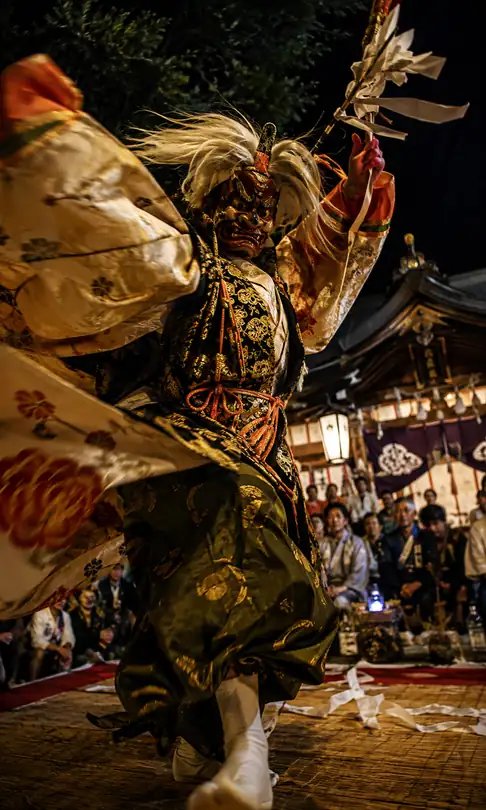 Scattering White Hair and the Demon God Standing Before the Night Shrine
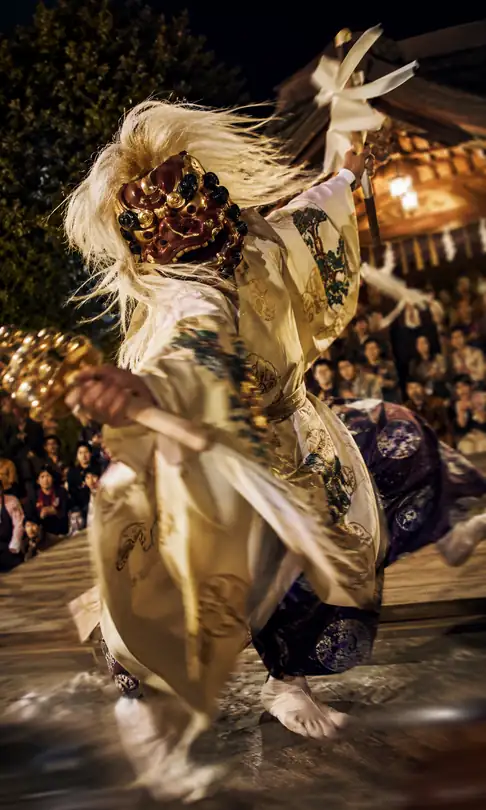 Shaking the Golden Bell and Scattering White Hair in the Demon Mask Kagura Dance
Similar Artworks
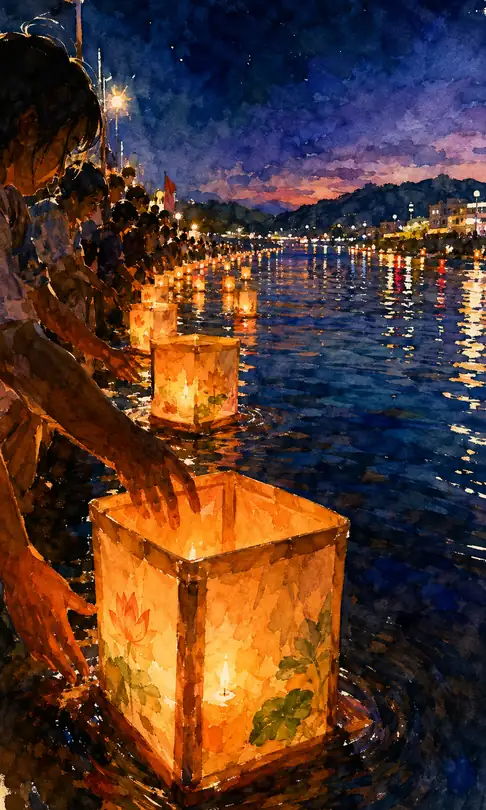 Lotus Lantern of Prayer Entrusted to the Waters and Twilight River Waves
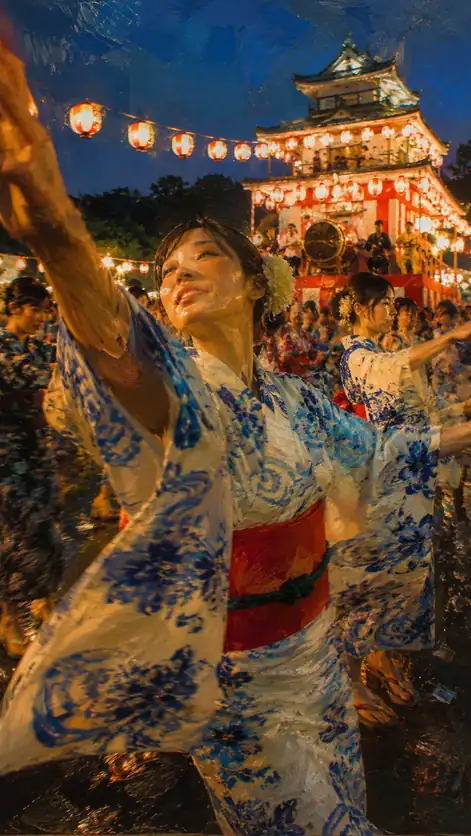 Dancing in Indigo-White Florals Beneath the Lanterns of the Castle Yagura
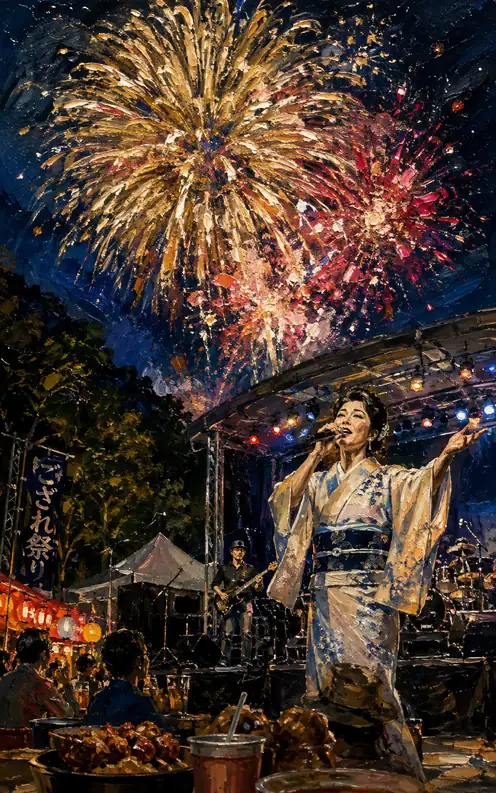 Singing Voice Echoing in the Gozare Festival Night Sky and Golden Blooms
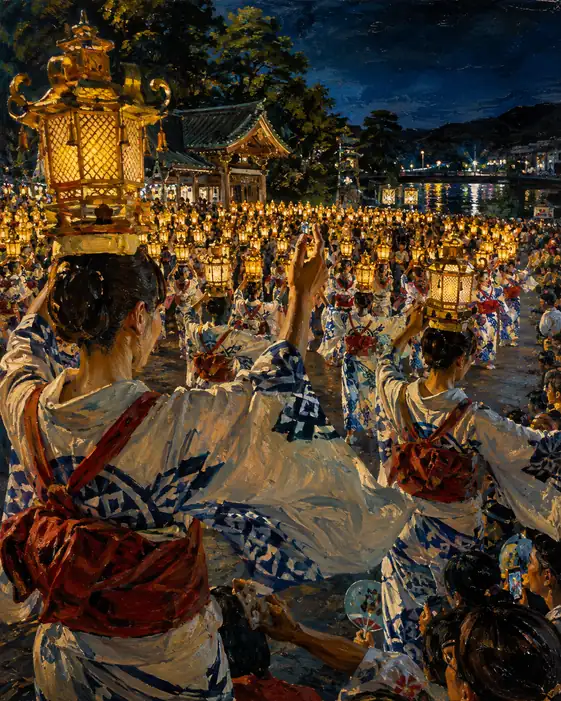 A Thousand Waves of Light Dancing Before the Night Shrine Bearing Golden Lanterns
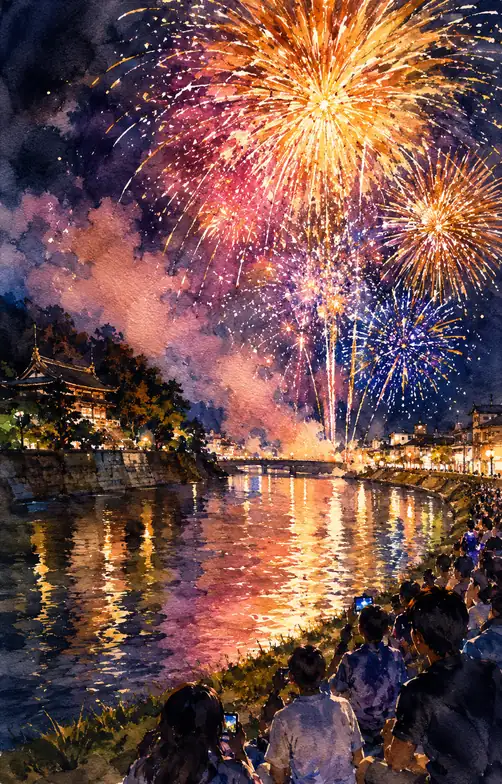 River Waves Illuminating Castle Stone Walls and Great Blooms in the Night Sky
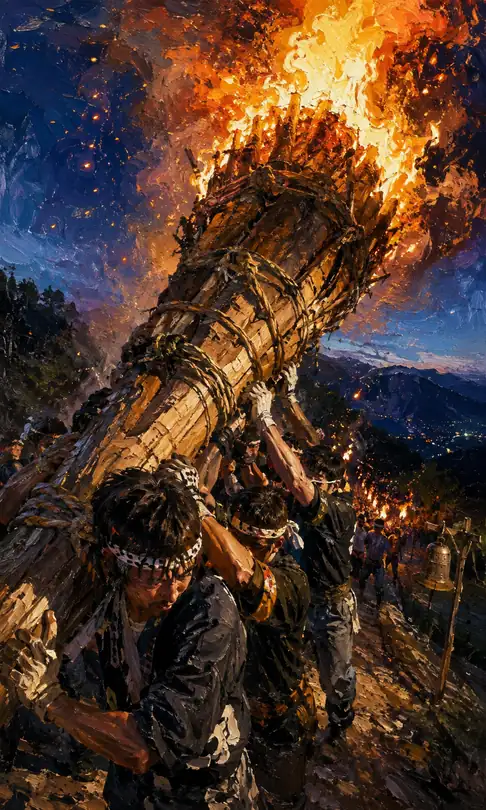 Great Torches Carried Up the Mountain Path and Roaring Flames Scorching the Night Sky
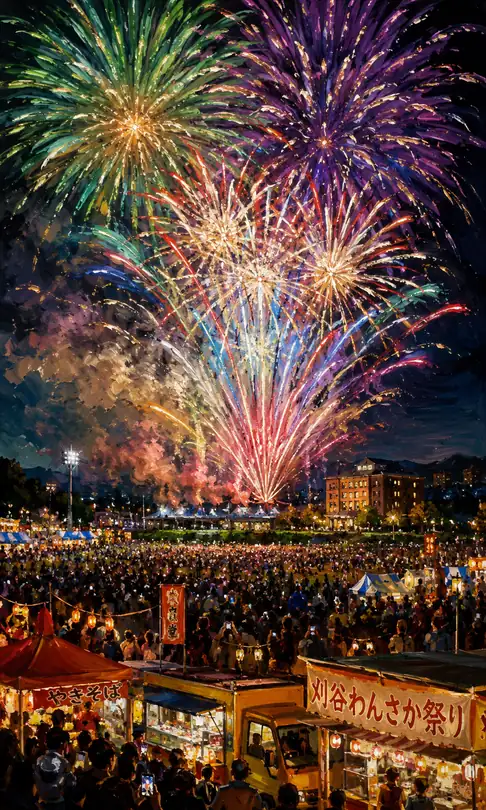 Bustle of Kariya Wansaka and Emerald and Purple Blooms in the Night Sky
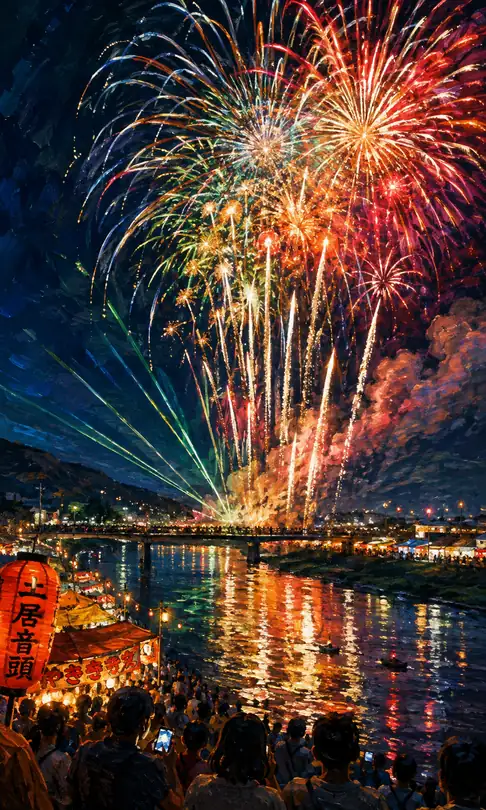 Red Lanterns of Doi Ondo and Blooms of Light Reflecting on the River
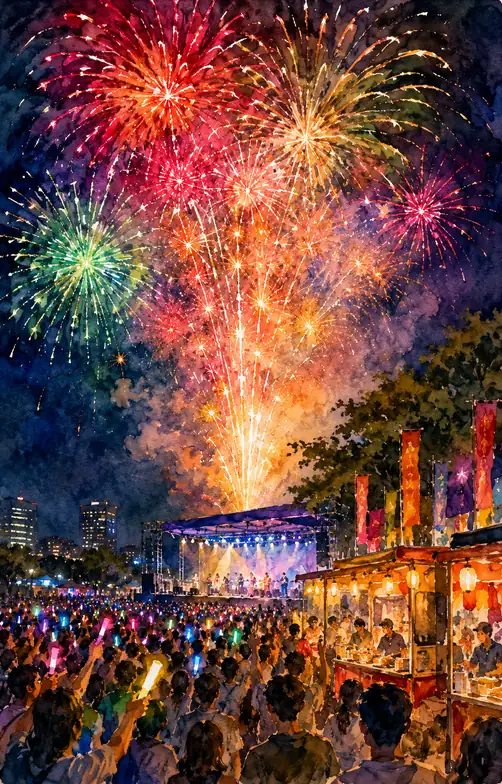 Rays of Light Raised to the Outdoor Stage and Great Blooms in the Night Sky
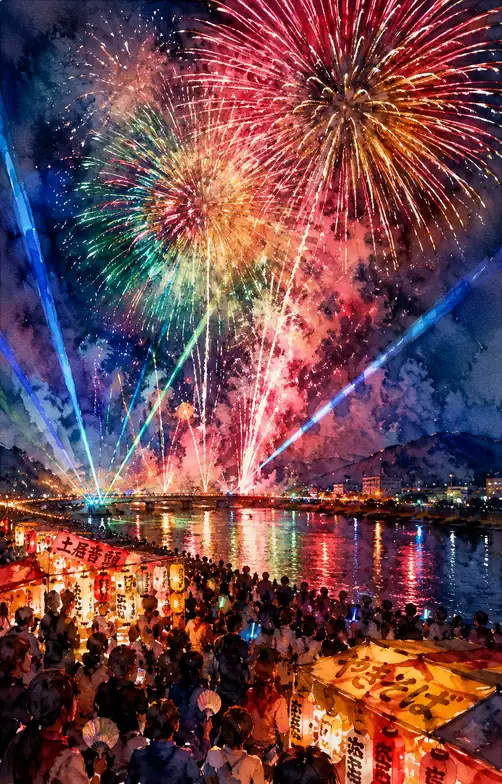 Stall Lights of Doi Ondo and the Great Cascade of Blooms Reflecting on the River