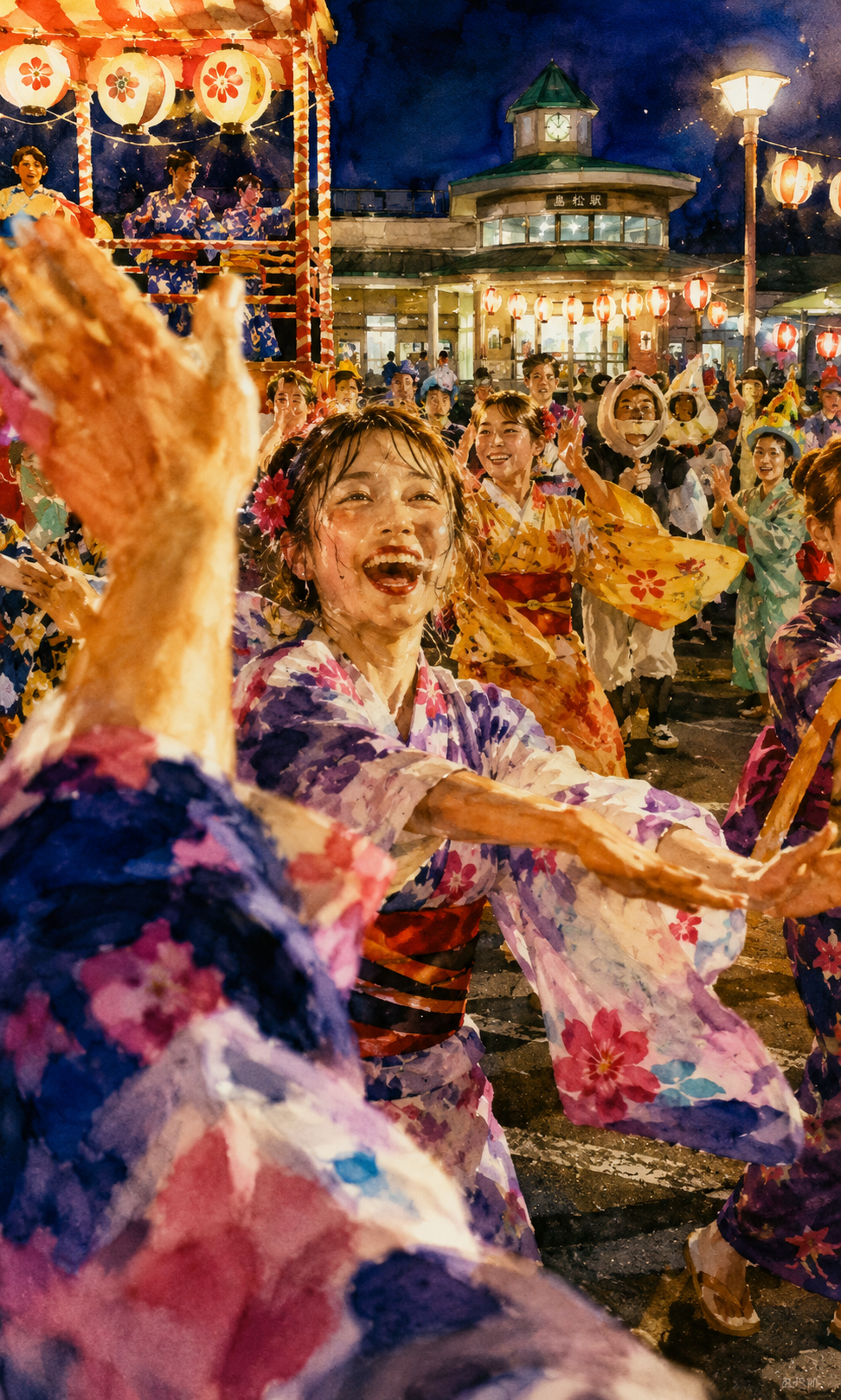
Exchanged Gestures and Flowered Robes Before the Clock Tower Station
Critique
Introduction This watercolor views a station-front dance through gestures exchanged by two participants. A blurred sleeve and palm enclose the foreground, lifting the central smile as if onto a stage. Its chief charm is the improvised intimacy created in a public square. Description The central woman wears a pale robe patterned in pink, violet, and turquoise with a red-black sash. Laughing, she stretches both arms horizontally. At left, the back, sleeve, and large palm of another dancer enter out of focus, making their movements face one another. Behind are a woman in orange, playful costumes, a striped platform, flower-marked lanterns, and a station with clock tower. Analysis The foreground arm forms a diagonal curtain, through which face and station align vertically. Extended arms describe an invisible circle at center, presenting the larger dance through close exchange. Transparent pink, violet, and blue bleed through fabric; warm yellow-orange washes illuminate skin and lamps. Three depths—soft foreground, clear face, fragmented crowd—reenact the sensation of finding a partner’s expression while moving. Interpretation and Evaluation The woman’s smile can stand for collective joy, yet the opposing dancer prevents it from becoming a unilateral pose. Clock, station sign, streetlamp, and whimsical outfits show traditional movement open to contemporary daily space. Foreground obstruction is converted into a participant’s position between people, subtly prompting the viewer’s next gesture. Conclusion Soft watercolor and intimate framing turn a large station gathering into one-to-one communication. Floral repetitions, lamps, and clock tower support place and time, while extended arms bind the field. The painting celebrates not generic cheerfulness but the pleasure of responding to another person’s movement.
Same Subcategory
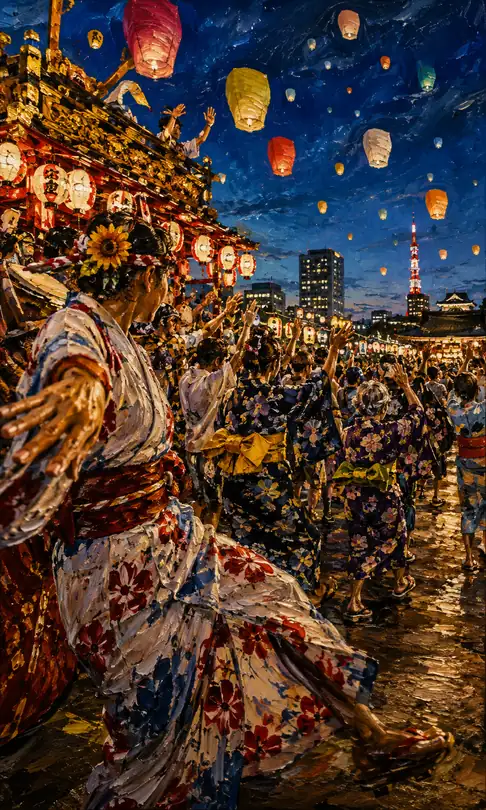 Sunflower Hairpin and Sky Lanterns Released into the Night Sky
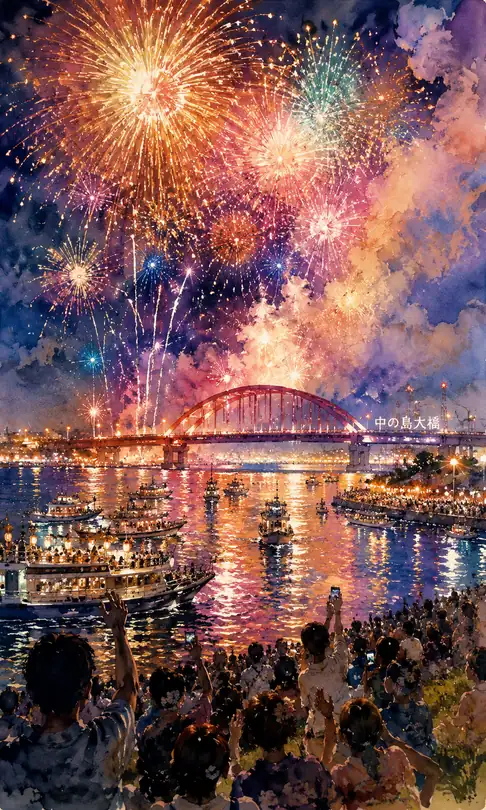 Luminous Cascade of a Hundred Blooms Spanning Nakanoshima Bridge
Similar Artworks
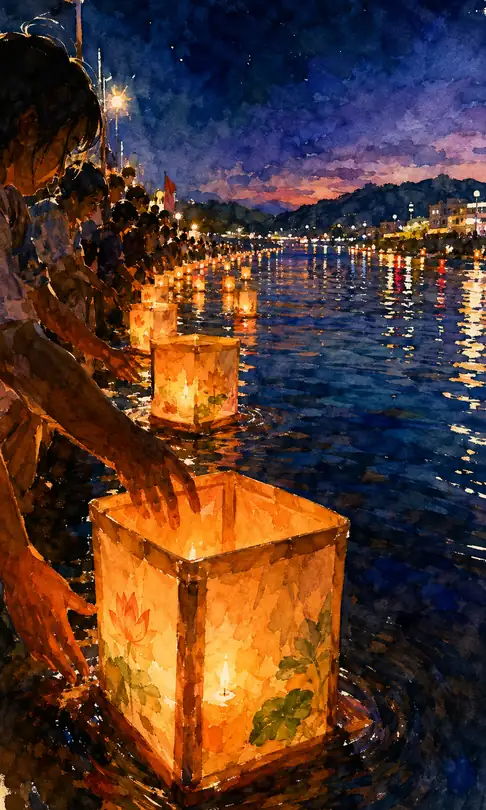 Lotus Lantern of Prayer Entrusted to the Waters and Twilight River Waves
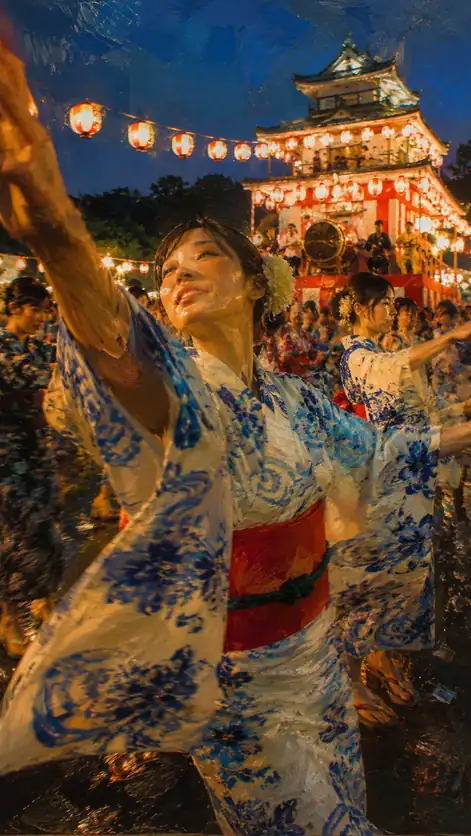 Dancing in Indigo-White Florals Beneath the Lanterns of the Castle Yagura
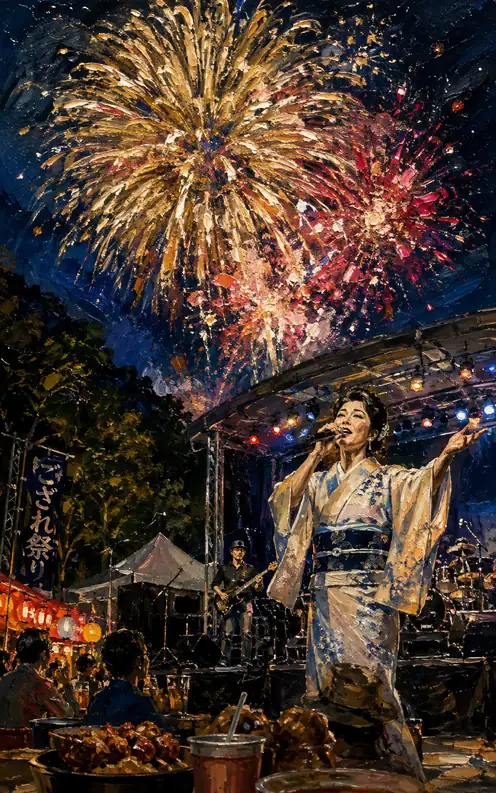 Singing Voice Echoing in the Gozare Festival Night Sky and Golden Blooms
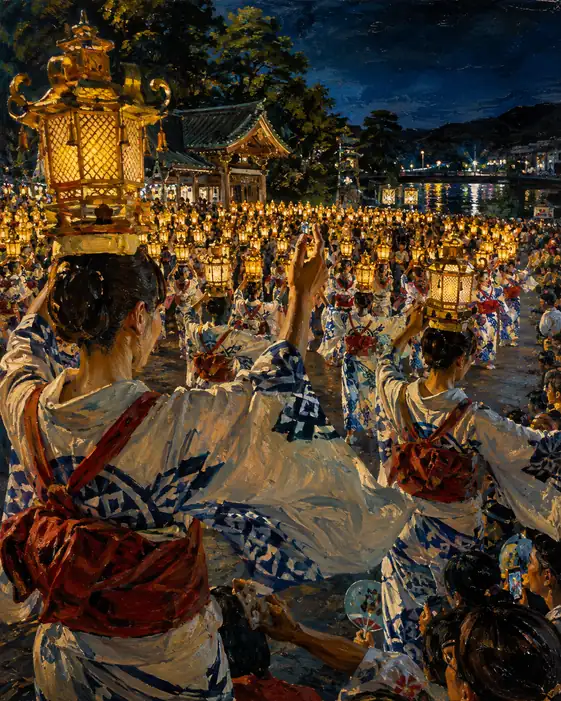 A Thousand Waves of Light Dancing Before the Night Shrine Bearing Golden Lanterns
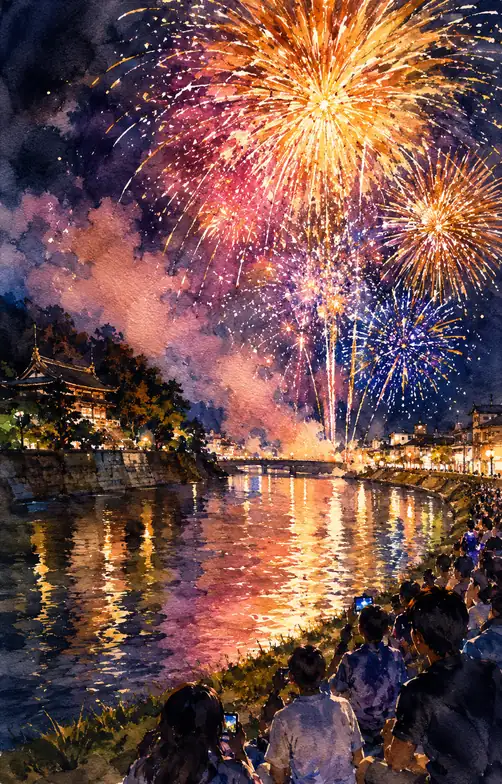 River Waves Illuminating Castle Stone Walls and Great Blooms in the Night Sky
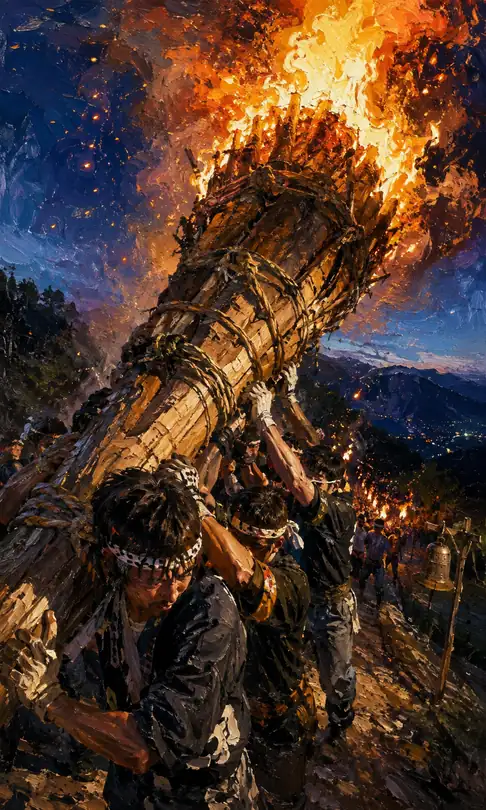 Great Torches Carried Up the Mountain Path and Roaring Flames Scorching the Night Sky
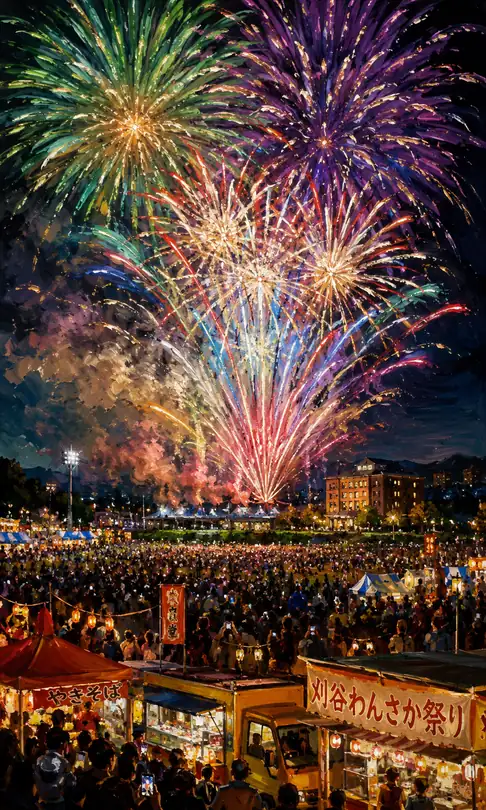 Bustle of Kariya Wansaka and Emerald and Purple Blooms in the Night Sky
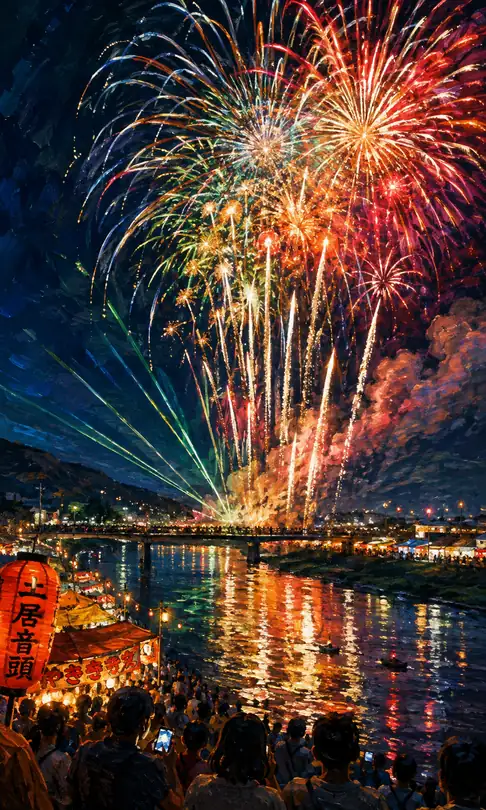 Red Lanterns of Doi Ondo and Blooms of Light Reflecting on the River
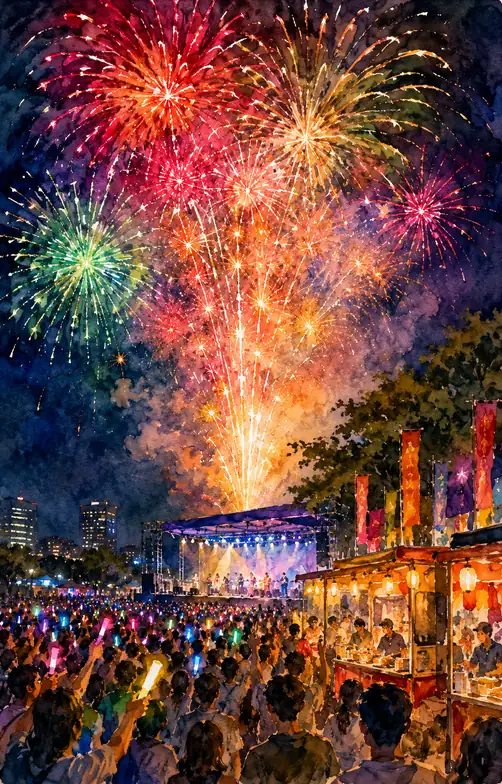 Rays of Light Raised to the Outdoor Stage and Great Blooms in the Night Sky
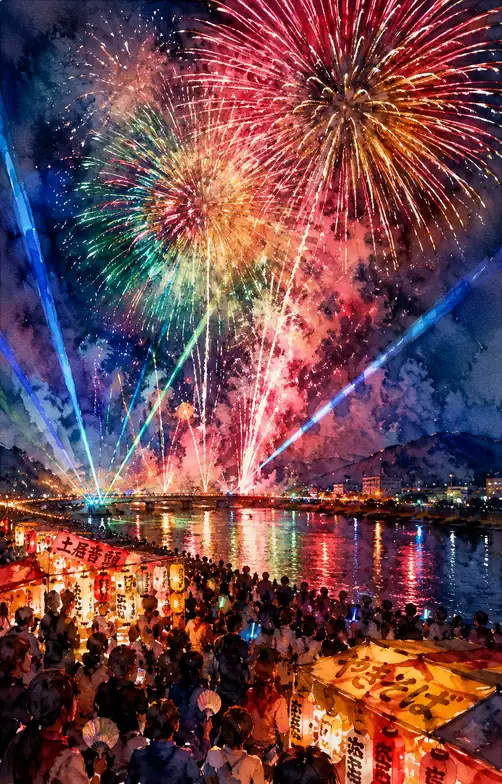 Stall Lights of Doi Ondo and the Great Cascade of Blooms Reflecting on the River