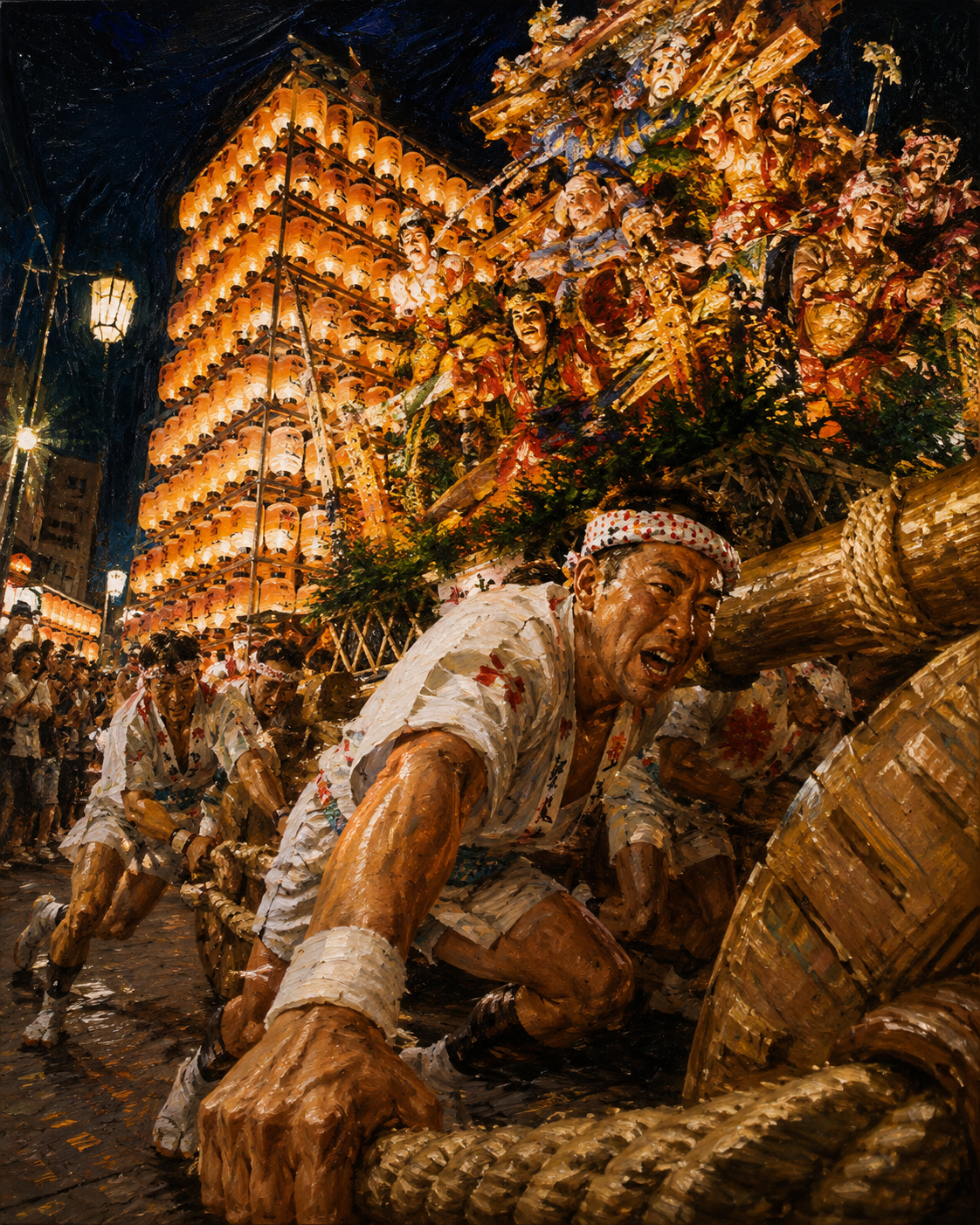
Full-Powered Shoulders Pulling the Rope Bearing the Lantern Tower
Critique
Introduction Seen from almost ground level, this dramatic painting reveals the human burden required to move an immense festival structure. Before decorative figures and lanterns can command attention, a man’s face, shoulder, and gripping hand confront us. Splendor is shown to depend upon physical labor. Description The foreground carrier wears a pale coat and dotted headband. With knees deeply bent, he receives a massive beam on his right shoulder and reaches toward a rope below. Other men crouch behind him. At upper right, a float crowded with vividly costumed warrior-like figures towers overhead; at left, stacked rows of orange lanterns blaze against the night. Analysis The extended arm, shoulder beam, and rising float create three diagonals that describe weight moving forward. Low viewpoint and severe foreshortening enlarge hand and rope, transmitting pressure toward the viewer. Brown flesh, white clothing, and golden light are tightened by a navy-black sky. Thick strokes differentiate muscle, timber, braided fiber, foliage, and ornament through distinct textures. Despite extraordinary density, the image preserves a hierarchy from laboring body to elevated display. Interpretation and Evaluation The central opposition is between radiance above and exertion below. Figures on the float seem to hover, but bent knees and compressed shoulders tether that illusion to material reality. The carrier’s pained, partly outward glance collapses the usual separation between performer and spectator. Receding teammates prevent him from becoming a solitary hero; the festival emerges as synchronized communal work. Conclusion The painting integrates lavish ritual equipment with punishing bodily effort. Rope and hand possess palpable weight, while the luminous towers rise as the achievement of that labor. It respects the often-unseen work sustaining celebration without sacrificing the magnificence of the night.
Same Subcategory
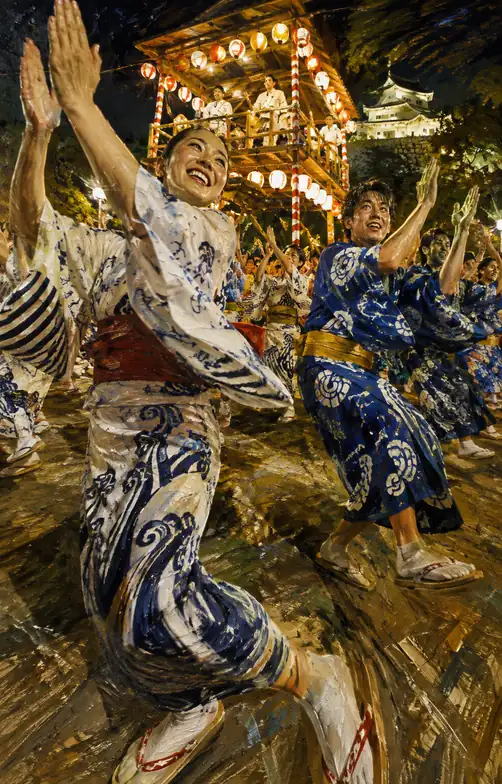 Wave Patterns of Joy Dancing Beneath the White Keep
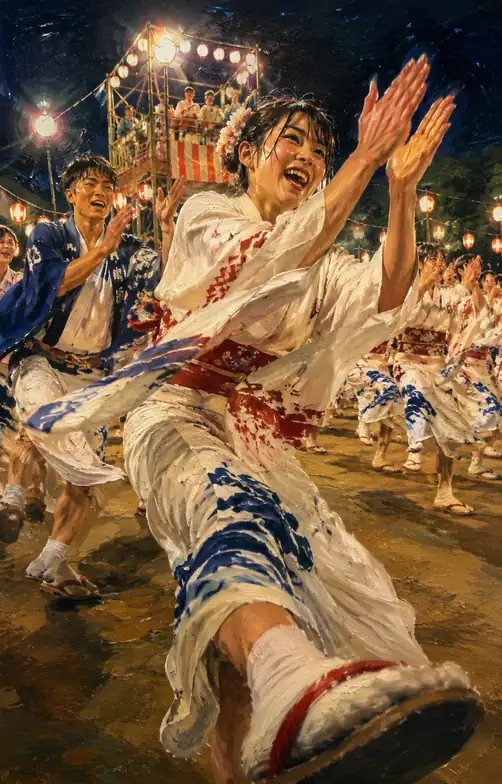 Kicking Out Zori and Handclaps Resounding in the Night Sky
Similar Artworks
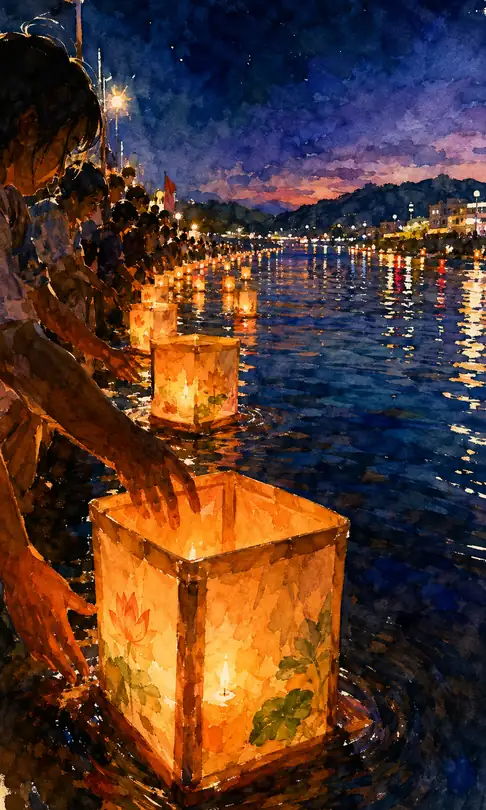 Lotus Lantern of Prayer Entrusted to the Waters and Twilight River Waves
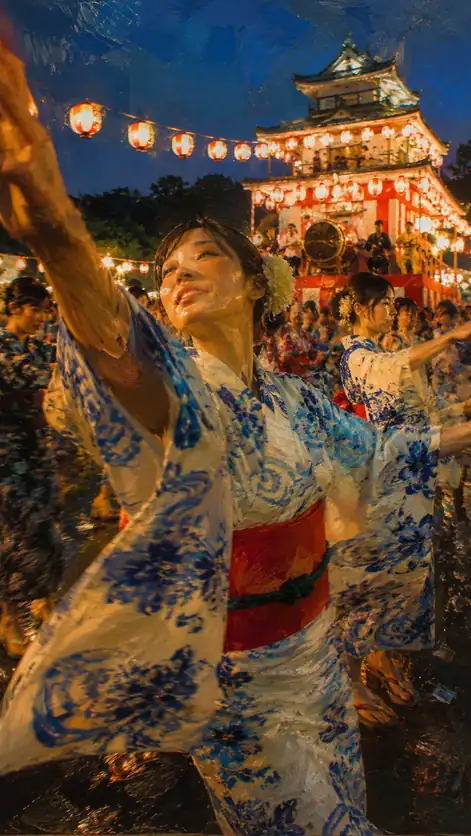 Dancing in Indigo-White Florals Beneath the Lanterns of the Castle Yagura
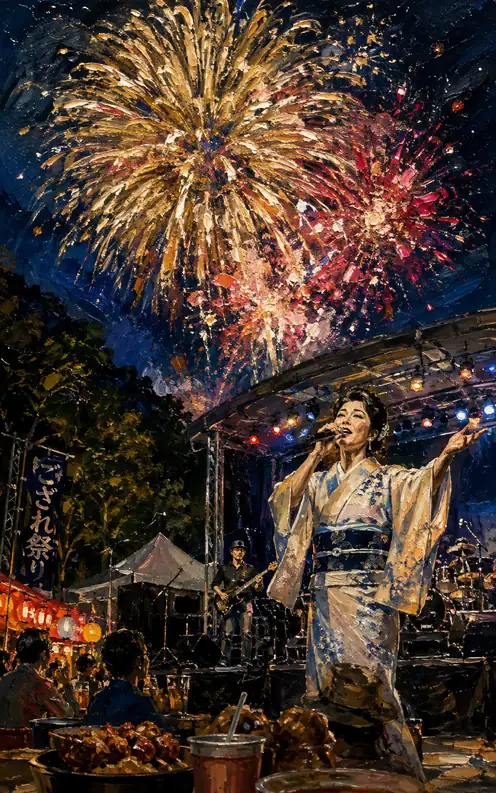 Singing Voice Echoing in the Gozare Festival Night Sky and Golden Blooms
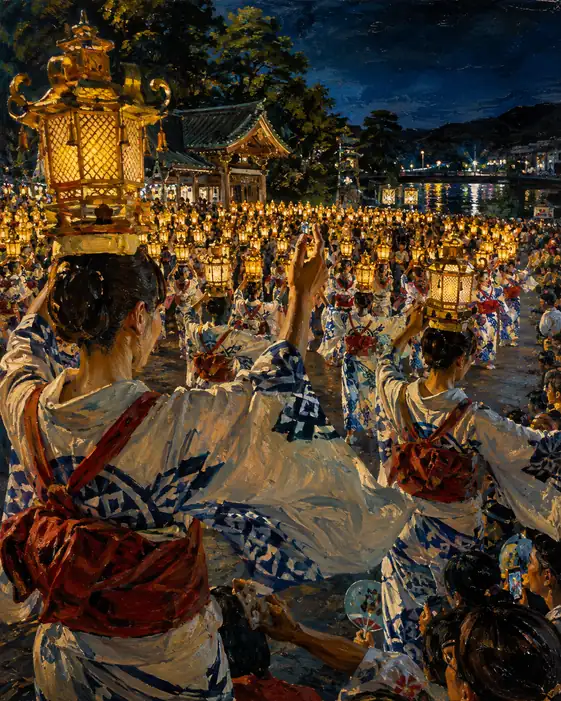 A Thousand Waves of Light Dancing Before the Night Shrine Bearing Golden Lanterns
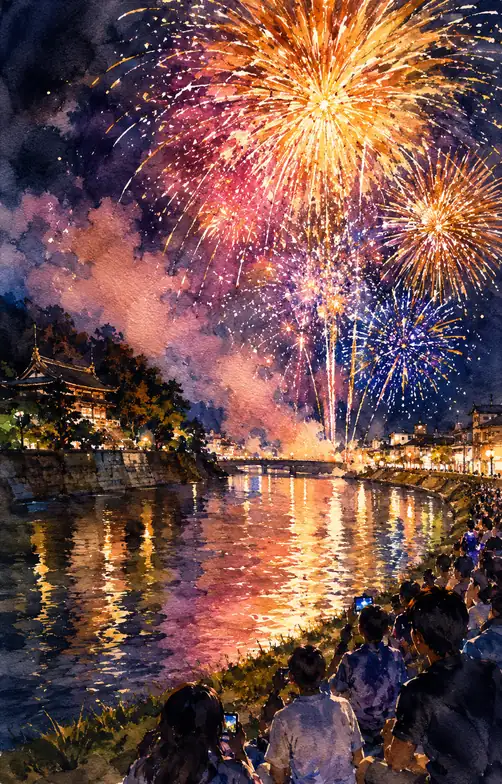 River Waves Illuminating Castle Stone Walls and Great Blooms in the Night Sky
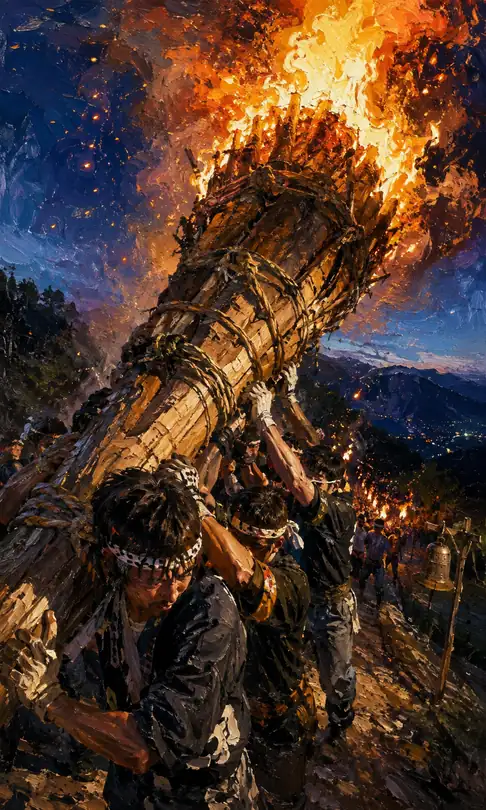 Great Torches Carried Up the Mountain Path and Roaring Flames Scorching the Night Sky
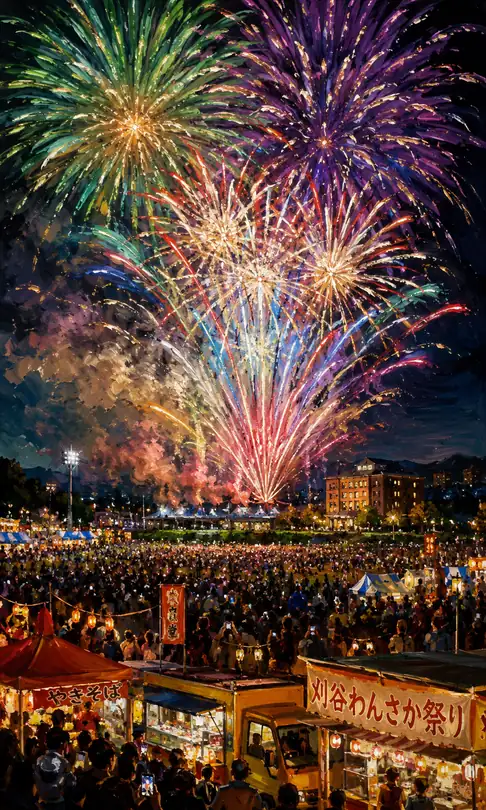 Bustle of Kariya Wansaka and Emerald and Purple Blooms in the Night Sky
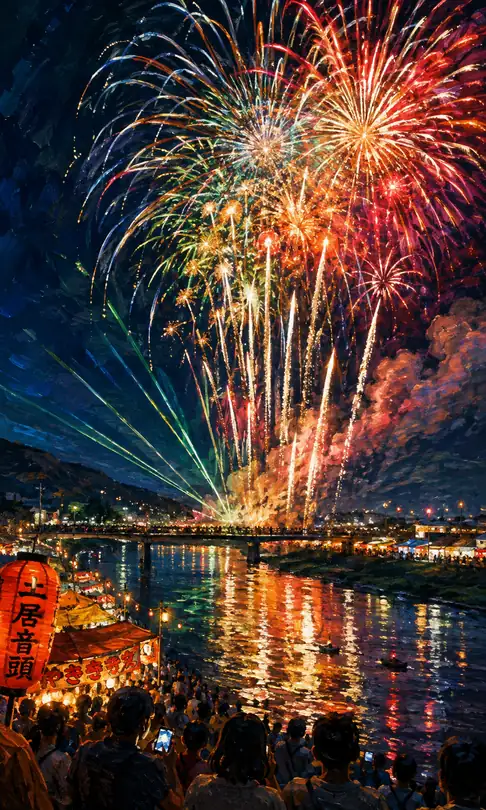 Red Lanterns of Doi Ondo and Blooms of Light Reflecting on the River
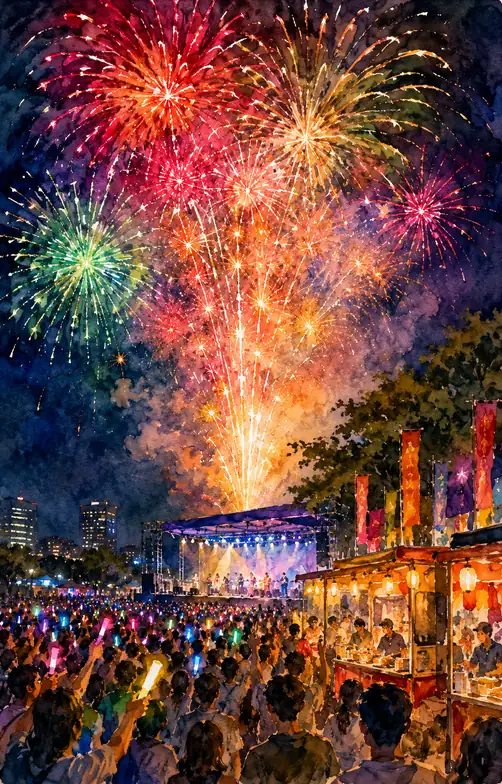 Rays of Light Raised to the Outdoor Stage and Great Blooms in the Night Sky
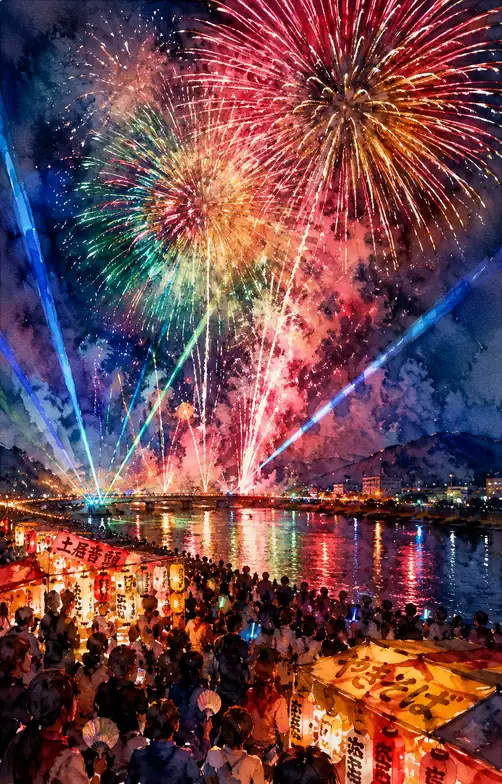 Stall Lights of Doi Ondo and the Great Cascade of Blooms Reflecting on the River