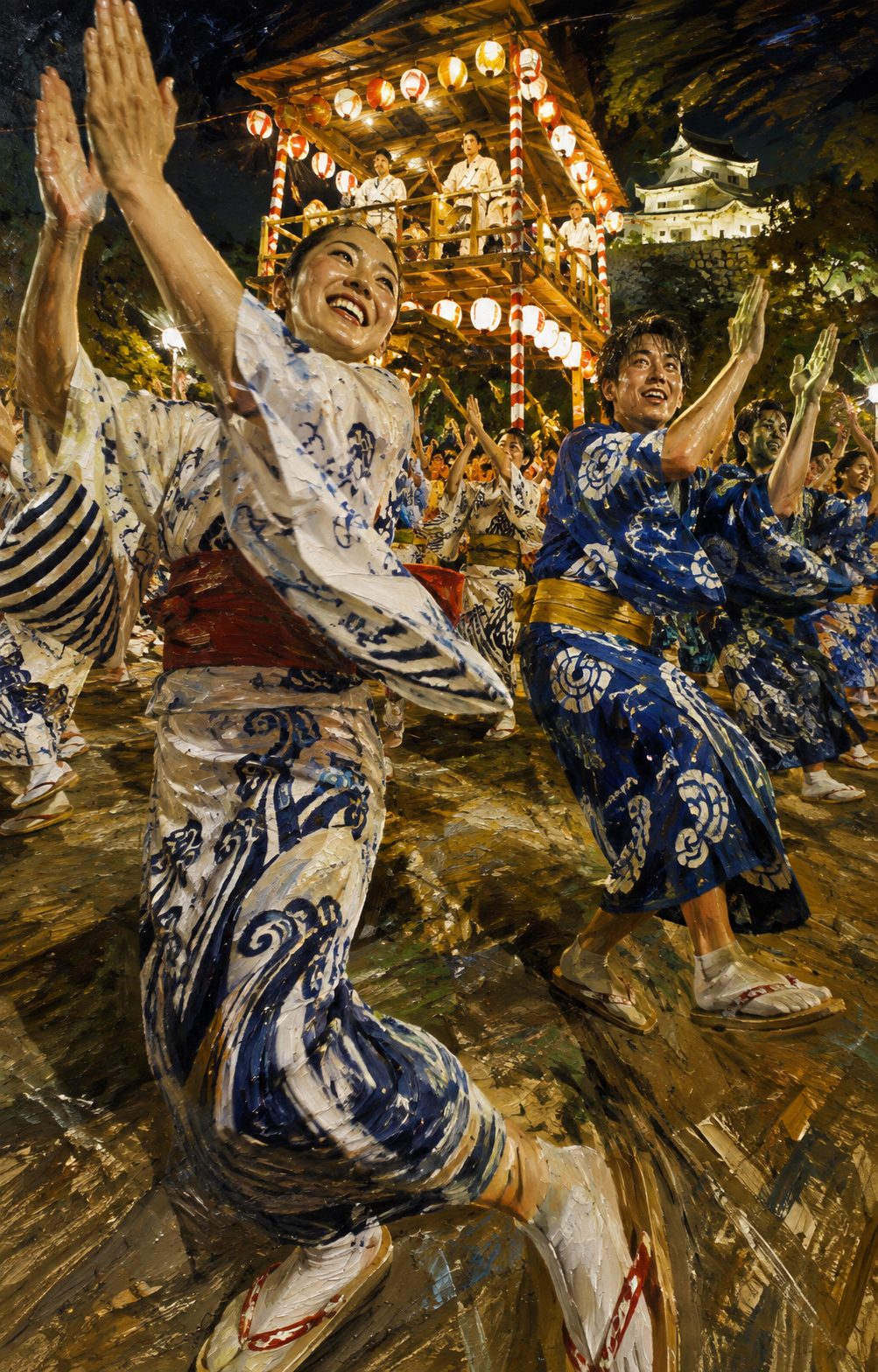
Wave Patterns of Joy Dancing Beneath the White Keep
Critique
Introduction This night scene condenses a castle dance into two smiles and lifted arms. Platform, crowd, and landmark appear, yet living bodies remain the subject. An upward mood fills the composition. Description At left, a woman in a white robe patterned with indigo waves and tied with red raises her hands together while smiling. A man beside her wears deep blue and a yellow sash, echoing the gesture. Dancers of several ages continue behind them. Musicians perform on a timber tower at center, and a brilliantly lit white castle rises above stone walls at upper right. Analysis Parallel diagonals in the arms carry movement toward the platform posts and the castle’s vertical accents. The woman’s twisting torso and crossing feet trace an S-curve, preserving rotation within stillness. Warm yellow-orange lamps envelop blue and white garments, while the cooler castle becomes a distant secondary focus. Rough ground strokes record the direction of steps. Repeated textile motifs and raised palms reinforce the dance’s beat across depth. Interpretation and Evaluation The castle supplies history without becoming an oppressive protagonist. Citizens dancing below it suggest heritage transmitted through ordinary contemporary bodies. Contrasting costumes and stances also reveal diversity within a shared pattern. Placing musicians over the dancers gives the scene a strong center, as though sound descends to coordinate the movement. The result avoids reducing either architecture or festival to a postcard emblem. Conclusion The painting moves beyond scenic record to describe continuity among people, sound, and place. Open expressions and forceful steps invite participation, while platform and castle support them across spatial and historical scales. Abundant information is unified by one persuasive ascending rhythm.
Same Subcategory
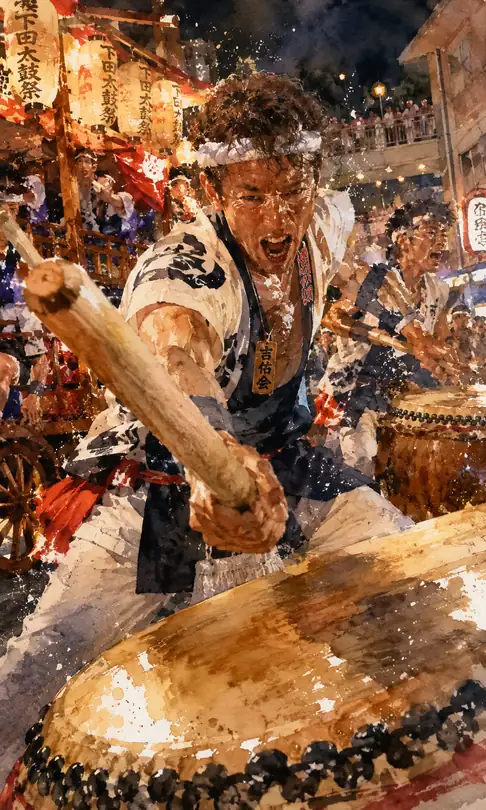 Soul of Shimoda Roaring in Sweat and Flying Spray
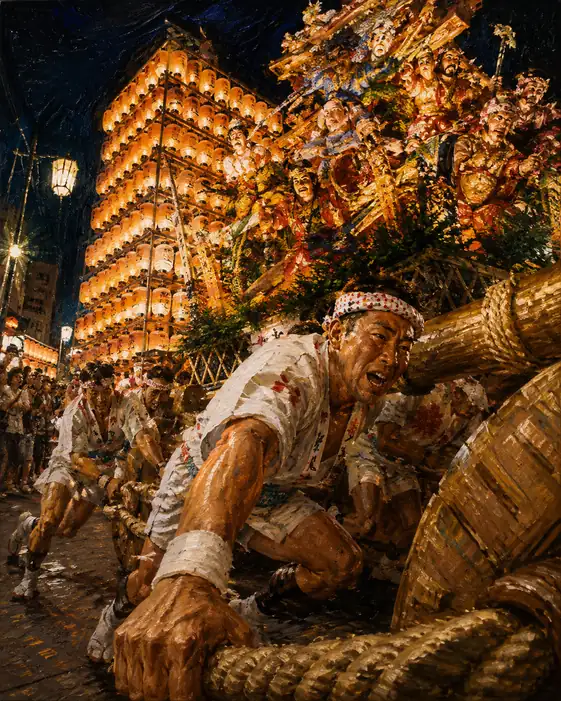 Full-Powered Shoulders Pulling the Rope Bearing the Lantern Tower
Similar Artworks
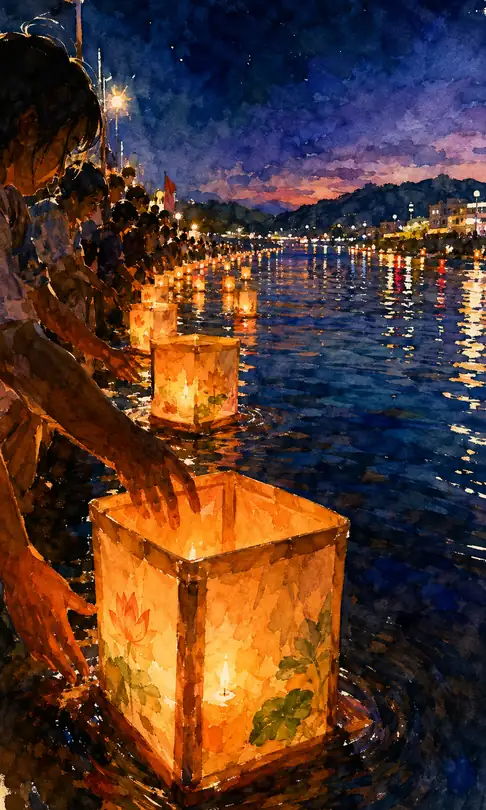 Lotus Lantern of Prayer Entrusted to the Waters and Twilight River Waves
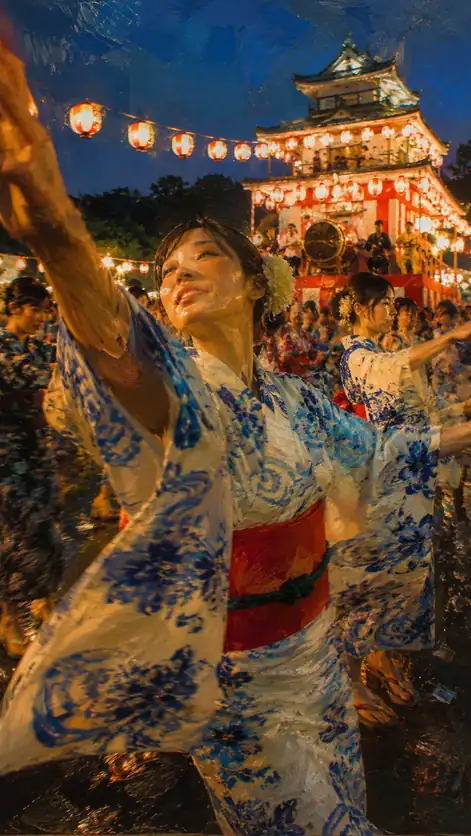 Dancing in Indigo-White Florals Beneath the Lanterns of the Castle Yagura
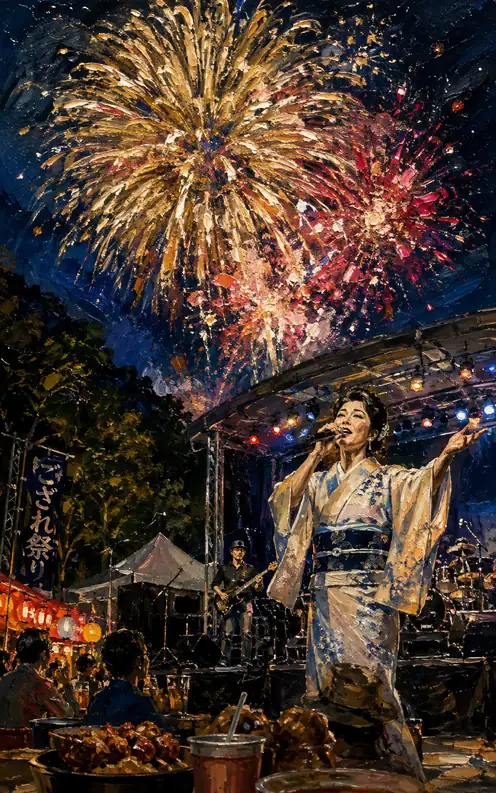 Singing Voice Echoing in the Gozare Festival Night Sky and Golden Blooms
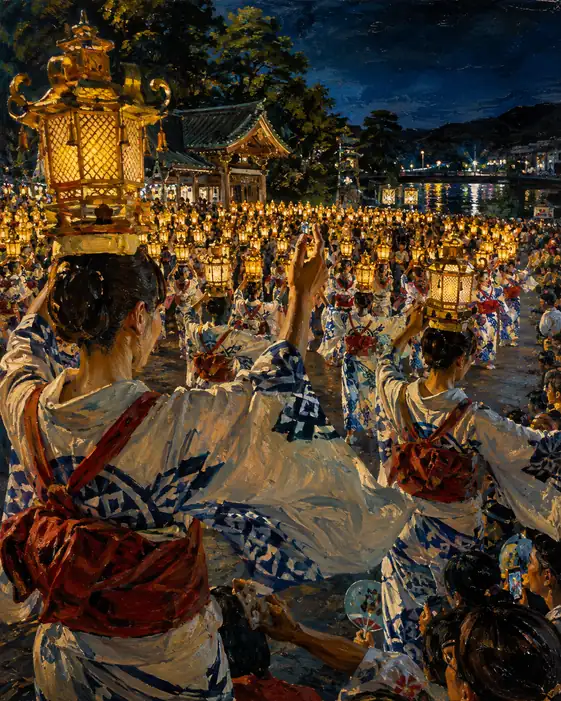 A Thousand Waves of Light Dancing Before the Night Shrine Bearing Golden Lanterns
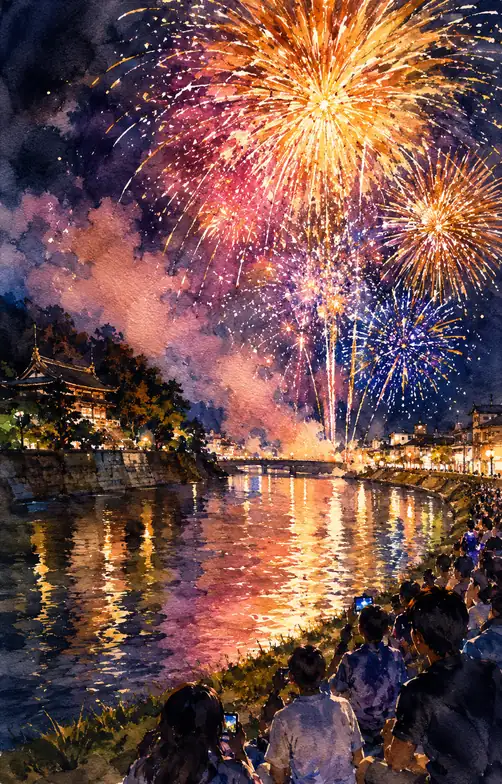 River Waves Illuminating Castle Stone Walls and Great Blooms in the Night Sky
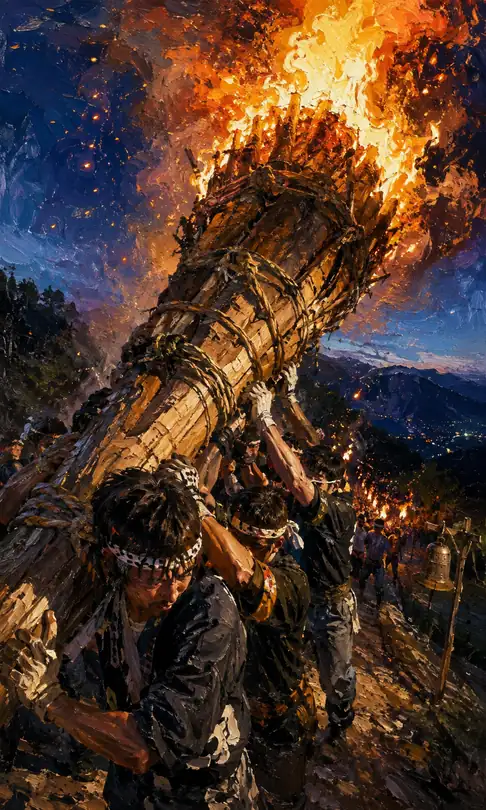 Great Torches Carried Up the Mountain Path and Roaring Flames Scorching the Night Sky
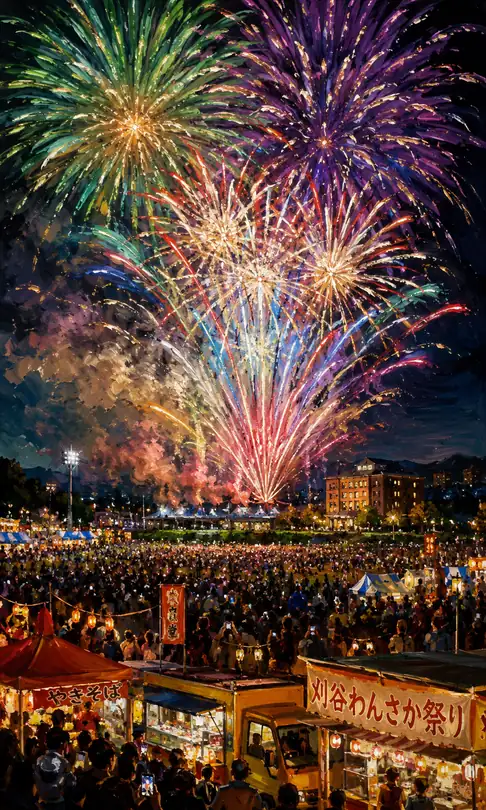 Bustle of Kariya Wansaka and Emerald and Purple Blooms in the Night Sky
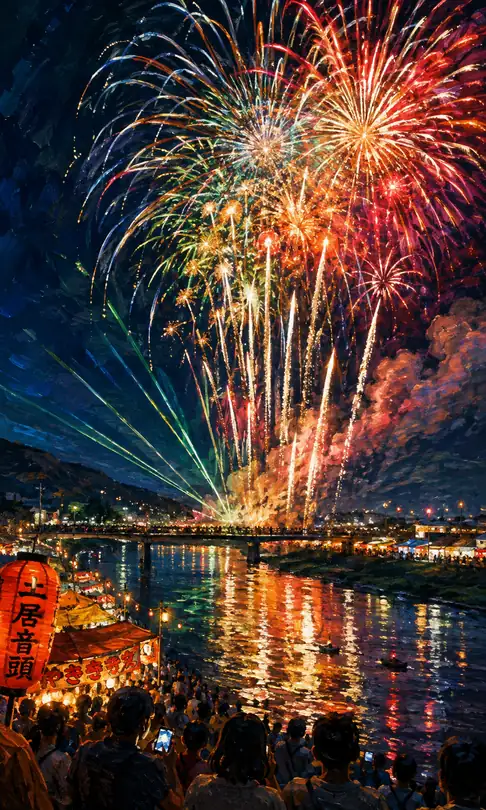 Red Lanterns of Doi Ondo and Blooms of Light Reflecting on the River
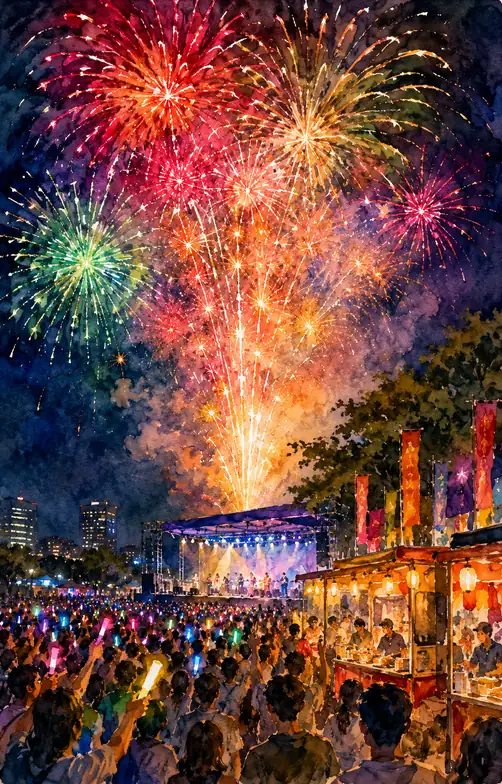 Rays of Light Raised to the Outdoor Stage and Great Blooms in the Night Sky
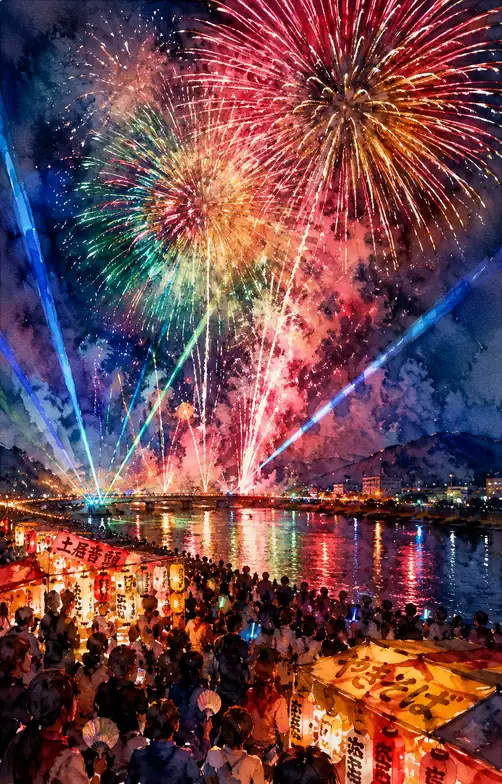 Stall Lights of Doi Ondo and the Great Cascade of Blooms Reflecting on the River