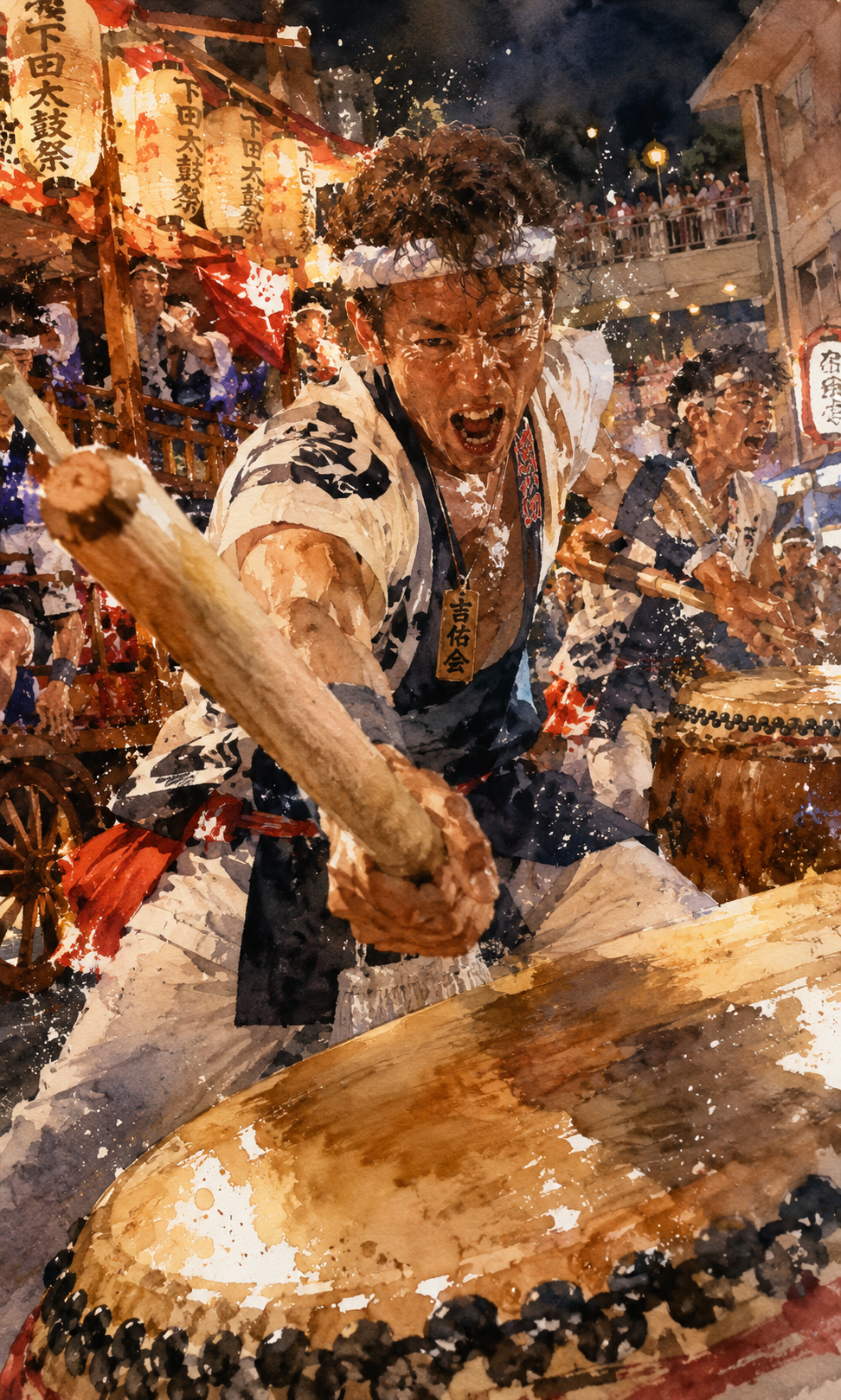
Soul of Shimoda Roaring in Sweat and Flying Spray
Critique
Introduction This work transforms watercolor splashes into the impact of drumming. A mallet projects toward us and the hide occupies much of the lower frame, placing the viewer immediately before the strike. The performer’s shout and the crowd’s heat inhabit every scattered white mark. Description At center, a man in a white headband and navy-white coat bares his chest, opens his mouth, and drives a thick stick downward. A wooden tag hangs at his neck. Another drummer works at right; at left, a wheeled float carries inscribed lanterns and musicians. Spectators line a bridge above. White droplets fly across night sky, streetlamps, bodies, and instruments. Analysis Severe foreshortening connects the foreground stick to the player’s arm and face, while the tilted ellipse of the hide receives its force. Float and secondary drum form a triangular support around the protagonist. Transparent browns let skin and timber share warmth, whereas navy, white, and vermilion distinguish costume and equipment. Reserved whites and splattered pigment make sweat, water, and acoustic pressure visually inseparable. Despite surface turbulence, the strike remains a clear focal event. Interpretation and Evaluation Sound becomes visible collision. The enlarged mallet distorts literal scale but directly joins the drummer’s intention to the viewer’s bodily response. The neck tag, written lanterns, fellow players, and audience return private intensity to an organized civic ritual. Especially effective is the opposition between watercolor accident and disciplined gesture: release and control remain in productive tension. Conclusion Foreshortening, restricted color, and splashed light make the drum’s bass resonance imaginable. Fatigue and pride coexist in the central expression, while rich background detail connects performance to community. The image delivers immediate excitement without losing the labor and solidarity behind it.
Same Subcategory
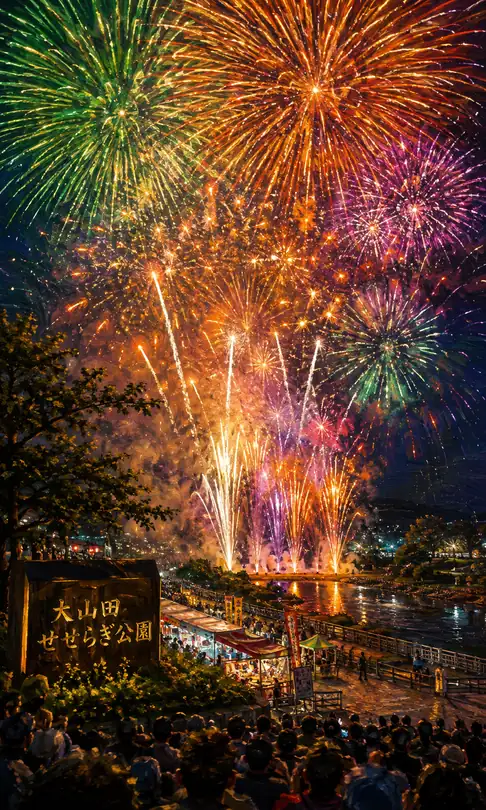 Night of a Hundred Blooms Reflecting upon the Stream of Seseragi Park
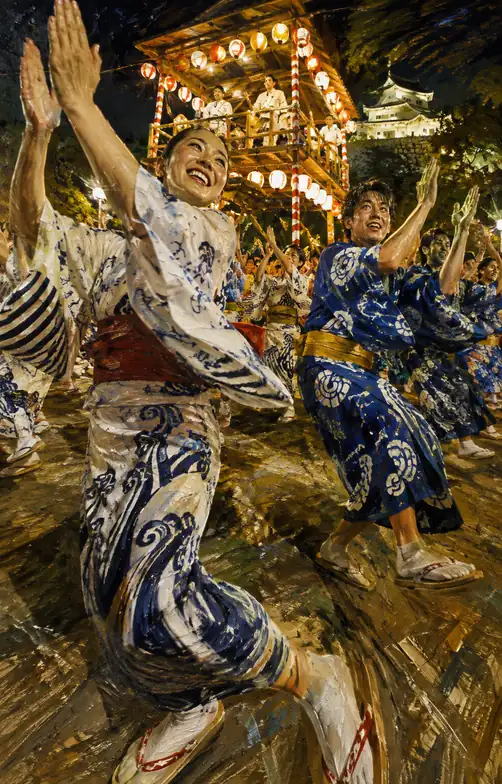 Wave Patterns of Joy Dancing Beneath the White Keep
Similar Artworks
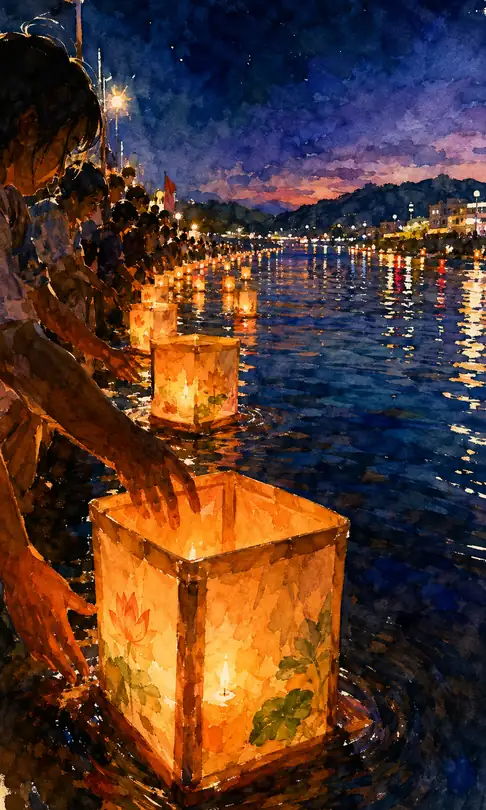 Lotus Lantern of Prayer Entrusted to the Waters and Twilight River Waves
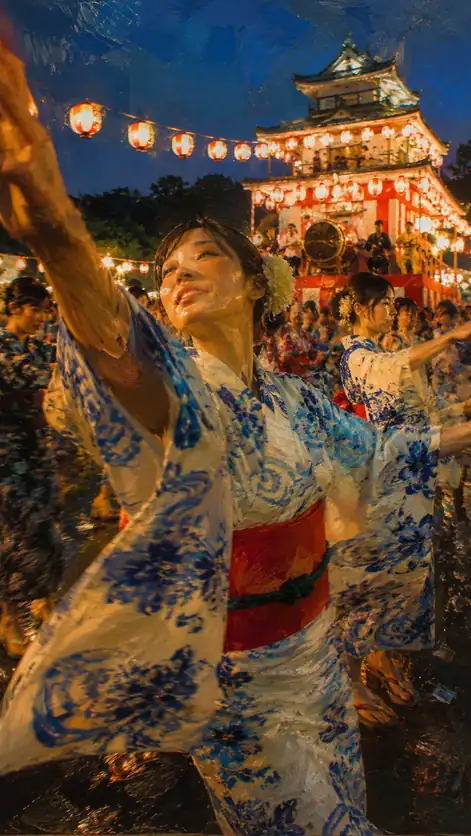 Dancing in Indigo-White Florals Beneath the Lanterns of the Castle Yagura
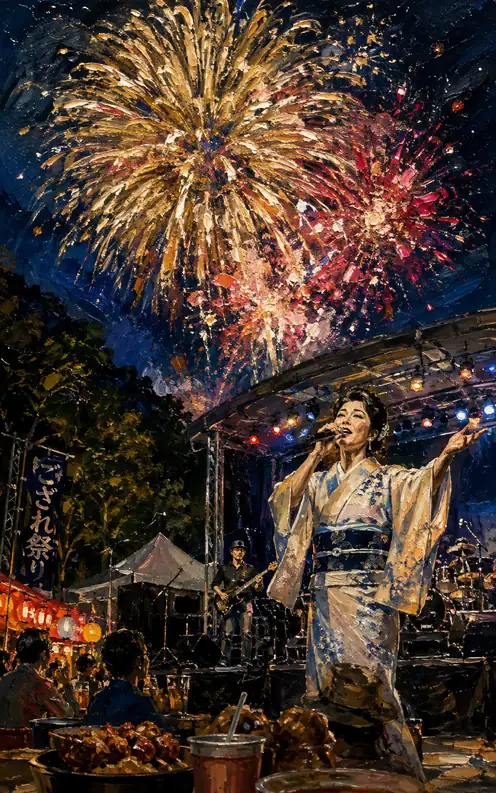 Singing Voice Echoing in the Gozare Festival Night Sky and Golden Blooms
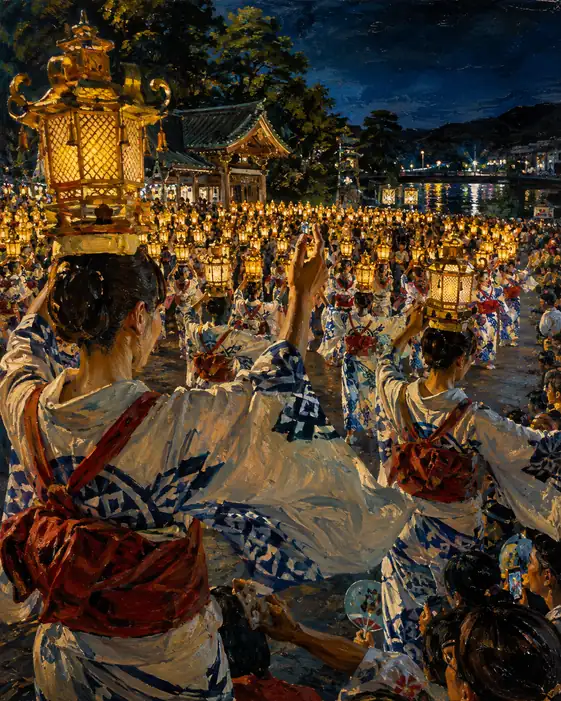 A Thousand Waves of Light Dancing Before the Night Shrine Bearing Golden Lanterns
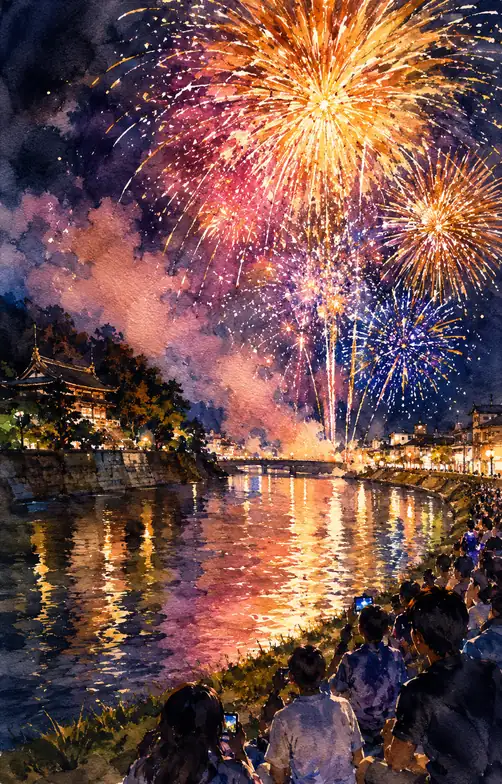 River Waves Illuminating Castle Stone Walls and Great Blooms in the Night Sky
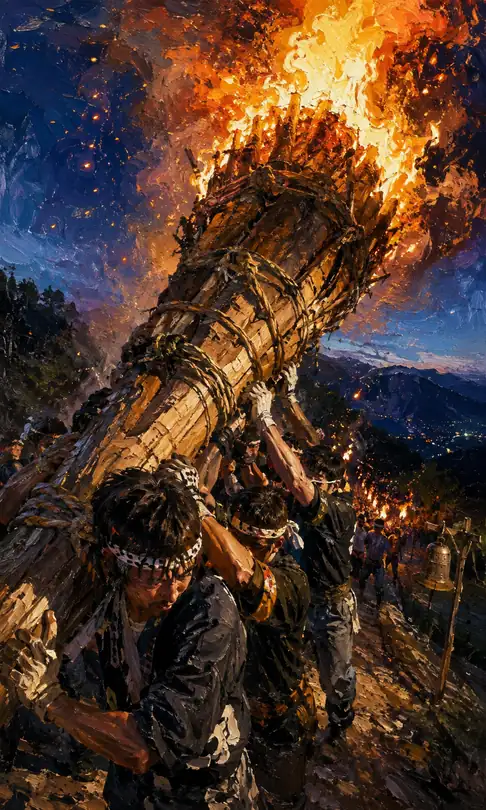 Great Torches Carried Up the Mountain Path and Roaring Flames Scorching the Night Sky
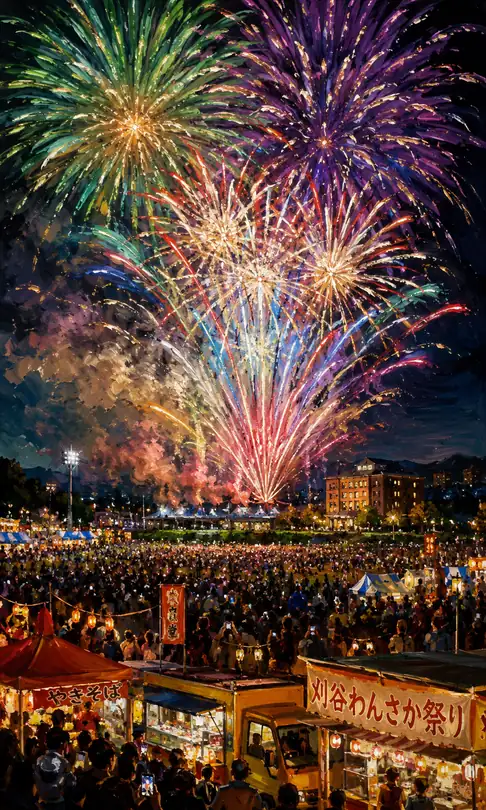 Bustle of Kariya Wansaka and Emerald and Purple Blooms in the Night Sky
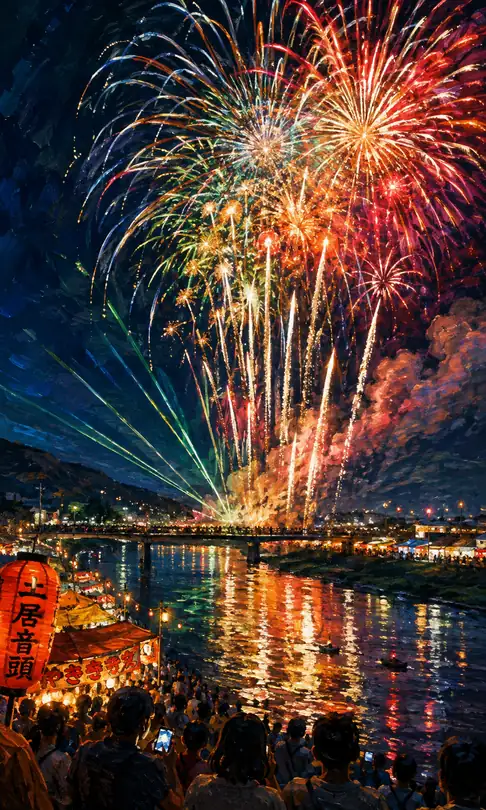 Red Lanterns of Doi Ondo and Blooms of Light Reflecting on the River
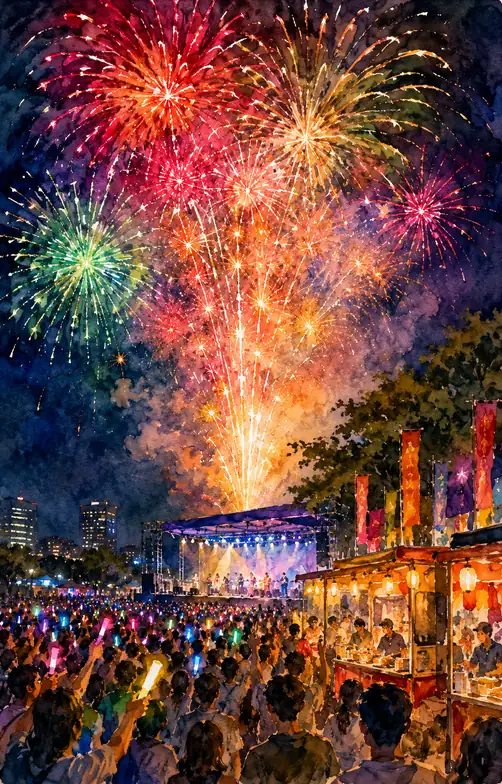 Rays of Light Raised to the Outdoor Stage and Great Blooms in the Night Sky
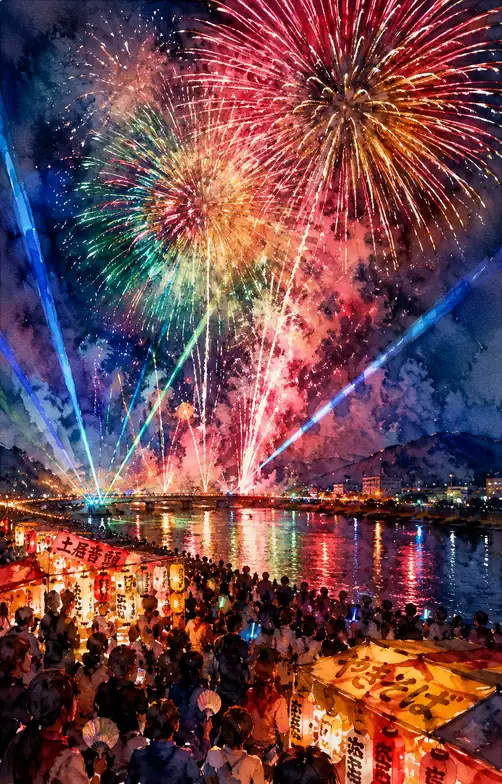 Stall Lights of Doi Ondo and the Great Cascade of Blooms Reflecting on the River