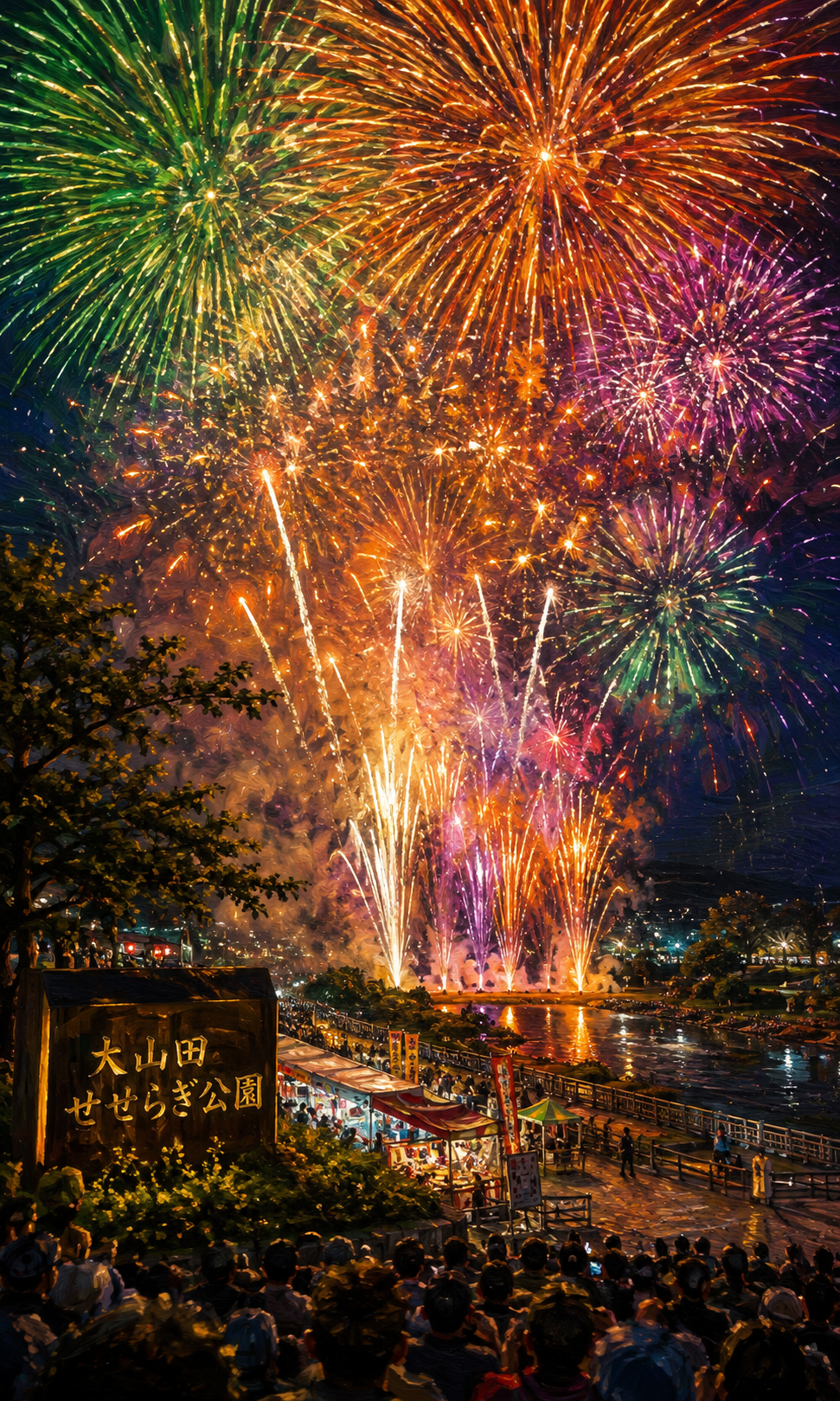
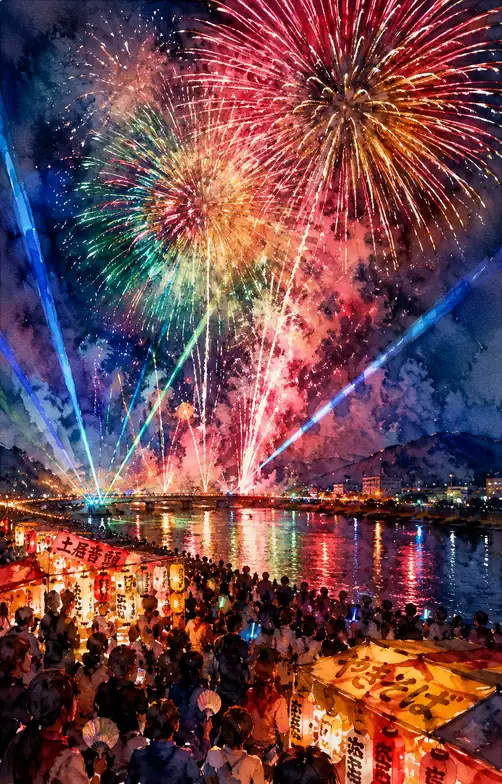
Night of a Hundred Blooms Reflecting upon the Stream of Seseragi Park
Critique
Introduction This celebratory landscape fits a sky overwhelmed by fireworks and a crowded waterside park into a tall frame. The scale of light is immense, yet a carved marker, stalls, spectators, and reflections preserve a precise sense of place. Sky-borne spectacle remains tied to life on the ground. Description Green, orange, violet, and blue bursts overlap above, while white-gold fountains climb from the lower center. Smoke turns amber, and a pond catches vertical ribbons of reflected fire. Dark trees frame both sides. Below are a promenade, food stalls, banners, and a dense audience. A stone at lower left carries the park’s name. Analysis Circular explosions, a horizontal shoreline, and vertical launch trails establish the composition’s geometry. Cropping the largest blooms implies expansion beyond the picture and intensifies their scale against tiny figures. Complementary green and red-orange, violet and yellow, create exuberance, restrained by near-black foliage. Reflections and small stall lights transfer the sky’s brilliance downward. Dense marks above gradually yield to more legible structures below, preventing chromatic abundance from becoming shapeless. Interpretation and Evaluation The inscribed stone does more than identify a site. It anchors a transient event in local memory and keeps grandeur from becoming anonymous. Spectators merge into a dark collective, but stalls and pathways invite imagined individual experiences. The almost excessive accumulation of color and explosions feels less like documentary simultaneity than the enlargement performed by recollection. Conclusion The work skillfully links sky, water, and crowd through a circulation of light. Bursts command attention, but smoke, reflections, trees, and vendors give the night its depth. Spectacle and local intimacy coexist, making the scene persuasive as both event and remembered summer experience.
Same Subcategory
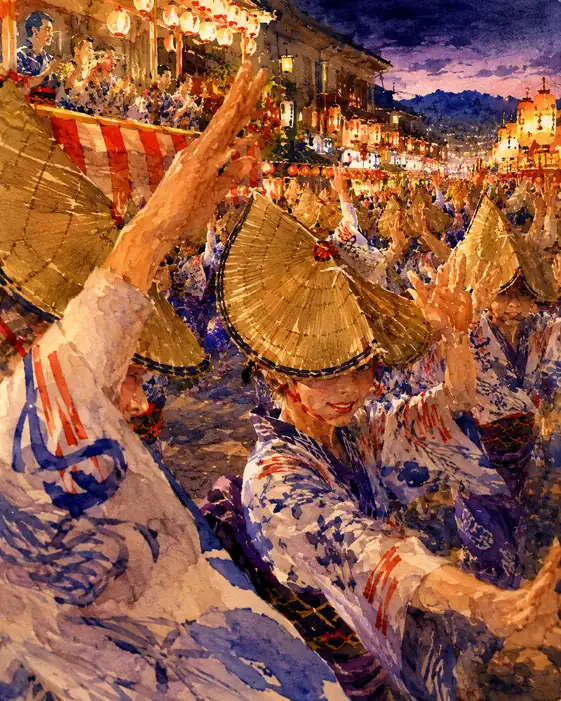 Waves of Woven Hats Drifting on the Twilight Slope
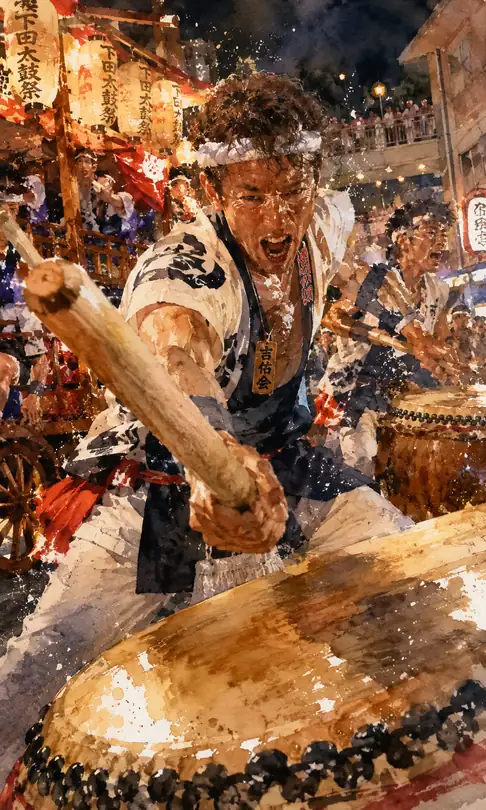 Soul of Shimoda Roaring in Sweat and Flying Spray
Similar Artworks
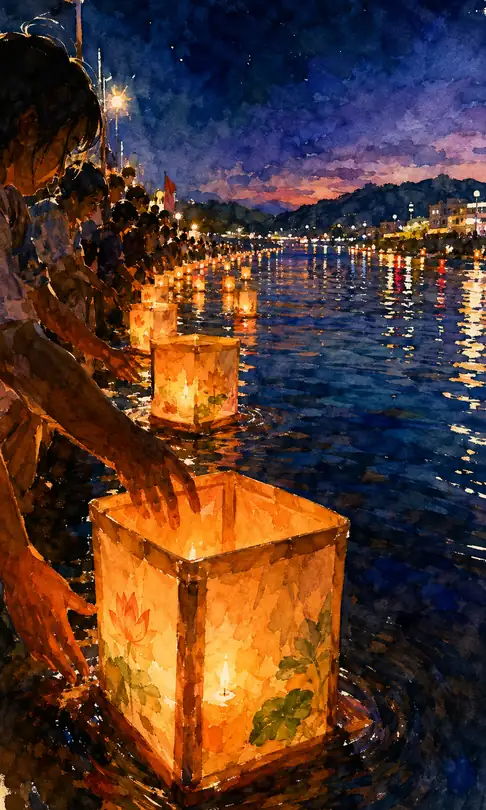 Lotus Lantern of Prayer Entrusted to the Waters and Twilight River Waves
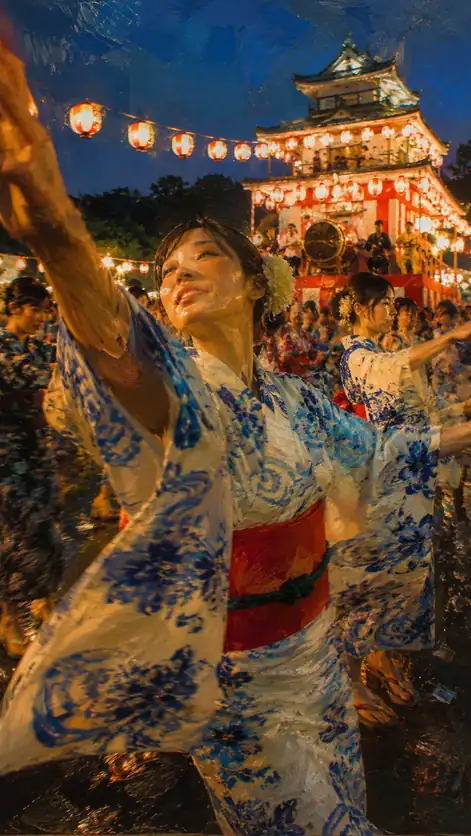 Dancing in Indigo-White Florals Beneath the Lanterns of the Castle Yagura
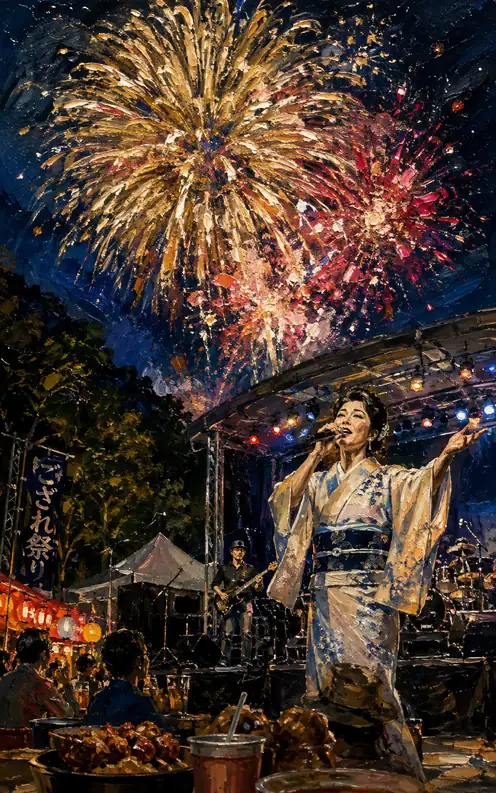 Singing Voice Echoing in the Gozare Festival Night Sky and Golden Blooms
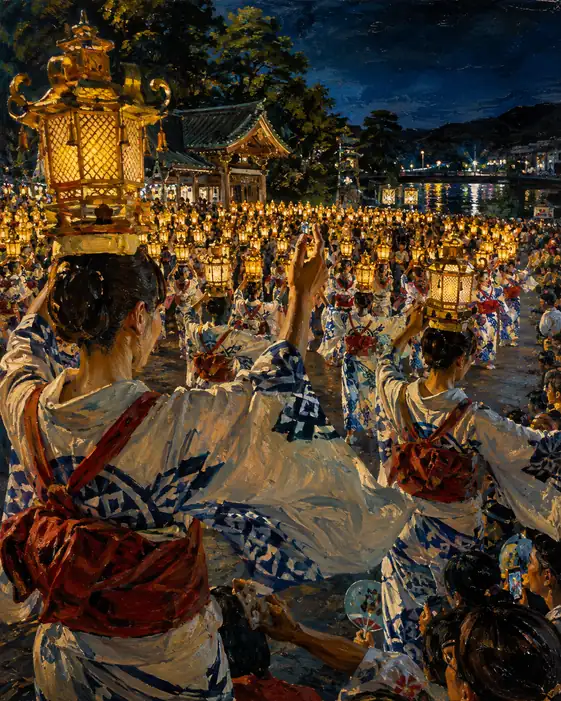 A Thousand Waves of Light Dancing Before the Night Shrine Bearing Golden Lanterns
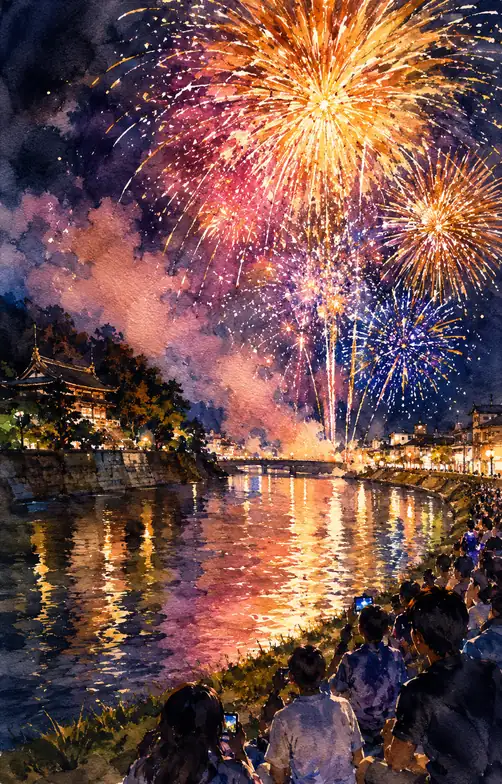 River Waves Illuminating Castle Stone Walls and Great Blooms in the Night Sky
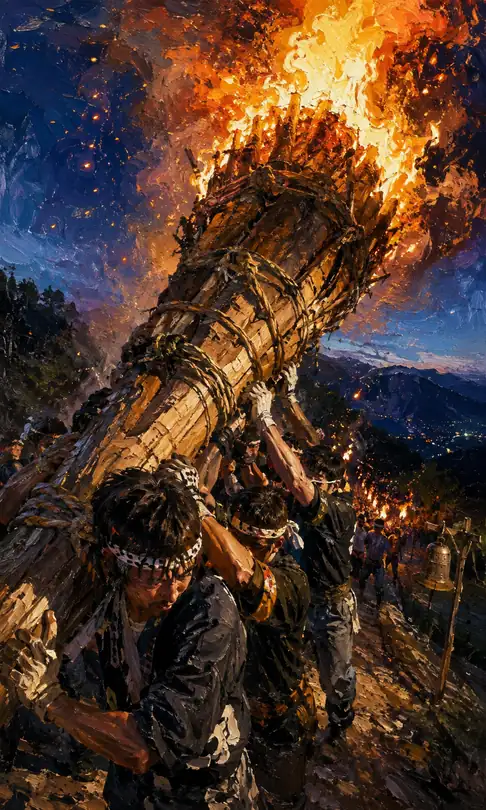 Great Torches Carried Up the Mountain Path and Roaring Flames Scorching the Night Sky
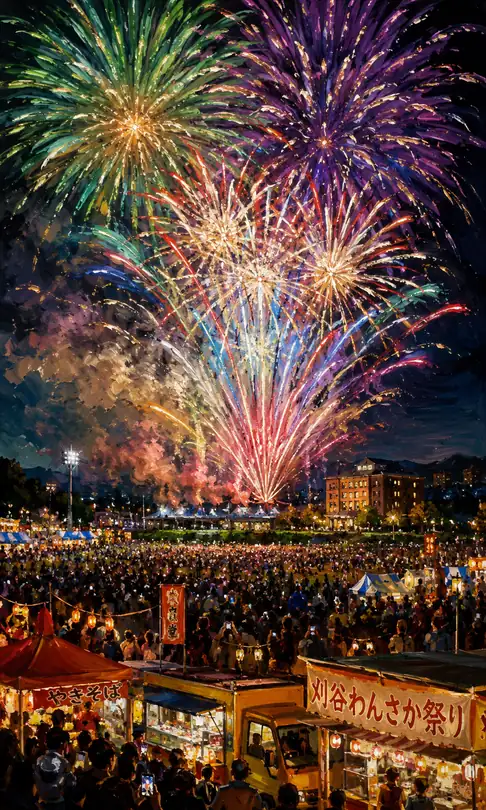 Bustle of Kariya Wansaka and Emerald and Purple Blooms in the Night Sky
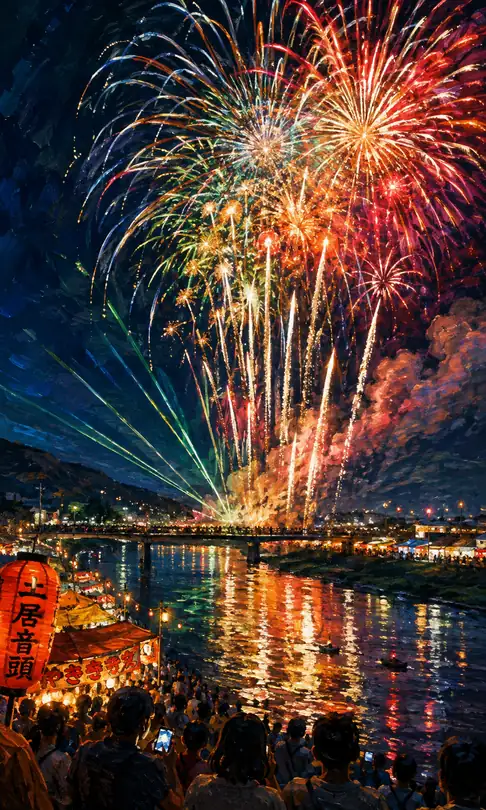 Red Lanterns of Doi Ondo and Blooms of Light Reflecting on the River
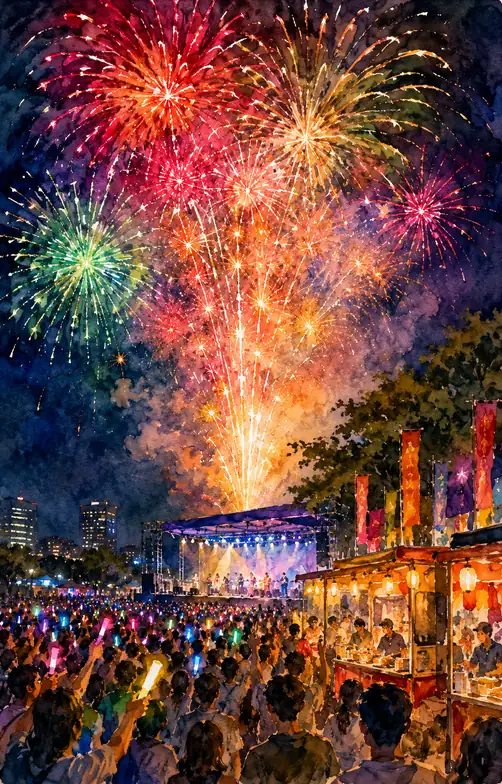 Rays of Light Raised to the Outdoor Stage and Great Blooms in the Night Sky
 Stall Lights of Doi Ondo and the Great Cascade of Blooms Reflecting on the River