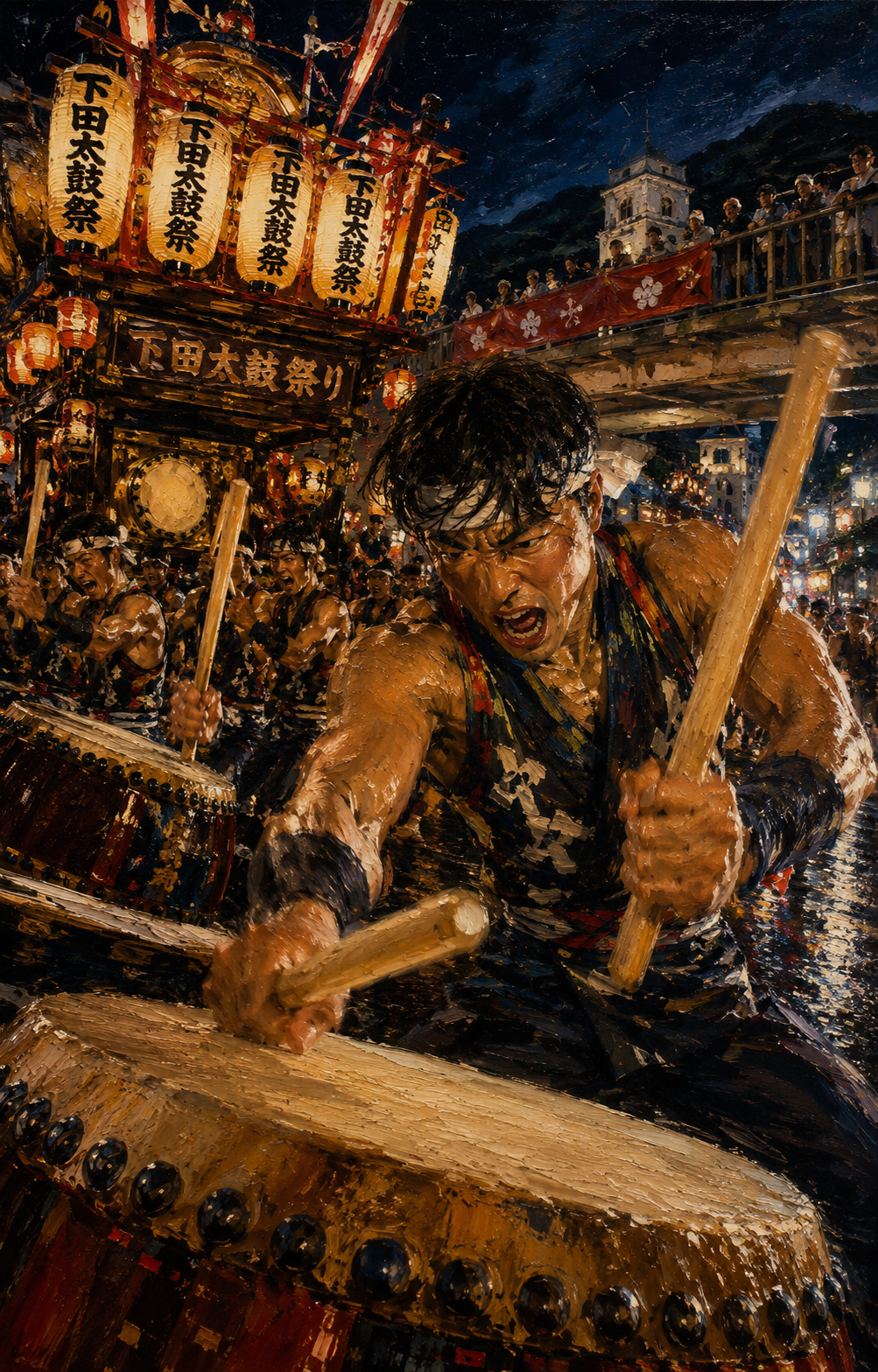
Roar of Dedication and Shimoda Taiko Striking the Soul
Critique
Introduction This painting condenses pre-strike tension into a performer and festival architecture. Close mallets and rim eliminate safe distance. Sweat, shouting, wood, and hide press through heavy paint. Description A man in a dark sleeveless costume and headband occupies the center. Wet hair clings to his forehead as he cries out and drives two mallets downward. A studded drum is cropped across the bottom; more players and drums continue at left. Behind them rises an elaborate lantern-covered float. Spectators line a bridge draped in red, with a pale tower and dark blue sky farther back. Analysis The mallets and arms form a converging triangle that concentrates attention on the impending point of impact. The drum’s ellipse, the float’s vertical mass, and the bridge’s horizontal span exert competing forces while stabilizing the crowded scene. Brown-orange flesh and golden lamps oppose the cool sky, and sharp white highlights articulate sweat and straining muscles. Raised strokes entangle skin, water, timber, and metal in one visual pulse. Interpretation and Evaluation The drummer’s expression, almost painful in its intensity, presents performance as physical offering and shared labor rather than easy entertainment. Open mouths and synchronized sticks behind him connect individual exertion to collective rhythm. Lettered lanterns, watching townspeople, and civic architecture show the sound taking possession of an entire street. Although dramatized, the scene remains persuasive because bodily weight and fatigue are carefully observed. Conclusion Proximity, repetition, and material texture make audible force visible. The design is direct at the point of impact yet preserves a rich sense of local scale around it. By centering effort rather than decoration, the painting holds celebration and hardship together in a memorable image.
Same Subcategory
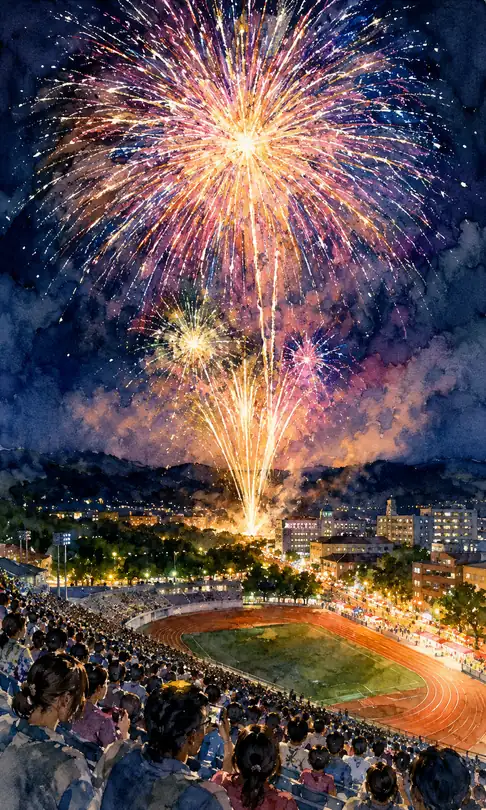 Golden Sparks Raining Down upon the Stadium
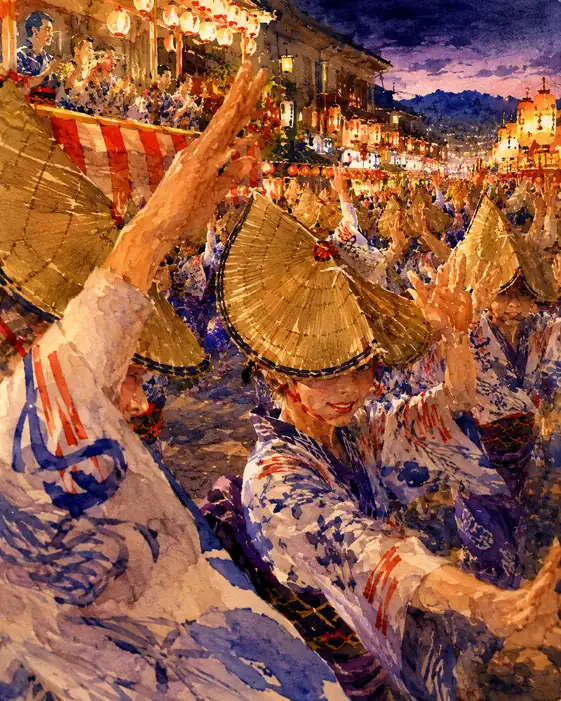 Waves of Woven Hats Drifting on the Twilight Slope
Similar Artworks
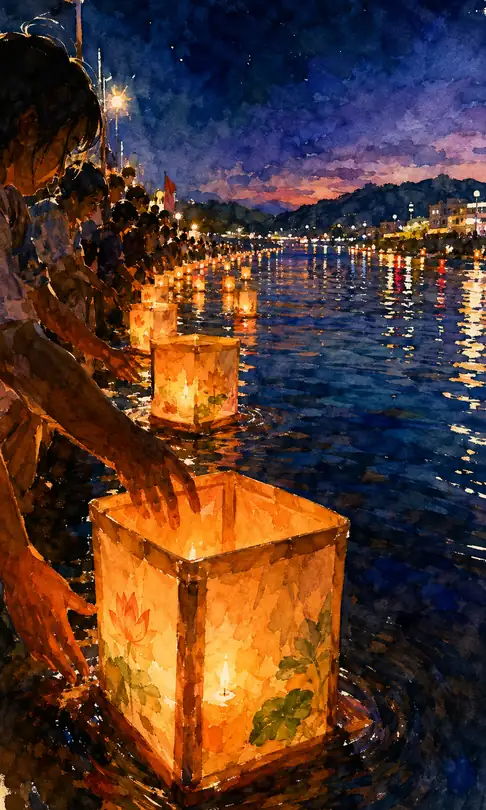 Lotus Lantern of Prayer Entrusted to the Waters and Twilight River Waves
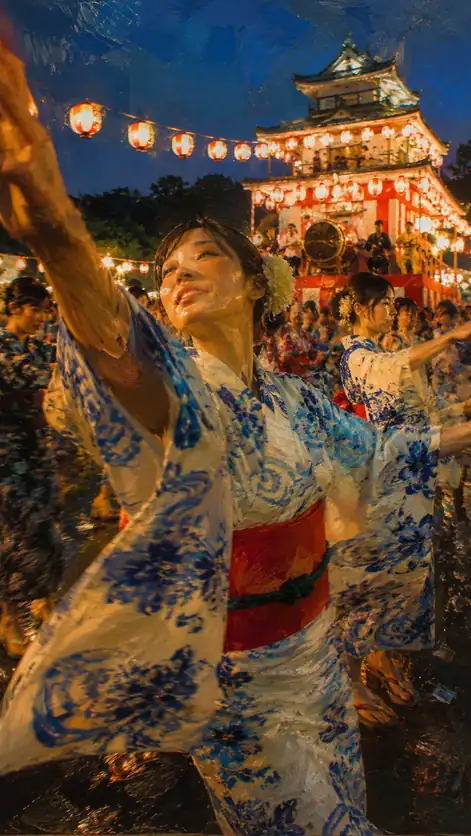 Dancing in Indigo-White Florals Beneath the Lanterns of the Castle Yagura
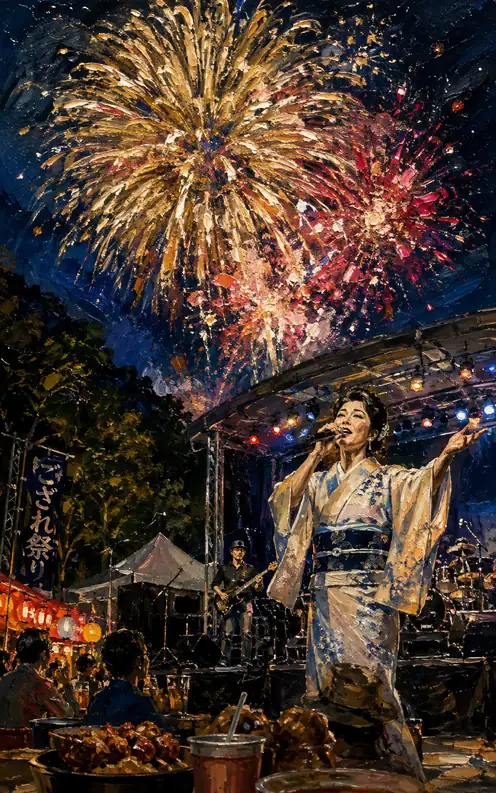 Singing Voice Echoing in the Gozare Festival Night Sky and Golden Blooms
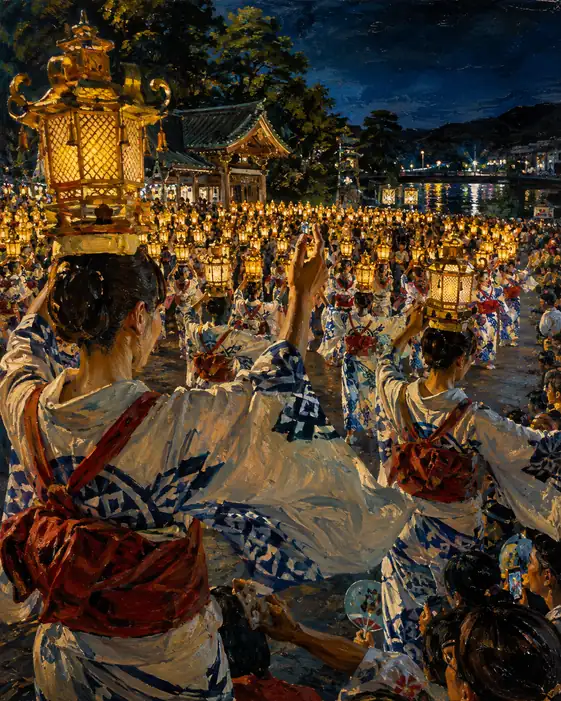 A Thousand Waves of Light Dancing Before the Night Shrine Bearing Golden Lanterns
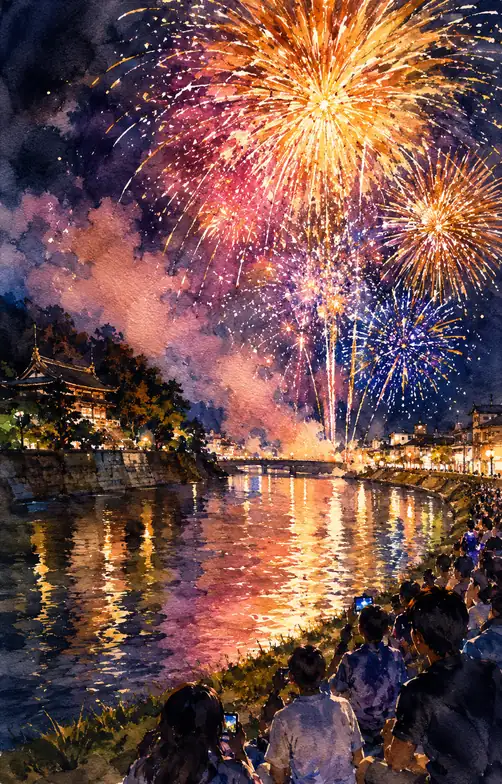 River Waves Illuminating Castle Stone Walls and Great Blooms in the Night Sky
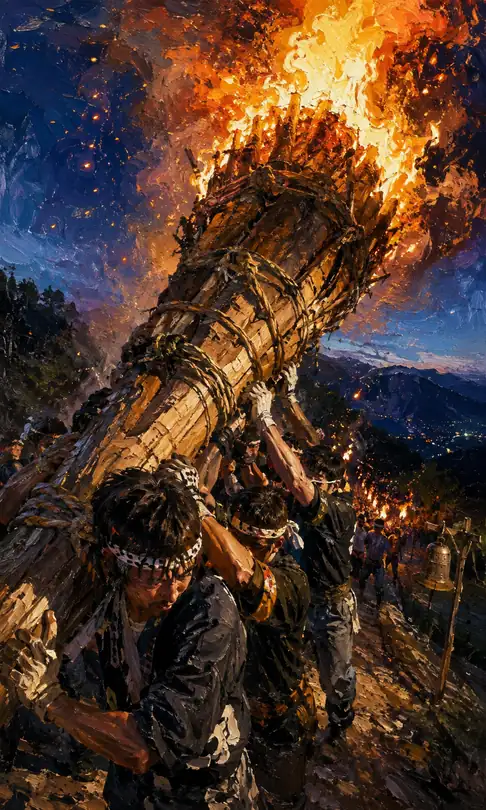 Great Torches Carried Up the Mountain Path and Roaring Flames Scorching the Night Sky
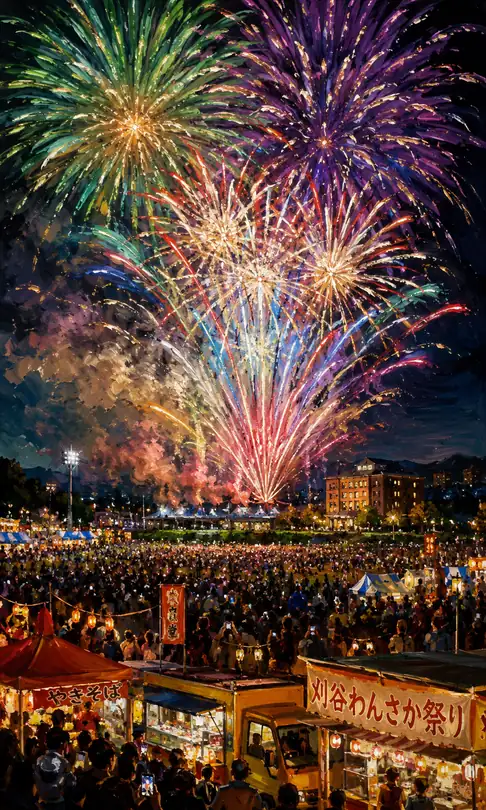 Bustle of Kariya Wansaka and Emerald and Purple Blooms in the Night Sky
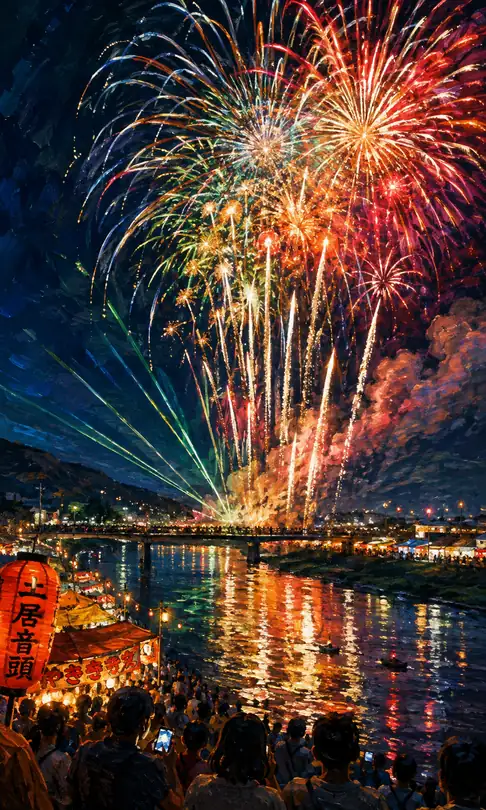 Red Lanterns of Doi Ondo and Blooms of Light Reflecting on the River
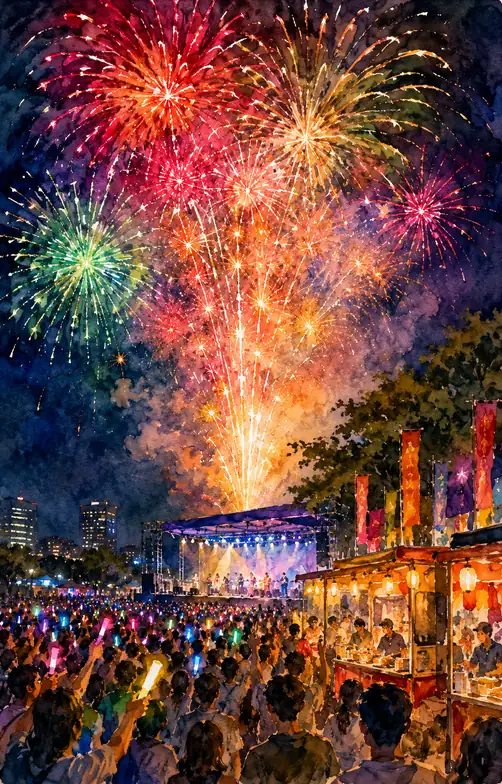 Rays of Light Raised to the Outdoor Stage and Great Blooms in the Night Sky
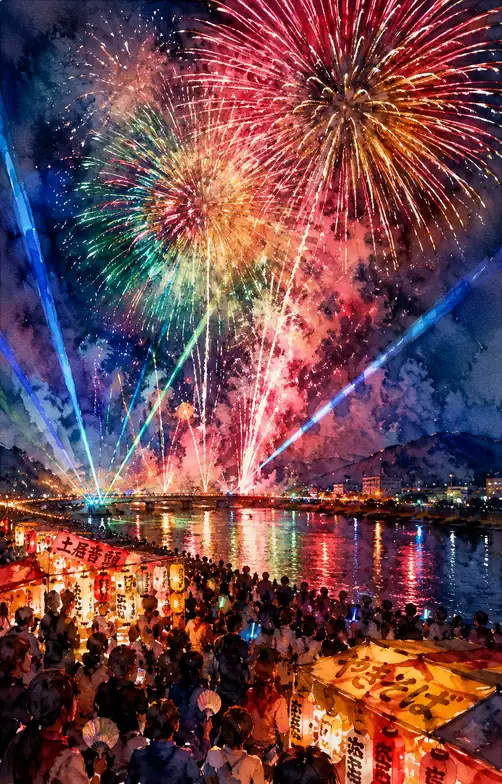 Stall Lights of Doi Ondo and the Great Cascade of Blooms Reflecting on the River