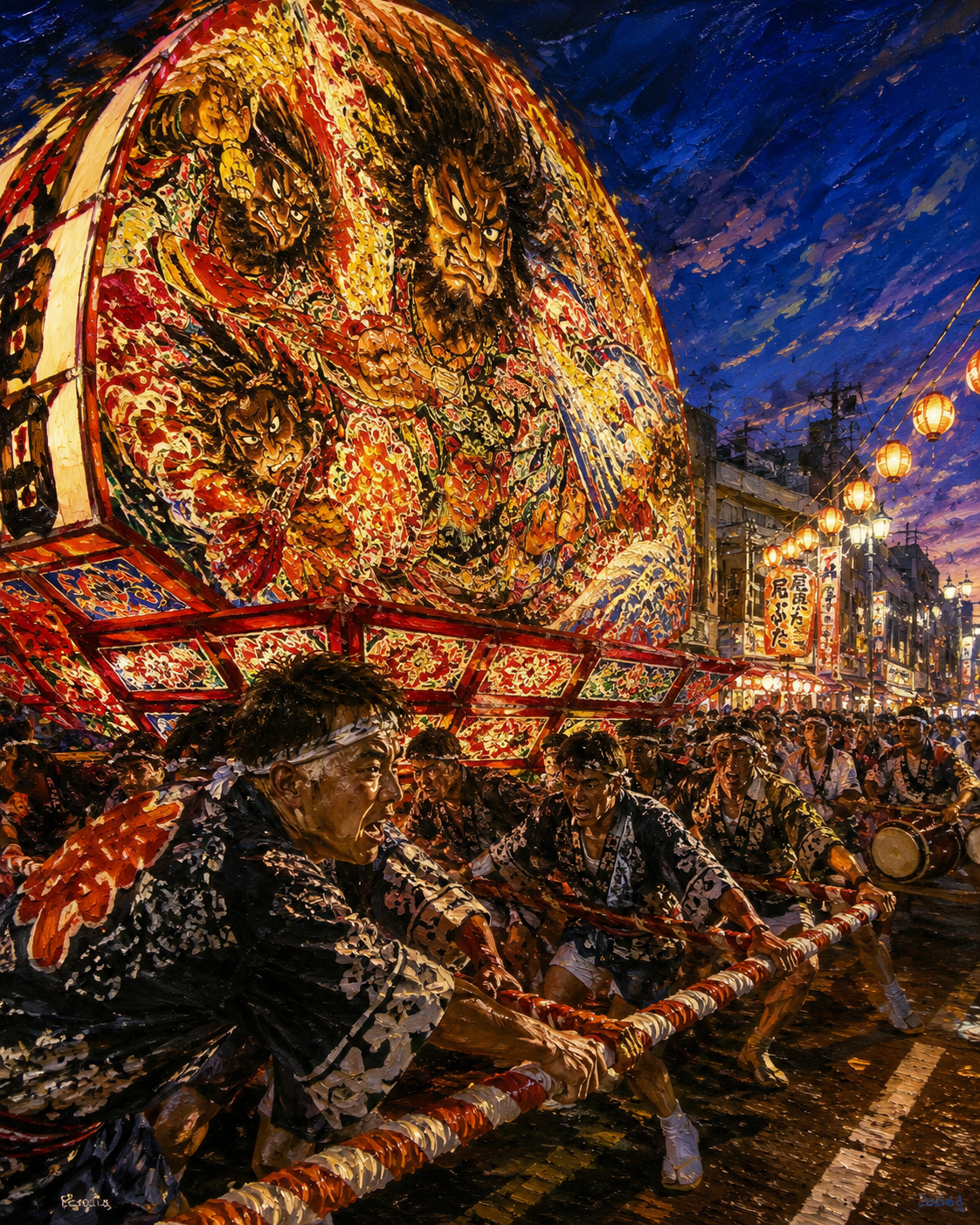
Burning Warrior Painting and the Earth-Shaking Tow Rope
Critique
Introduction This impasto painting crowds a night street with people hauling an enormous illuminated float. A radiant warrior image fills the upper half above bodies pulling below, connecting spectacle to human propulsion. Deep ultramarine and red-gold communicate nocturnal heat. Description A huge curved float panel presses from upper left, densely depicting armored warriors, severe faces, and wave- or flame-like patterns in red, gold, and black. Below, headbanded men in patterned coats pull a thick red-white rope. The nearest man opens his mouth, lowers his hips, and steps toward us. A drummer and dense crowd continue at right. Lanterns, signs, poles, and shopfronts recede beneath dark blue sky. Analysis The float’s arc covers the top, while the rope diagonal carries force from right distance to lower left. Ornate curves above and bent knees below converge along one direction. Saturated red-gold flares against sky and clothing, and small lantern circles measure depth. Raised strokes distinguish luminous surface, wet street, and perspiring skin. Open mouths also establish the imagined direction of sound. Interpretation and Evaluation The warrior scene possesses narrative authority, yet rope and hands reveal its dependence upon communal effort. Pullers adjust individually to footing and tension rather than forming a uniform pattern. Contemporary shops and wires allow fantastic imagery to invade lived urban space. Splendor and bodily severity remain balanced. Conclusion The warrior image dominates first, but fingers on rope, lowered hips, and distant drum gradually reveal movement and meter. Arc versus diagonal, red-gold versus blue, and radiant panel versus dark bodies tighten the design. Grandeur becomes understandable through feet and voices.
Same Subcategory
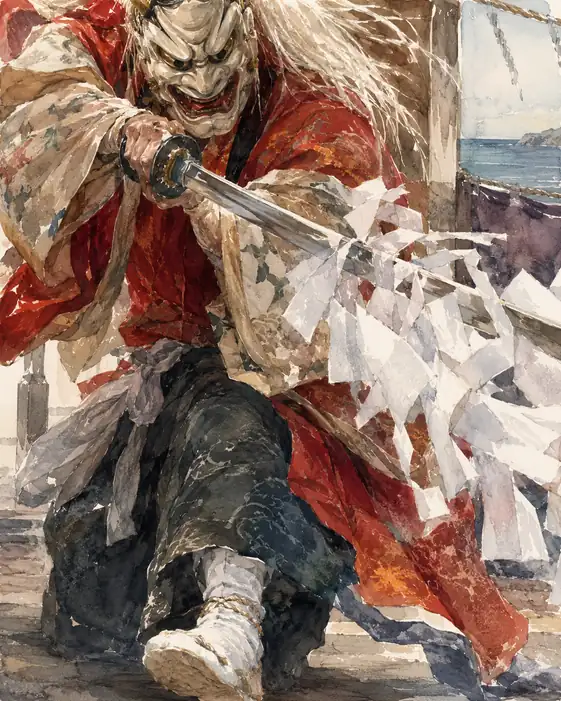 Stepping White Tabi and the Sword Path of the White Demon Mask
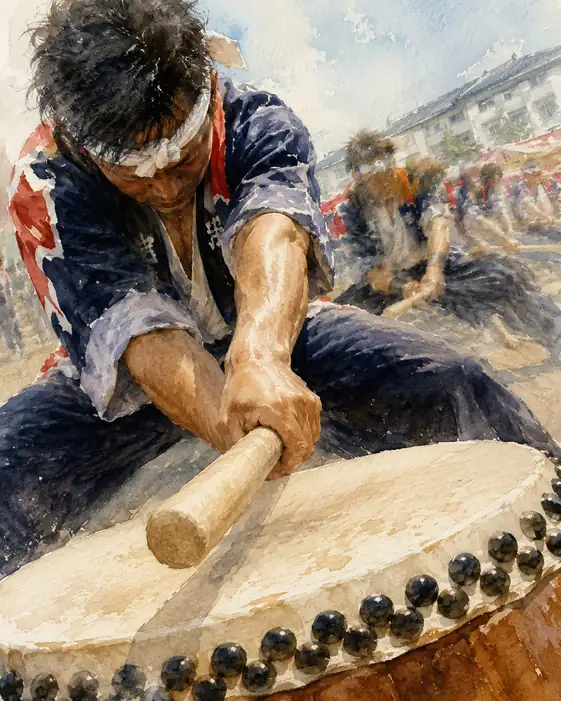 Sweat-Gleaming Arms and the Bachi Tip Sinking into the Drumhead
Similar Artworks
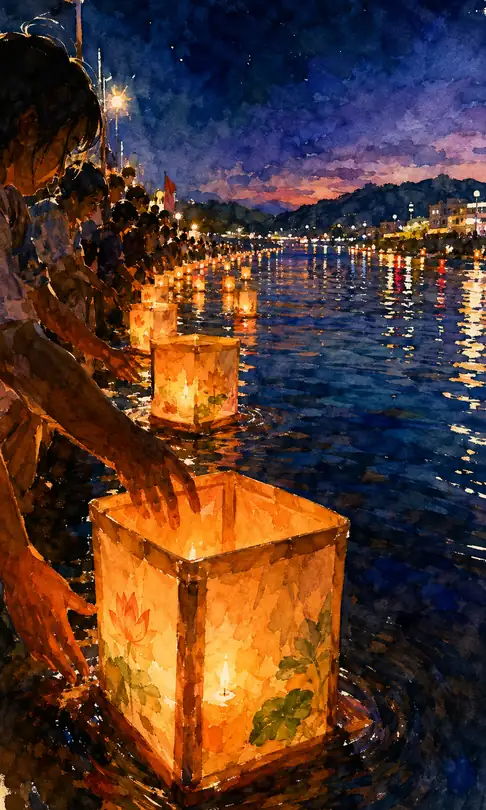 Lotus Lantern of Prayer Entrusted to the Waters and Twilight River Waves
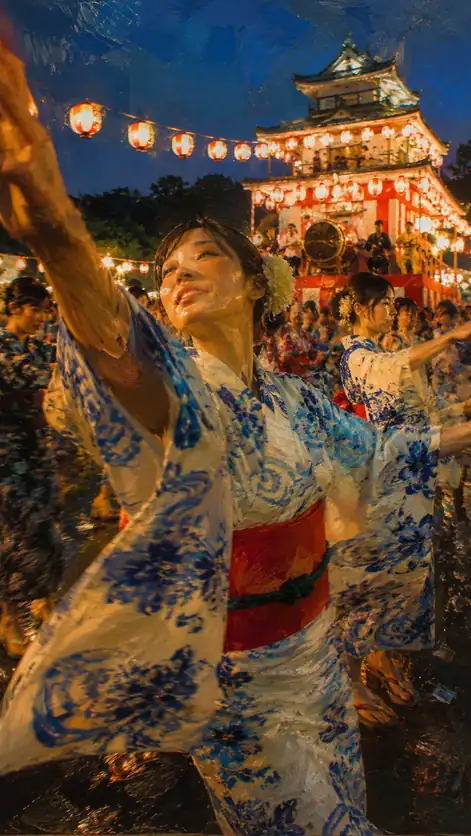 Dancing in Indigo-White Florals Beneath the Lanterns of the Castle Yagura
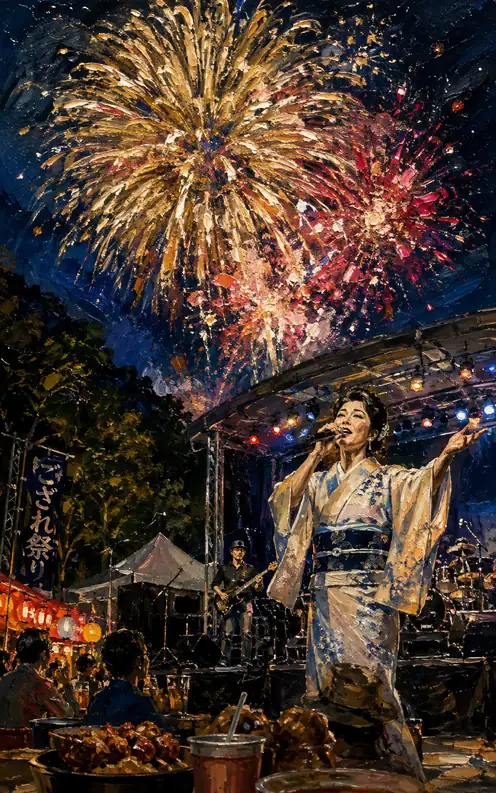 Singing Voice Echoing in the Gozare Festival Night Sky and Golden Blooms
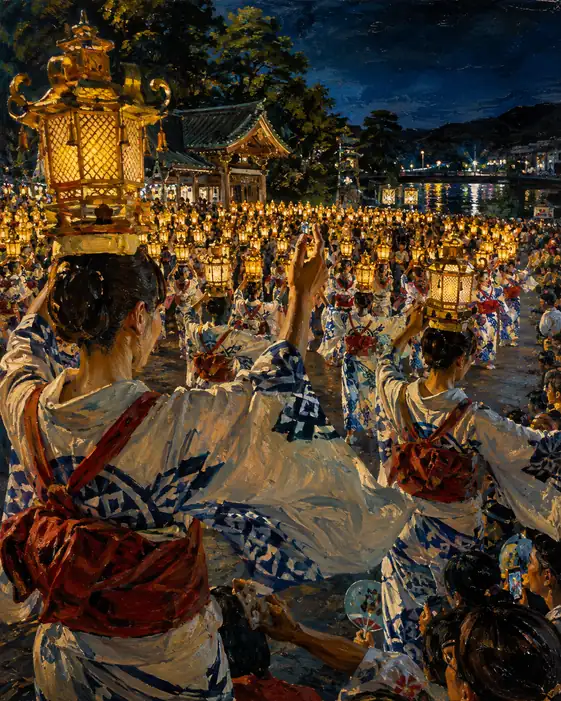 A Thousand Waves of Light Dancing Before the Night Shrine Bearing Golden Lanterns
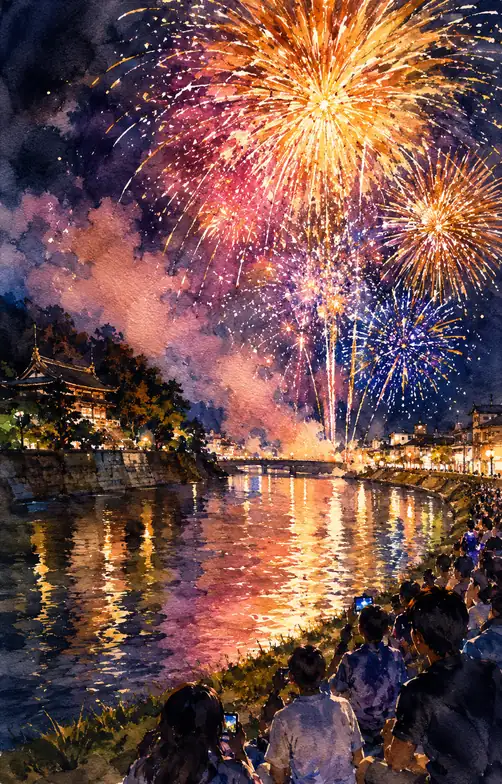 River Waves Illuminating Castle Stone Walls and Great Blooms in the Night Sky
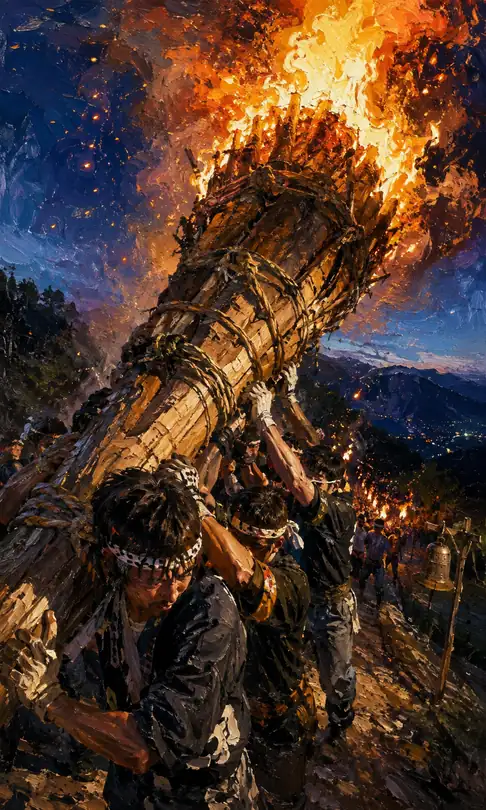 Great Torches Carried Up the Mountain Path and Roaring Flames Scorching the Night Sky
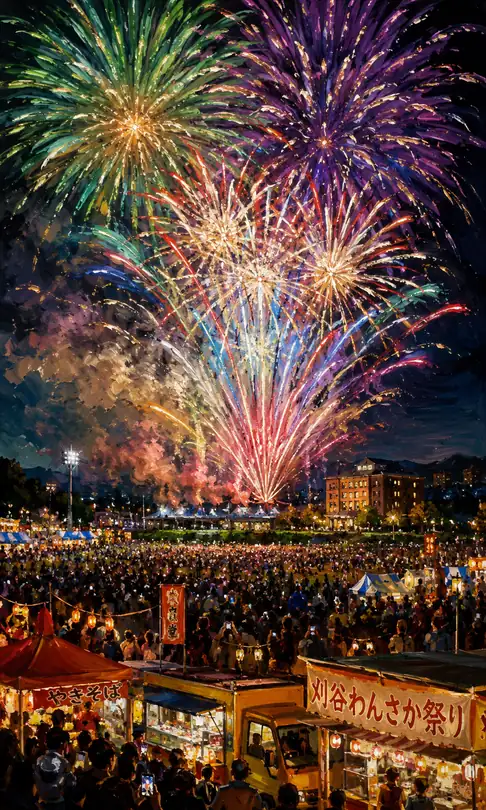 Bustle of Kariya Wansaka and Emerald and Purple Blooms in the Night Sky
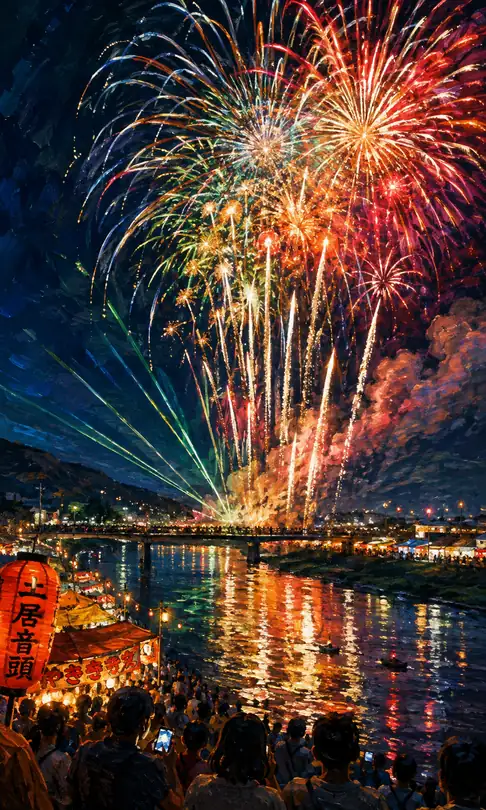 Red Lanterns of Doi Ondo and Blooms of Light Reflecting on the River
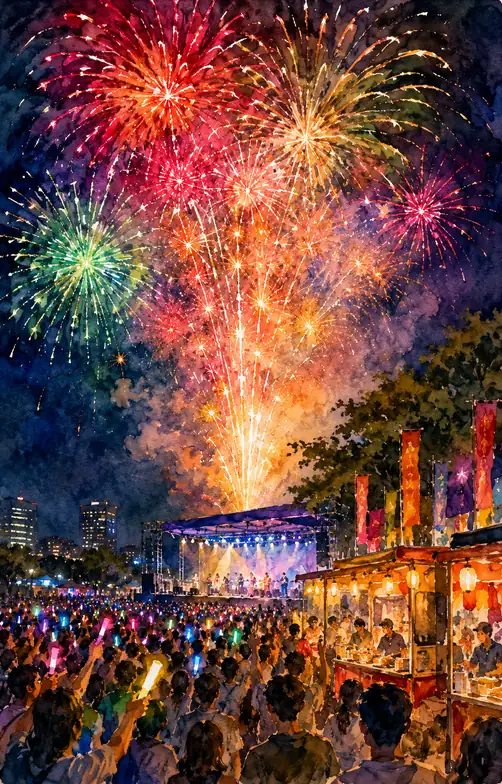 Rays of Light Raised to the Outdoor Stage and Great Blooms in the Night Sky
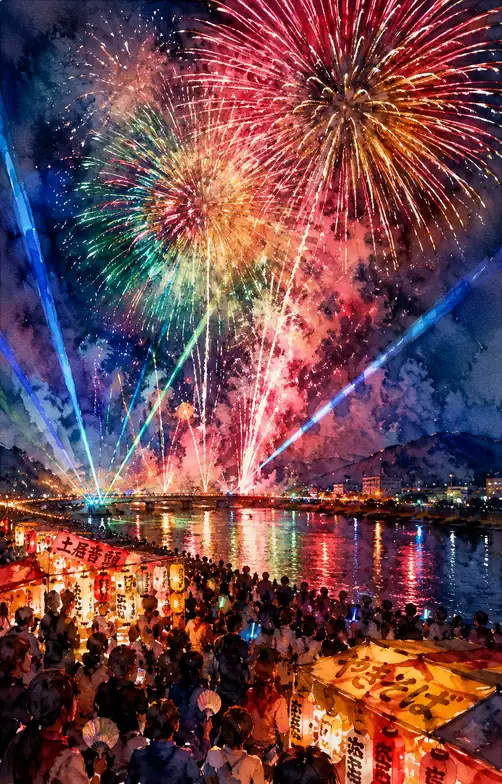 Stall Lights of Doi Ondo and the Great Cascade of Blooms Reflecting on the River