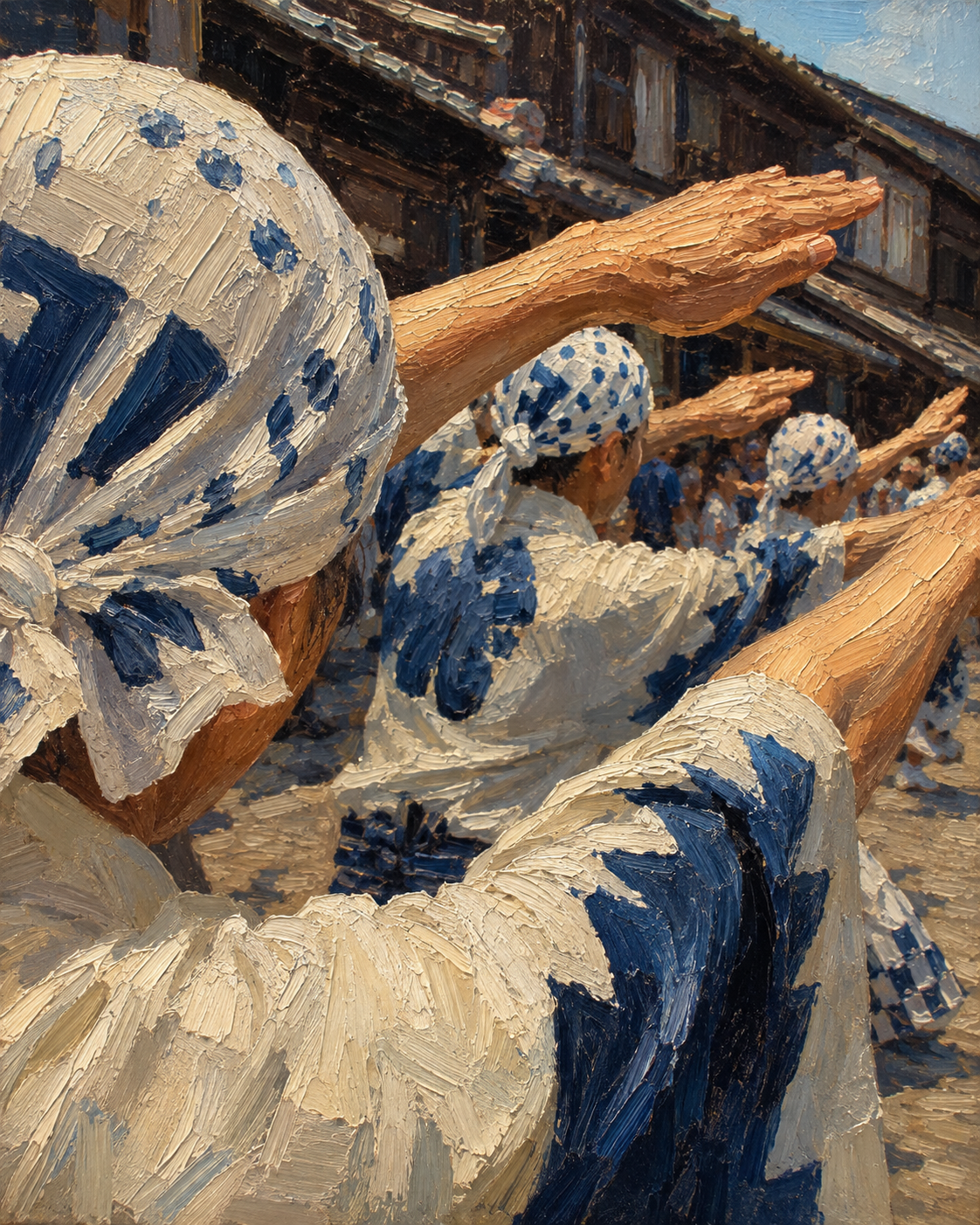
Patterns of the Town Street Continuing on Backs of Matching Towels
Critique
Introduction This impasto scene observes people in white-indigo headcloths and garments extending one arm from the rear of their line. With few faces visible, repeated heads, shoulders, sleeves, and palms become the subject, carrying shared form into an old street. Description At left, a dotted white cloth wraps an enlarged head above a pale sleeve bearing dark blue motifs. The right arm extends horizontally with palm turned downward. Similarly dressed figures continue centrally at nearly equal arm height. Another large arm enters from below and exits the right edge. Dark posts, deep eaves, white walls, and sunlit pavement define the old houses behind. Analysis Parallel arms diminish toward the right distance, clarifying depth and direction. Rounded headcloths repeat at intervals and soften the straight rhythm. Raised cream paint conveys thick fabric and direct light, while navy marks function as pattern and shadow. Warm skin separates from dark timber. Concealed faces shift emphasis from identity to form. Interpretation and Evaluation Rear views create anonymity, yet variations in wrists and fingers retain people continually adjusting to a beat. Horizontal palms seem to press through space and connect body direction with the street. Eaves run parallel to the arms, integrating movement with town structure rather than treating architecture as scenery. Dense paint evokes sunlight and rustling cloth. Conclusion White-indigo pattern attracts first, but headcloth intervals, level arms, and stepping feet gradually reveal rhythmic order. Close cropping and receding buildings supply forward motion. Collective action and lived space become materially unified.
Same Subcategory
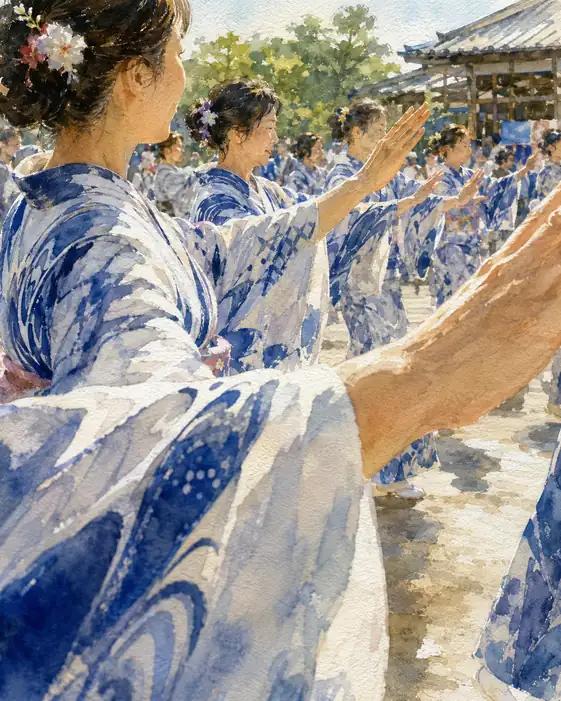 White-and-Indigo Palms Extending into the Shrine Light
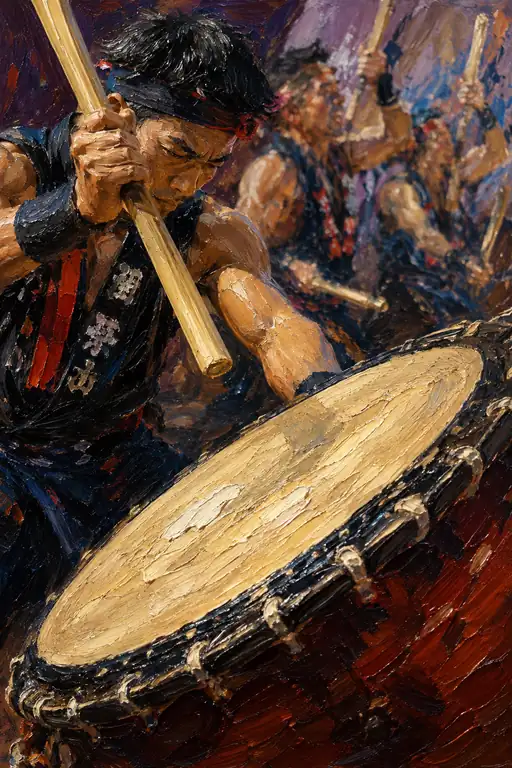 Full-Power Strike Concentrated on the Drumhead
Similar Artworks
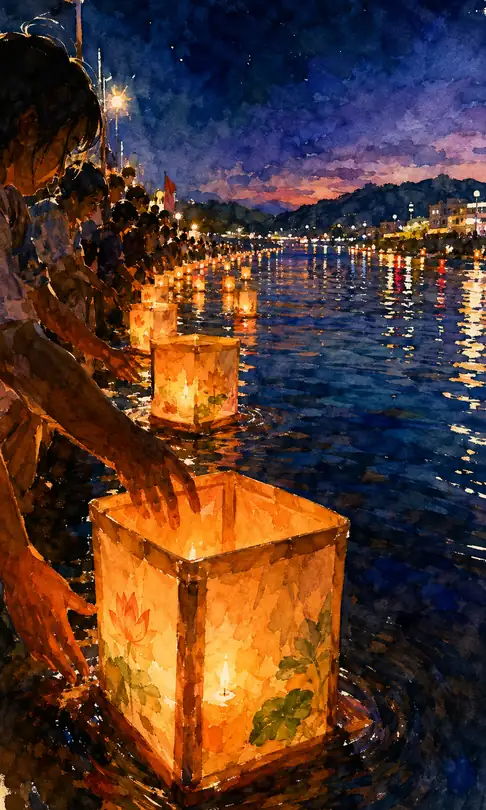 Lotus Lantern of Prayer Entrusted to the Waters and Twilight River Waves
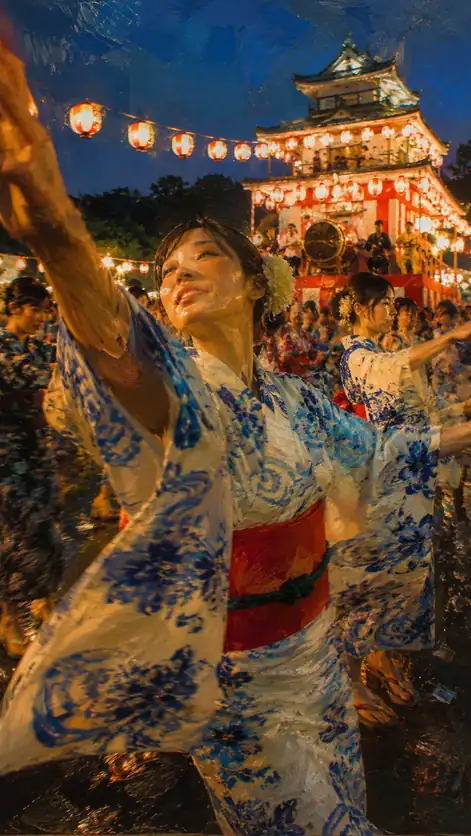 Dancing in Indigo-White Florals Beneath the Lanterns of the Castle Yagura
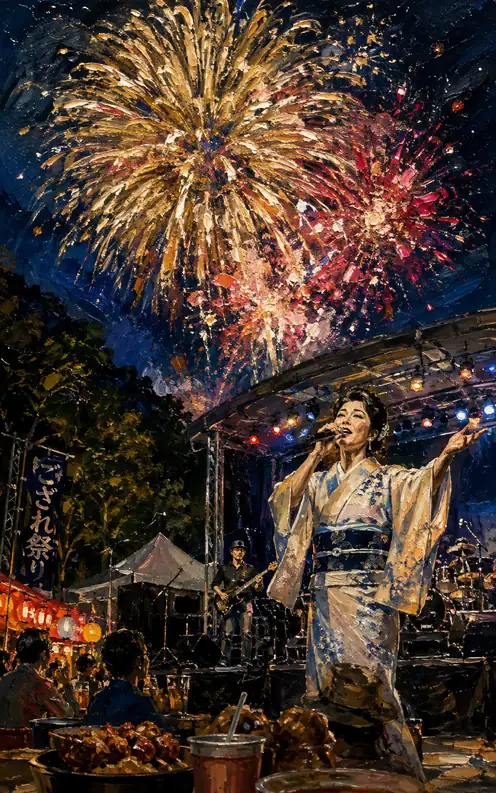 Singing Voice Echoing in the Gozare Festival Night Sky and Golden Blooms
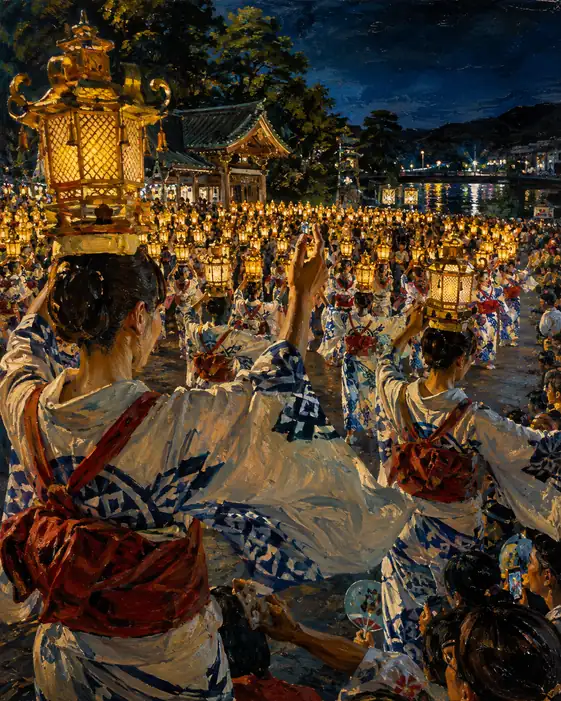 A Thousand Waves of Light Dancing Before the Night Shrine Bearing Golden Lanterns
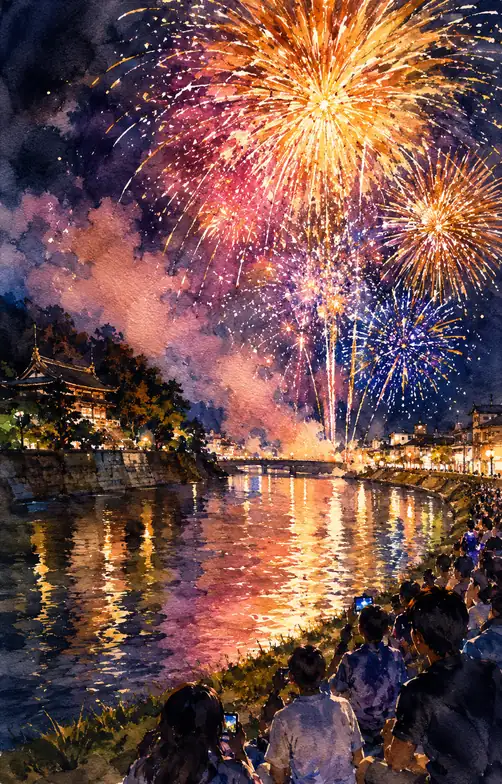 River Waves Illuminating Castle Stone Walls and Great Blooms in the Night Sky
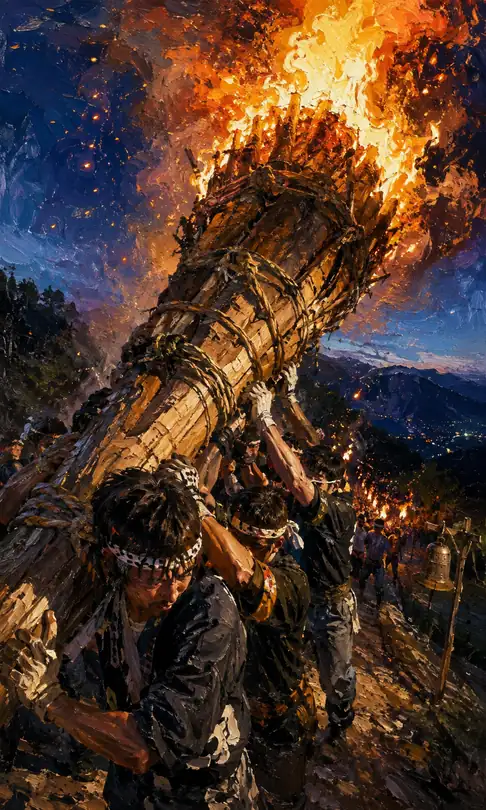 Great Torches Carried Up the Mountain Path and Roaring Flames Scorching the Night Sky
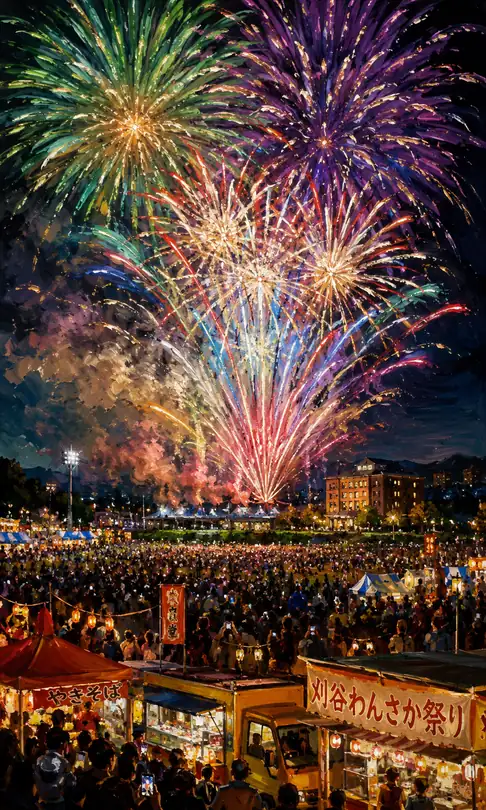 Bustle of Kariya Wansaka and Emerald and Purple Blooms in the Night Sky
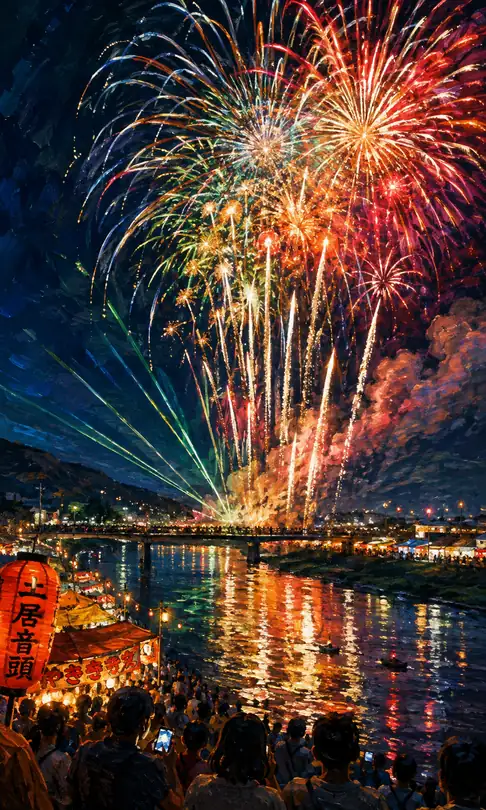 Red Lanterns of Doi Ondo and Blooms of Light Reflecting on the River
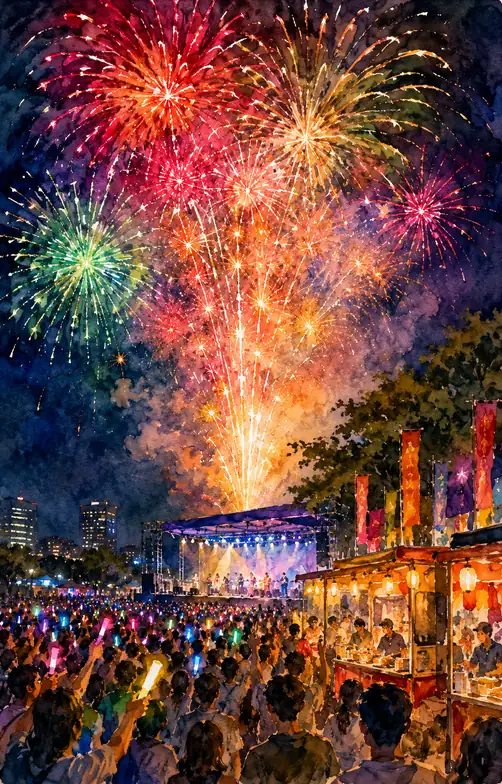 Rays of Light Raised to the Outdoor Stage and Great Blooms in the Night Sky
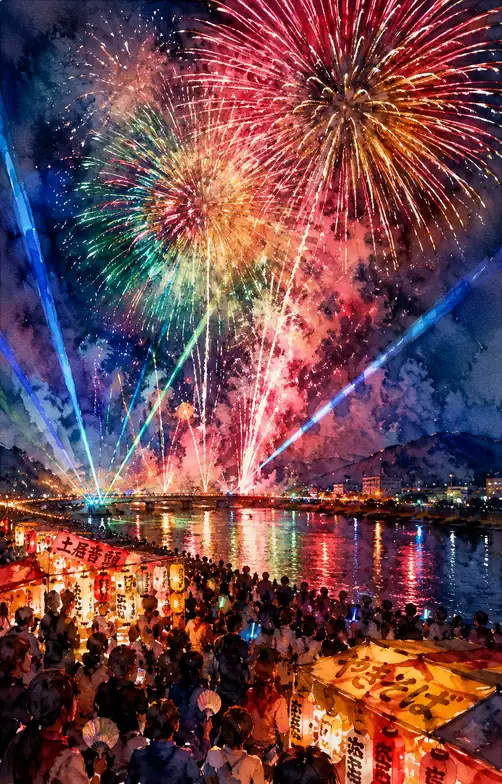 Stall Lights of Doi Ondo and the Great Cascade of Blooms Reflecting on the River