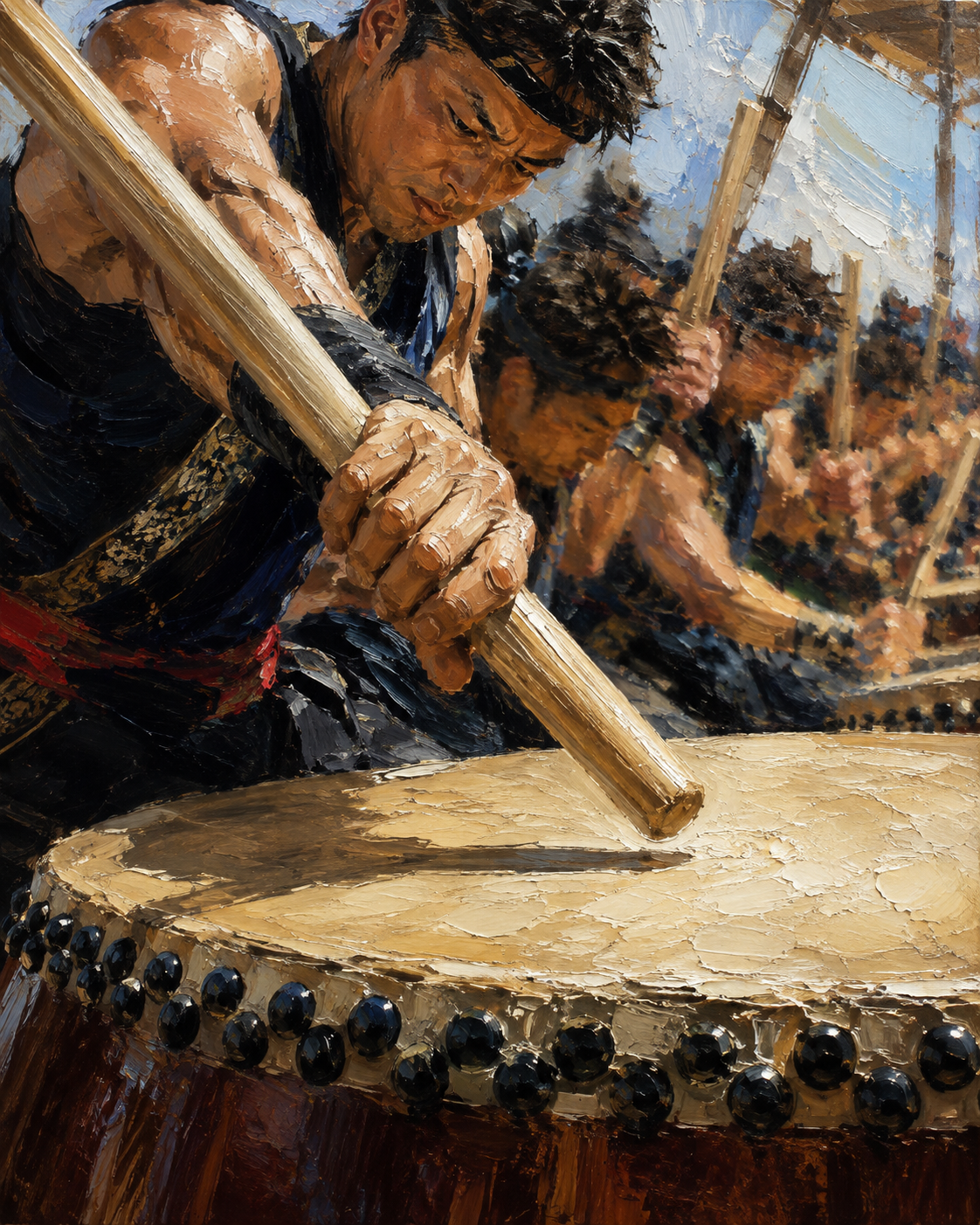
A Single Blow Approaching the Drumhead and the Dedicated Bachi
Critique
Introduction This impasto painting approaches a large drum at the level of its hide, concentrating on a man’s hands, face, and descending beater. Repeated striking poses extend into the distance, showing one impact transmitted through a group. Sweat, timber, and leather become tactile. Description The foreground man wears a dark sleeveless garment, wrist guard, and red sash. Lowering his body, he encloses a long wooden beater with both hands. His furrowed face looks toward the contact point, where the tip nearly meets the pale hide. Two rows of black studs border the drum above a red-brown body. Similar players and instruments continue rightward, their beaters held at differing heights beneath pale sky and simple supports. Analysis The beater divides the frame diagonally and joins hands, arms, face, and impact into one force line. Receding sticks repeat that slope with slight changes, representing successive beats. Thick ocher conveys taut hide, dark studs define hardness, and brown grain suggests elastic wood. Warm skin against black clothing clarifies muscular tension, while softened background figures concentrate attention upon imminent contact. Interpretation and Evaluation By refusing a panoramic stage view, the painting reveals the physical conditions from which sound emerges. The lowered gaze indicates coordination with beat and contact rather than display for spectators. Distant performers embody different instants and sustain rhythmic duration. Rough paint itself becomes a visual equivalent of pressure and resonance without theatrical additions. Conclusion Drum and stick dominate initially, but fingers, wrist angle, and the receding ensemble gradually reveal impact as collective sound. Circular hide and sharp diagonal, ocher and black, tighten the design. Technique and observation converge immediately before the beat.
Same Subcategory
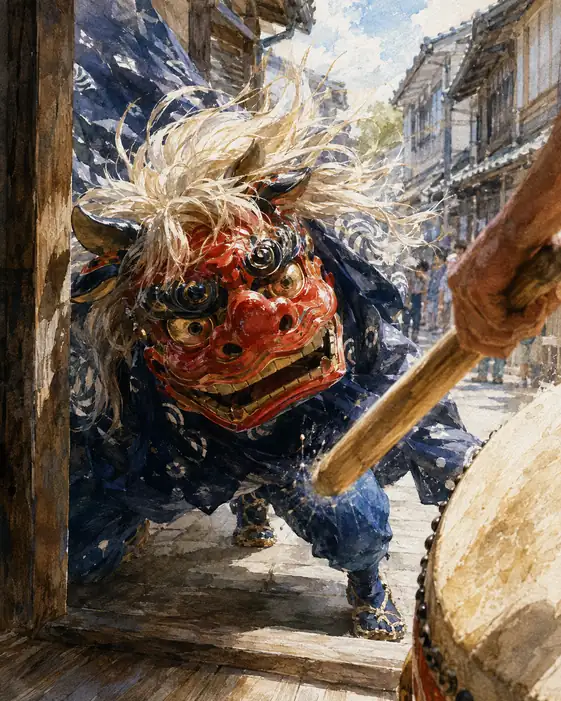 Vermilion Lion Stepping on the Threshold Confronting the Drum
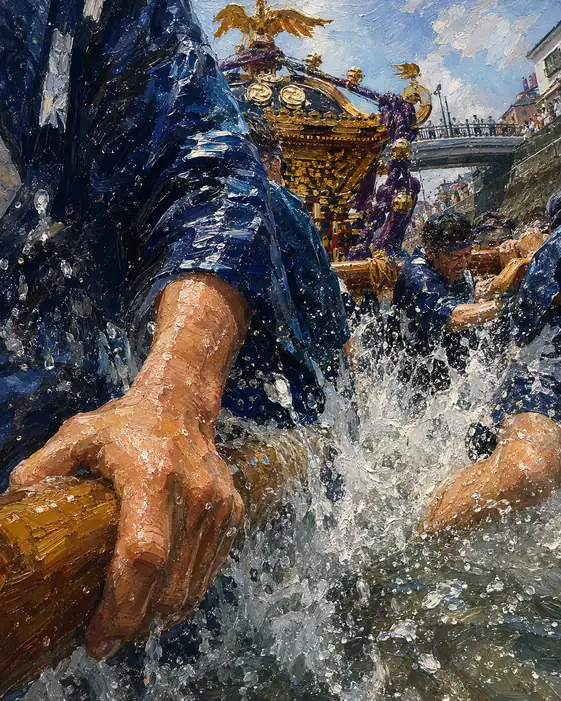 Mighty Arm Gripping the Torrent and the Golden Phoenix
Similar Artworks
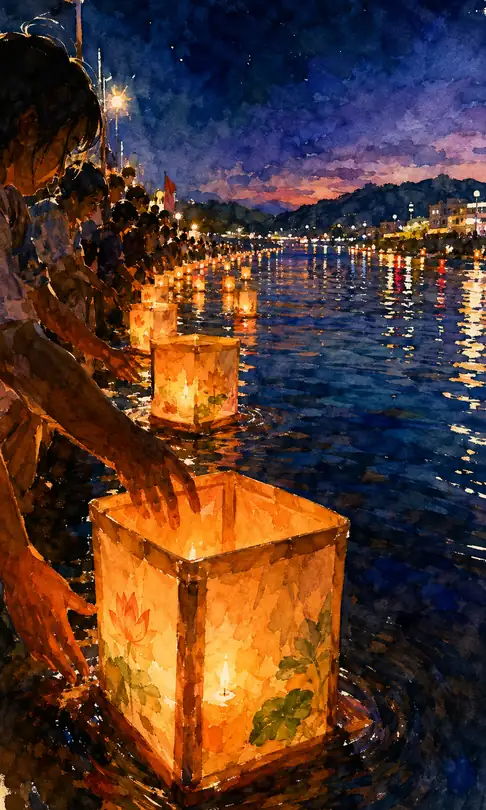 Lotus Lantern of Prayer Entrusted to the Waters and Twilight River Waves
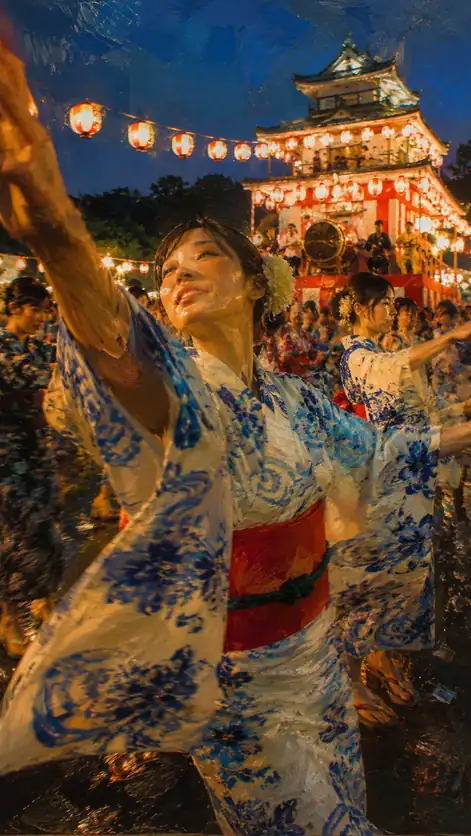 Dancing in Indigo-White Florals Beneath the Lanterns of the Castle Yagura
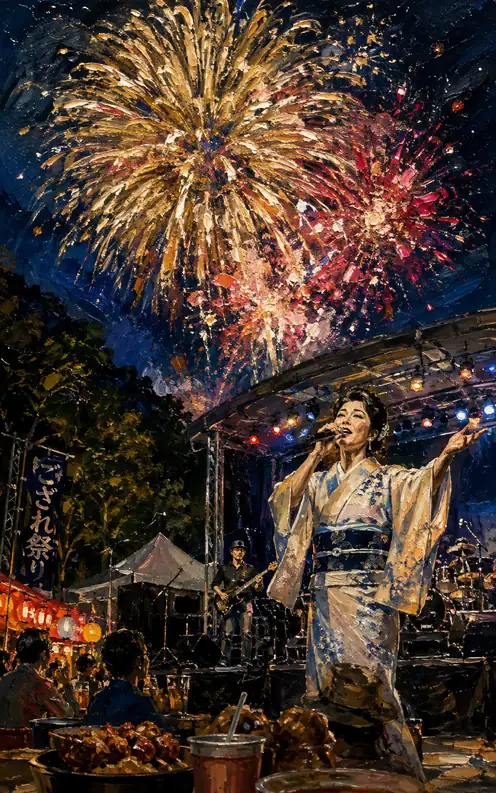 Singing Voice Echoing in the Gozare Festival Night Sky and Golden Blooms
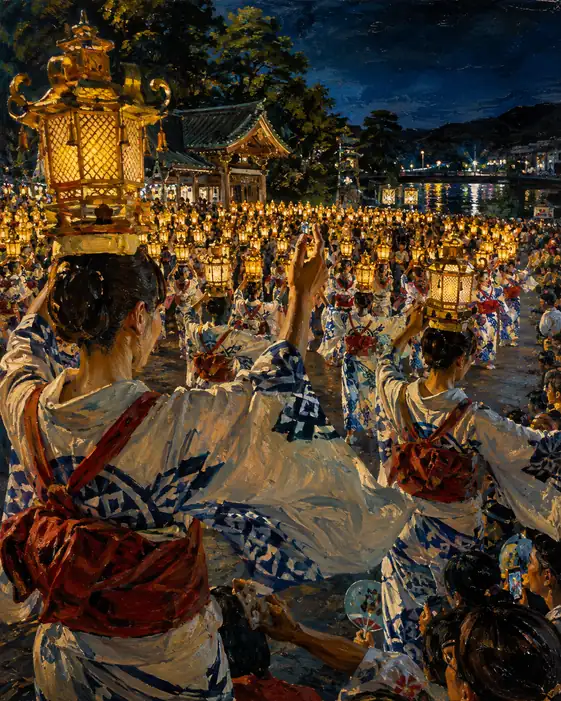 A Thousand Waves of Light Dancing Before the Night Shrine Bearing Golden Lanterns
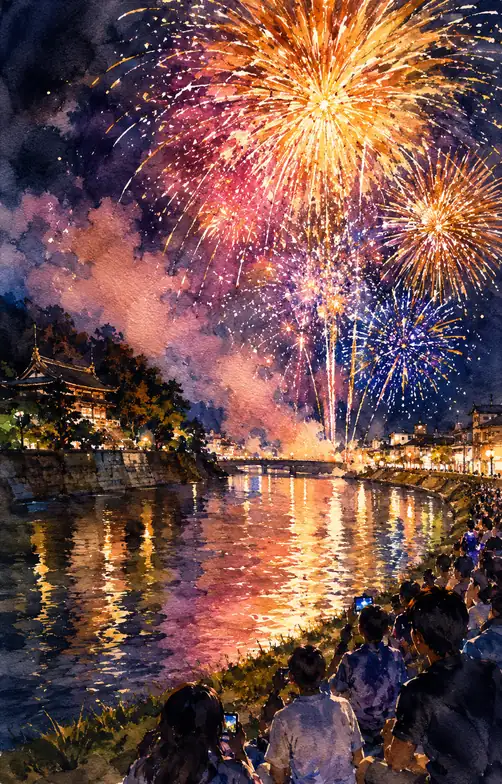 River Waves Illuminating Castle Stone Walls and Great Blooms in the Night Sky
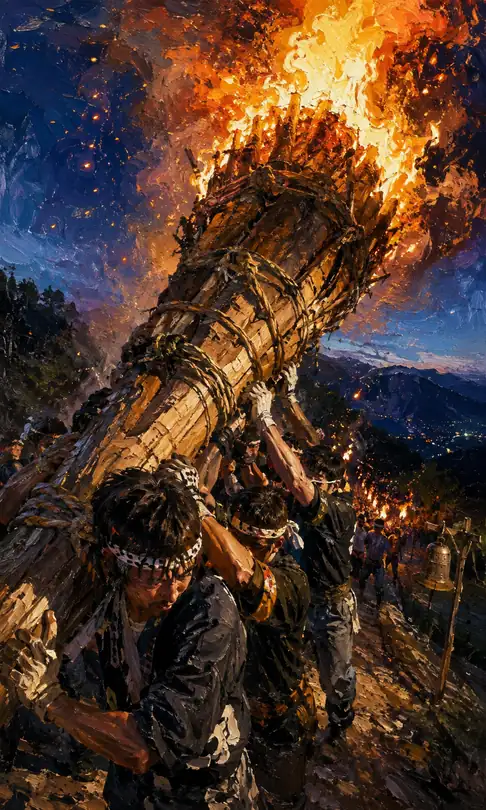 Great Torches Carried Up the Mountain Path and Roaring Flames Scorching the Night Sky
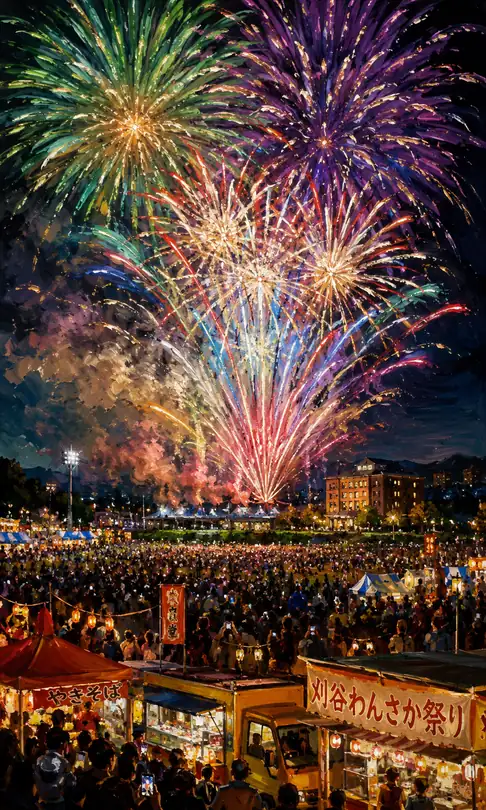 Bustle of Kariya Wansaka and Emerald and Purple Blooms in the Night Sky
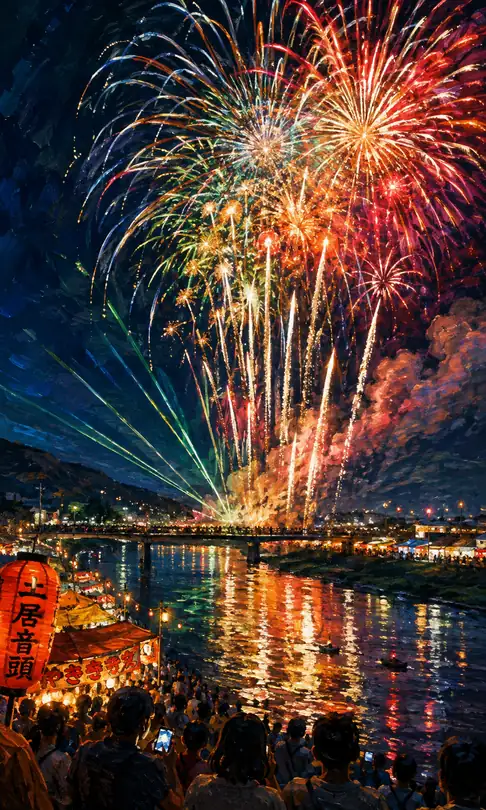 Red Lanterns of Doi Ondo and Blooms of Light Reflecting on the River
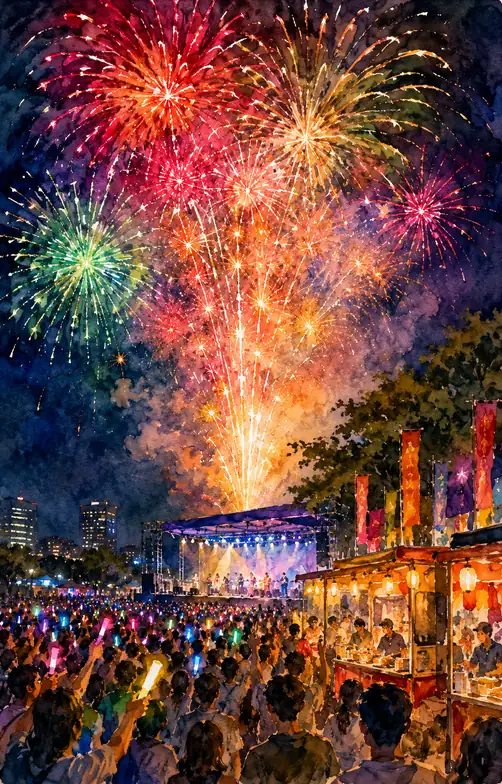 Rays of Light Raised to the Outdoor Stage and Great Blooms in the Night Sky
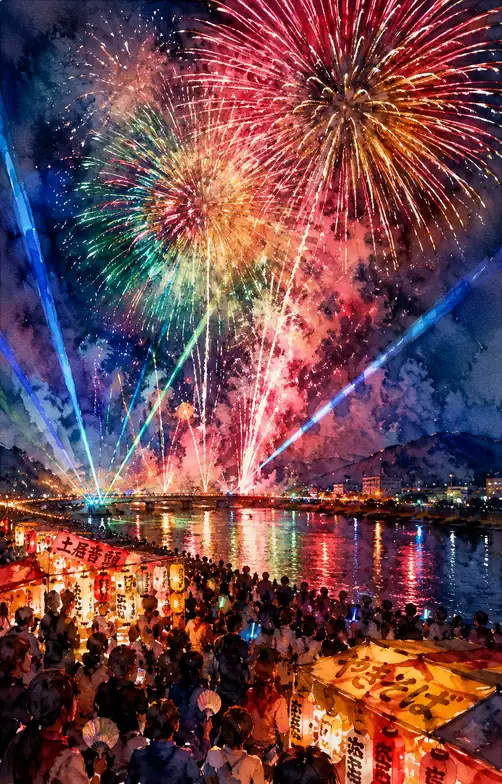 Stall Lights of Doi Ondo and the Great Cascade of Blooms Reflecting on the River