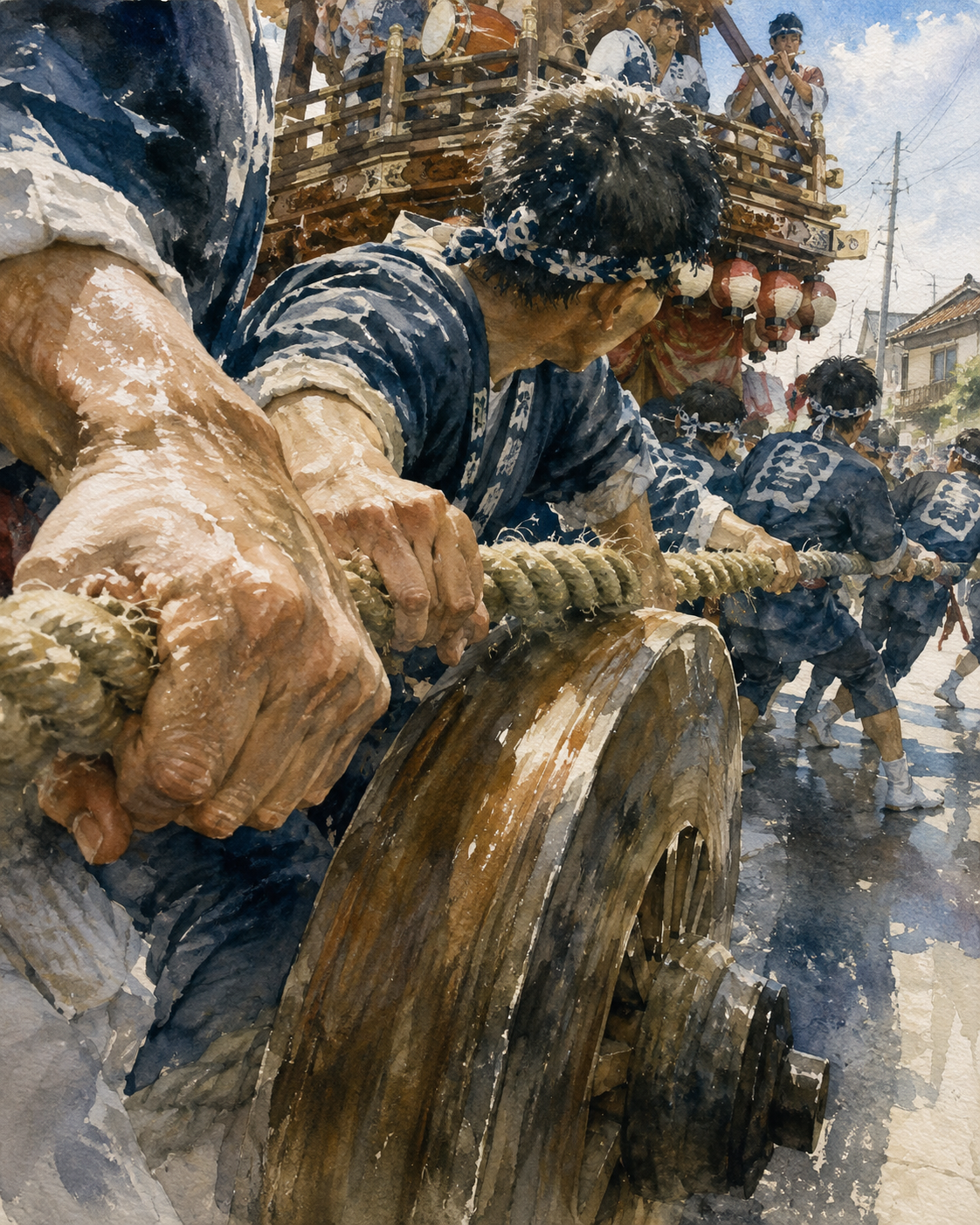
Fingers Sunk into the Rope and the Turning Great Wheel
Critique
Introduction This watercolor approaches hands hauling a thick rope beside a massive float wheel. Timber, straw, wet arms, and musicians above are joined into one field of force, concretely conveying the tension of controlling weight in a street. Description Two sets of enlarged hands grip a frayed rope at lower left, with sun-darkened arms entering from outside the frame. At center, a man in an indigo-white coat and headband looks down toward the wheel while adding his fingers to the line. The wooden wheel rises from below, exposing worn rim and axle. More pullers continue at right. Drummers and wind players occupy the upper deck among red-white lanterns, carving, and metal fittings. Houses and poles border the road. Analysis The rope’s diagonal runs from foreground to distance, making force visible through repeated grips. The wheel’s circle supports the center and creates a vertical weight axis beneath the rectangular deck. Brown wood and skin oppose the cool rhythm of navy and white. Dry watercolor marks distinguish straw fibers, abraded timber, and wrinkled flesh, while blue-gray road shadows indicate hard noon light. Gathered gazes identify the wheel as the operational focus. Interpretation and Evaluation Ornament and music remain present, but the work transfers value to hands and wheel at ground level. Different positions and bodily angles show separate judgments coordinated into one advance. Frayed rope remains a burdened tool rather than a polished symbol. Modern street details locate tradition within present constraints. Conclusion The wheel dominates initially, yet sustained viewing reveals fingers, assessing eyes, and braced legs determining direction. Circle and diagonal, wood and cloth, near hands and elevated musicians create depth. Festival grandeur is persuasively understood through exact human control.
Same Subcategory
 Gate of Summer Sky Carved by Log Piers
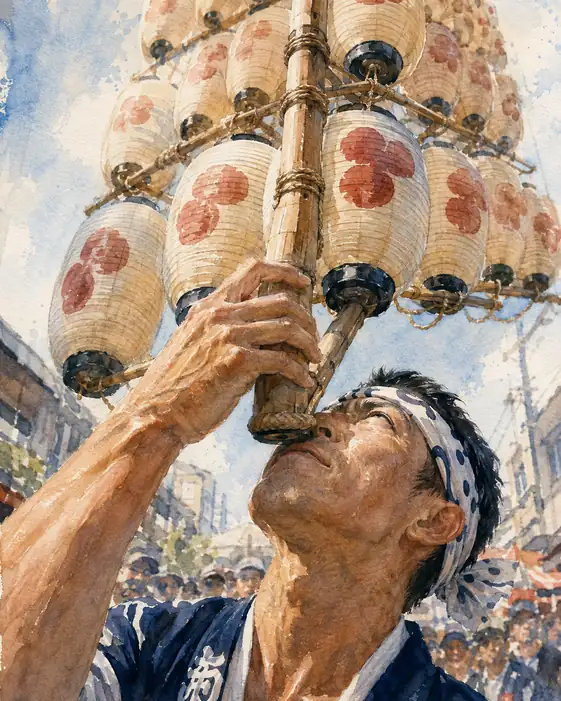 Weight of Lanterns Received upon the Chin
Similar Artworks
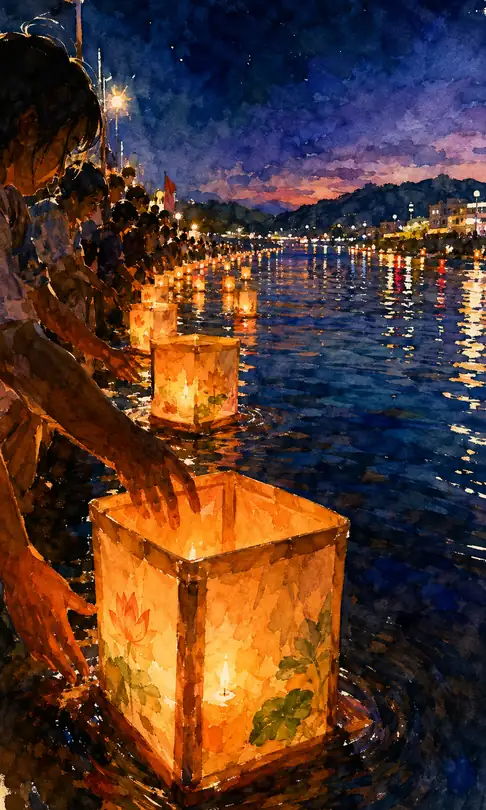 Lotus Lantern of Prayer Entrusted to the Waters and Twilight River Waves
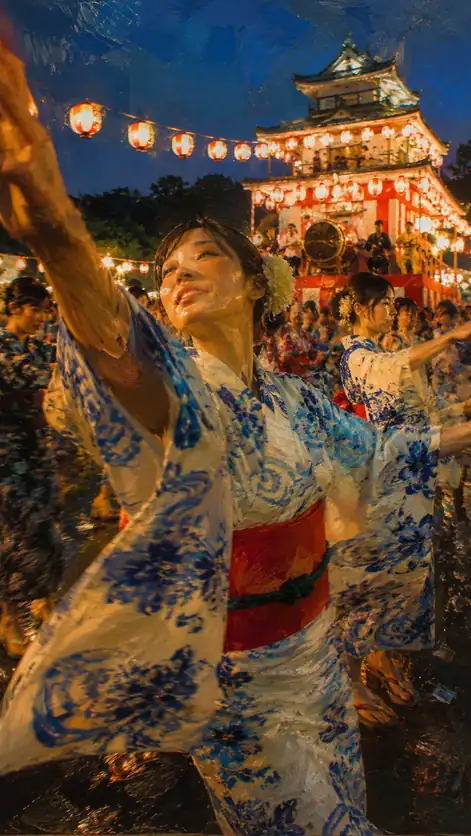 Dancing in Indigo-White Florals Beneath the Lanterns of the Castle Yagura
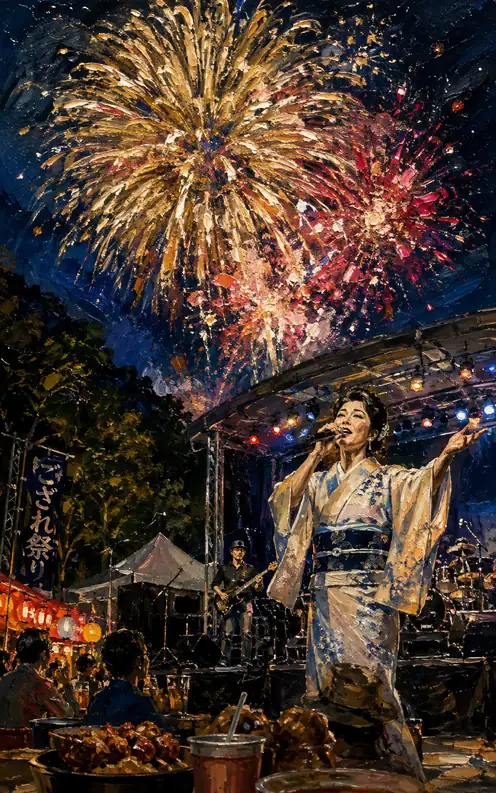 Singing Voice Echoing in the Gozare Festival Night Sky and Golden Blooms
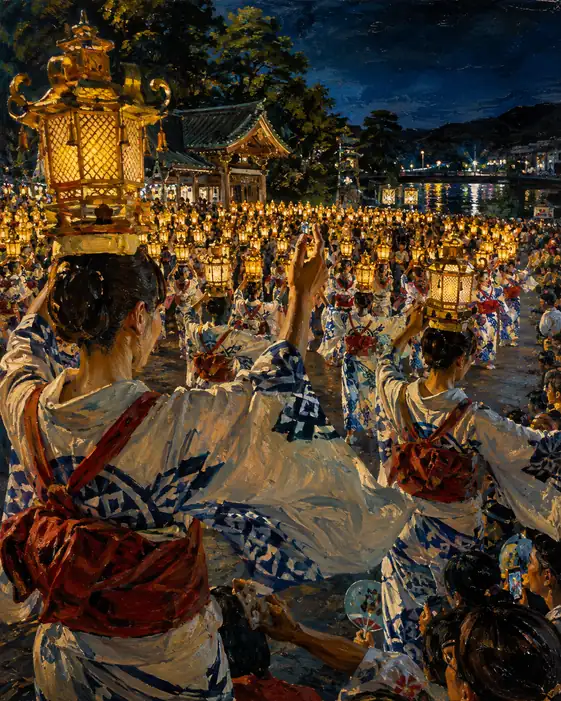 A Thousand Waves of Light Dancing Before the Night Shrine Bearing Golden Lanterns
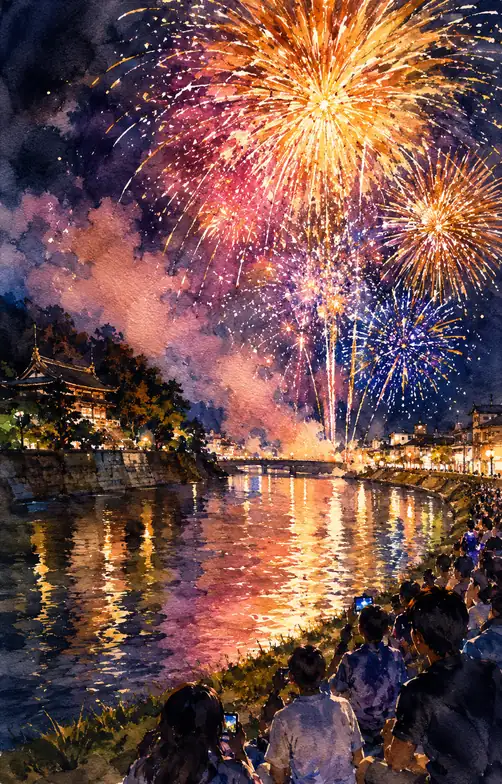 River Waves Illuminating Castle Stone Walls and Great Blooms in the Night Sky
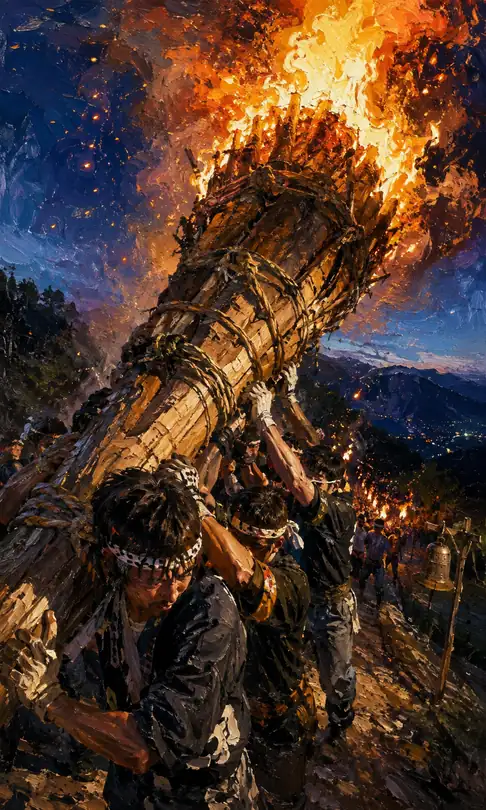 Great Torches Carried Up the Mountain Path and Roaring Flames Scorching the Night Sky
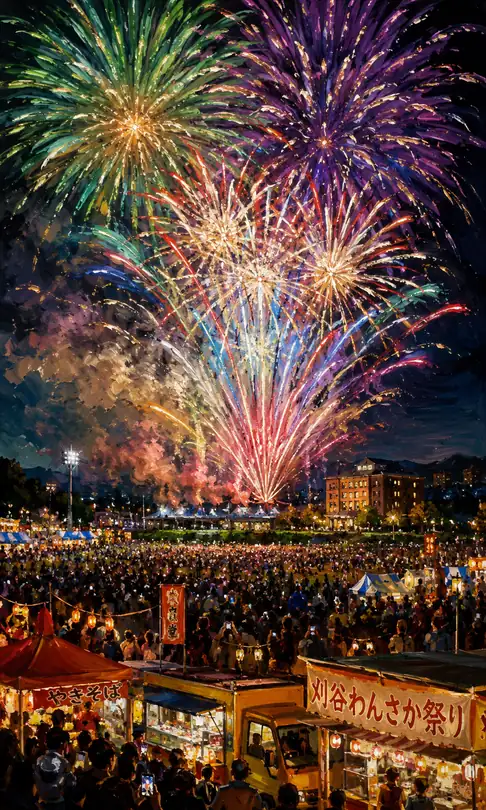 Bustle of Kariya Wansaka and Emerald and Purple Blooms in the Night Sky
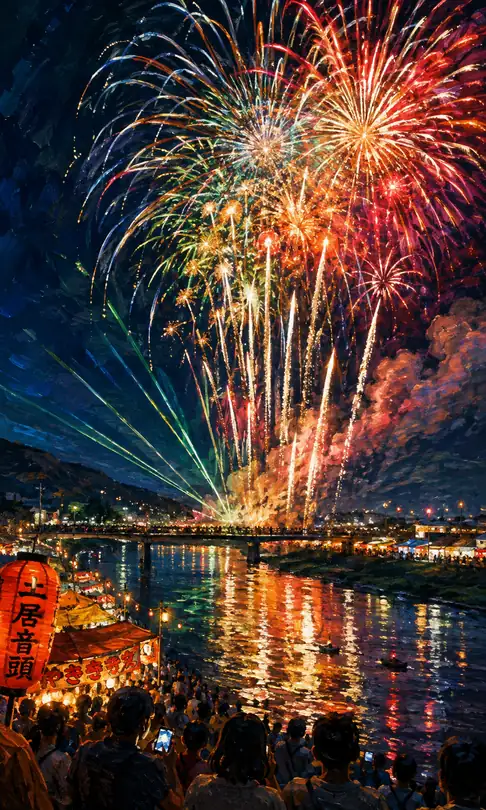 Red Lanterns of Doi Ondo and Blooms of Light Reflecting on the River
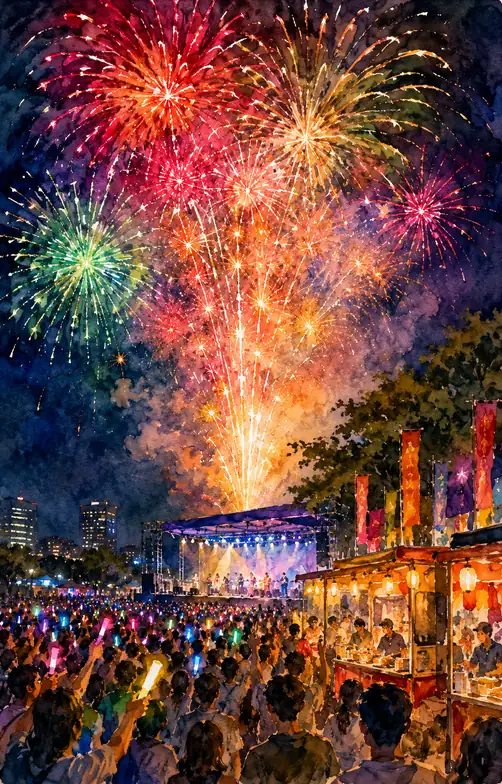 Rays of Light Raised to the Outdoor Stage and Great Blooms in the Night Sky
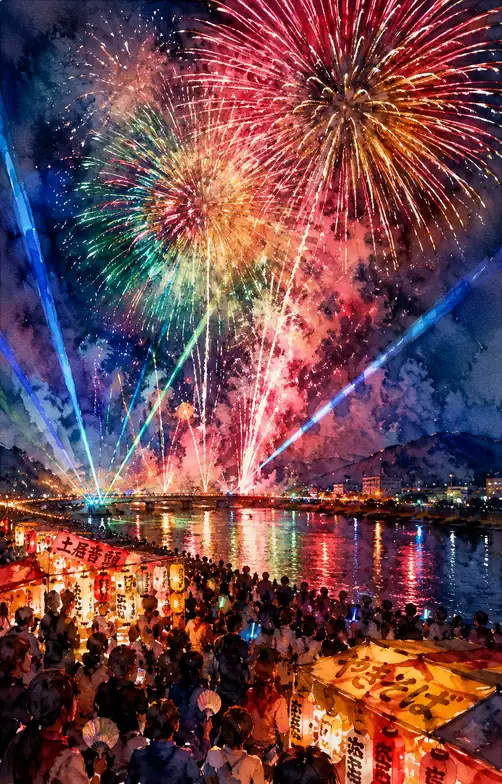 Stall Lights of Doi Ondo and the Great Cascade of Blooms Reflecting on the River