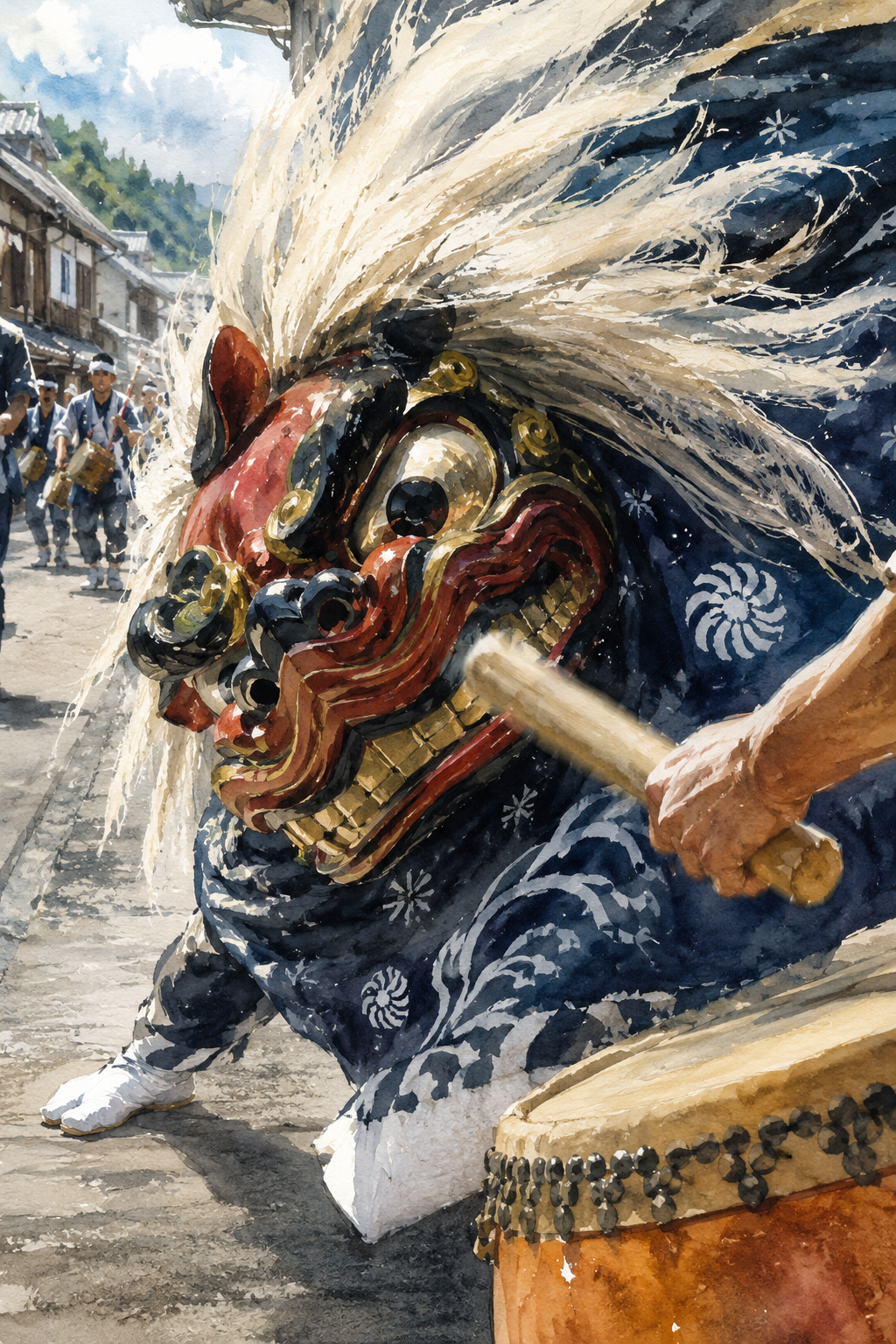
White-Maned Lion Answering the Drum Bachi
Critique
Introduction This watercolor catches a lion turning toward a drum as its long pale mane swings upward and a player’s beater enters. The red-black-gold face advances centrally, while following performers and old houses preserve the closeness of itinerant performance to everyday streets. Description The lion has a red muzzle, black spirals, large golden eyes and teeth, and a sideways-open mouth. Long white-brown hair streams across the top. A dark indigo body cloth bears pale floral and spiral motifs. From the right, a weathered arm extends a thick beater near the mouth. The studded rim and orange body of a drum are cropped below. Musicians in blue-white clothing approach along a lane between tiled houses. Analysis The mane’s broad arc crosses the top and collides with the beater’s diagonal near the face, visualizing response to sound. Layered red, black, and gold give the head density; exposed paper and elongated marks supply speed to hair. Indigo cloth supports mass, with pale motifs echoing mane and sunlit road. Small distant figures preserve extreme scale while continuing the route. Interpretation and Evaluation The beater’s proximity joins percussion and bodily reaction in one causal event. The lion seems autonomous, yet planted feet beneath cloth and a musician’s arm allow fantasy and technique to coexist. Following drums and houses identify repeated neighborhood visitation rather than a one-time stage performance. Worn color and irregular fibers are respected as evidence of use. Conclusion Rising mane, turning face, approaching beater, and cropped drum hold moments before and after sound together. Fluid watercolor suits rapid hair and cloth, while dense color keeps the head grounded. Uncanny life remains inseparable from skill and ordinary town space.
Same Subcategory
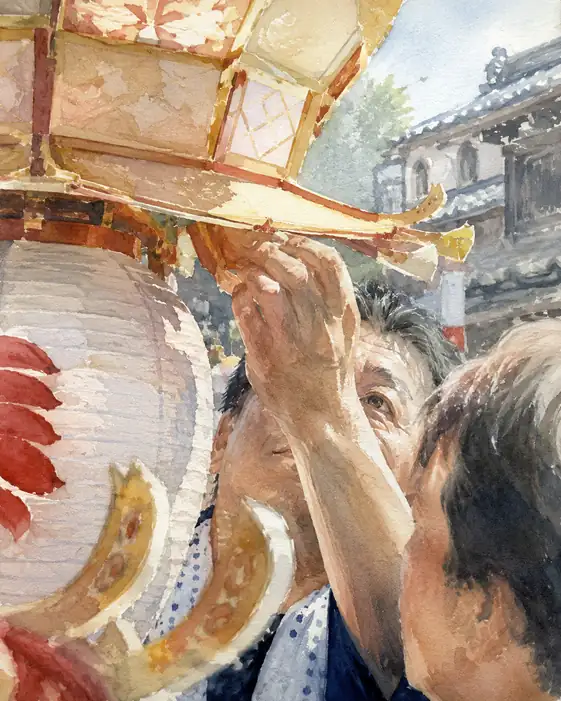 Craftsman's Gaze Poured into the Lantern's Reverse Side
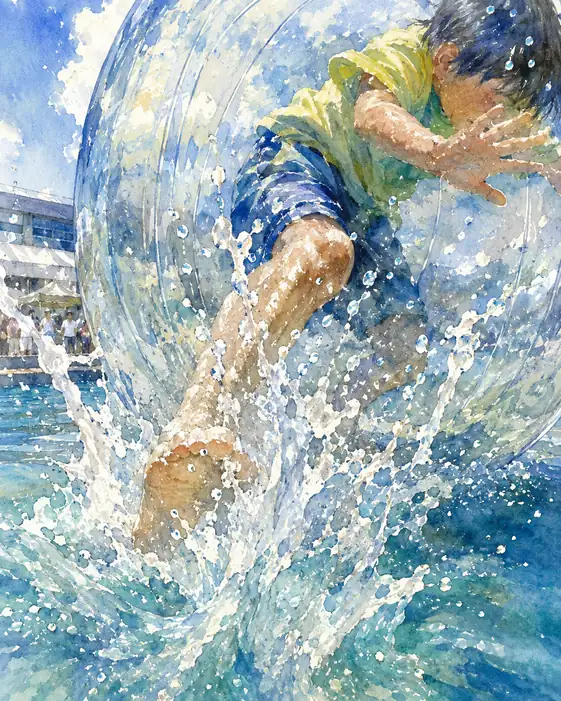 Summer Leap Dancing in the Dome of Water Spray
Similar Artworks
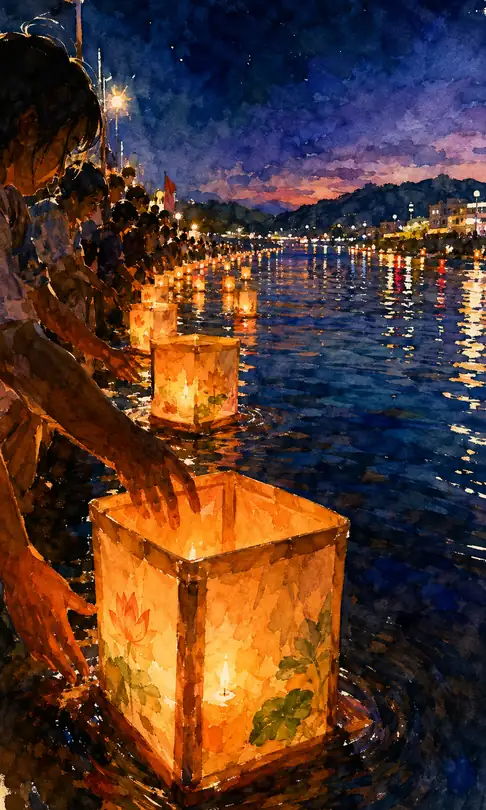 Lotus Lantern of Prayer Entrusted to the Waters and Twilight River Waves
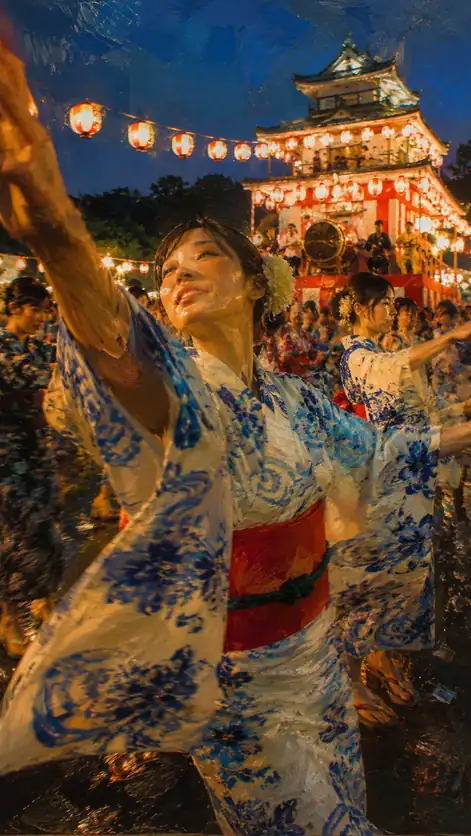 Dancing in Indigo-White Florals Beneath the Lanterns of the Castle Yagura
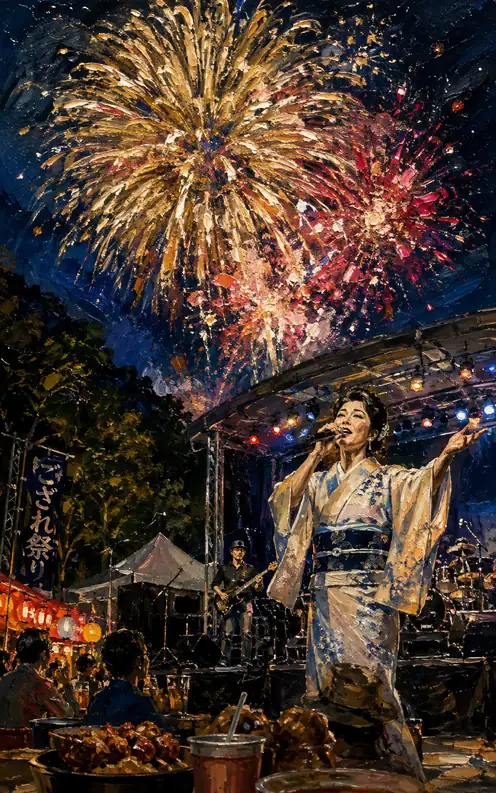 Singing Voice Echoing in the Gozare Festival Night Sky and Golden Blooms
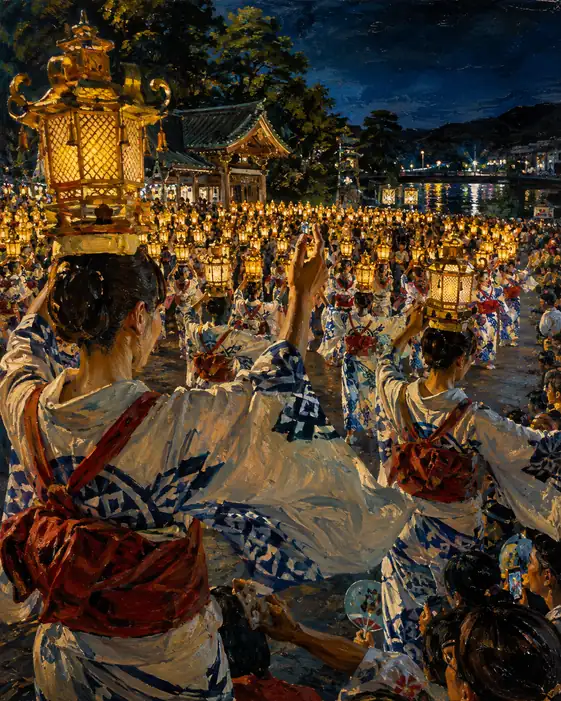 A Thousand Waves of Light Dancing Before the Night Shrine Bearing Golden Lanterns
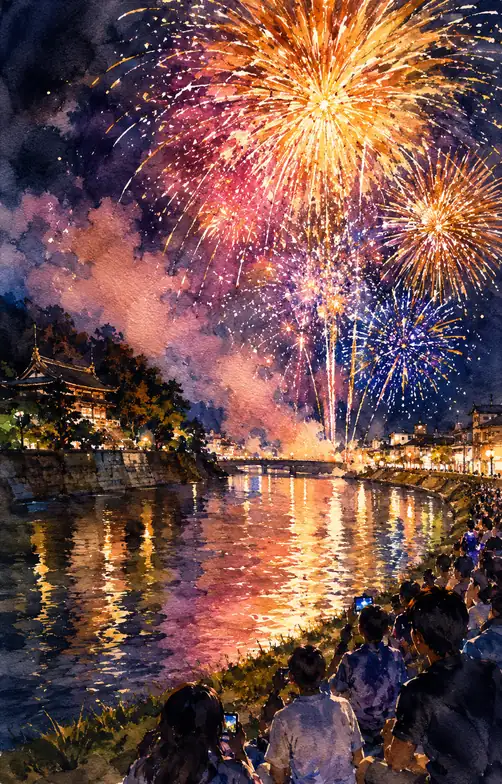 River Waves Illuminating Castle Stone Walls and Great Blooms in the Night Sky
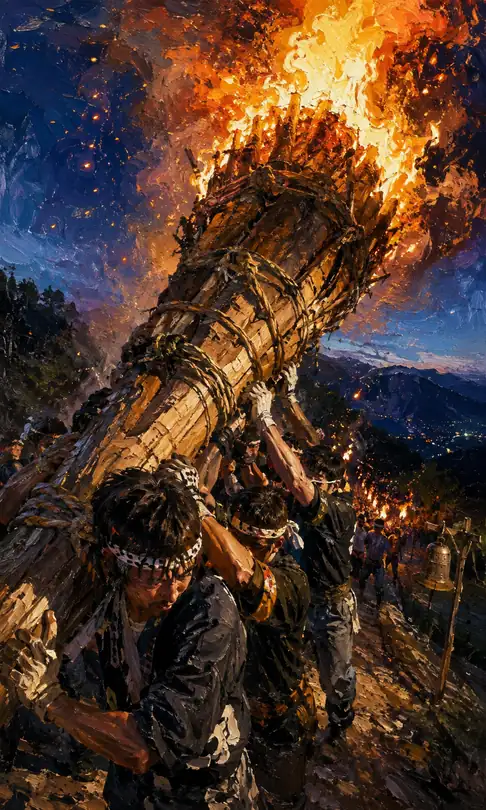 Great Torches Carried Up the Mountain Path and Roaring Flames Scorching the Night Sky
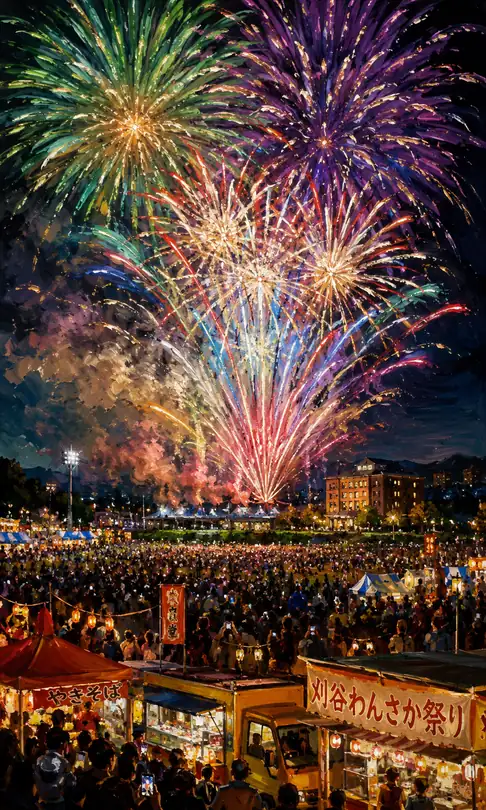 Bustle of Kariya Wansaka and Emerald and Purple Blooms in the Night Sky
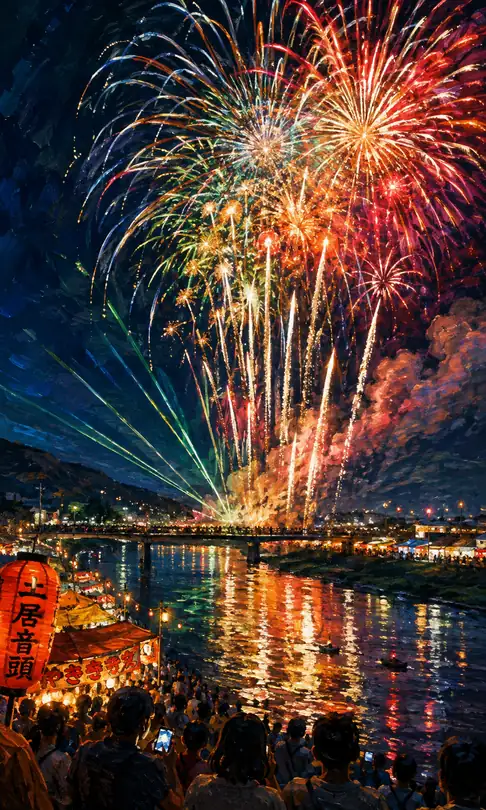 Red Lanterns of Doi Ondo and Blooms of Light Reflecting on the River
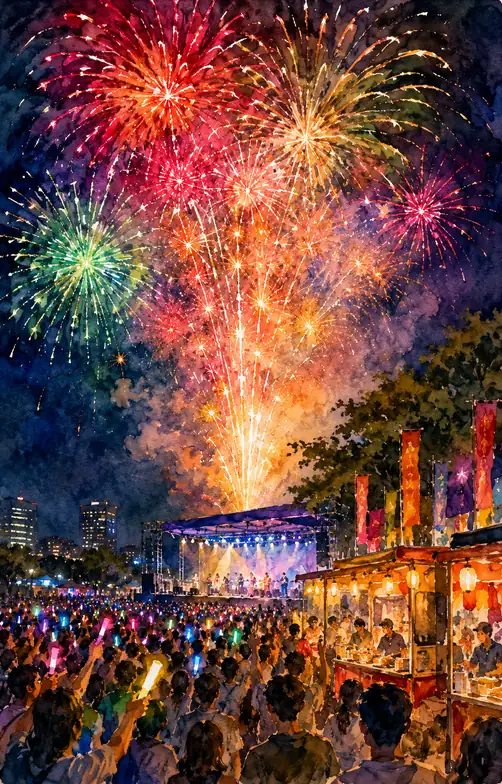 Rays of Light Raised to the Outdoor Stage and Great Blooms in the Night Sky
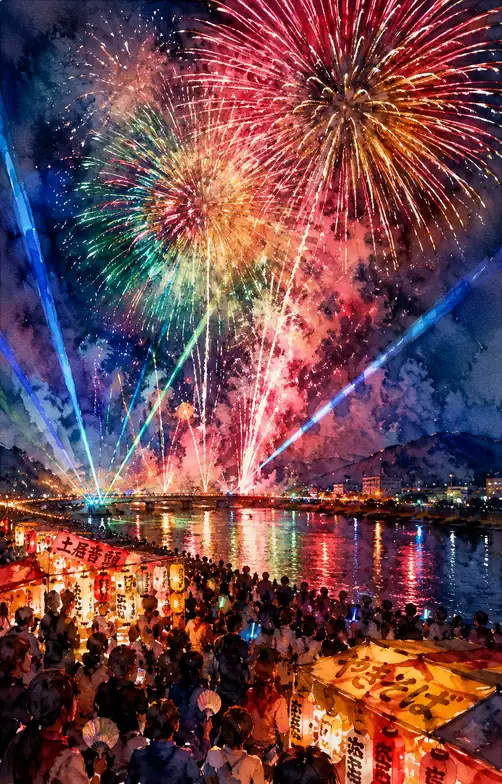 Stall Lights of Doi Ondo and the Great Cascade of Blooms Reflecting on the River