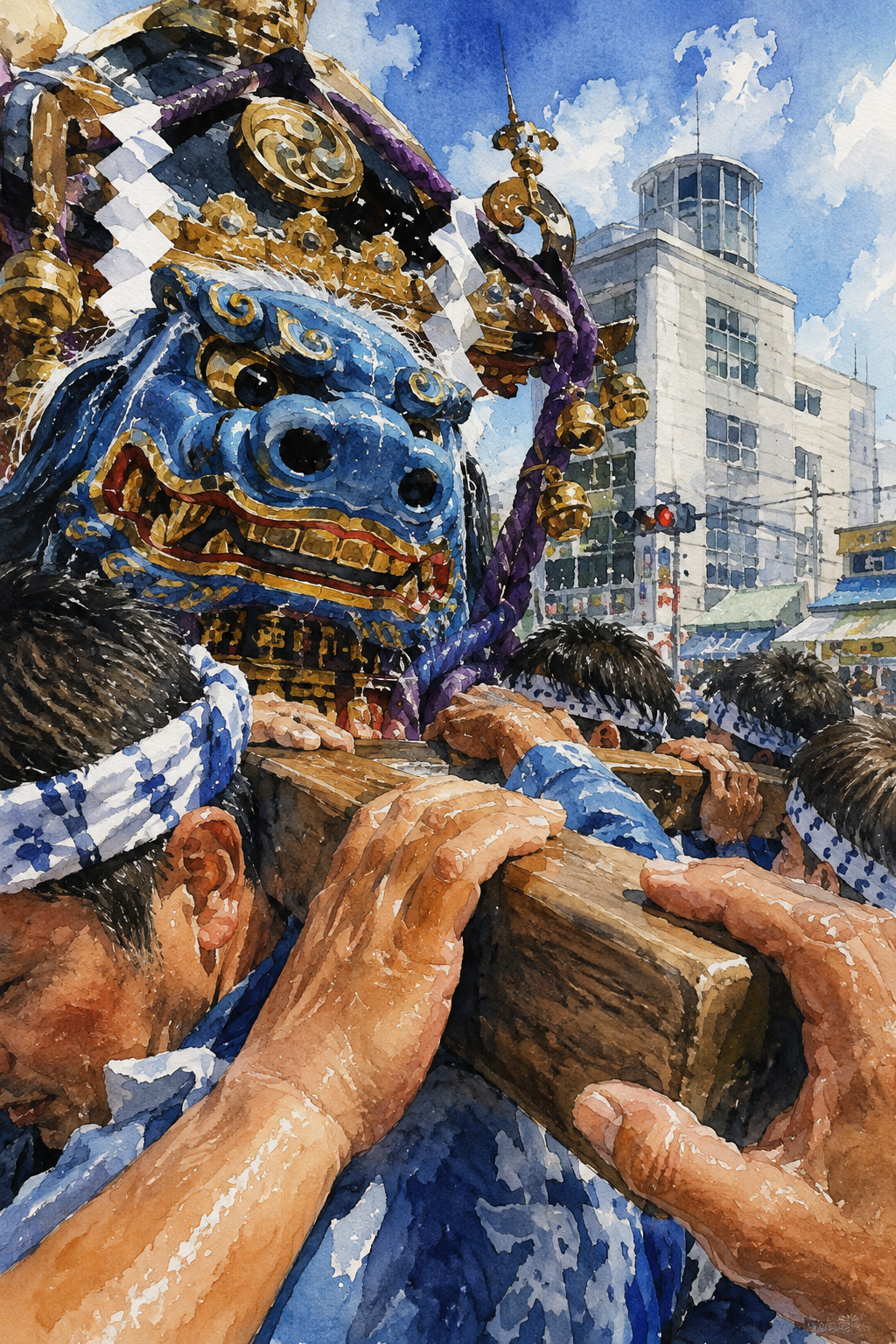
Shoulders of Men Advancing Through Town Bearing the Blue Lion
Critique
Introduction This watercolor looks upward from clustered shoulders and hands toward a mikoshi bearing a blue lion head. Golden traditional ornament shares the scene with a white modern building and traffic signal, locating the procession in the present-day town. Wet skin and timber transmit weight at close range. Description Heads, shoulders, and arms in blue-white headbands overlap around a thick beam. The nearest hands are enlarged to the knuckles and shine with moisture. Above, a frontal blue lion displays black eyes, golden brows and teeth, and a red mouth. A black-and-gold roof, purple ropes, bells, and paper streamers rise behind it. Analysis The beam’s horizontal crosses the shrine’s vertical, with hands filling the joint. Blue links lion, clothes, and sky, while gold and red isolate the face. Watercolor gradations distinguish damp timber, shining skin, and folded cloth; exposed paper becomes droplets and cloud. Scale decreases from hands through lion to tower, producing depth in the narrow street. The traffic light’s red answers the mouth and integrates modern detail chromatically. Interpretation and Evaluation The lion’s frontal authority establishes a specific emblem, but shoulders below make its dependence on collective labor unmistakable. Modern architecture is not erased, so the festival becomes living urban culture rather than historical reenactment. Concealed faces diminish individuality yet intensify touch, density, and imagined chanting and vertical sway. Conclusion Blue lion, golden roof, and white tower are stacked above a sea of gripping hands, joining tradition to the present and symbol to work. Clear summer light never removes weight because wet skin and rough wood retain physical truth. The painting combines local specificity with immediate collective heat.
Same Subcategory
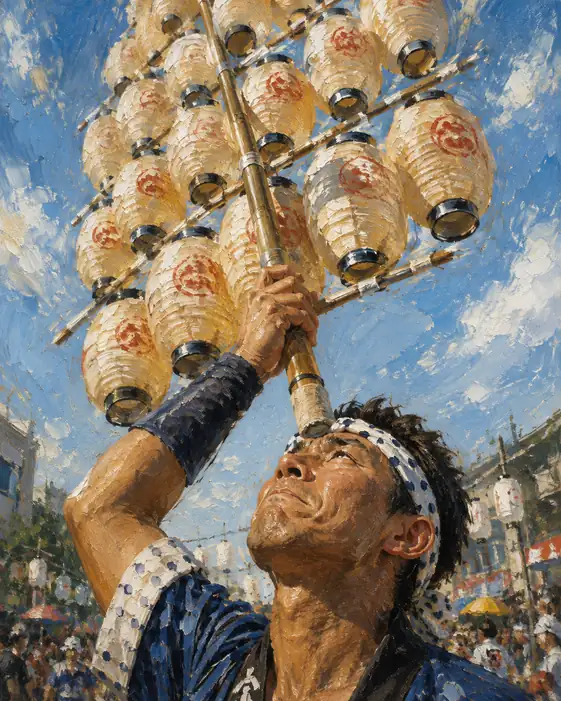 Feat of the Kanto Lantern Tower Balanced on the Forehead
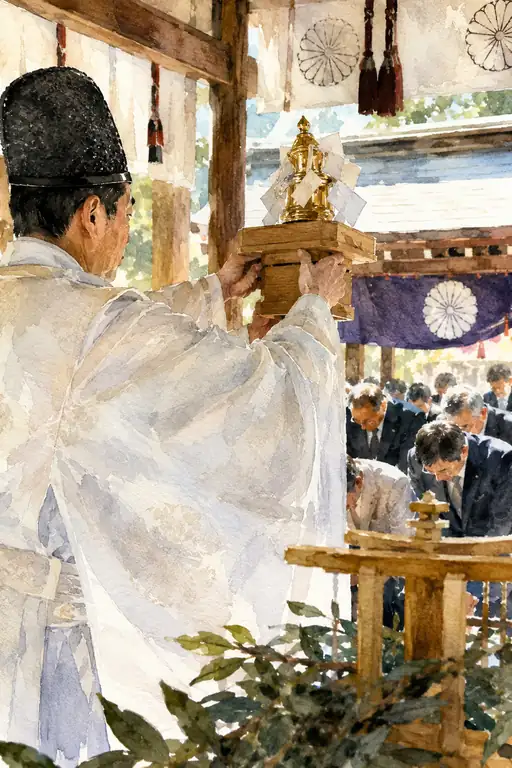 White Cloth Prayer Offered to the Solemn Atmosphere
Similar Artworks
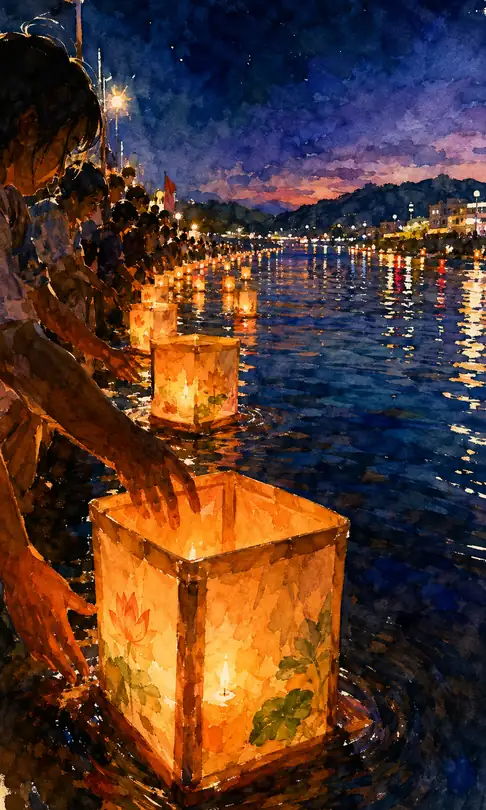 Lotus Lantern of Prayer Entrusted to the Waters and Twilight River Waves
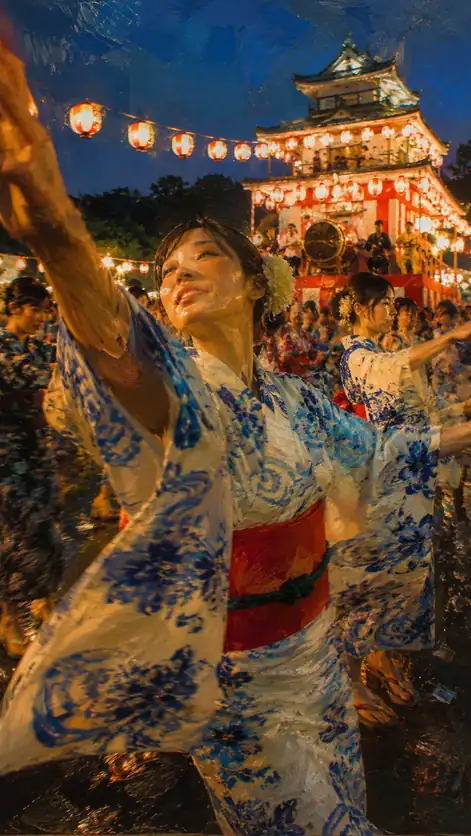 Dancing in Indigo-White Florals Beneath the Lanterns of the Castle Yagura
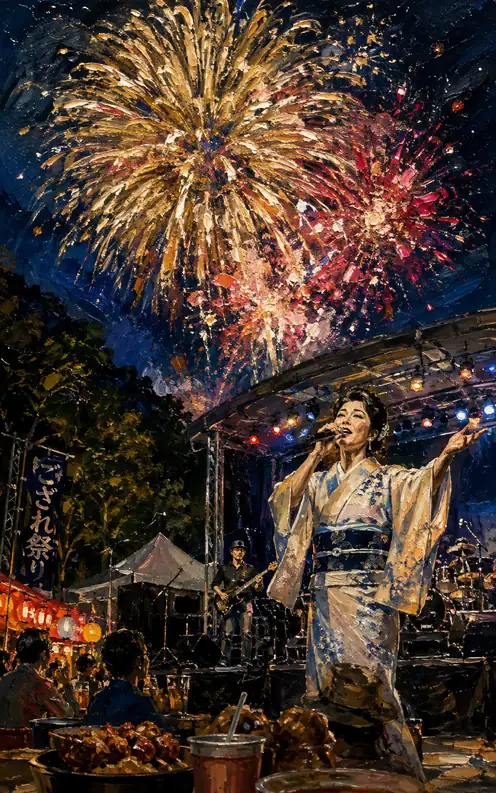 Singing Voice Echoing in the Gozare Festival Night Sky and Golden Blooms
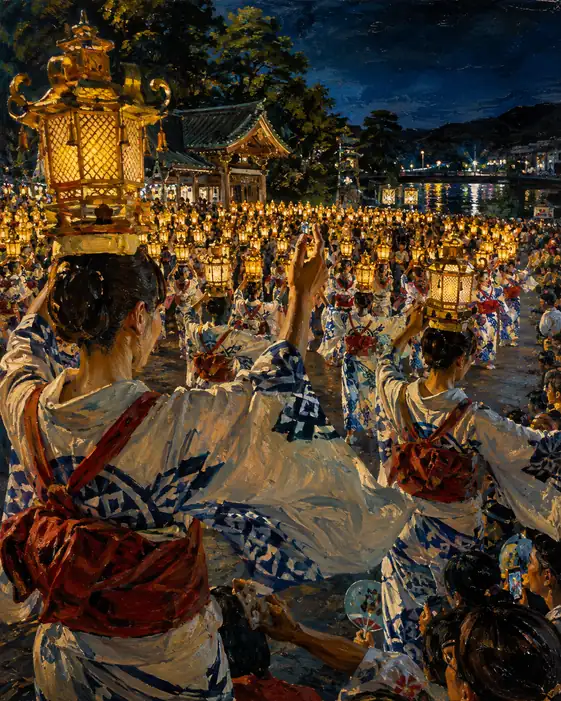 A Thousand Waves of Light Dancing Before the Night Shrine Bearing Golden Lanterns
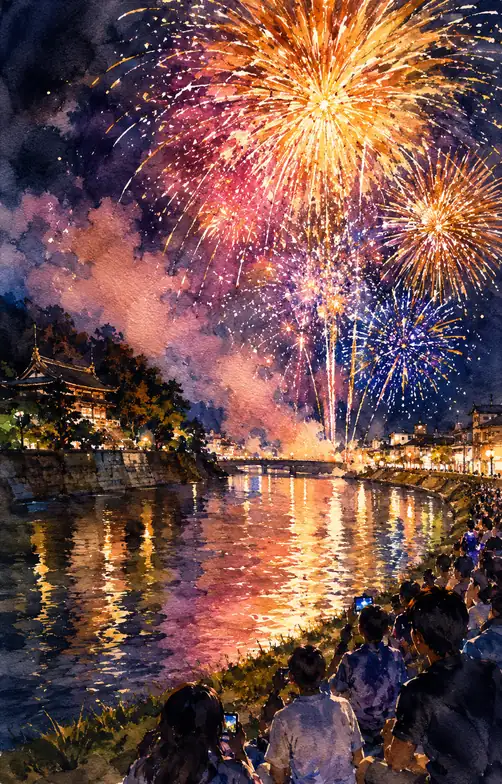 River Waves Illuminating Castle Stone Walls and Great Blooms in the Night Sky
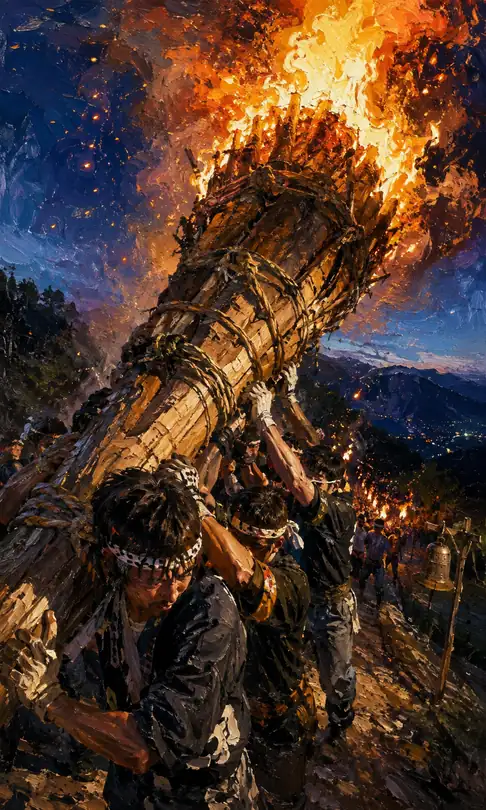 Great Torches Carried Up the Mountain Path and Roaring Flames Scorching the Night Sky
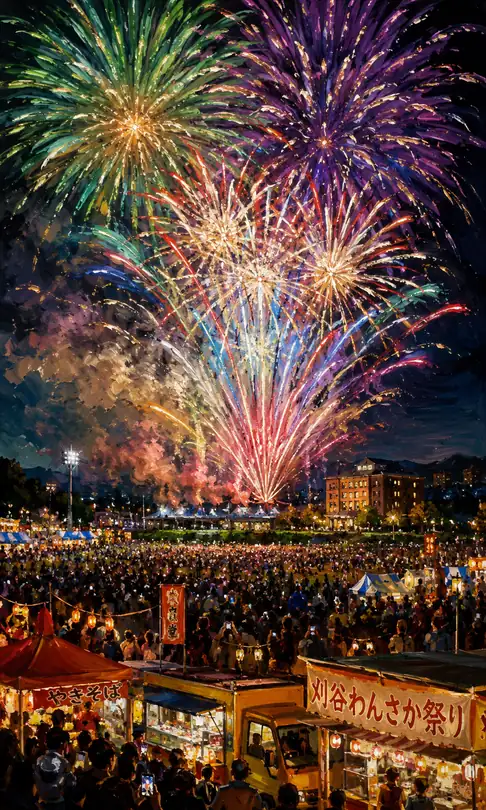 Bustle of Kariya Wansaka and Emerald and Purple Blooms in the Night Sky
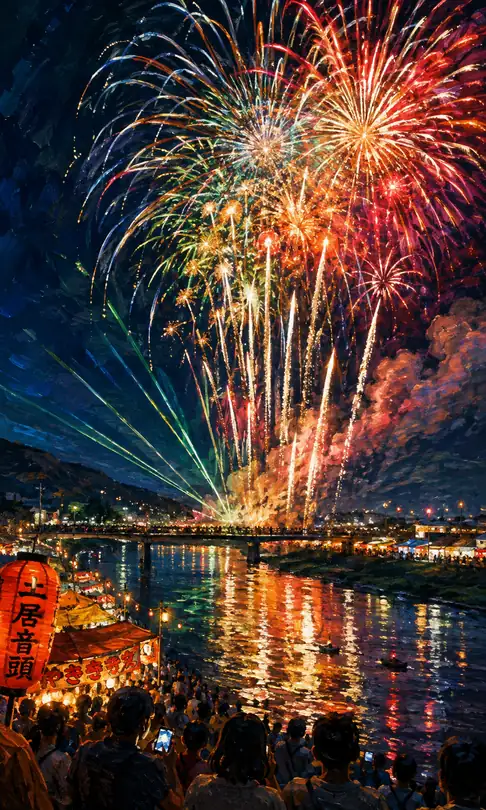 Red Lanterns of Doi Ondo and Blooms of Light Reflecting on the River
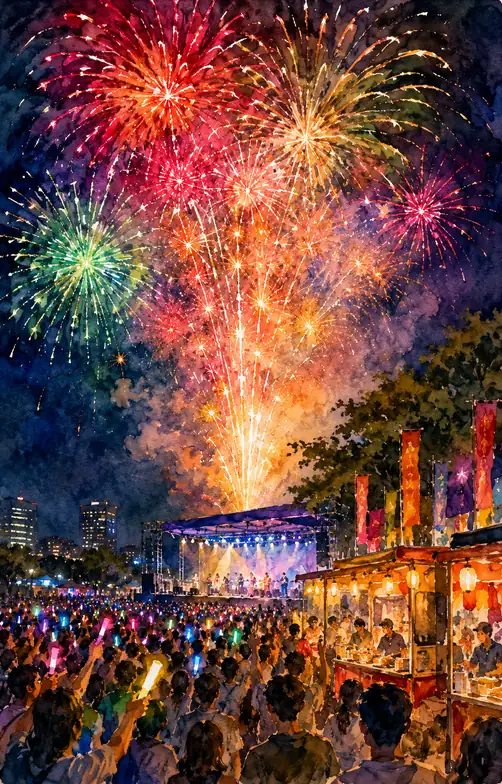 Rays of Light Raised to the Outdoor Stage and Great Blooms in the Night Sky
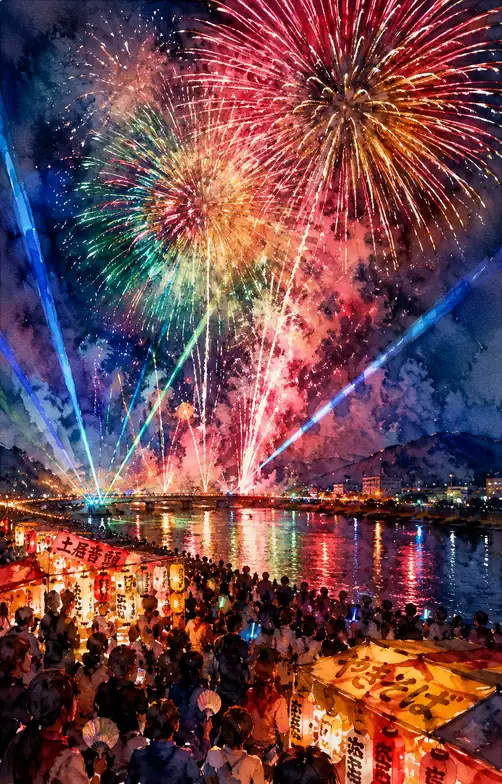 Stall Lights of Doi Ondo and the Great Cascade of Blooms Reflecting on the River