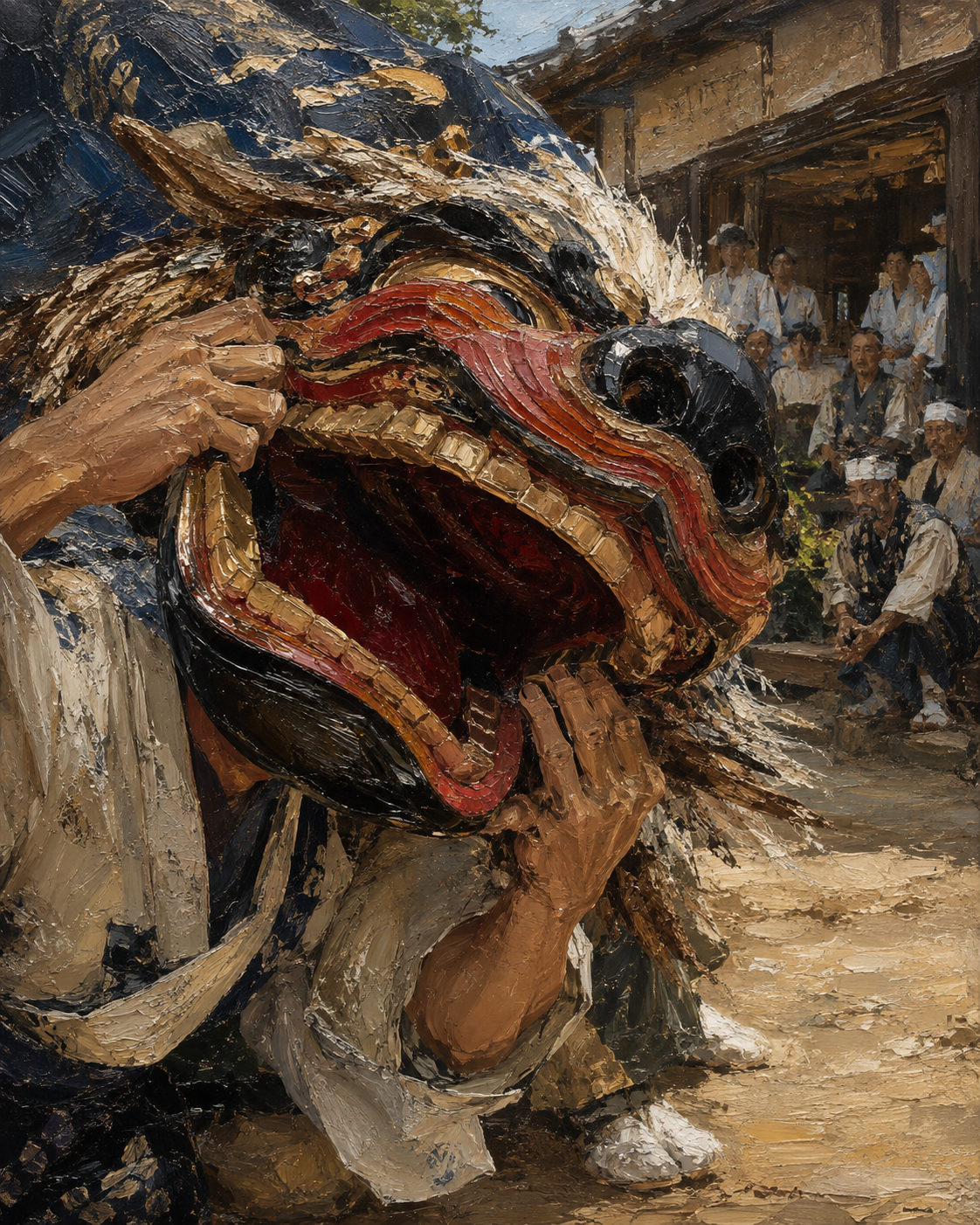
Breath of the Carved Lion Approaching the Eaves
Critique
Introduction An enormous lion head seems to bite into the picture while the performer’s hands and body visibly struggle to sustain it. Residents gathered at an old house remain in the distance, condensing supernatural force and the intimacy of inherited neighborhood performance into one thickly painted scene. Description Black, red, and gold fill most of the left and center. Bulging eyes, spiral brows, pale coarse hair, and golden teeth surround a mouth opening into dark crimson. The performer grips near the upper and lower jaws; pale sleeves, a dark sash, bent knees, and white footwear emerge below. At right, residents of several ages sit or lean from a timber doorway. Diagonal sunlight falls across the earthen street. Analysis Extreme enlargement turns perspective into an almost tactile encounter. Ovals of mouth and eyes seize attention, while the sloping muzzle and hair redirect it toward the spectators. Raised paint materially conveys carved ridges, abraded color, and rough fibers. Smaller, restrained strokes push architecture and people backward. Saturated red and gold cut through navy, while the white sleeve and sunlit road form a passage of light into depth. Realistic supporting hands sharply oppose the mask’s strangeness. Interpretation and Evaluation The face alone suggests attack, but exposed hands and feet reveal skilled bodily operation as the source of its power. The work therefore neither mystifies tradition completely nor reduces it to a prop. Doorway spectators show performance entering lived space rather than occupying a distant stage. Conclusion Dark mouth, hard teeth, coarse mane, and human grip are rendered with overwhelming proximity without sacrificing the quiet village setting. The scale difference lets an uncanny presence invade daily life.
Same Subcategory
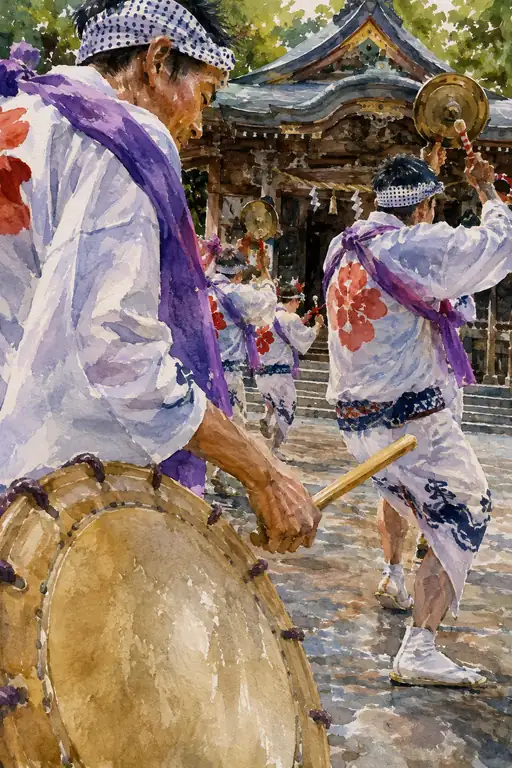 Dedication of Drums and Gongs Resounding in the Shrine Precincts
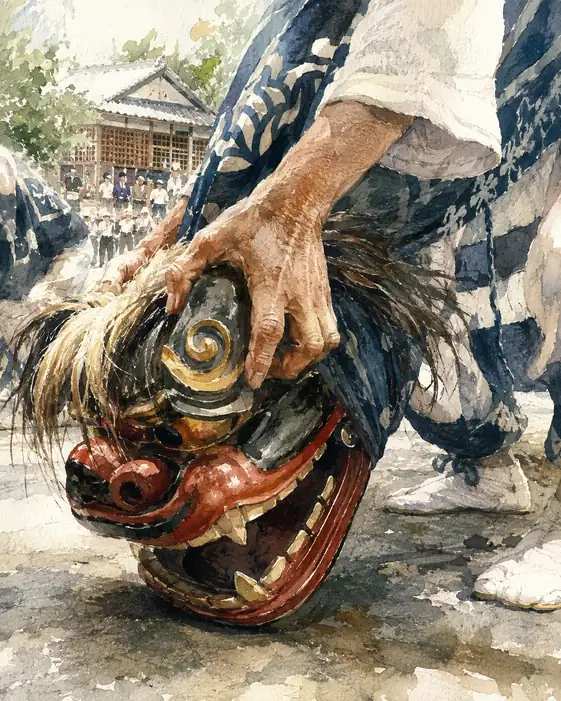 Lion Head Creeping on the Earth and the Gripping Hand
Similar Artworks
 Lotus Lantern of Prayer Entrusted to the Waters and Twilight River Waves
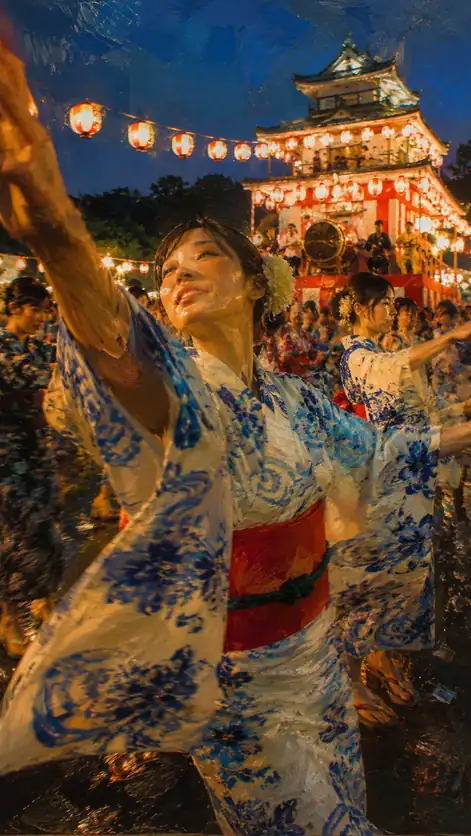 Dancing in Indigo-White Florals Beneath the Lanterns of the Castle Yagura
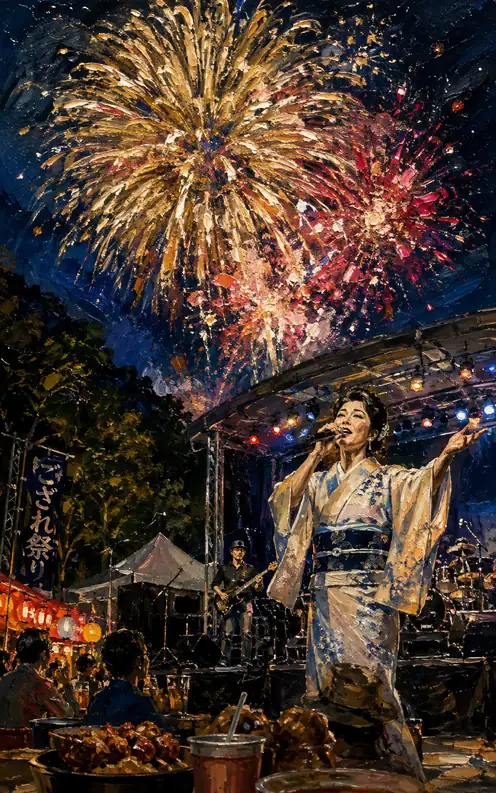 Singing Voice Echoing in the Gozare Festival Night Sky and Golden Blooms
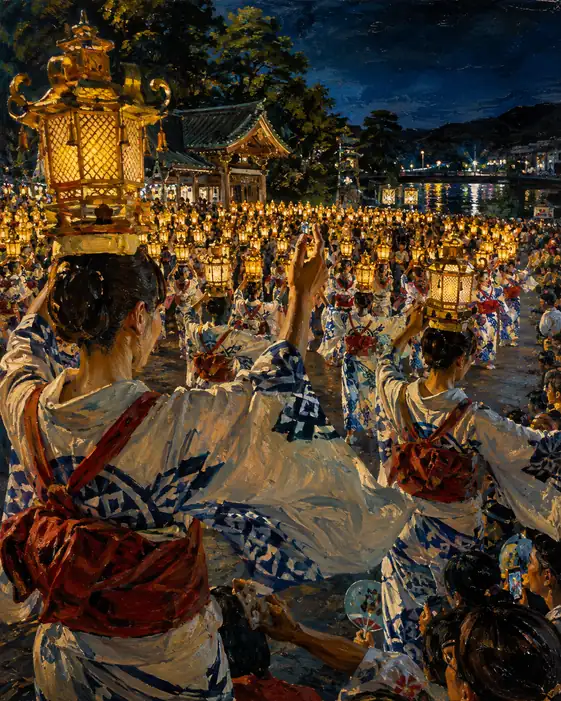 A Thousand Waves of Light Dancing Before the Night Shrine Bearing Golden Lanterns
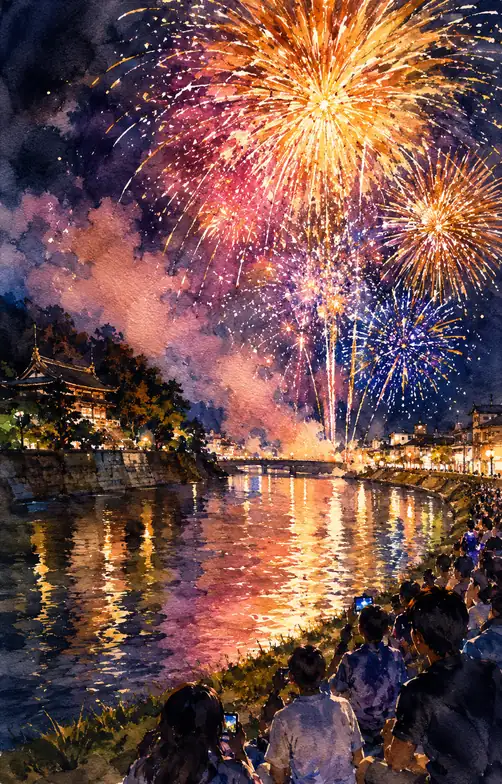 River Waves Illuminating Castle Stone Walls and Great Blooms in the Night Sky
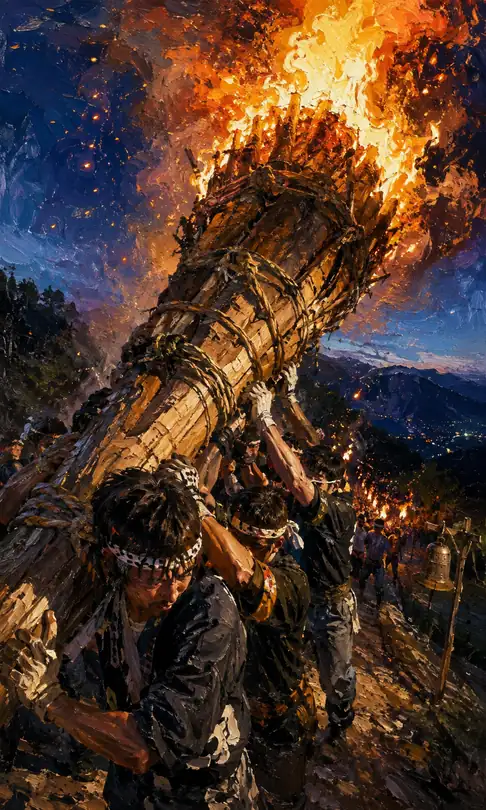 Great Torches Carried Up the Mountain Path and Roaring Flames Scorching the Night Sky
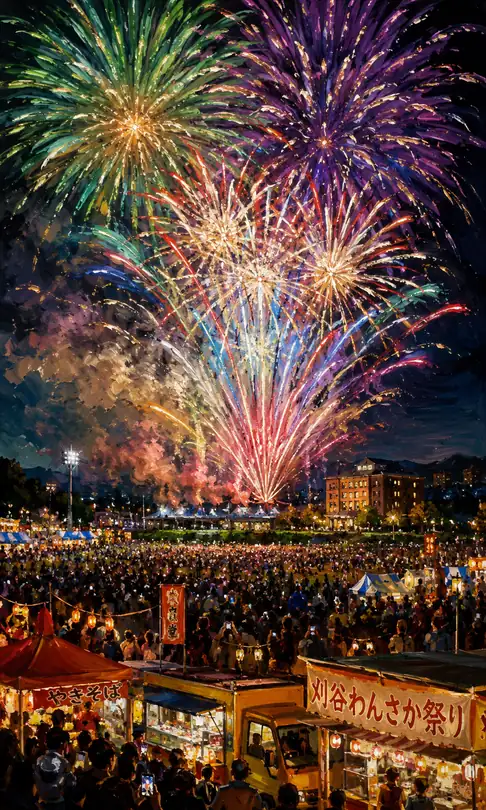 Bustle of Kariya Wansaka and Emerald and Purple Blooms in the Night Sky
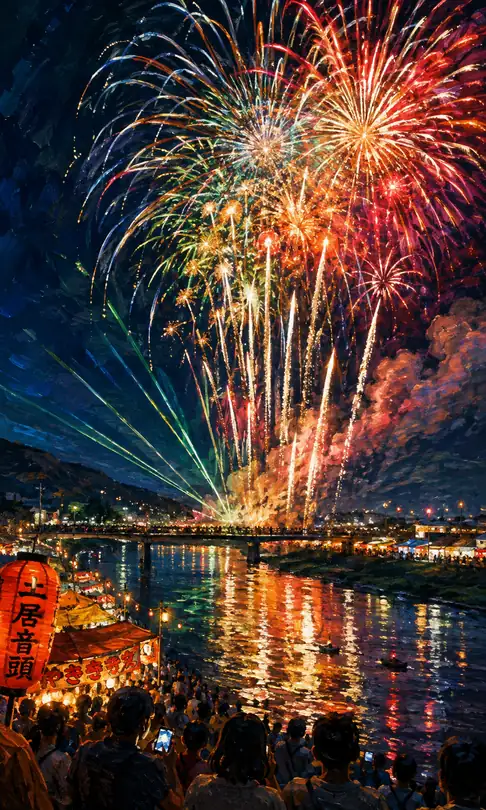 Red Lanterns of Doi Ondo and Blooms of Light Reflecting on the River
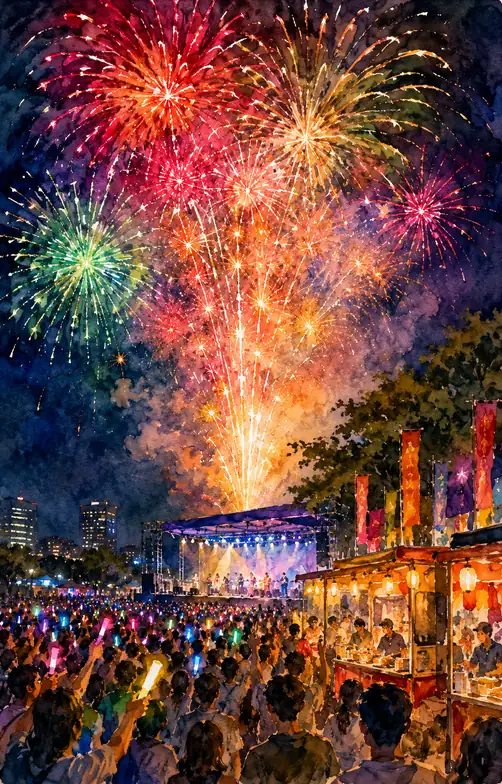 Rays of Light Raised to the Outdoor Stage and Great Blooms in the Night Sky
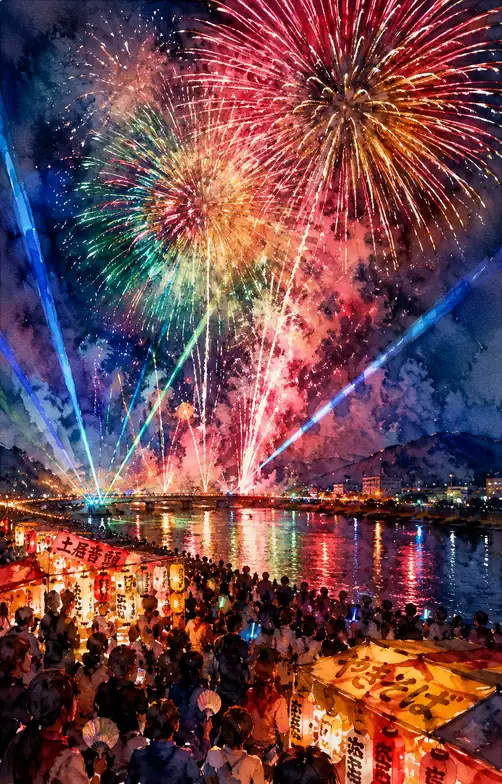 Stall Lights of Doi Ondo and the Great Cascade of Blooms Reflecting on the River