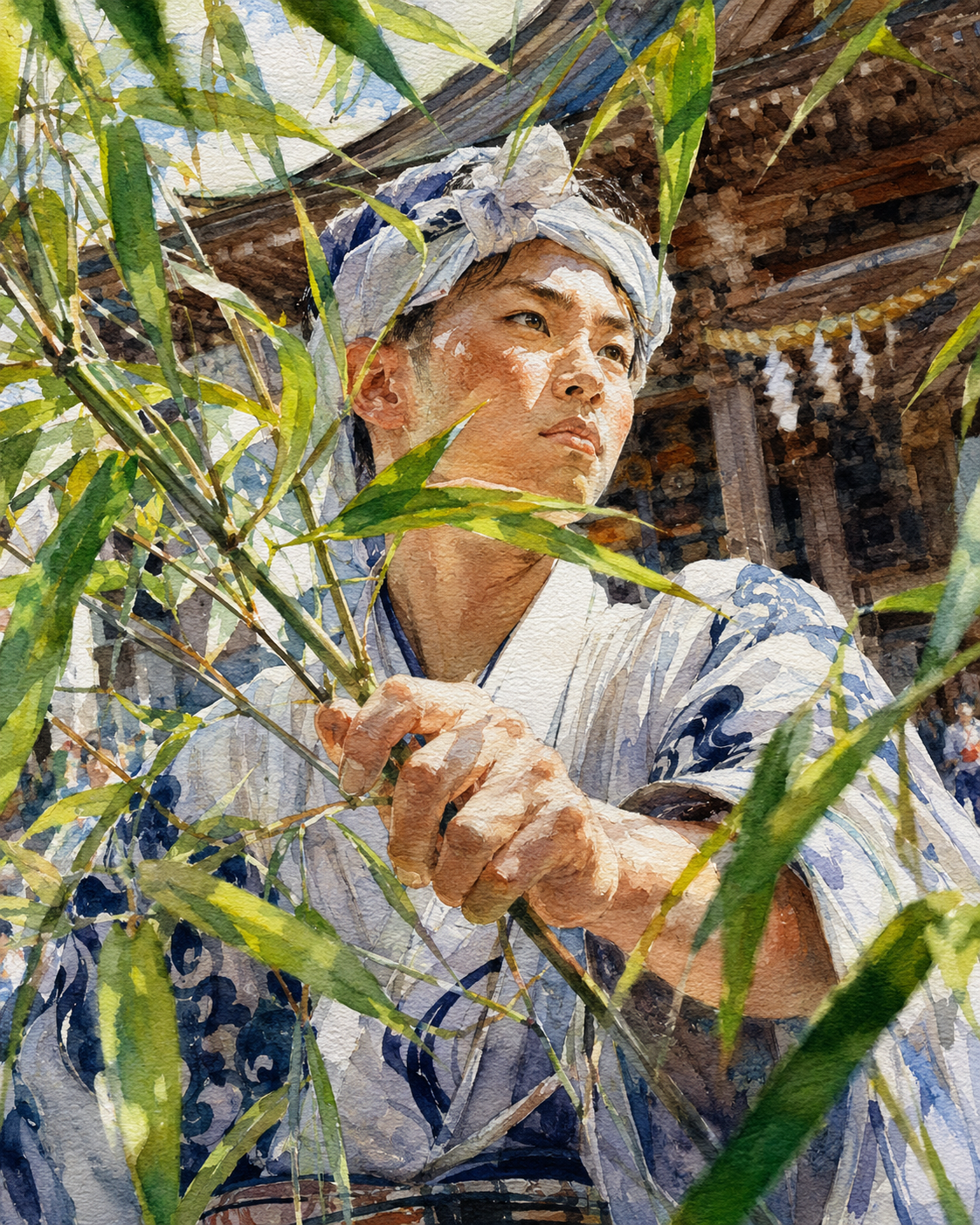
Sky Above the Sacred Hall Gazed Through Bamboo Leaves
Critique
Introduction This watercolor renders a young man gathering slender bamboo-grass stems as an image of quiet resolve. Leaves repeatedly cross his outline and face, loosening the boundary between portrait and environment. A wooden shrine behind gently places an apparently ordinary task within ceremonial time. Description The youth wears a white garment patterned in indigo and a blue-white cloth tied around his head. He lifts his face slightly and looks toward the upper right while collecting thin branches at his chest with both hands. Each finger meets a stem at a different angle, and strong sunlight falls across wrists and forearms. Yellow-green and dark leaves enter from every side, crossing cheek and neck. Behind are brown carved eaves, sacred rope, white paper streamers, and fragments of sky. Analysis From the small circle formed by his hands, stems radiate through the entire picture. His gaze alone passes beyond that complexity, supplying purpose and reflection. Warm flesh is the brightest element among cool indigo cloth, green foliage, and dark architecture. Dry pigment catches the grain of paper like rough sunlight, while transparent layering describes overlapping leaves. Interpretation and Evaluation Because the figure works while looking outward rather than concentrating solely downward, the image occupies an interval between preparation and contemplation. Careful fingers suggest accommodation to the material rather than domination. Leaves conceal the face yet also carry light onto it, making nature both obstruction and ritual medium. Conclusion Without a dramatic event, the painting raises service and attention from slight tensions of gaze and fingertips. Radiating bamboo, soft cloth, and weighty timber hold different temporal qualities but unite in translucent light.
Same Subcategory
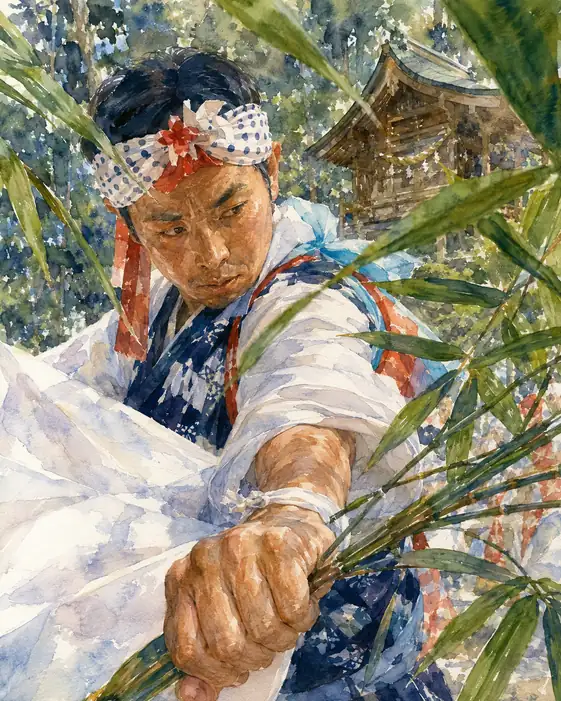 Sacred Devotion Imbued in the Bamboo of the Shrine Woods
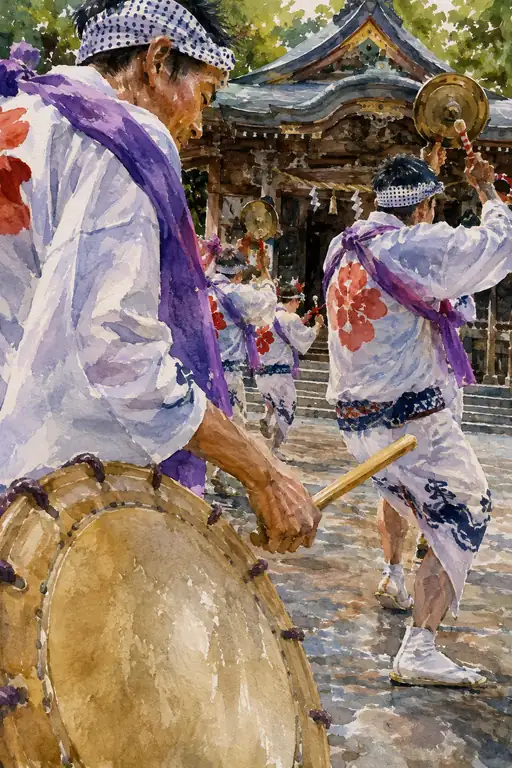 Dedication of Drums and Gongs Resounding in the Shrine Precincts
Similar Artworks
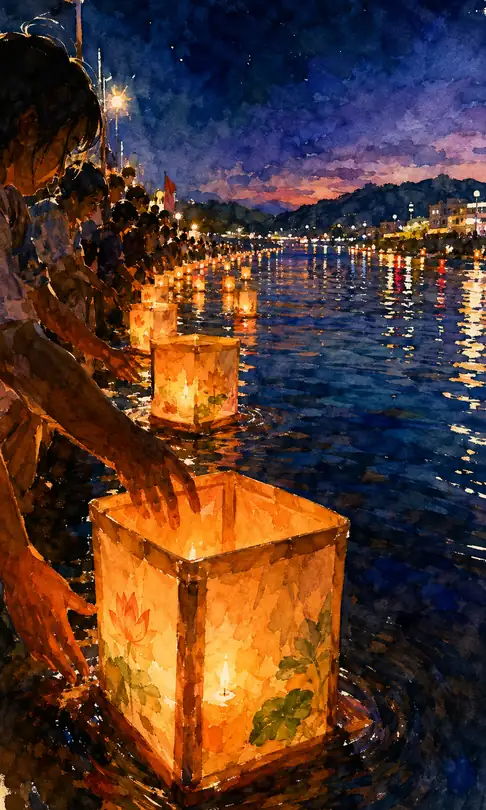 Lotus Lantern of Prayer Entrusted to the Waters and Twilight River Waves
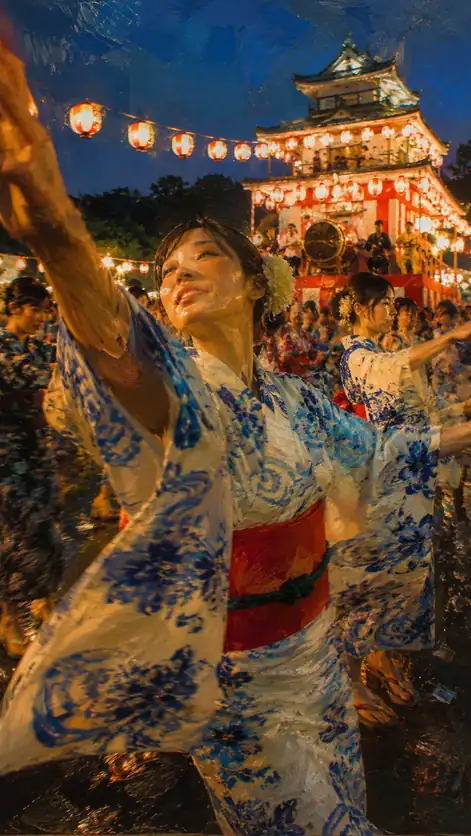 Dancing in Indigo-White Florals Beneath the Lanterns of the Castle Yagura
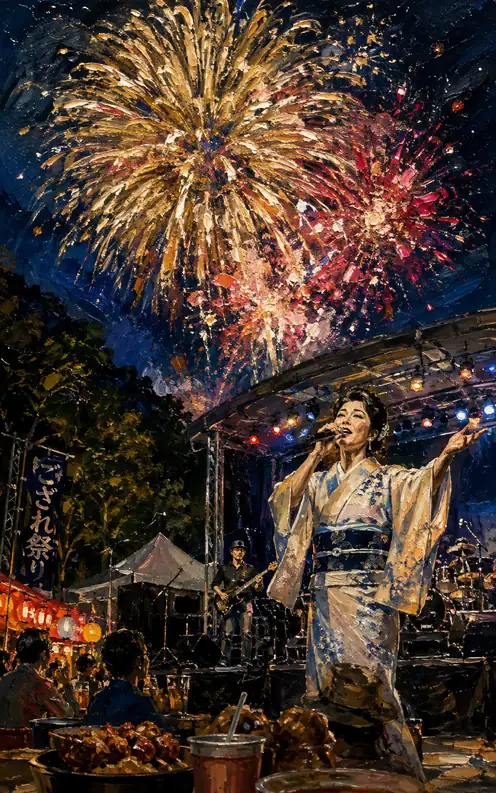 Singing Voice Echoing in the Gozare Festival Night Sky and Golden Blooms
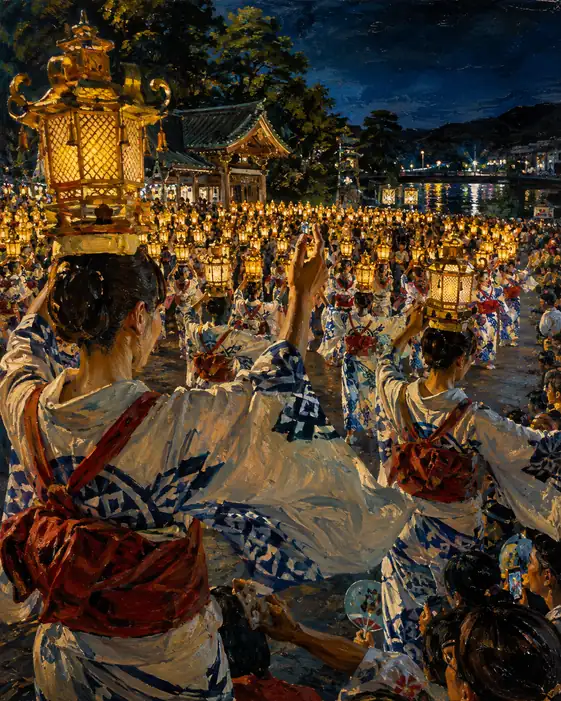 A Thousand Waves of Light Dancing Before the Night Shrine Bearing Golden Lanterns
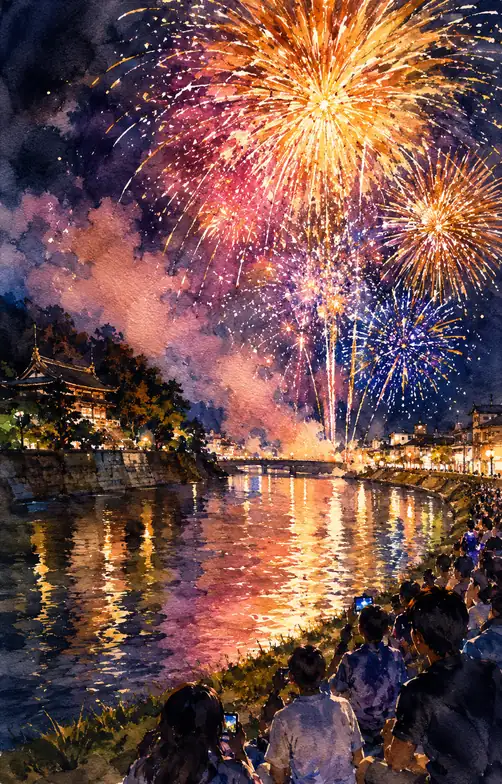 River Waves Illuminating Castle Stone Walls and Great Blooms in the Night Sky
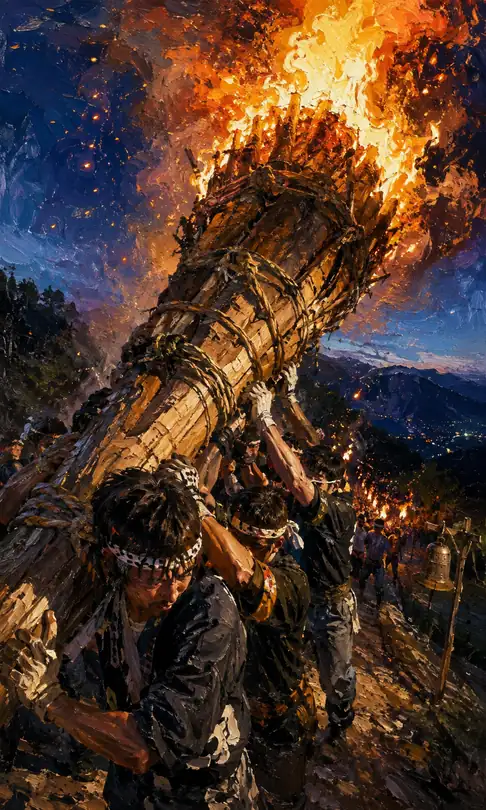 Great Torches Carried Up the Mountain Path and Roaring Flames Scorching the Night Sky
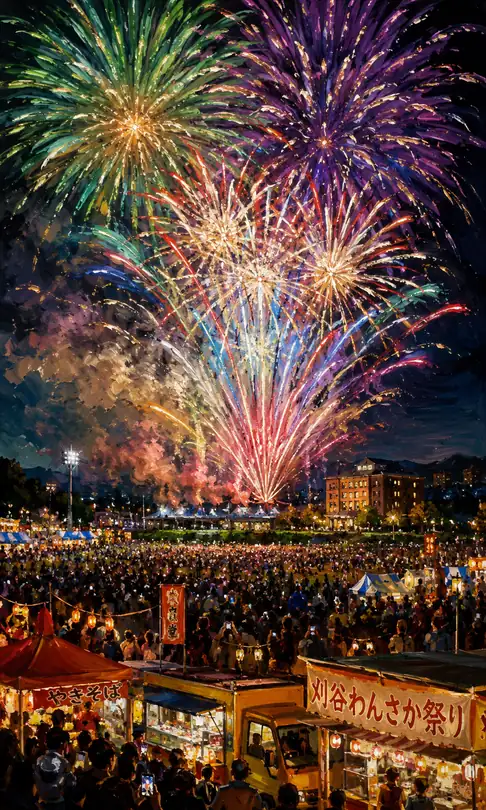 Bustle of Kariya Wansaka and Emerald and Purple Blooms in the Night Sky
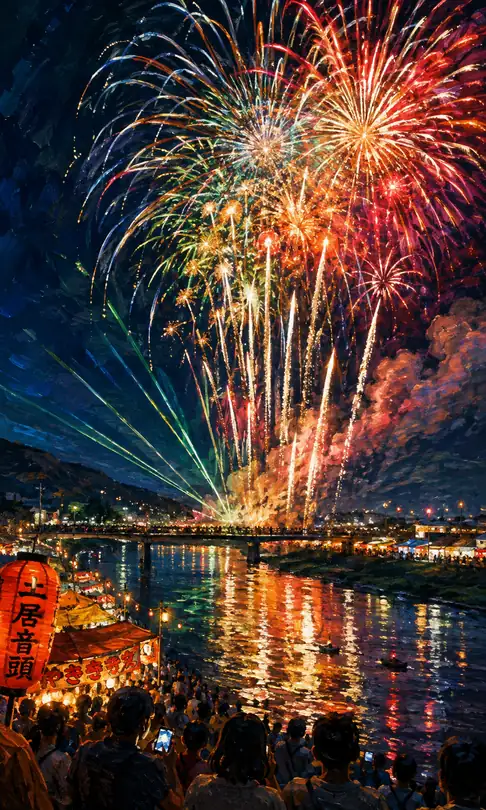 Red Lanterns of Doi Ondo and Blooms of Light Reflecting on the River
 Rays of Light Raised to the Outdoor Stage and Great Blooms in the Night Sky
 Stall Lights of Doi Ondo and the Great Cascade of Blooms Reflecting on the River