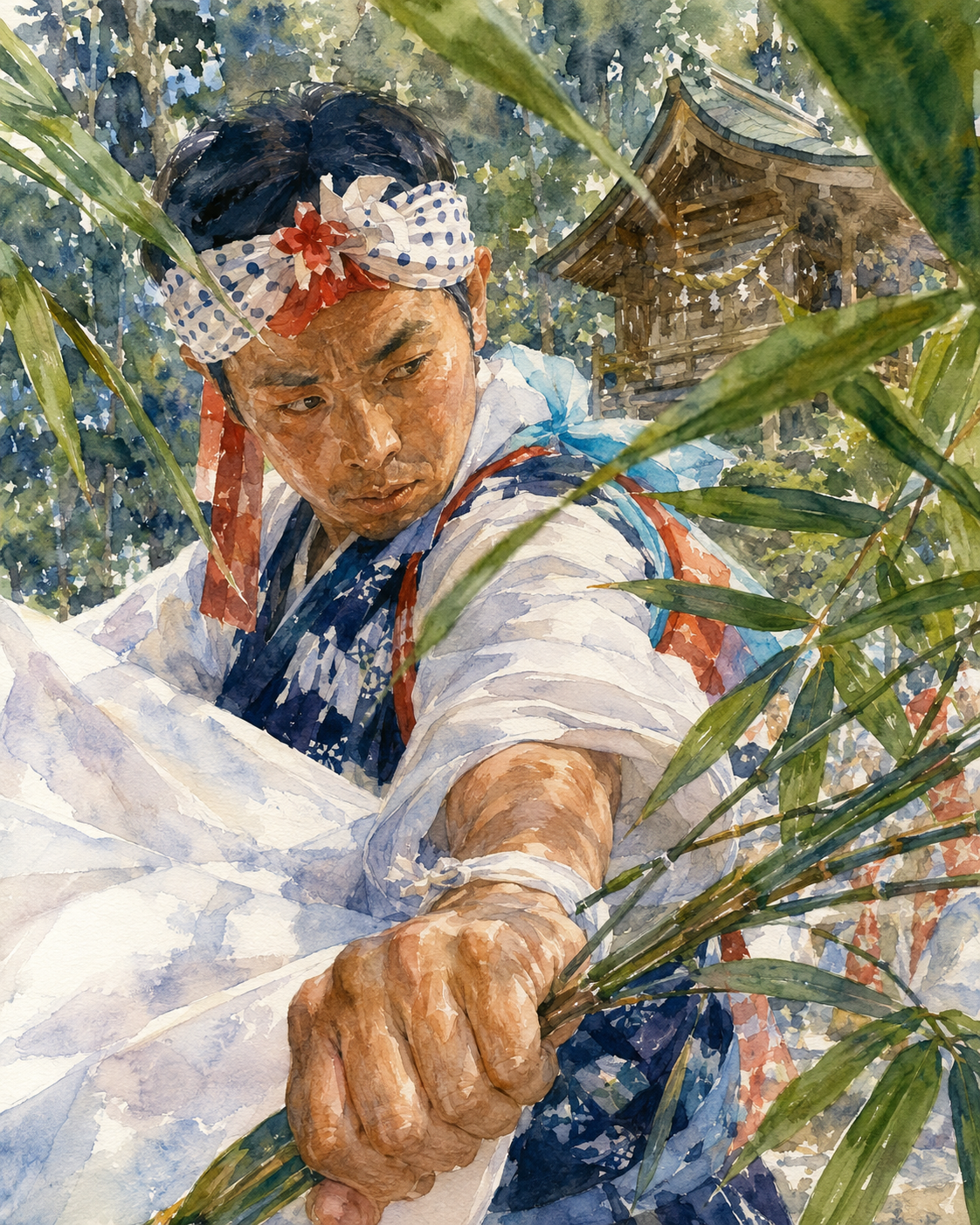
Sacred Devotion Imbued in the Bamboo of the Shrine Woods
Critique
Introduction This tense watercolor observes a participant drawing thick bamboo-grass stems through a screen of leaves. Green blades interrupt the foreground in every direction, placing the viewer inside the vegetation. White-and-blue clothing, a red knot, and the shrine behind lend ceremonial concentration to the handling of natural material. Description The man wears a pale patterned garment and a dotted headband decorated in red and white. Brow furrowed, he looks downward while gripping several stems firmly. His arm reaches from depth toward us, enlarging the knuckled hand near the bottom. Long leaves cross the edges and his face, shifting from yellow green to deep green in sunlight. Analysis A diagonal from fist through forearm to face concentrates effort, while leaves moving in contrary directions imply resistance and sway. Their partial obstruction creates spatial layers and intensifies the visible gaze. The white garment gains volume through untouched paper and pale blue shadow, separating warm skin from foliage. A restrained brown rectangle of architecture stabilizes the figure. Broken watercolor textures scatter woodland light, balancing the solidity of the hand with flexible vegetal speed. Interpretation and Evaluation The festival is condensed into a body confronting a handful of plant material rather than announced through spectacle. Bamboo grass acts not as background but as an active partner: it responds to pressure, conceals the face, and reorganizes the image. The severe gaze suggests responsibility toward a prescribed action. Conclusion The three layers of enlarged fist, crossing leaves, and quiet shrine give simple material remarkable drama. Translucent green and cool clothing provide freshness, while the weathered hand and taut expression retain weight. Nature, body, and ritual setting are integrated into one decisive act.
Same Subcategory
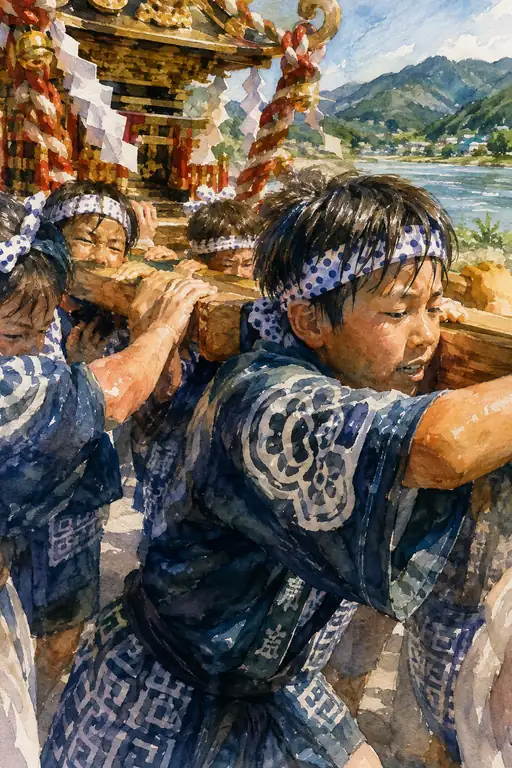 Youth's Determination Gazing at the Weight
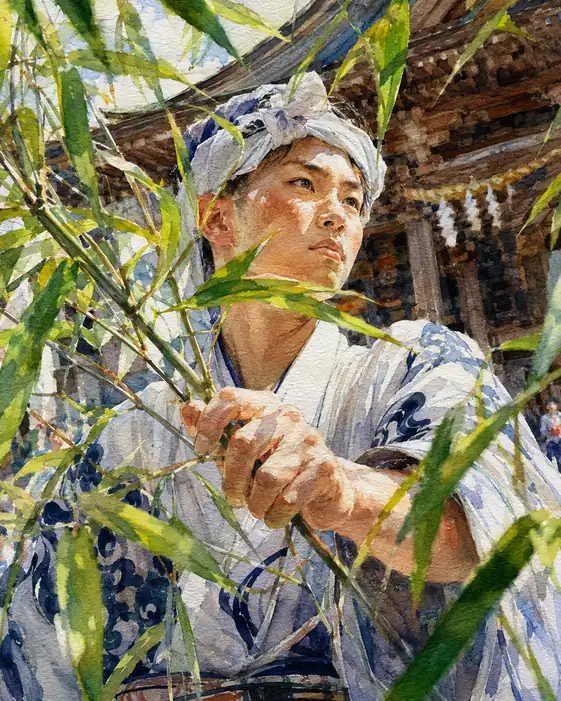 Sky Above the Sacred Hall Gazed Through Bamboo Leaves
Similar Artworks
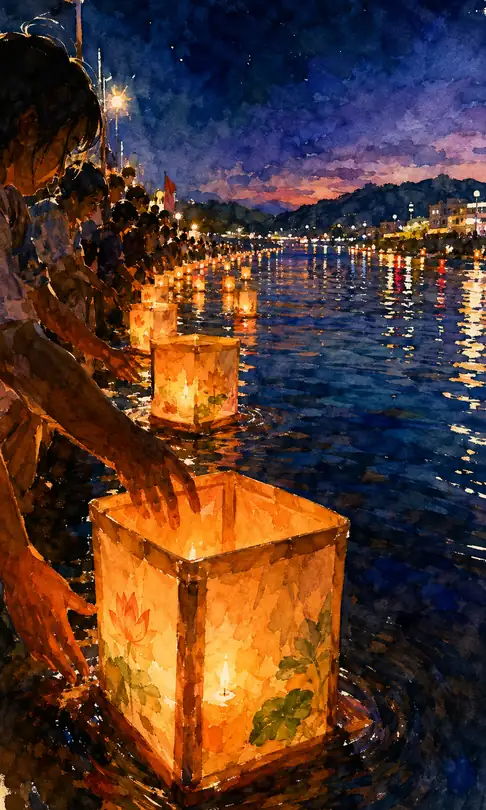 Lotus Lantern of Prayer Entrusted to the Waters and Twilight River Waves
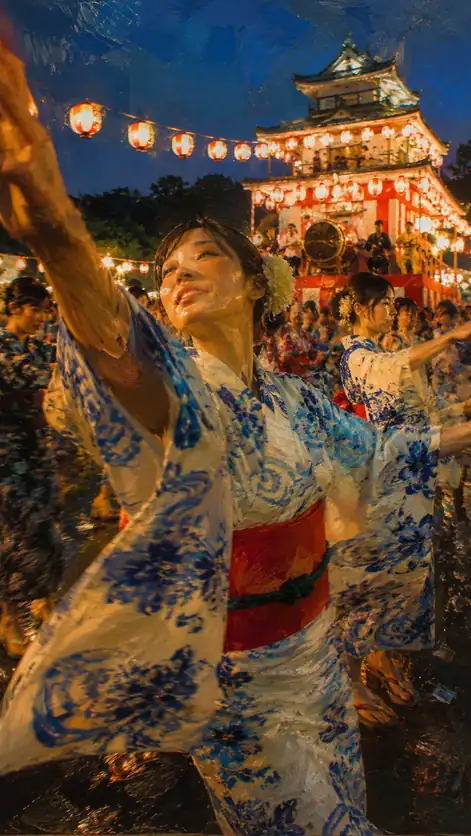 Dancing in Indigo-White Florals Beneath the Lanterns of the Castle Yagura
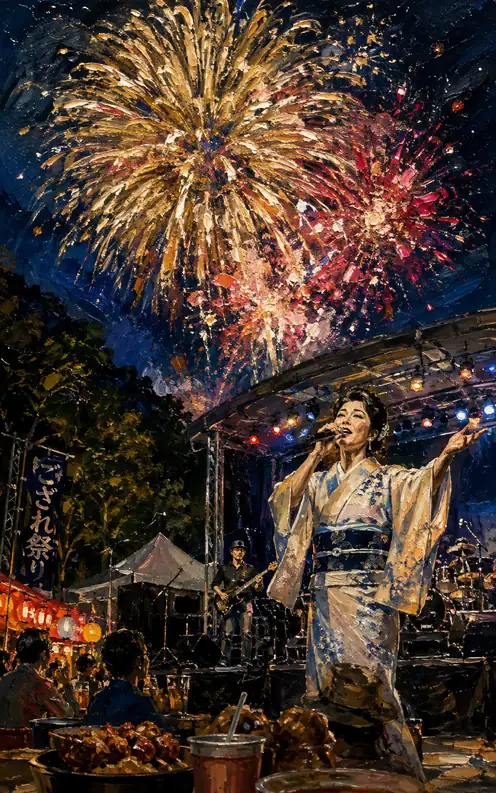 Singing Voice Echoing in the Gozare Festival Night Sky and Golden Blooms
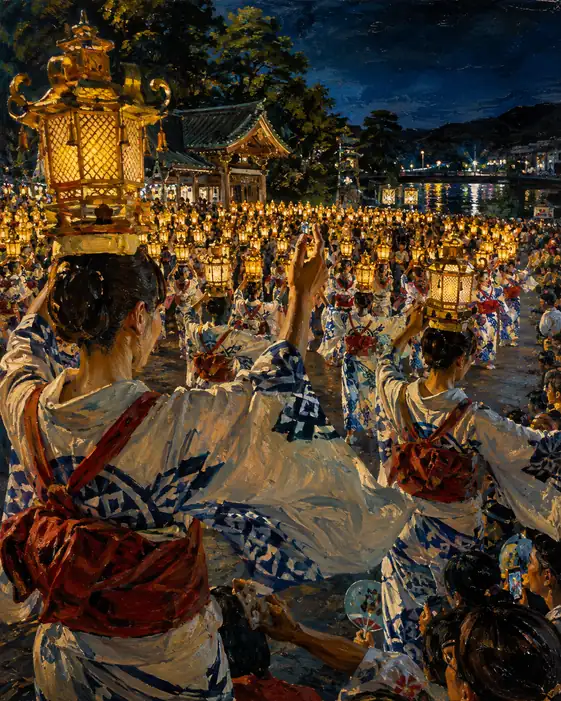 A Thousand Waves of Light Dancing Before the Night Shrine Bearing Golden Lanterns
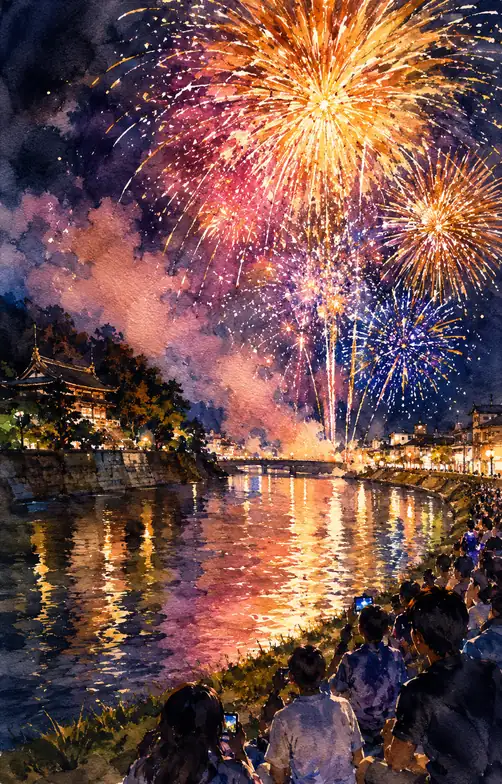 River Waves Illuminating Castle Stone Walls and Great Blooms in the Night Sky
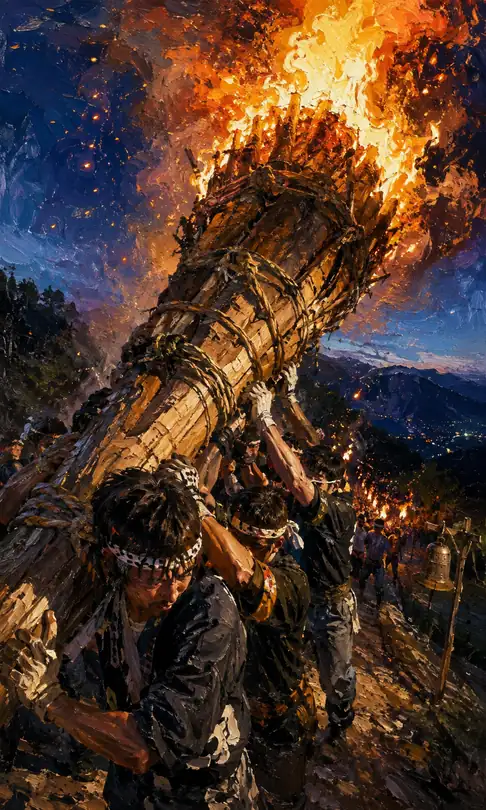 Great Torches Carried Up the Mountain Path and Roaring Flames Scorching the Night Sky
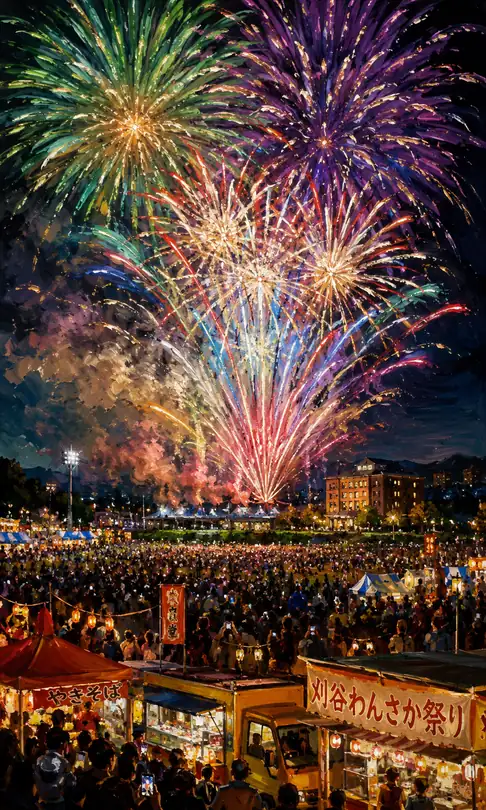 Bustle of Kariya Wansaka and Emerald and Purple Blooms in the Night Sky
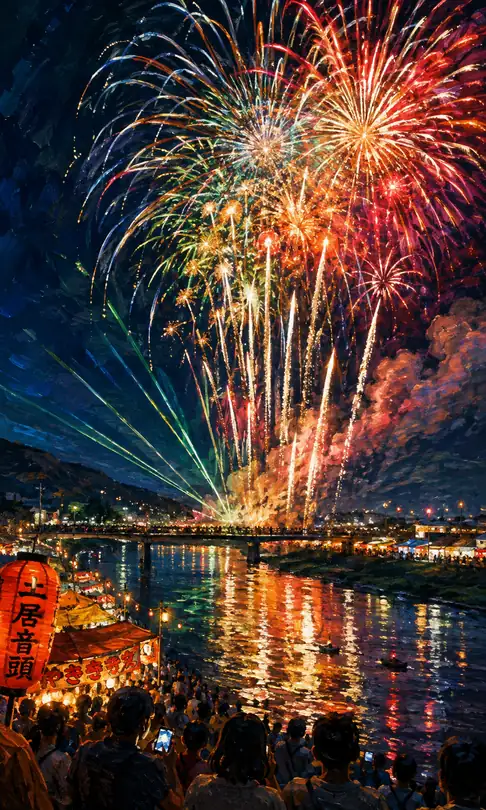 Red Lanterns of Doi Ondo and Blooms of Light Reflecting on the River
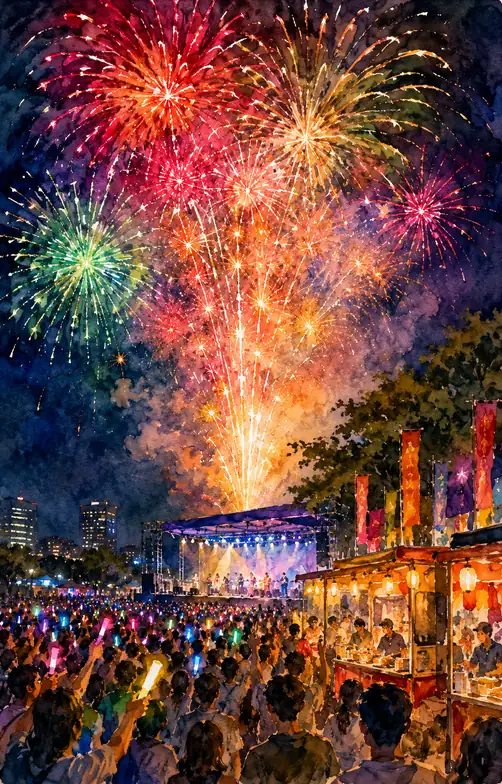 Rays of Light Raised to the Outdoor Stage and Great Blooms in the Night Sky
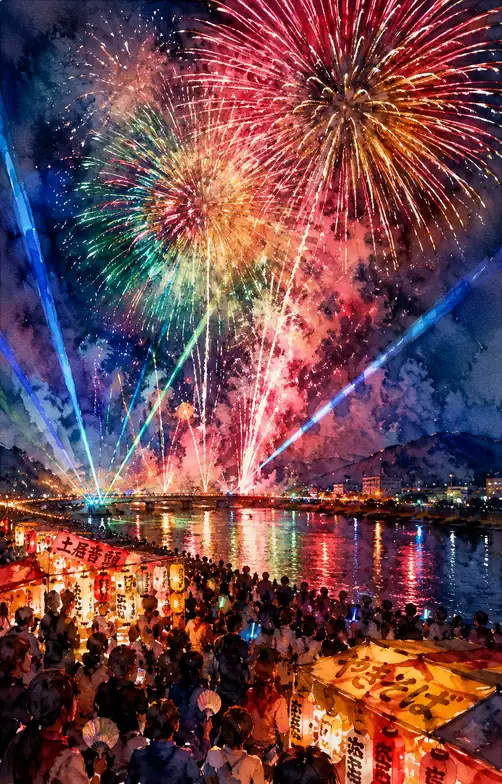 Stall Lights of Doi Ondo and the Great Cascade of Blooms Reflecting on the River