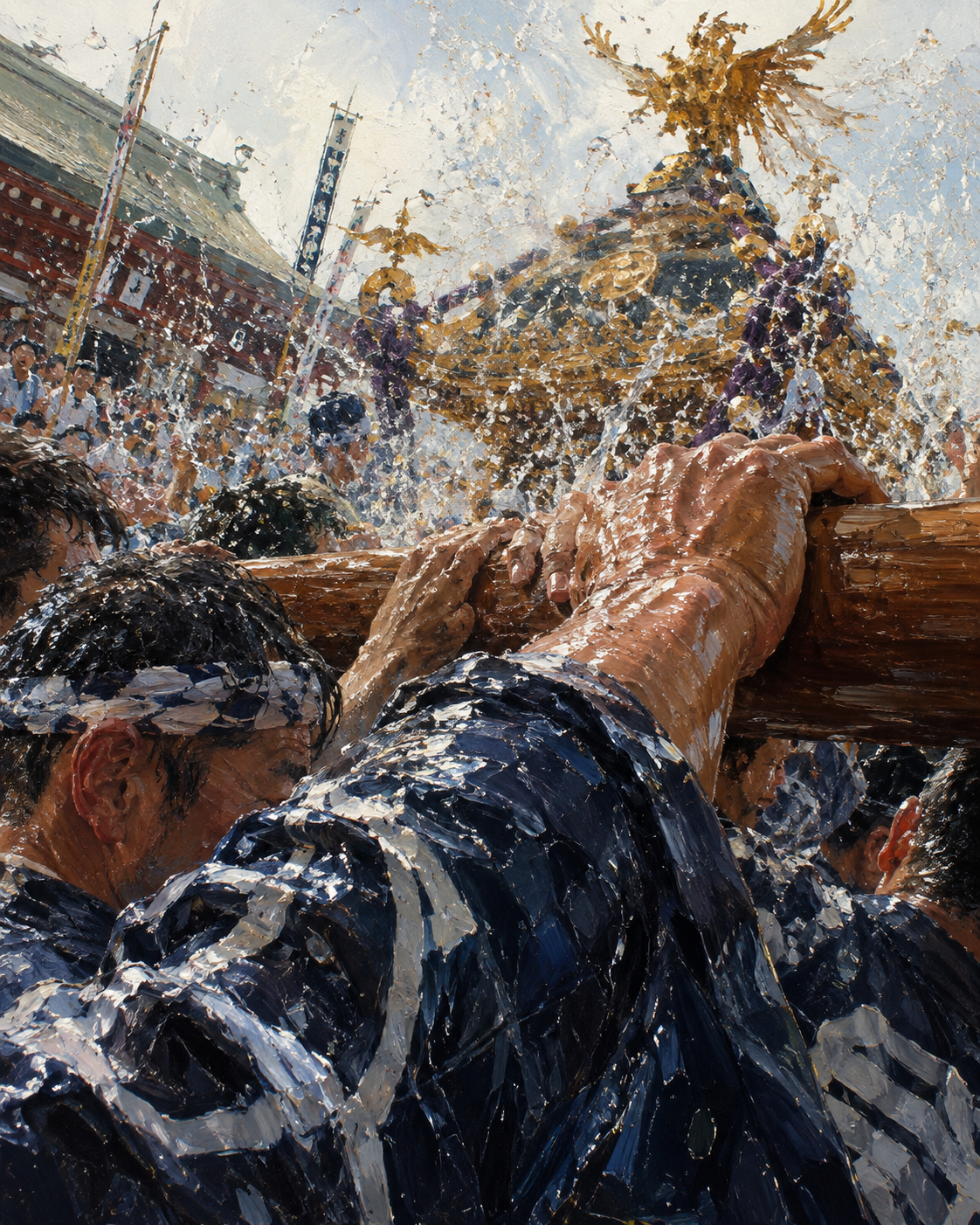
Arms Gripping the Spray and the Golden Phoenix
Critique
Introduction Seen from immediately beneath a heavy carrying beam, this oil-like painting captures both the weight of a mikoshi procession and the violence of purifying water. Rather than explaining the golden shrine through a complete view, it makes hands, shoulders, and soaked cloth the foundation from which grandeur rises. Description A thick brown-black beam crosses the center, gripped tightly by several large hands from above and below. At left, the profile of a bearer in a blue-and-white coat and headband reflects hard light from wet skin and fabric. Analysis The extreme upward angle enlarges the beam into a horizon and gives the shrine a powerful ascent. Foreground arms create diagonals that collide with the contrary direction of the water, concentrating pressure near the center. Heavy areas of navy, flesh, and dark wood are punctured by white spray and yellow metal. Brushwork describes water as both particles and broad bands, while distinguishing the dull reflection of soaked timber from polished ornament. Cropping the phoenix near the top conveys height as experienced by the body below. Interpretation and Evaluation The deeper subject is the shared support that enables the shrine to appear sacred. Fingers pressing into wood, a tilted neck, and cloth made heavier by water disclose the labor beneath pageantry. The deluge is not decorative sparkle; it is a force that obscures sight and breath even as it blesses the passage. Conclusion Gripping hands, the horizontal beam, the rising shrine, and oblique water lead the image to a convincing peak of tension. Extreme proximity becomes tactile knowledge of weight, coldness, and slippery wood. Symbolic gold is joined to bodily effort in a remarkably immediate festival image.
Same Subcategory
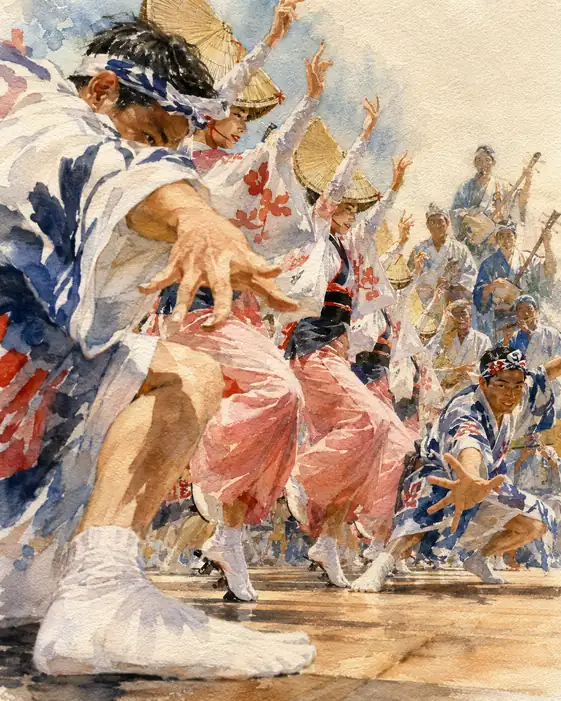 Approaching Fingertips and Woven Hats Drifting in Dance
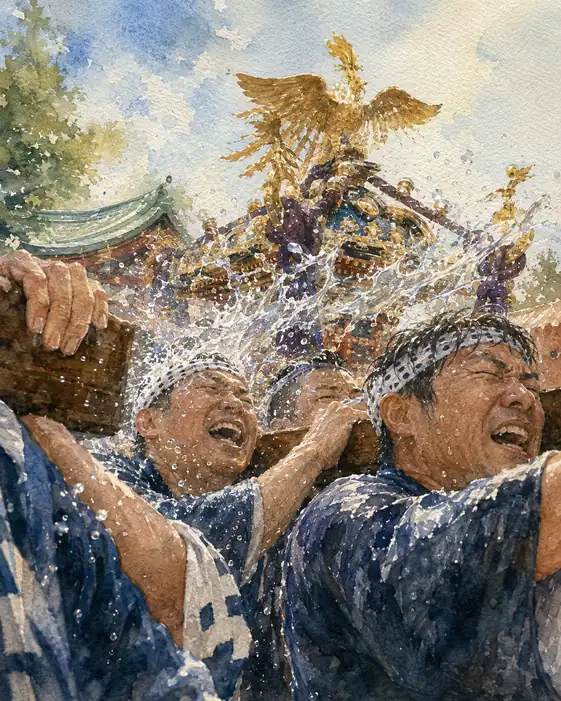 Smiling Bearers Roaring in the Pure Stream
Similar Artworks
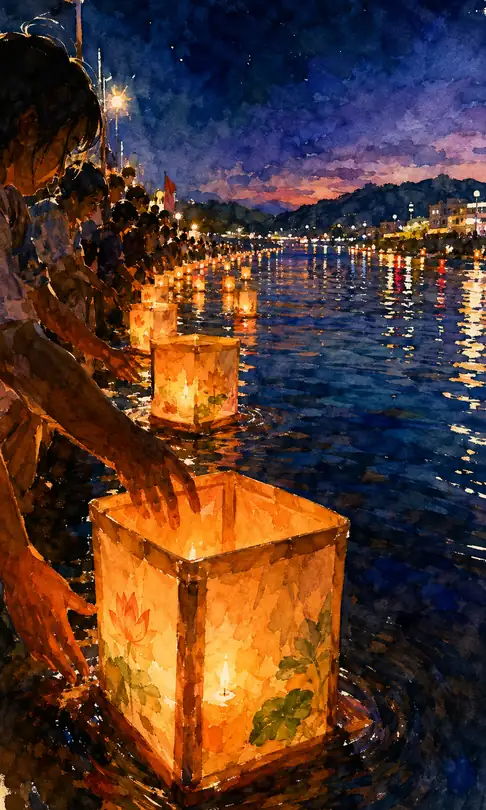 Lotus Lantern of Prayer Entrusted to the Waters and Twilight River Waves
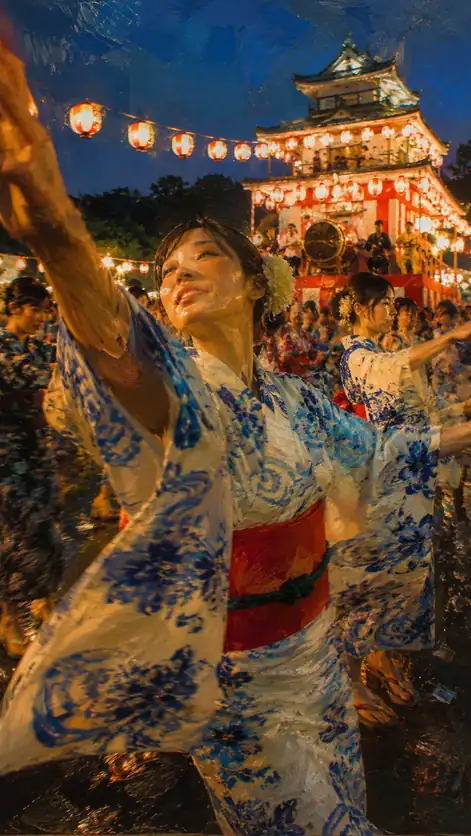 Dancing in Indigo-White Florals Beneath the Lanterns of the Castle Yagura
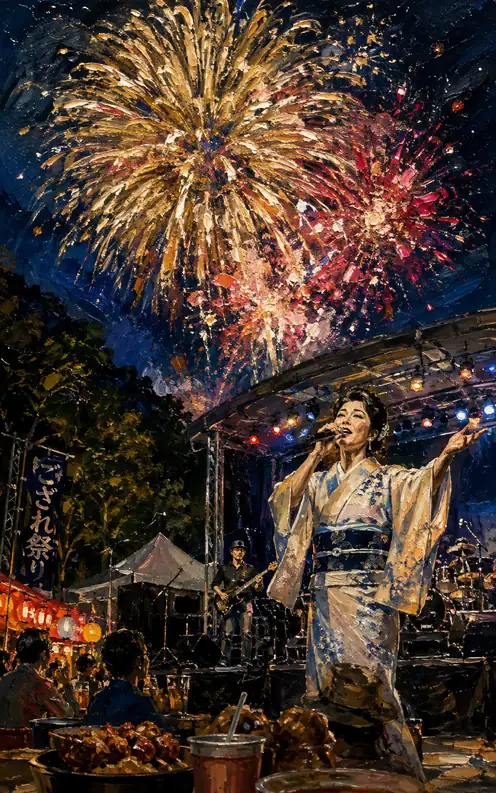 Singing Voice Echoing in the Gozare Festival Night Sky and Golden Blooms
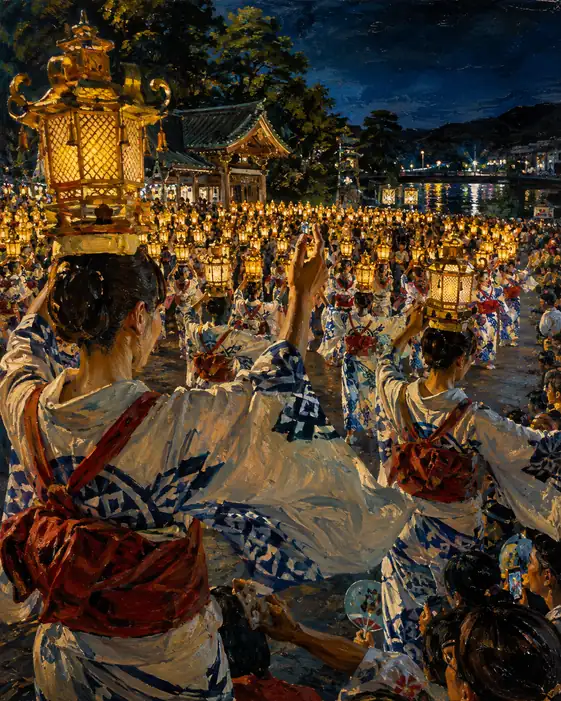 A Thousand Waves of Light Dancing Before the Night Shrine Bearing Golden Lanterns
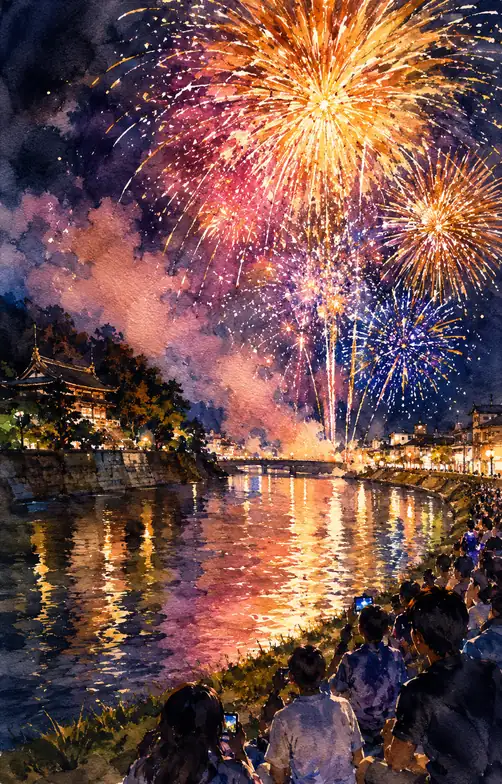 River Waves Illuminating Castle Stone Walls and Great Blooms in the Night Sky
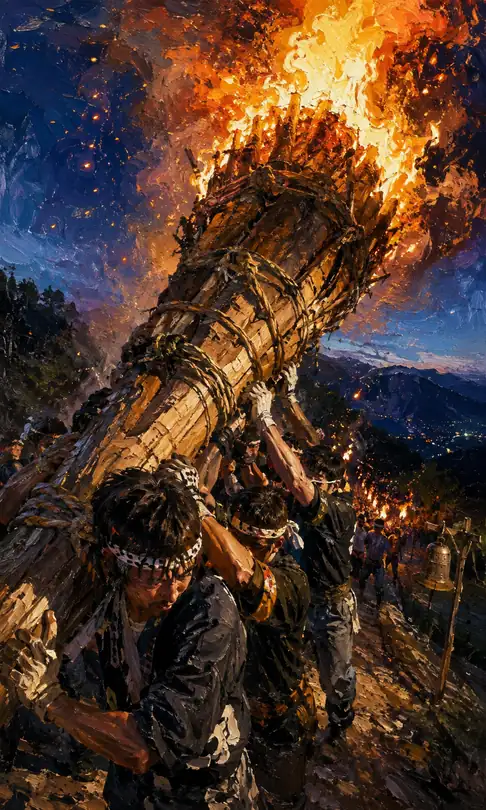 Great Torches Carried Up the Mountain Path and Roaring Flames Scorching the Night Sky
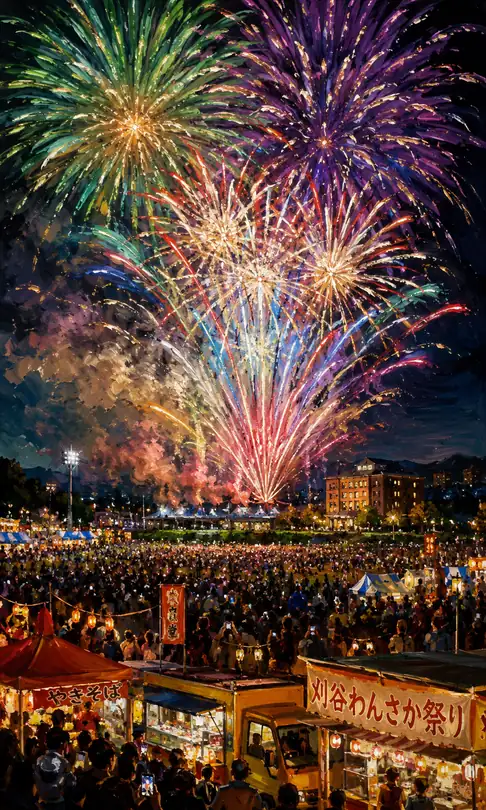 Bustle of Kariya Wansaka and Emerald and Purple Blooms in the Night Sky
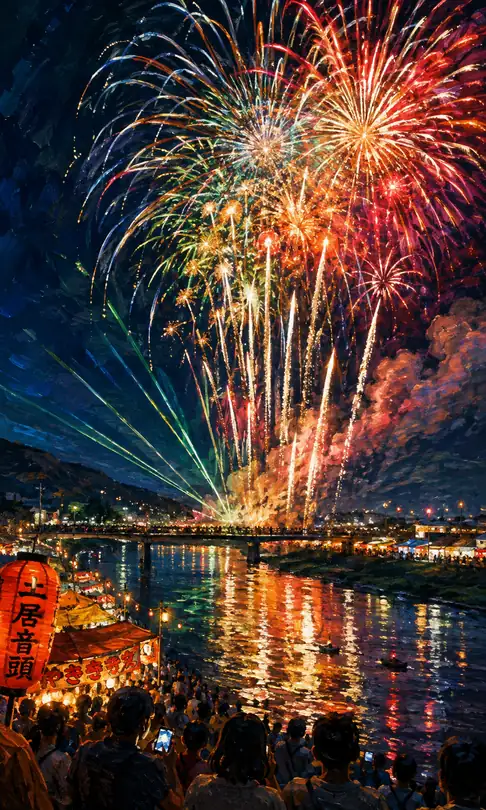 Red Lanterns of Doi Ondo and Blooms of Light Reflecting on the River
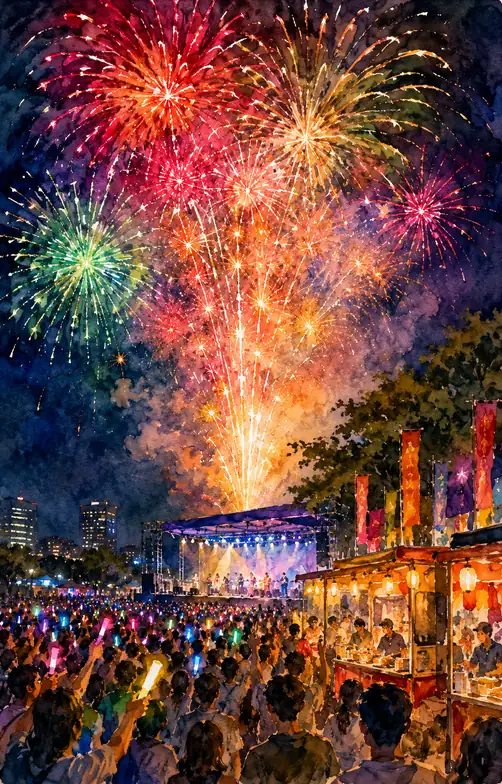 Rays of Light Raised to the Outdoor Stage and Great Blooms in the Night Sky
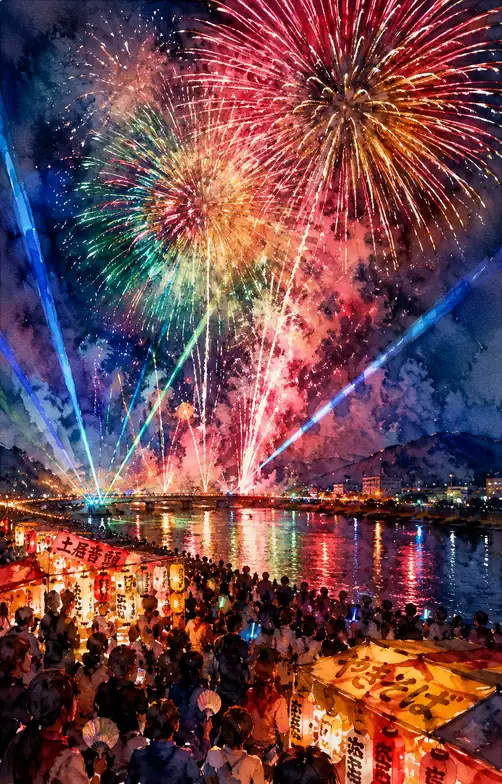 Stall Lights of Doi Ondo and the Great Cascade of Blooms Reflecting on the River