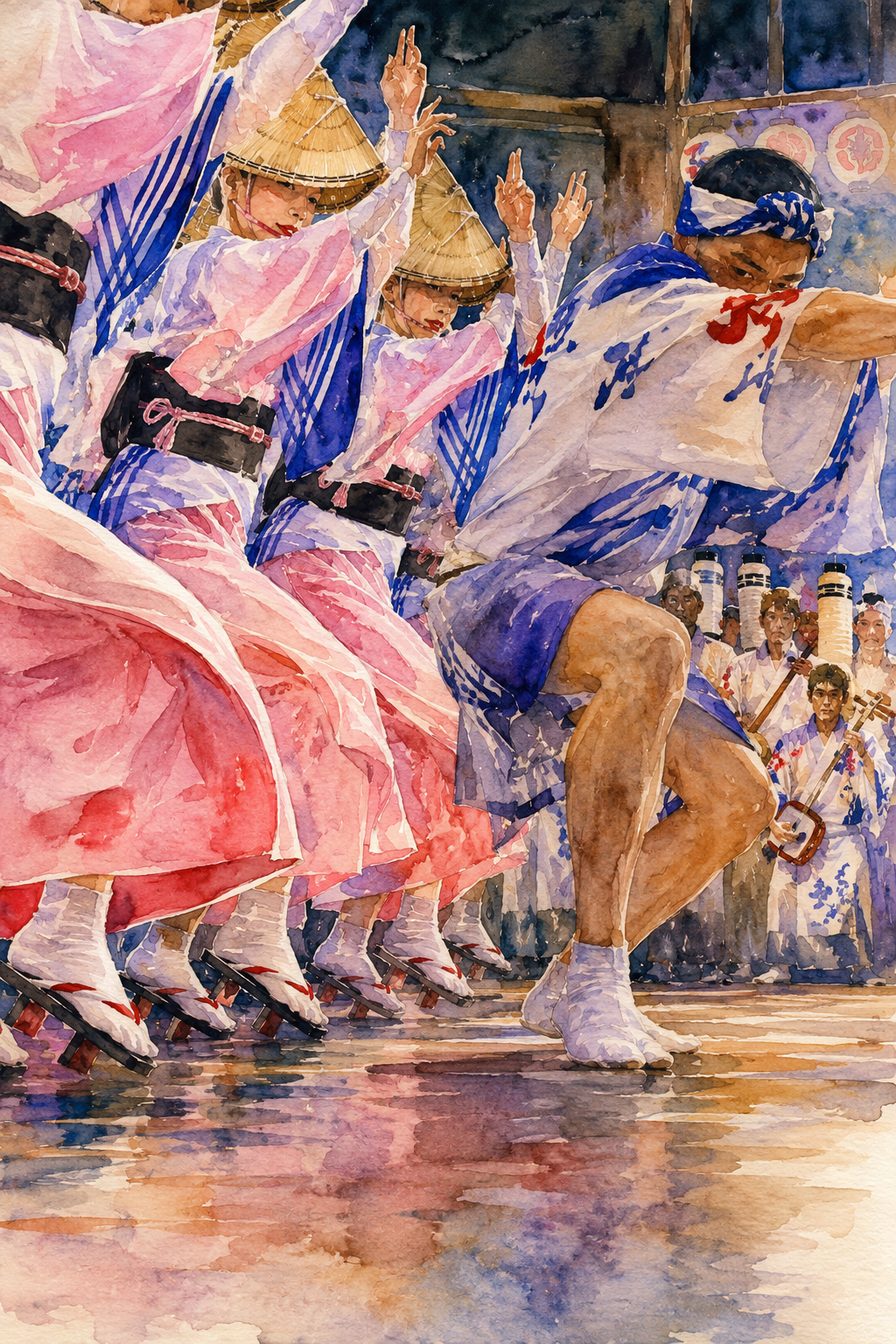
Awa Rhythm Exchanged by Tiptoes and Knees
Critique
Introduction Using translucent watercolor blooms, this painting brings the disciplined repetition of the women’s dance into productive collision with the expansive step of a male dancer. The low viewpoint makes the performers’ limbs feel less like a spectacle observed from afar than movement entering the viewer’s own space. Description A diagonal procession of women in tilted woven hats extends from the left toward the center. Their pale robes are touched with pink and red, while dark sashes hold the flowing silhouettes together. Raised arms, curved fingers, and small steps repeat down the line. Analysis The composition depends on contrast. The women’s hands produce an ascending rhythm, whereas the foreground dancer’s bent elbows and knee form a forceful wedge across it. Watercolor dissolves parts of the sleeves and hems to suggest speed, yet preserves sharper edges around faces, fingers, and hats. Bright whites, pinks, and blues rise against a background of umber and deep blue. Reflections extend the figures downward and reinforce the vertical pulse. Interpretation and Evaluation By placing two distinct bodily vocabularies together, the work avoids reducing the dance to uniform pageantry. The women’s measured file conveys collective discipline; the man’s precarious crouch introduces individuality and improvisation. Their gestures nevertheless answer the same inaudible beat. The musicians function not as incidental detail but as the pressure driving every step. The moist washes communicate heat and atmosphere more persuasively than exhaustive realism could. Conclusion The painting succeeds through the tension between order and release, upward delicacy and grounded force. Its close cropping, repeated hats, and projecting limbs create convincing forward motion.
Same Subcategory
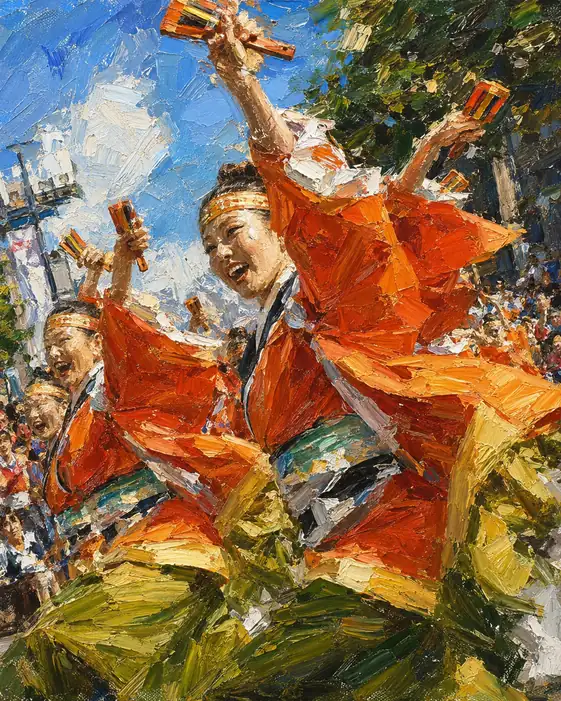 Waves of Vermilion Sleeves Flashing Against Early Summer Sky
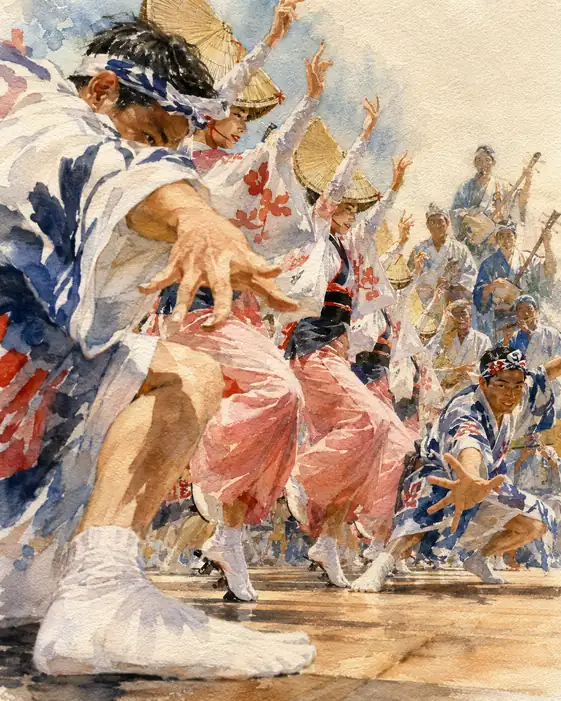 Approaching Fingertips and Woven Hats Drifting in Dance
Similar Artworks
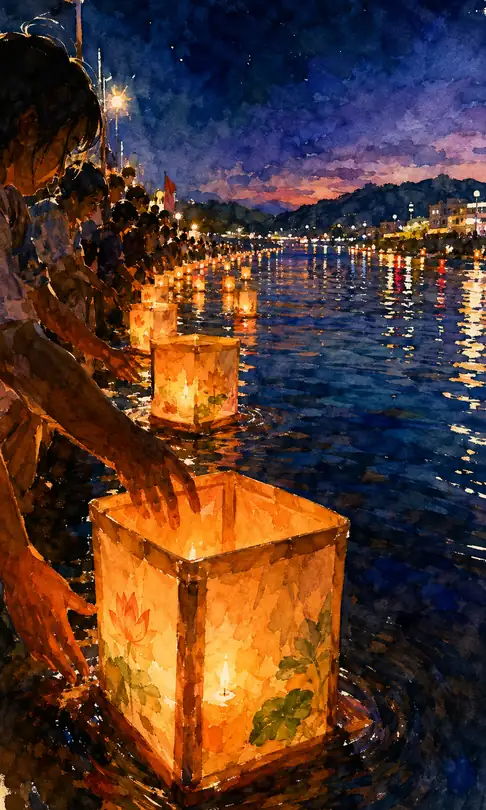 Lotus Lantern of Prayer Entrusted to the Waters and Twilight River Waves
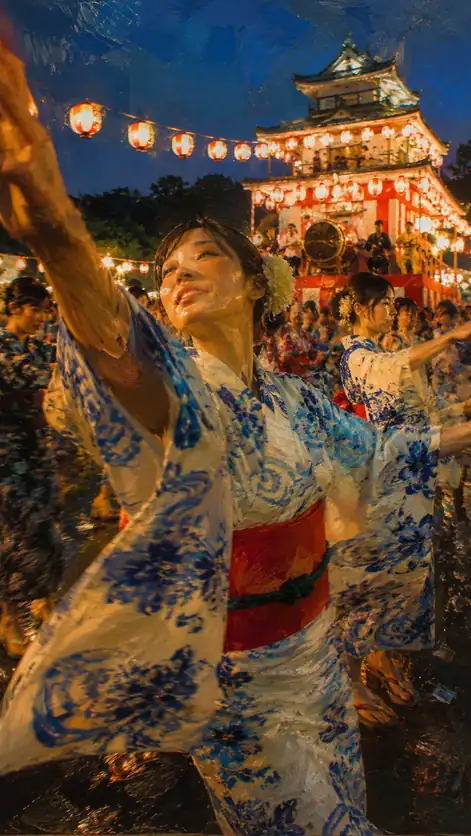 Dancing in Indigo-White Florals Beneath the Lanterns of the Castle Yagura
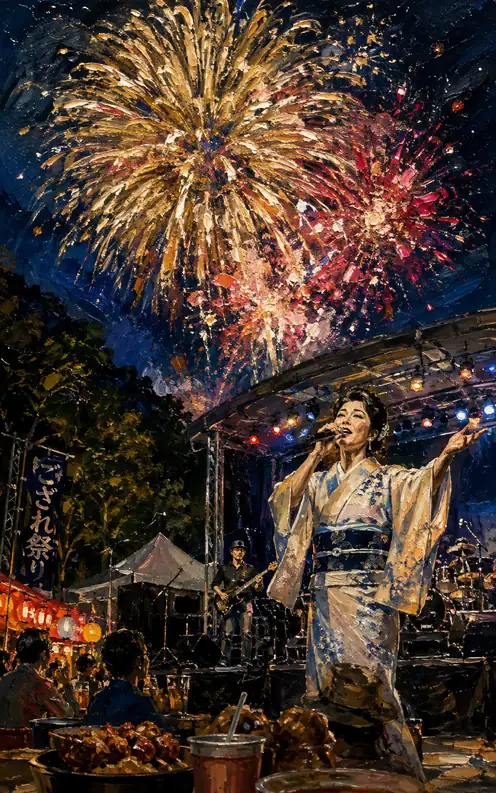 Singing Voice Echoing in the Gozare Festival Night Sky and Golden Blooms
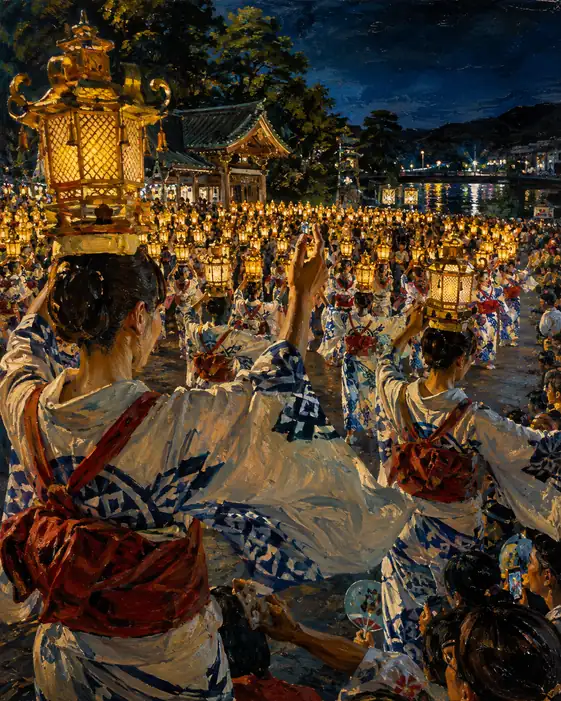 A Thousand Waves of Light Dancing Before the Night Shrine Bearing Golden Lanterns
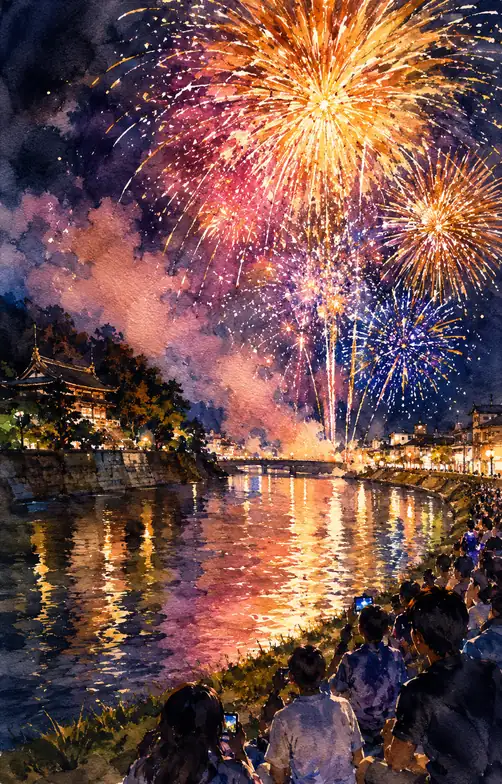 River Waves Illuminating Castle Stone Walls and Great Blooms in the Night Sky
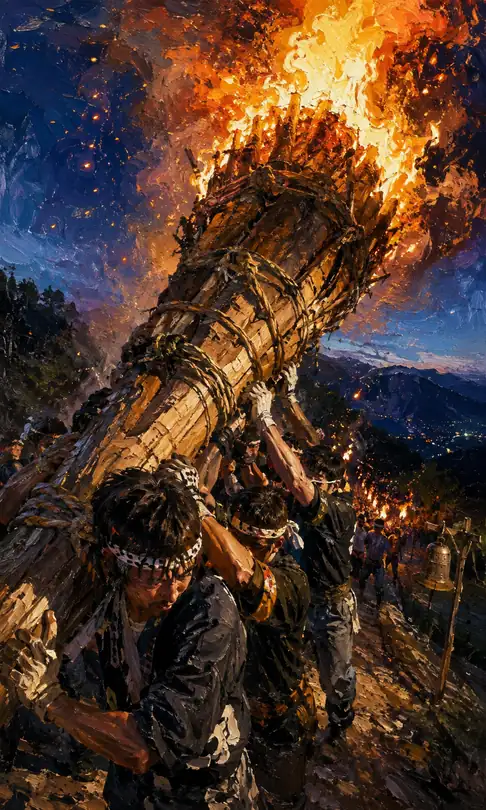 Great Torches Carried Up the Mountain Path and Roaring Flames Scorching the Night Sky
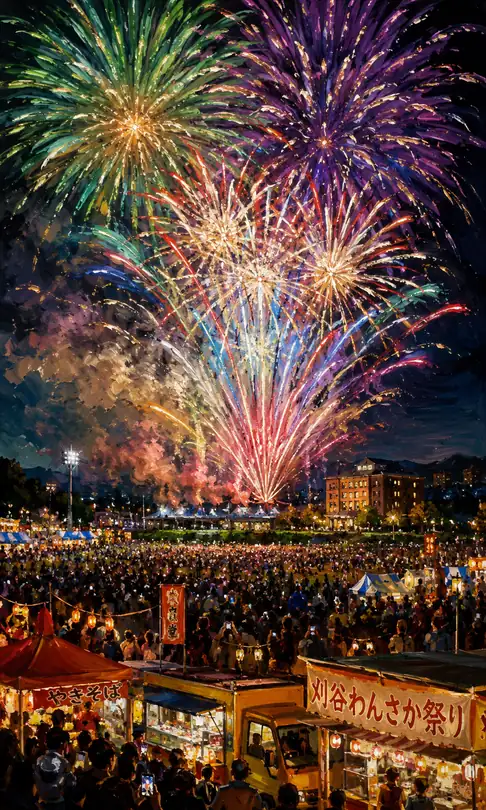 Bustle of Kariya Wansaka and Emerald and Purple Blooms in the Night Sky
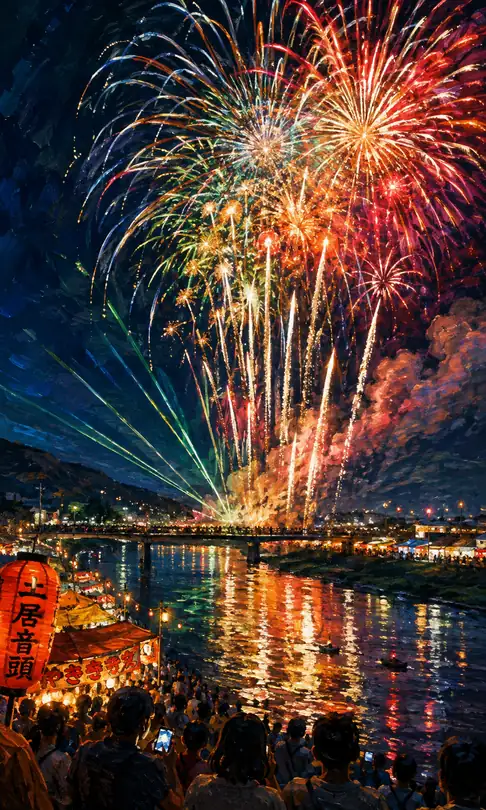 Red Lanterns of Doi Ondo and Blooms of Light Reflecting on the River
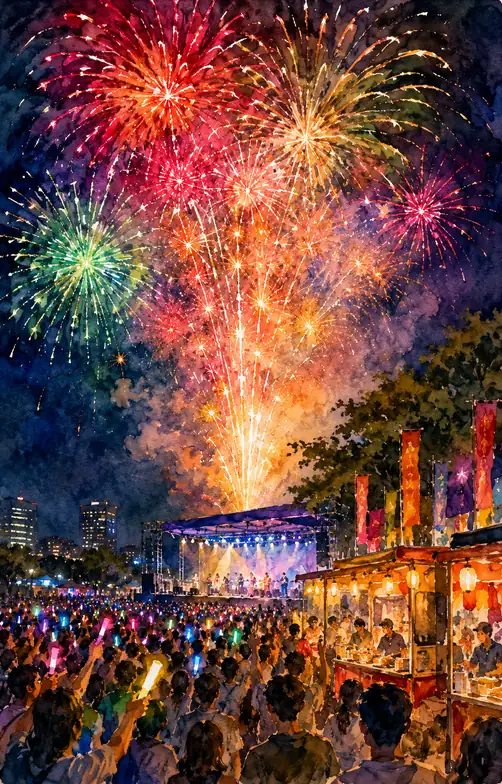 Rays of Light Raised to the Outdoor Stage and Great Blooms in the Night Sky
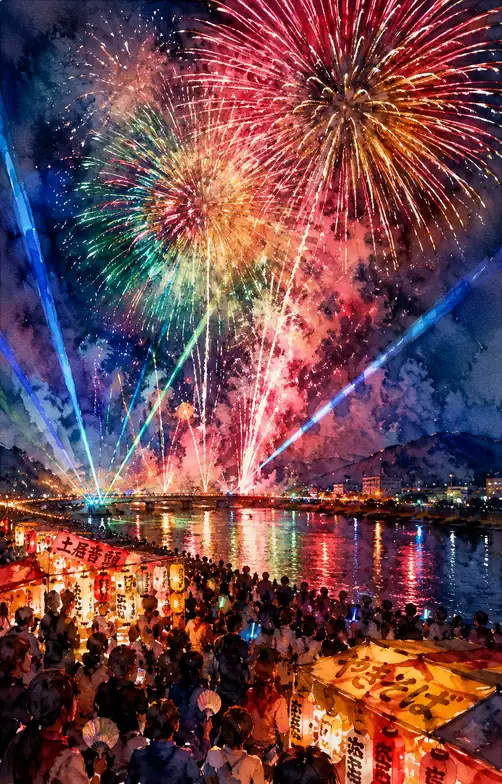 Stall Lights of Doi Ondo and the Great Cascade of Blooms Reflecting on the River