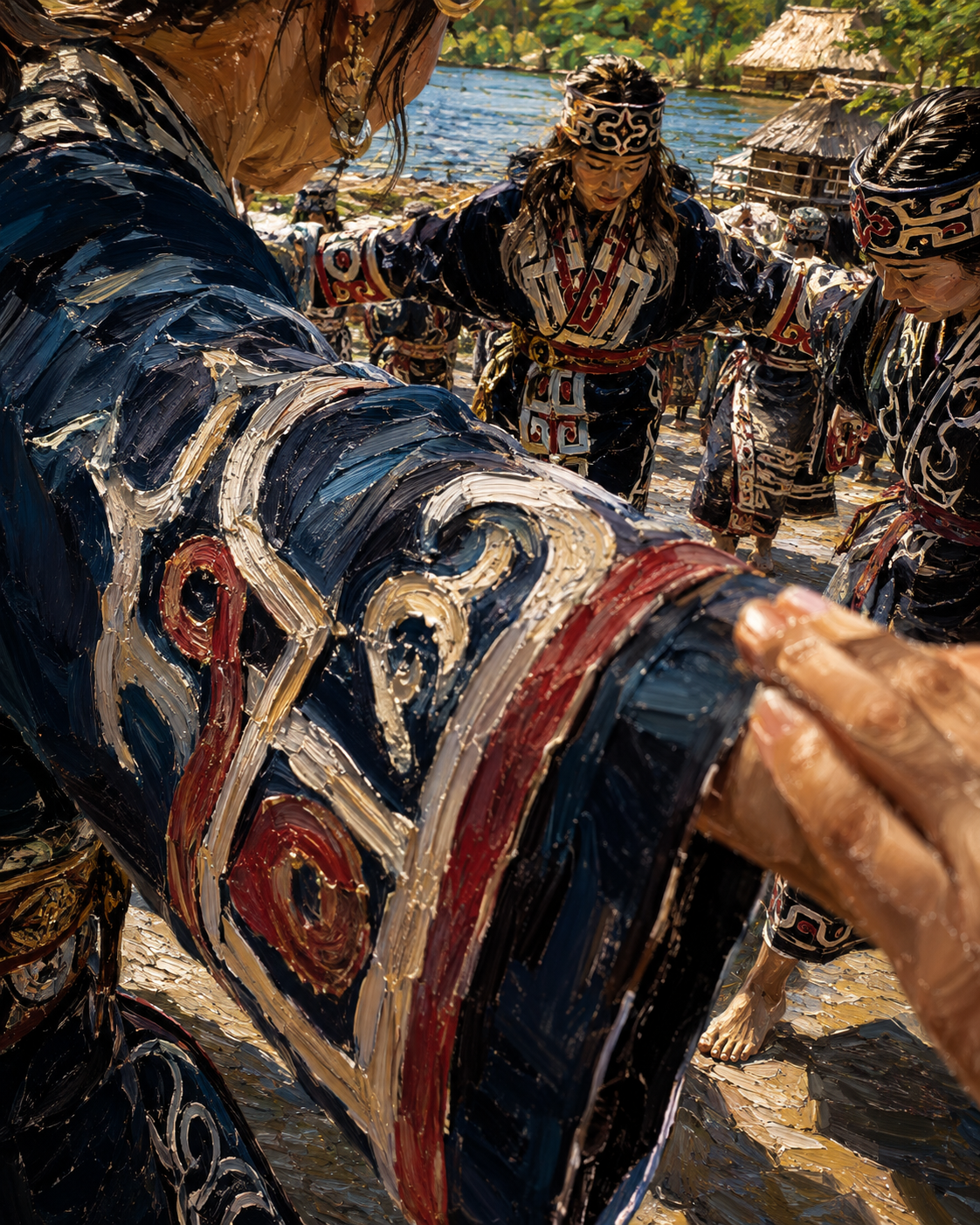
Swirling Patterns and Waterside Circle Dance
Critique
Introduction This oil-like scene shows people in dark garments marked by red-white curves linking arms beside a river settlement. A foreground sleeve and hand occupy much of the frame, while a lowered face, bare feet, water, and small thatched buildings recede. Textile pattern and collective movement take priority. Description A navy sleeve crosses diagonally at left, carrying raised white curves and red rings. A hand at right touches the sleeve or neighboring arm. The central participant wears long black hair, a black-white-red headband, dark clothing, pale fringed chest ornament, and red sash, opening both arms while looking down. Similarly dressed figures continue behind. Bare feet stand on stone and soil. Blue river, green bank, and rustic huts receive sunlight above. Analysis The enlarged sleeve drives downward diagonally, crossed by the central horizontal arms. Red-white spirals repeat across garments and visualize connection. Navy dominates; white-red marks pattern and sash, brown describes skin and earth, and blue-green remains behind. Impasto raises applied motifs and differentiates hair, damp skin, stone, and water. Shallow focus separates touching hand from face. Interpretation and Evaluation Enlarging cloth and contact over faces emphasizes linkage and clothing culture rather than portraiture. Downward gaze and bare feet indicate attention to footing and rhythm. River and huts preserve lived setting without becoming scenic explanation. Repetition with variation, textile thickness, and tactile contact are closely observed. Conclusion Sleeve, hand, motifs, linked bodies, feet, river, and buildings form a close diagonal scene. Spirals dominate first, but fingers, headband, fringe, soles, and water light reveal movement and place. Navy-red-white, heavy cloth-flowing water, and near-far contrasts are effective. Traditional dress becomes an active bond between people.
Same Subcategory
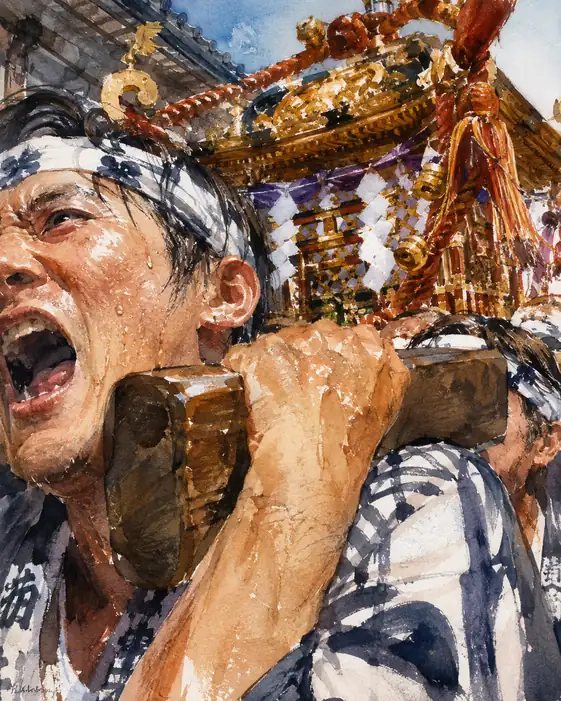 Prayer Engraved on Shoulders and the Scorching Cry
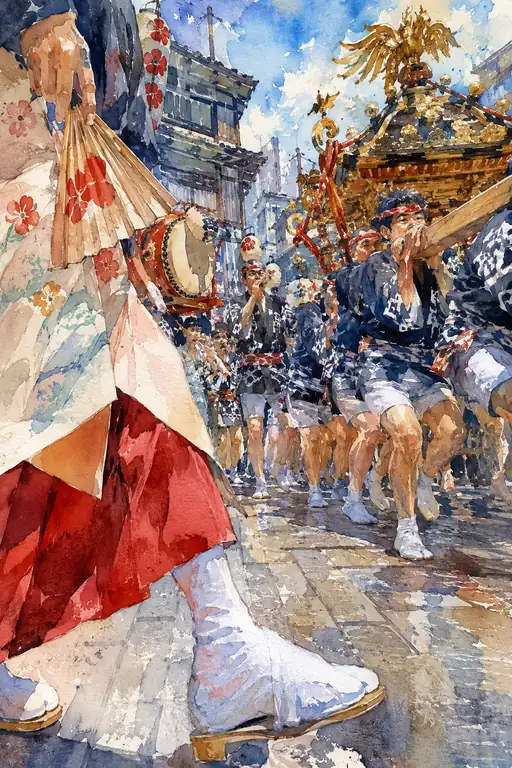 Crimson Hakama's Step and the Golden Procession
Similar Artworks
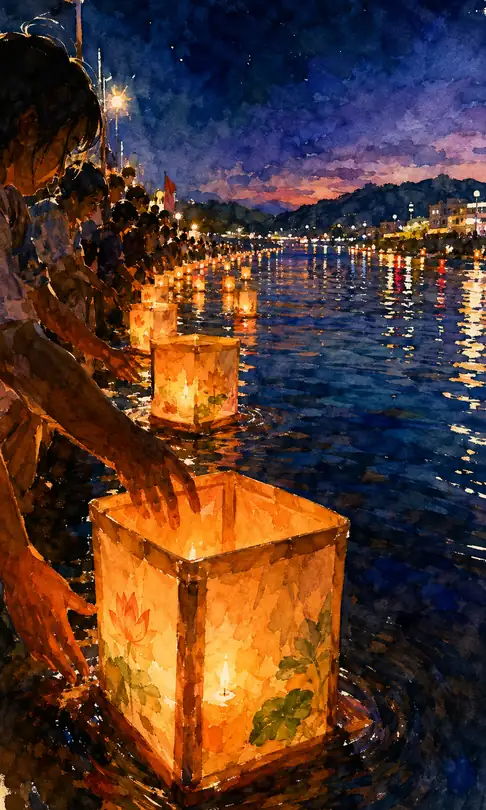 Lotus Lantern of Prayer Entrusted to the Waters and Twilight River Waves
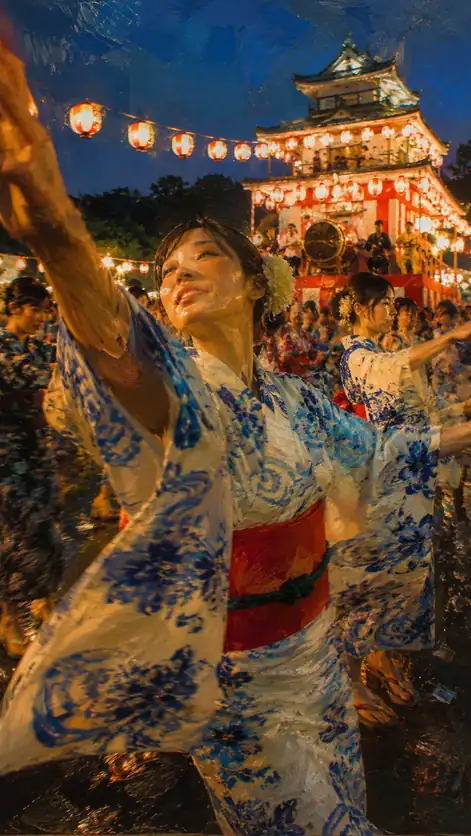 Dancing in Indigo-White Florals Beneath the Lanterns of the Castle Yagura
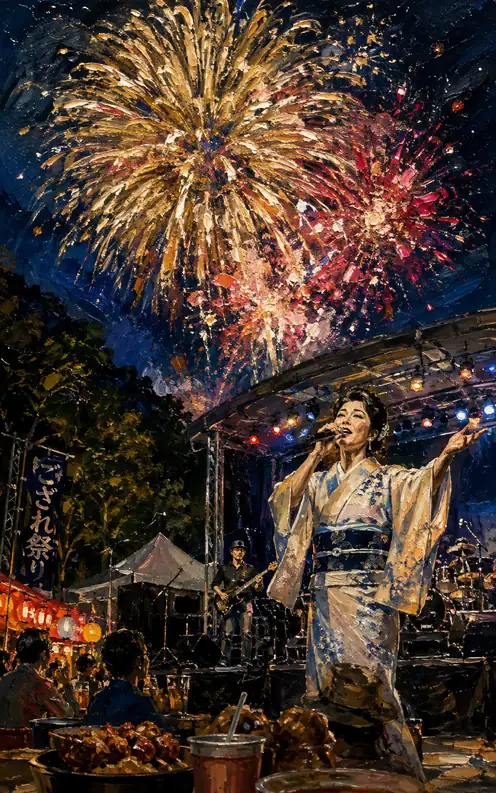 Singing Voice Echoing in the Gozare Festival Night Sky and Golden Blooms
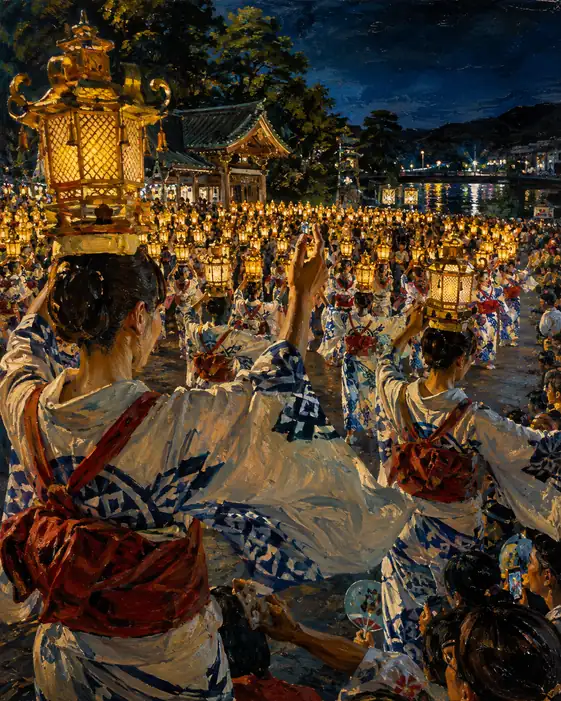 A Thousand Waves of Light Dancing Before the Night Shrine Bearing Golden Lanterns
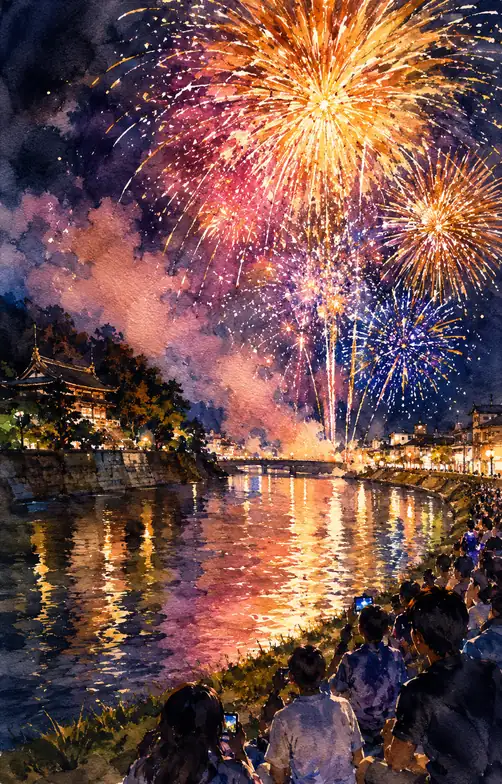 River Waves Illuminating Castle Stone Walls and Great Blooms in the Night Sky
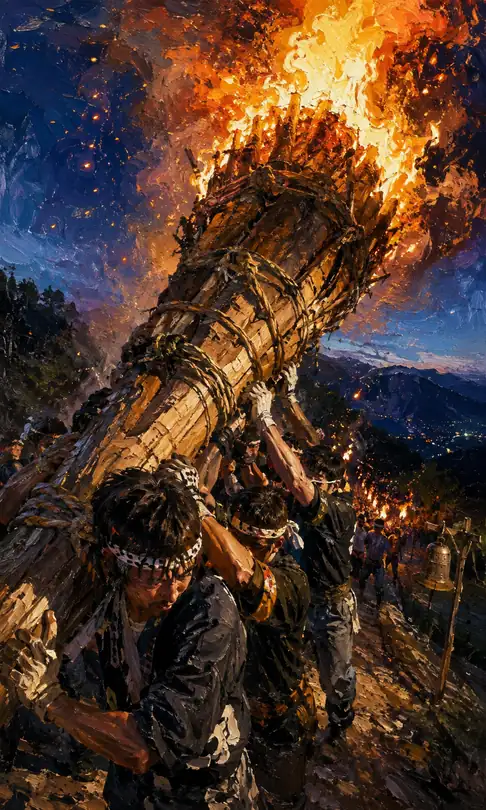 Great Torches Carried Up the Mountain Path and Roaring Flames Scorching the Night Sky
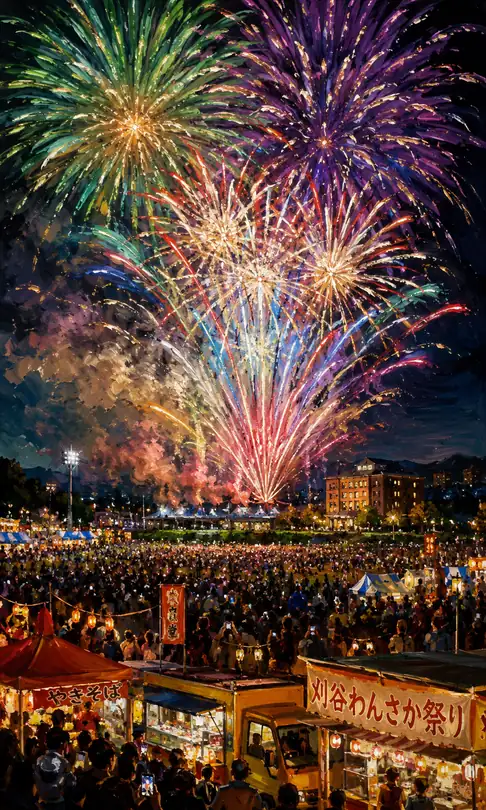 Bustle of Kariya Wansaka and Emerald and Purple Blooms in the Night Sky
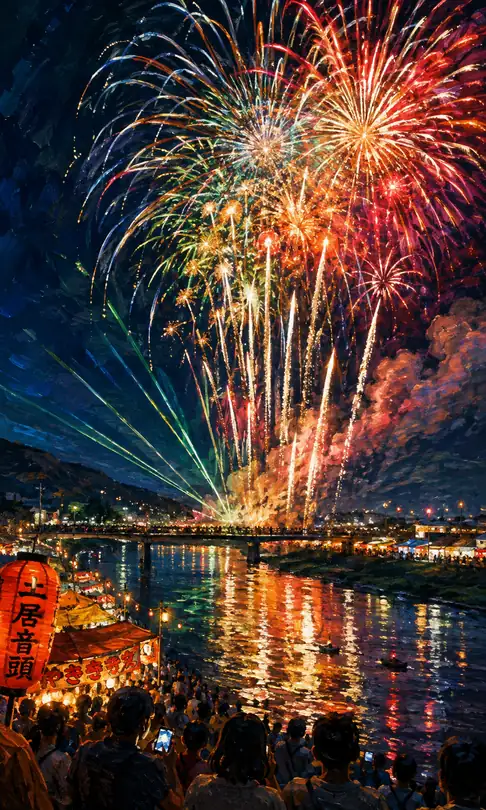 Red Lanterns of Doi Ondo and Blooms of Light Reflecting on the River
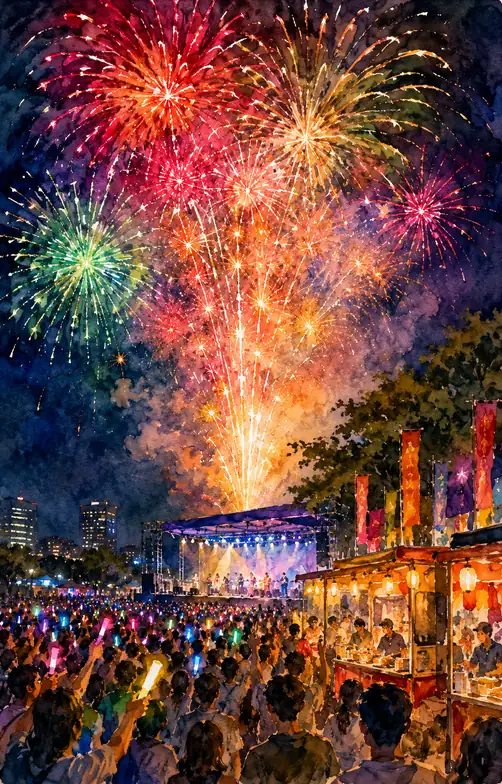 Rays of Light Raised to the Outdoor Stage and Great Blooms in the Night Sky
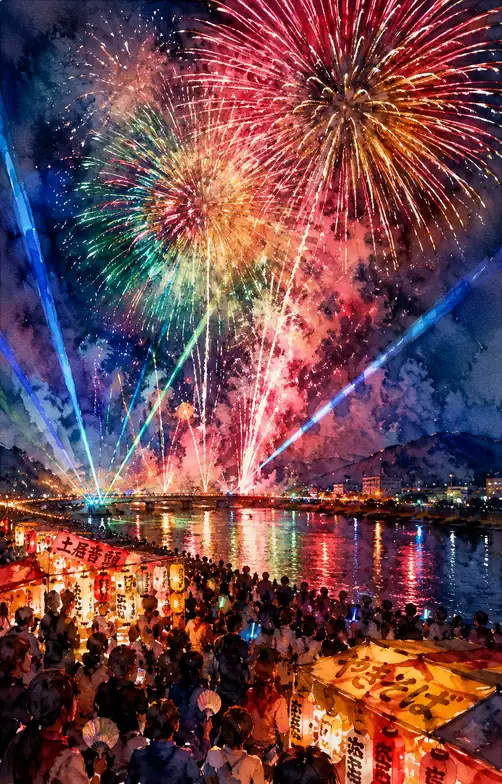 Stall Lights of Doi Ondo and the Great Cascade of Blooms Reflecting on the River