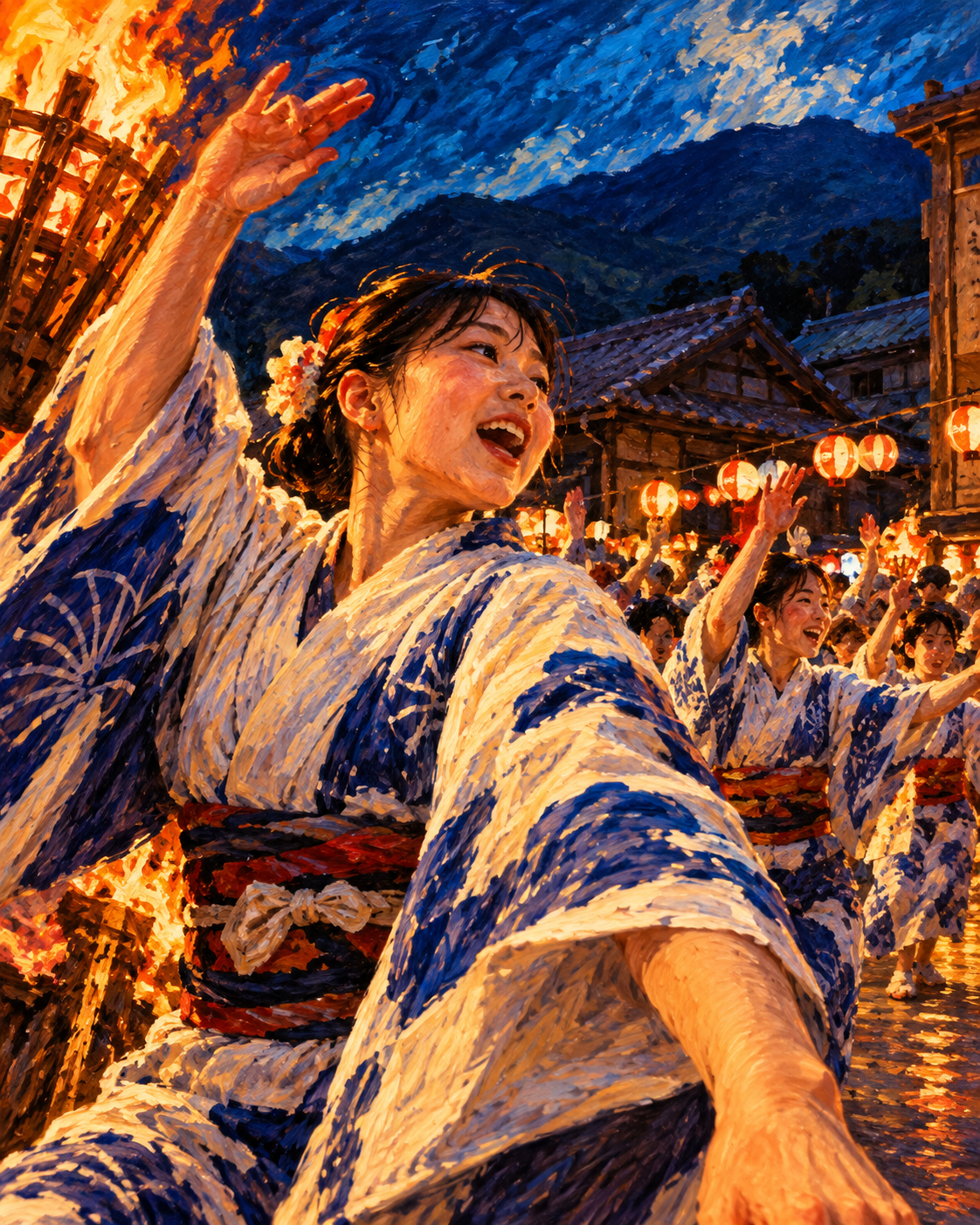
Joyous Dancer Blossoming by the Bonfire
Critique
Introduction This oil-like festival scene shows white-and-indigo dancers moving through an old mountain street beside a large fire. A smiling woman lifts one arm and reaches the other beyond the frame. Orange flame, lanterns, blue mountains, and tiled houses bind bodily exhilaration to place. Description The central woman wears a white yukata with bold indigo forms, a red-black sash, and white-red hair flowers. Turning right with open mouth, she raises one hand and extends the other forward. A timber fire basket burns beyond the left edge, with smaller flame below. Matching women lift palms in a receding line. Tiled roofs, wooden walls, orange lanterns, dark mountains, and cloud surround the reflective street. Analysis Her arms establish a broad diagonal repeated by background hands. The fire basket's vertical frame and roof slopes stabilize the body. White-indigo recurs through clothing and sky; red marks sash and ornament, while orange concentrates in flame, skin, and lamps. Impasto changes direction across sleeves, hair, timber, and fire, with smoother face and fingers. Low proximity enlarges cloth and arm. Interpretation and Evaluation Fire acts as a source coloring bodies rather than decoration, merging heat with movement. Open mouth implies breath or call, synchronized with surrounding palms. Houses and mountains prevent a placeless fire ritual. Lattice, fabric, skin, and cloud remain materially distinct. Conclusion Dancer, arms, flame, lanterns, houses, and mountain unite through diagonals and repetition. Smile and fire dominate first, but sash layers, flowers, roof lines, palms, and reflections establish action and locality. Blue-white against orange is vivid. Arm's-length framing makes the whole street dance feel immediate.
Same Subcategory
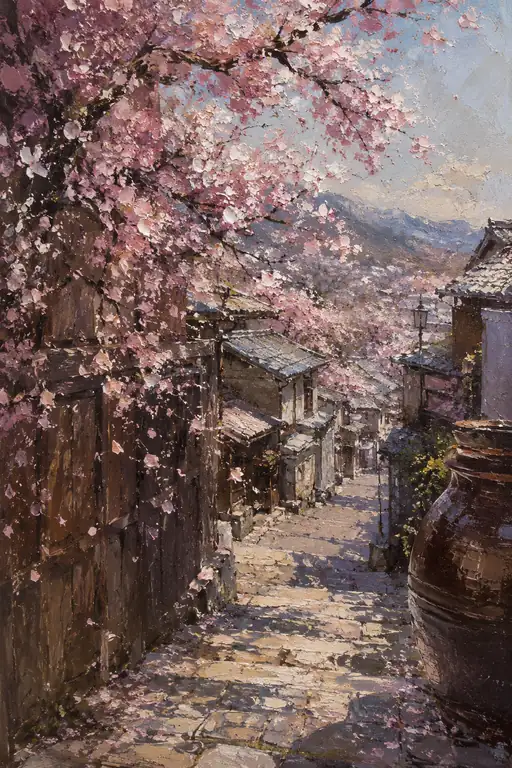 Spring Breeze Dancing on the Sunlit Slope
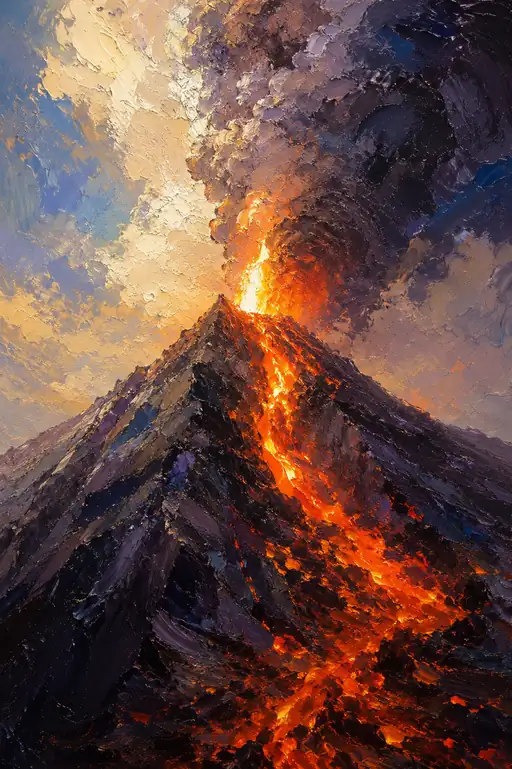 Quickening Flames Ripping the Pitch-Black Peak
Similar Artworks
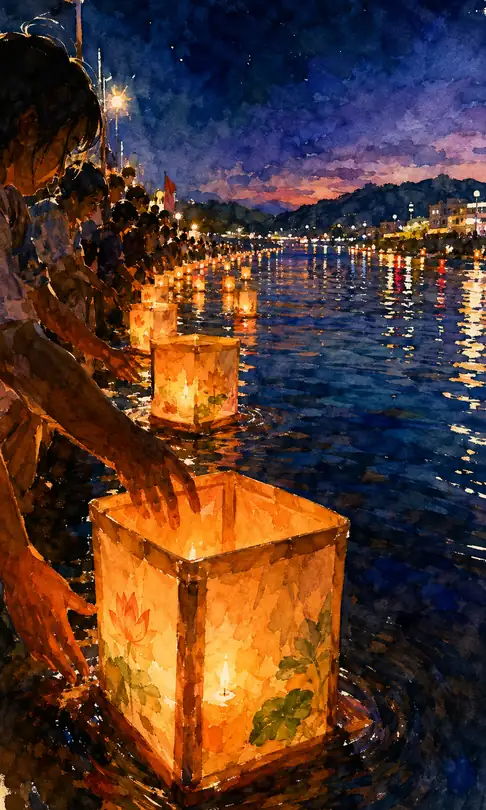 Lotus Lantern of Prayer Entrusted to the Waters and Twilight River Waves
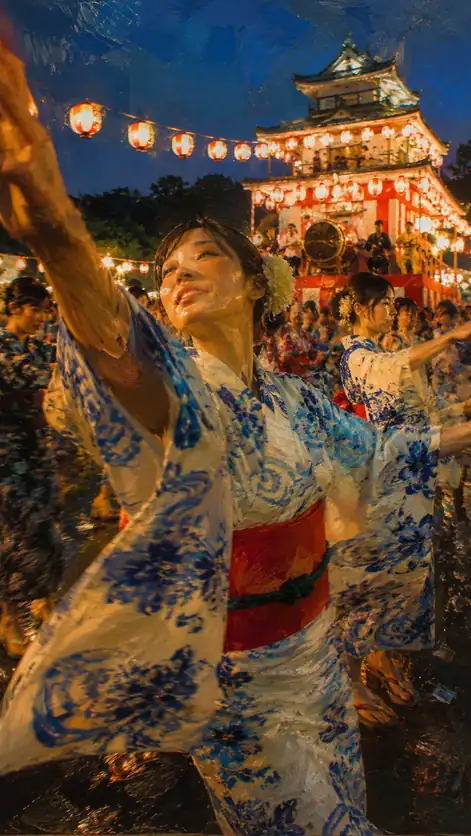 Dancing in Indigo-White Florals Beneath the Lanterns of the Castle Yagura
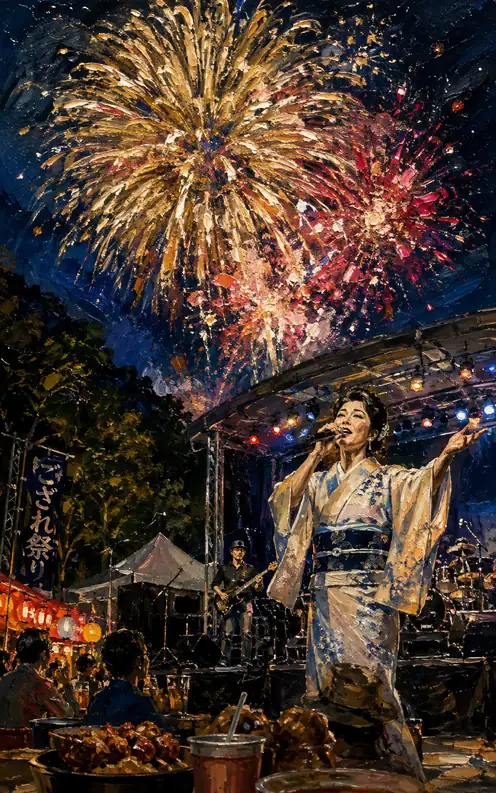 Singing Voice Echoing in the Gozare Festival Night Sky and Golden Blooms
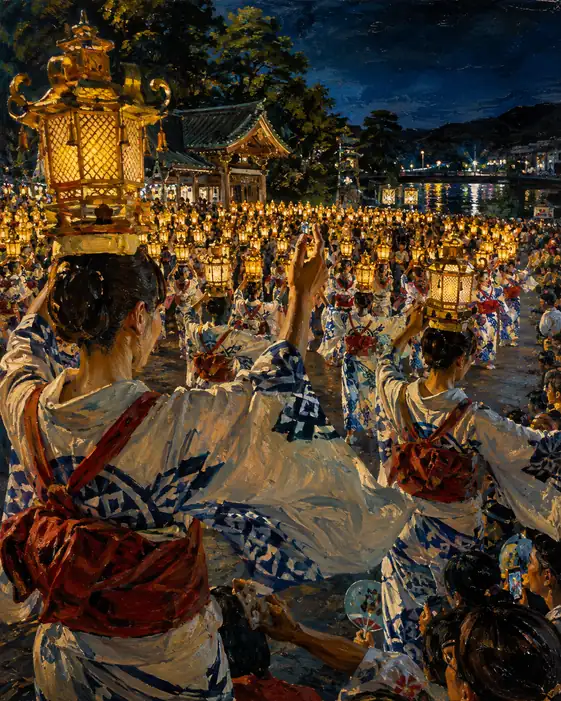 A Thousand Waves of Light Dancing Before the Night Shrine Bearing Golden Lanterns
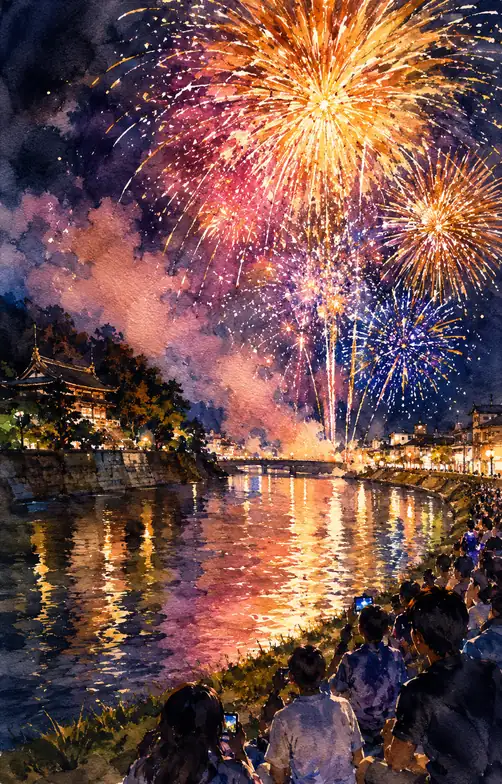 River Waves Illuminating Castle Stone Walls and Great Blooms in the Night Sky
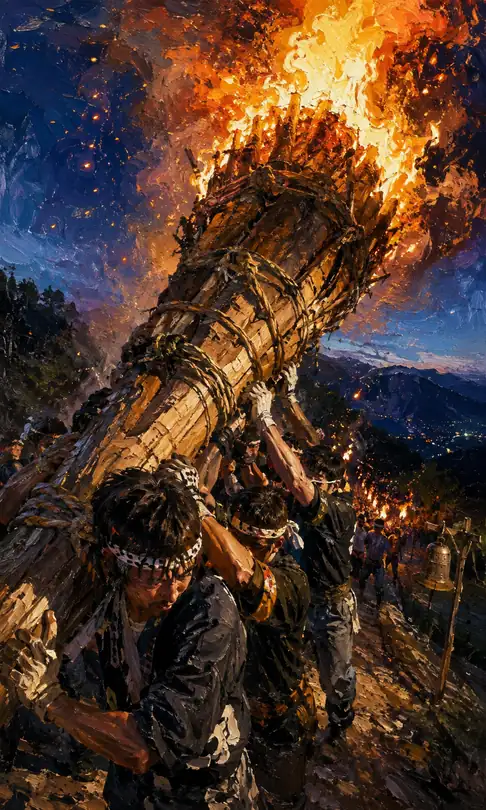 Great Torches Carried Up the Mountain Path and Roaring Flames Scorching the Night Sky
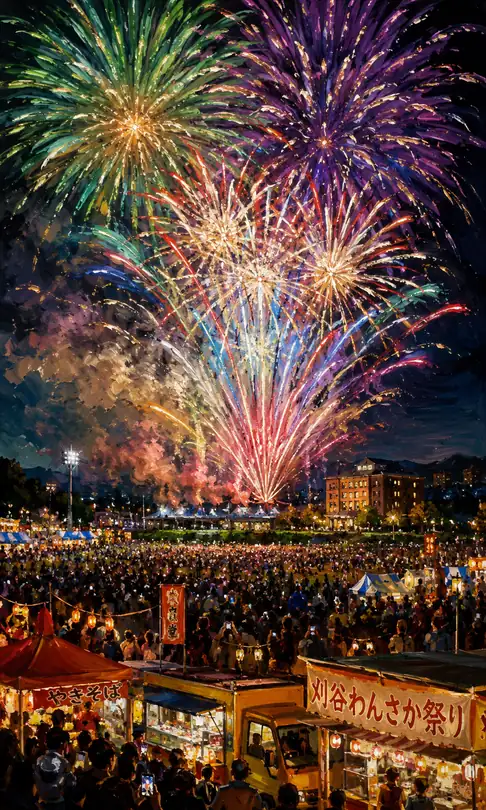 Bustle of Kariya Wansaka and Emerald and Purple Blooms in the Night Sky
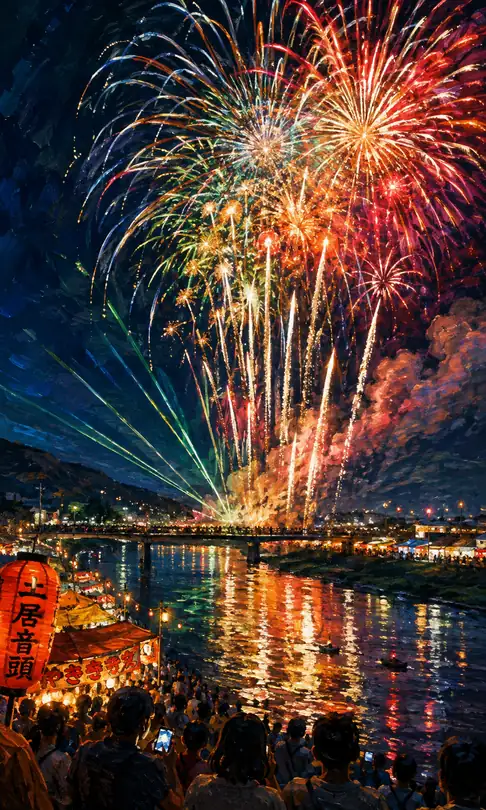 Red Lanterns of Doi Ondo and Blooms of Light Reflecting on the River
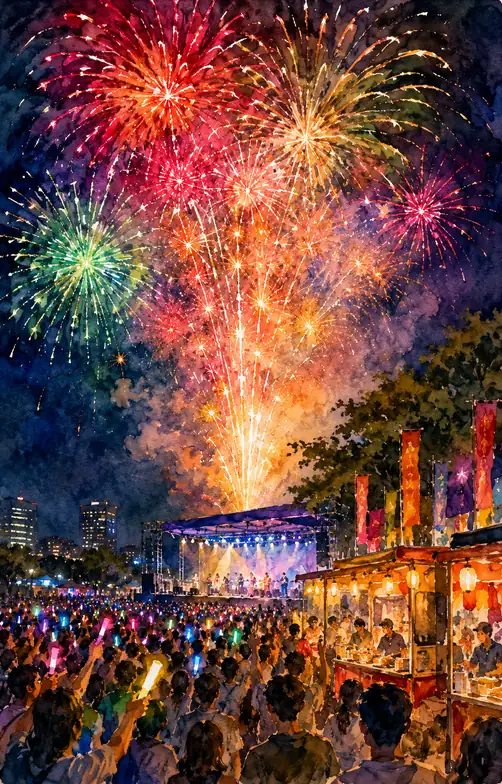 Rays of Light Raised to the Outdoor Stage and Great Blooms in the Night Sky
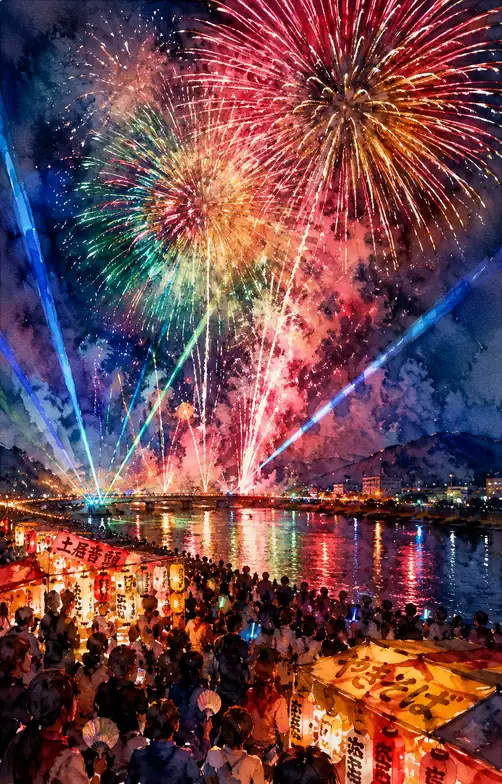 Stall Lights of Doi Ondo and the Great Cascade of Blooms Reflecting on the River