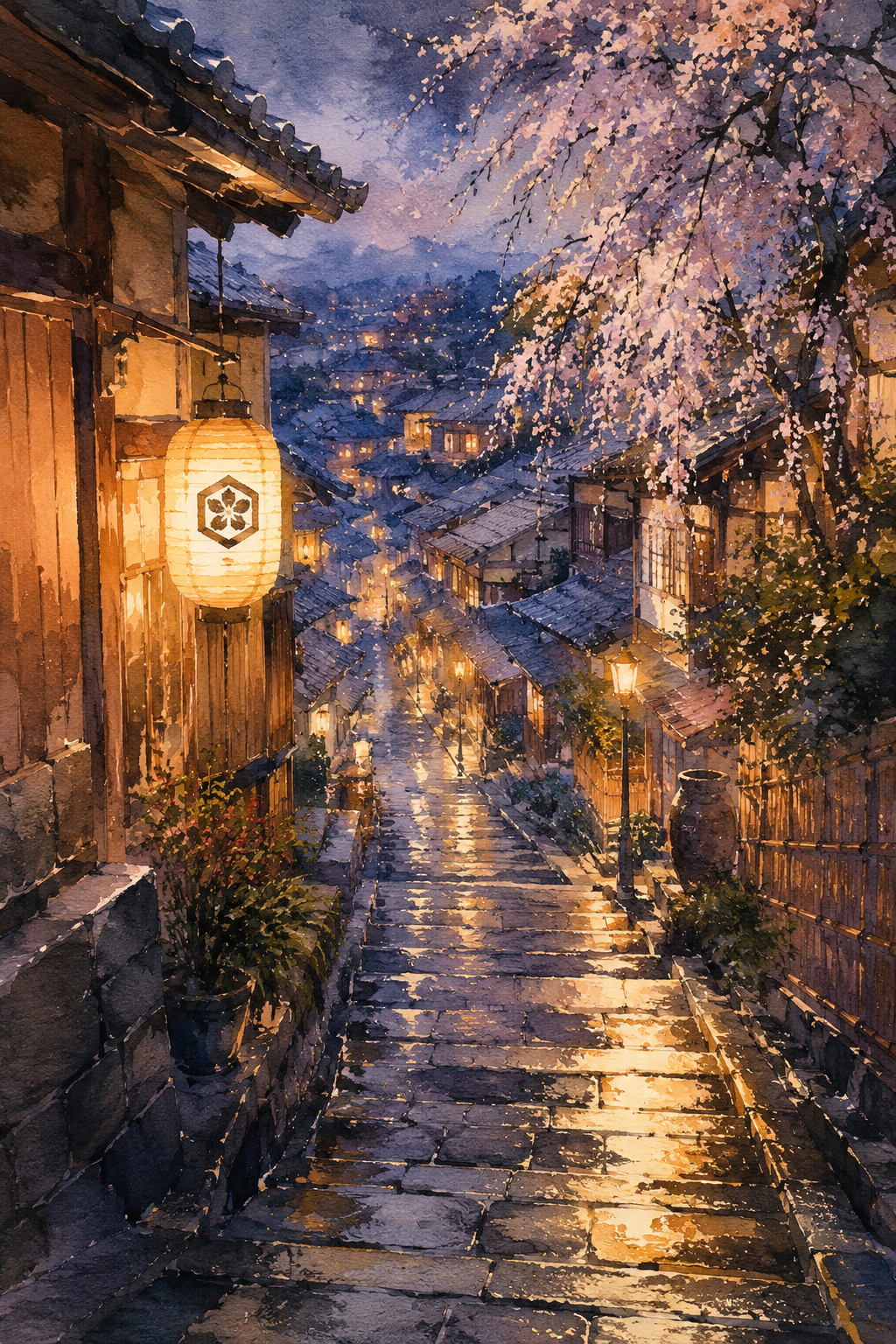
Blooming Lanterns and Night Cherry on Wet Stone Steps
Critique
Introduction This vertical townscape presents a rain-washed lane descending through traditional wooden buildings at evening. A large paper lantern and a flowering cherry tree frame the view, turning an ordinary passage into a carefully staged encounter between architecture, weather, and seasonal change. Description The lane begins as broad stone steps at the lower edge and narrows toward a clustered valley of blue roofs. Warm windows and small streetlamps punctuate the distance. At left, the lantern hangs close to the viewer beneath heavy eaves; at right, pale blossoms cascade from a dark trunk above fences, shrubs, and a large earthen jar. Analysis Strong converging edges in the steps, gutters, and roofs pull the eye downhill, while the lantern and cherry canopy hold the foreground on opposite sides. Amber reflections broken across wet stones create a second path of light. Cool indigo buildings recede convincingly, and the contrast between crisp architectural diagonals and scattered floral marks supplies both stability and movement. Interpretation and Evaluation The scene balances shelter with openness: enclosed wooden facades give way to a distant settlement and mountain air. Its descriptive strength lies in small repeated lights and varied roof planes rather than minute literal detail. The composition is assured, the warm-cool color structure is coherent, and the mottled handling of blossoms, masonry, and rain gives familiar scenery a distinctive tactile unity. Conclusion What first appears to be a picturesque evening street gradually reveals a disciplined arrangement of opposing temperatures, textures, and depths. The glowing lantern establishes welcome, but the descending perspective and fading blue roofs extend the experience beyond that immediate comfort, making transience and continuity equally present.
Same Subcategory
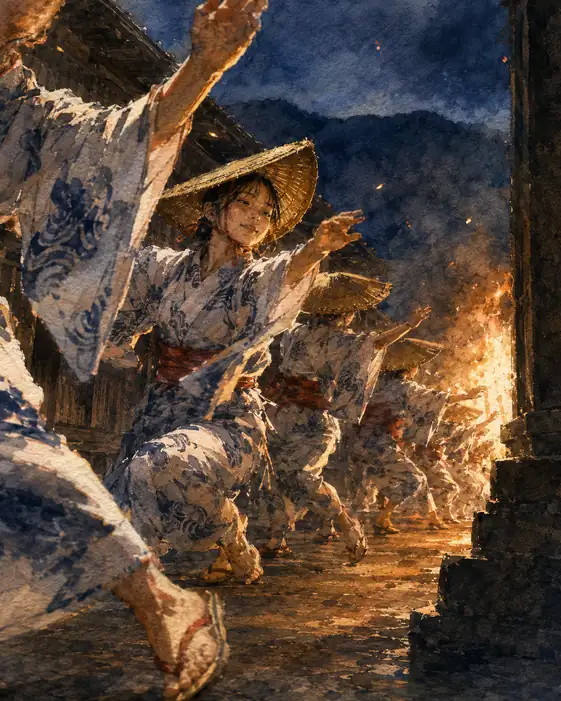 Melody of Woven Hats Dancing the Bonfire Path
 Summer Night Fireworks Over the Village Fair
Similar Artworks
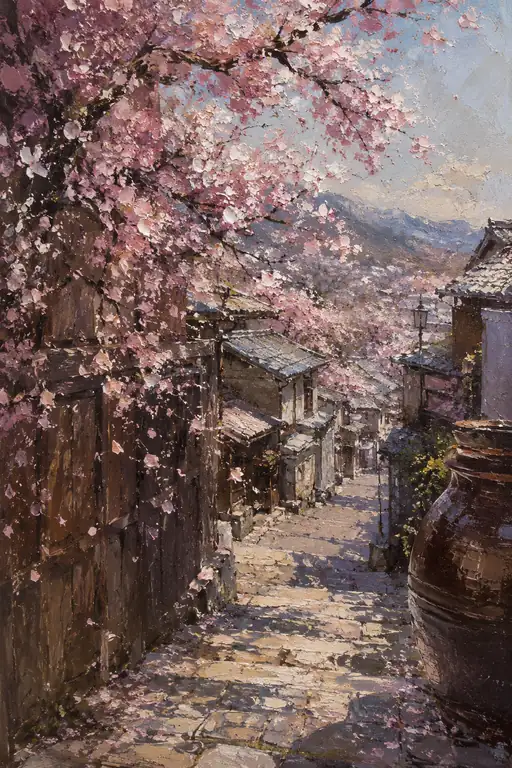 Spring Breeze Dancing on the Sunlit Slope
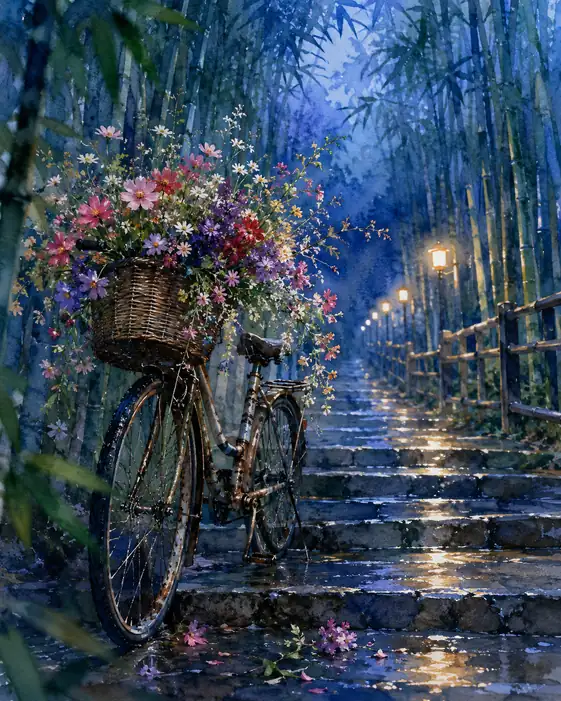 Silence on the Rain-Kissed Bamboo Steps
 Evening Terrace with Wildflowers and Glowing Lamps
 Candlelight Vigil Beneath the Blossoming Moon
 Fairy Lights Mirrored on Wet Cobblestones
 Evening Terrace Glow in the Old Quarter
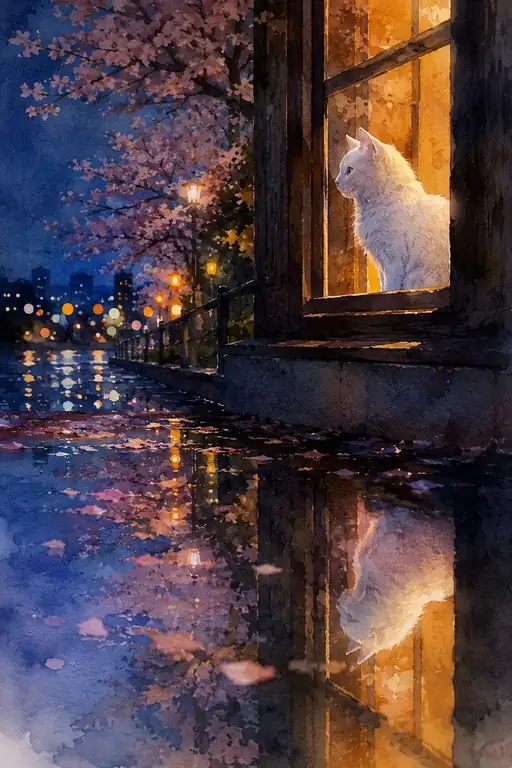 Silent Gaze into the Blossomed Night
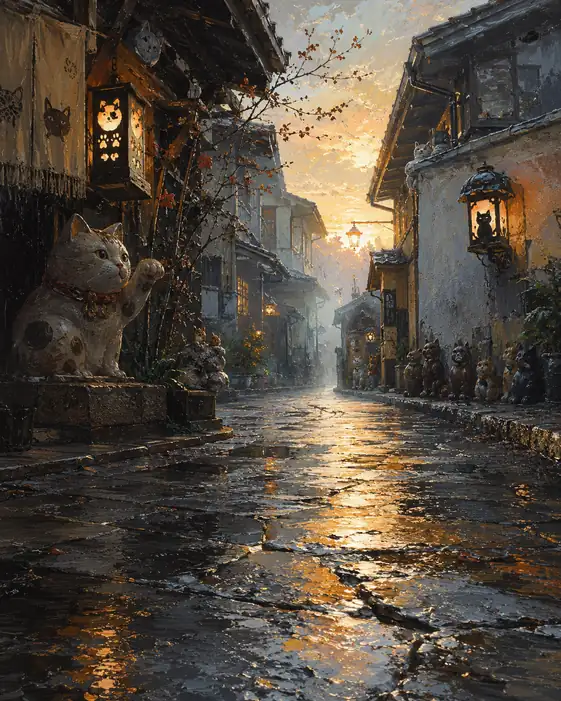 The Alley Where Fortune Waits
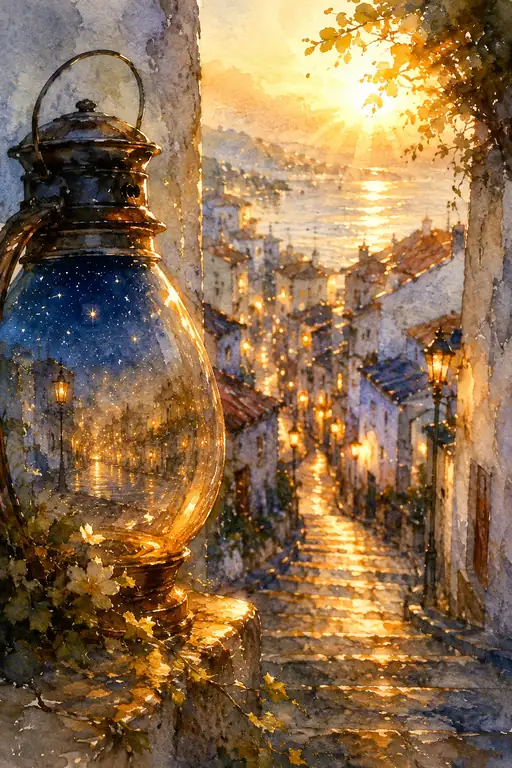 The Lantern that Kept the Night
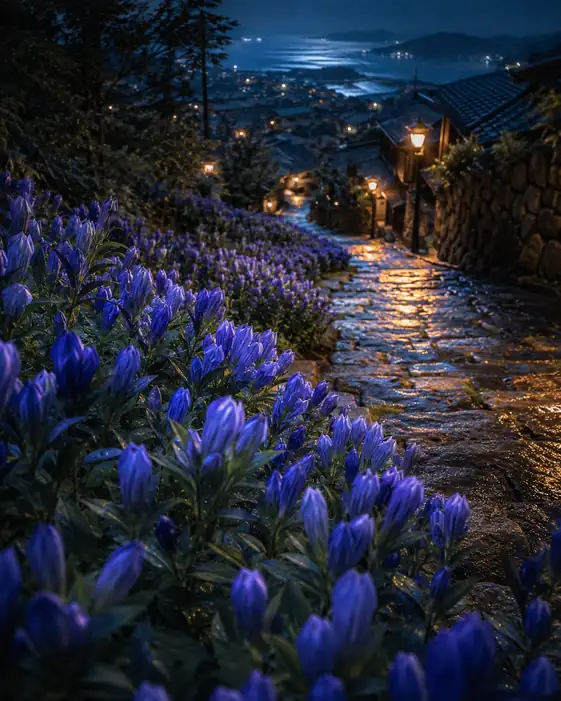 Lanterns on the Stone Slope, Stars of Dusk