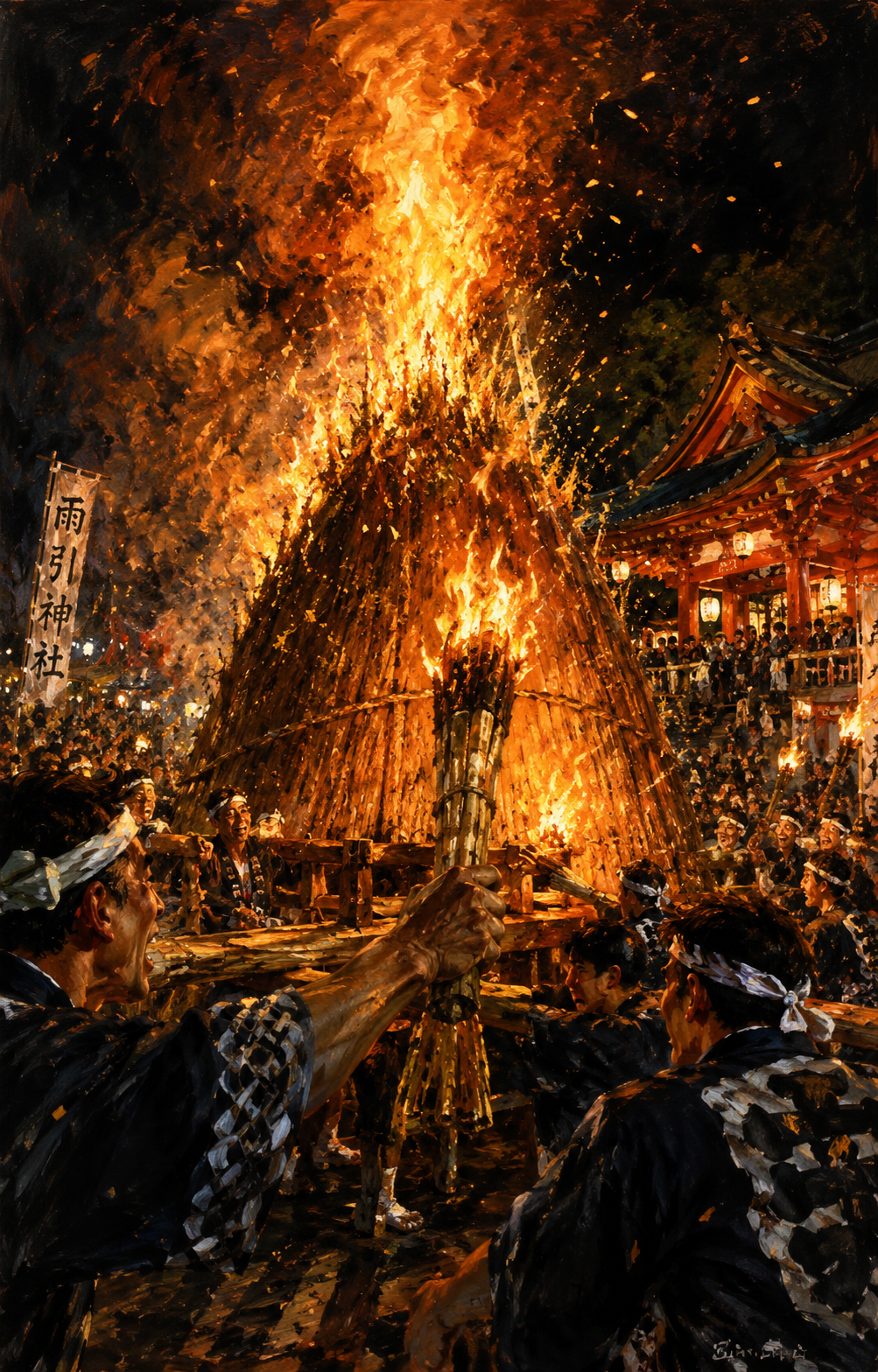
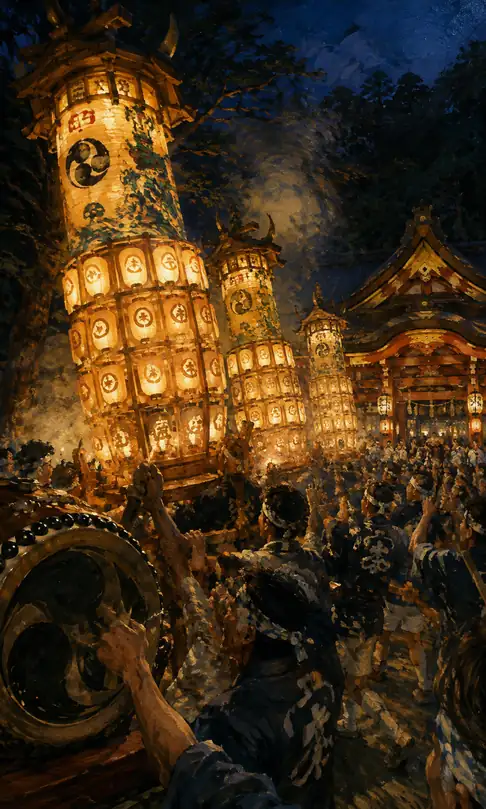
Massive Sacred Torches Purifying the Night Shrine
Critique
Introduction This painting presents an immense ceremonial bonfire before a shrine at night. A conical stack of wood and rising flame dominates the center, while black-clad participants and a large audience surround it. The composition makes controlled proximity to fire the immediate subject of the gathering. Description Foreground men in white headbands face the blaze, one holding a bound bundle or torch upright near the central barrier. The timber stack rises from a wooden enclosure and burns through several openings before releasing a broad column above. A vertical banner stands at left, while the vermilion shrine, hanging lanterns, crowded steps, and additional torches occupy the right. Analysis The triangular pile and vertical flame establish a monumental central axis, stabilized by the barrier and ring of figures below. Diagonal torches and turned shoulders feed attention inward from both sides. Orange, gold, and white are concentrated against deep black and red-brown; vigorous impasto separates sparks, split wood, smoke, skin, cloth, shrine timbers, and reflective ground through distinct directional marks. Interpretation and Evaluation The work interprets the bonfire as a collective practice requiring nearness, caution, and prescribed action. Foreshortened hands, illuminated profiles, and firmly planted bodies demonstrate persuasive descriptive skill. The severe central symmetry is enlivened by asymmetrical shrine architecture and gestures, while the restricted palette turns heat into a spatial force rather than mere decoration. Conclusion The painting joins human labor, spectatorship, sacred architecture, and combustible material in a coherent ceremonial space. Its tactile technique makes the blaze expansive without erasing the structure that contains it. Initially the flame seems uncontrolled, but closer viewing reveals a disciplined human ring that frames, tends, and gives social meaning to its intensity.
Same Subcategory
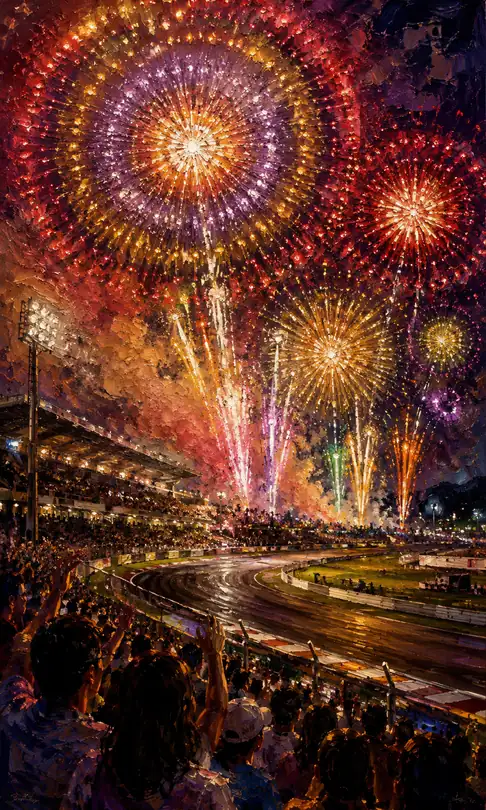 Dream Fireworks Canopying the Racing Circuit
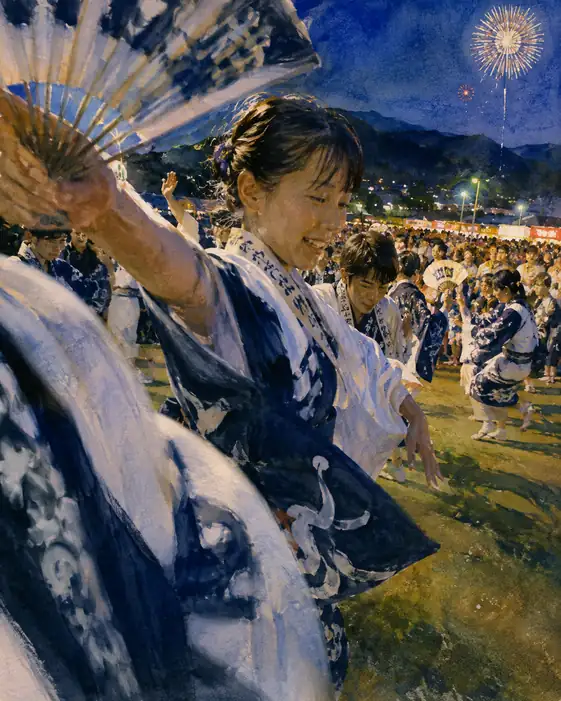 Graceful Fan Dance Under the Starry Night
Similar Artworks
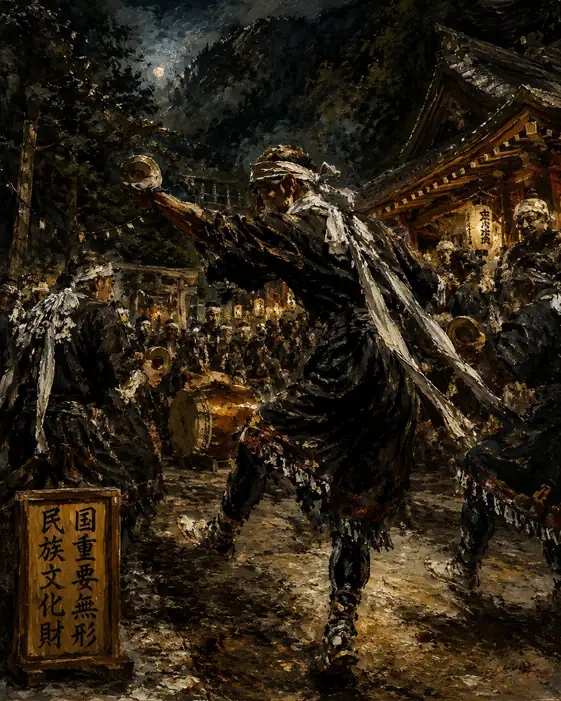 Metallic Echoes Piercing the Moonlit Silence
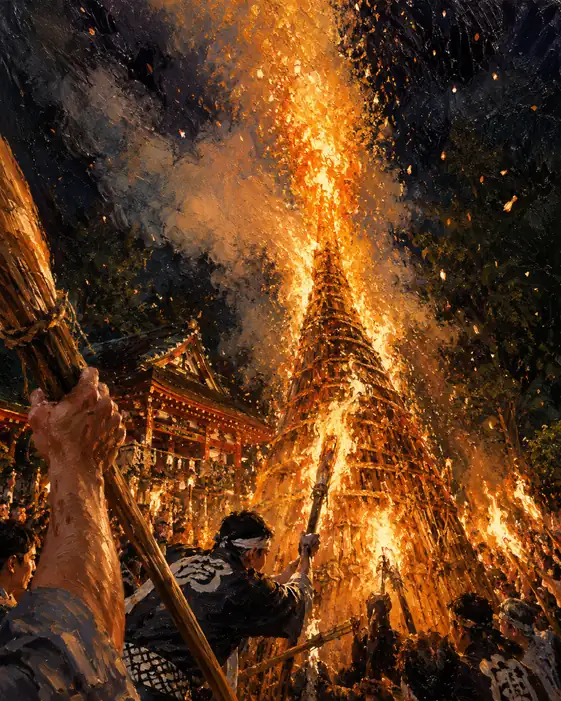 Column of Flames Piercing the Night Sky
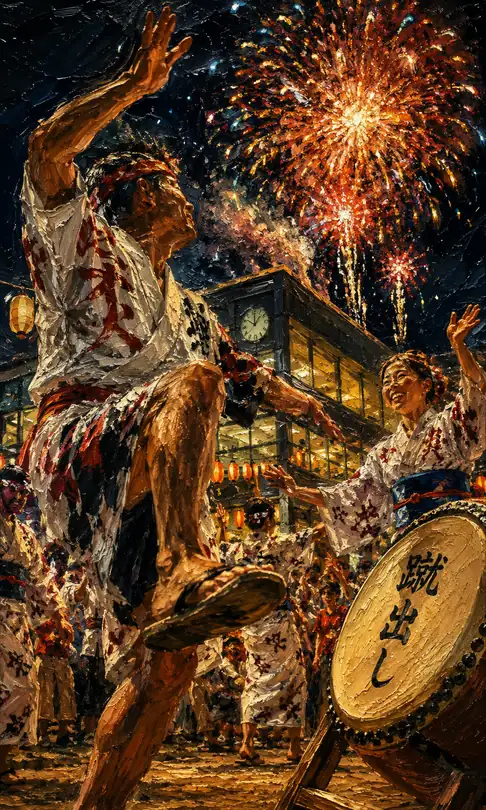 Dynamic Leap Dance by the Great Drum Under the Clock Tower Sky
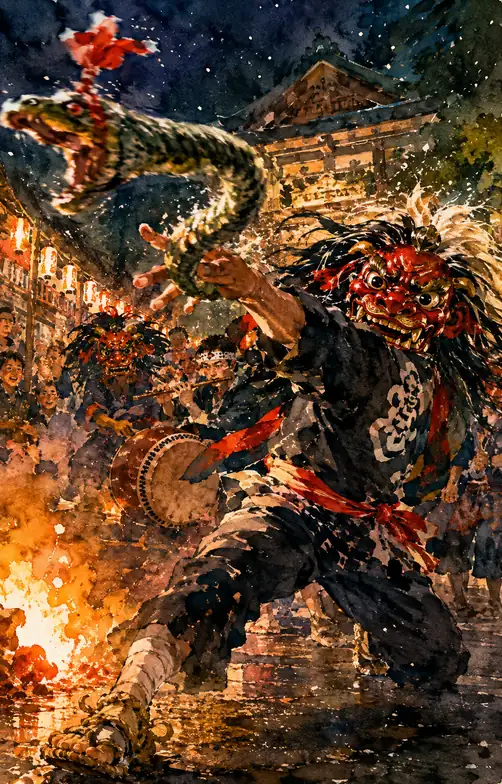 Red-Masked Lion Dancing Freely Before the Bonfire Flame
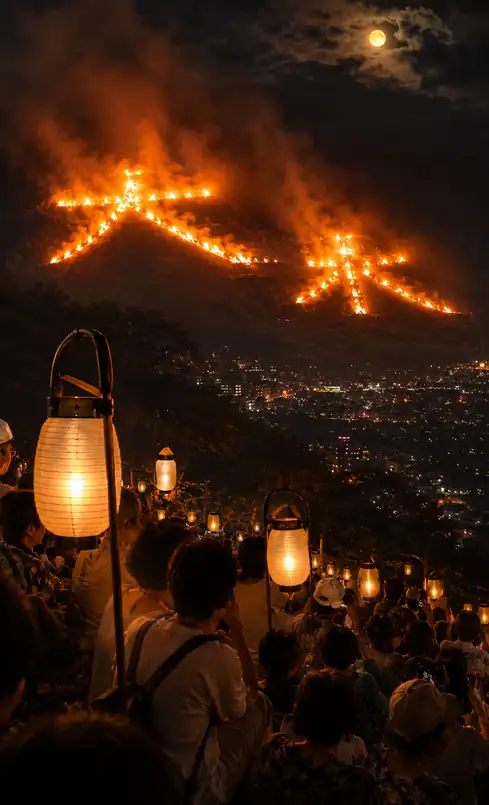 Sacred Fires Burning Across Two Peaks
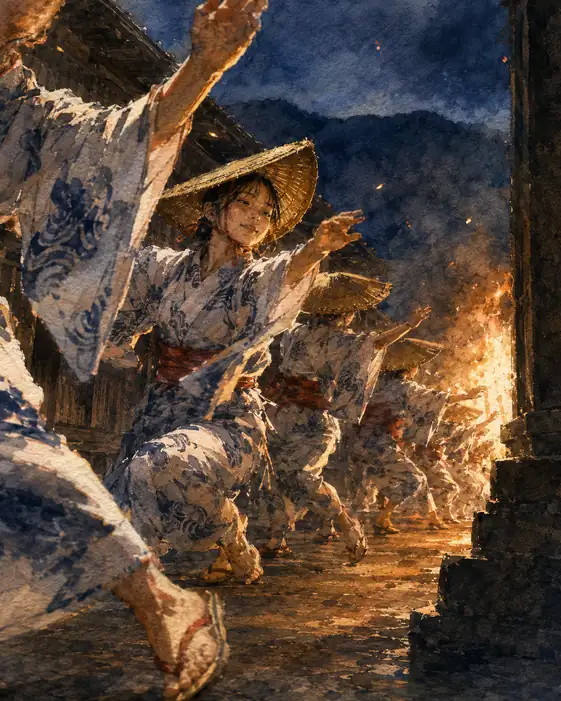 Melody of Woven Hats Dancing the Bonfire Path
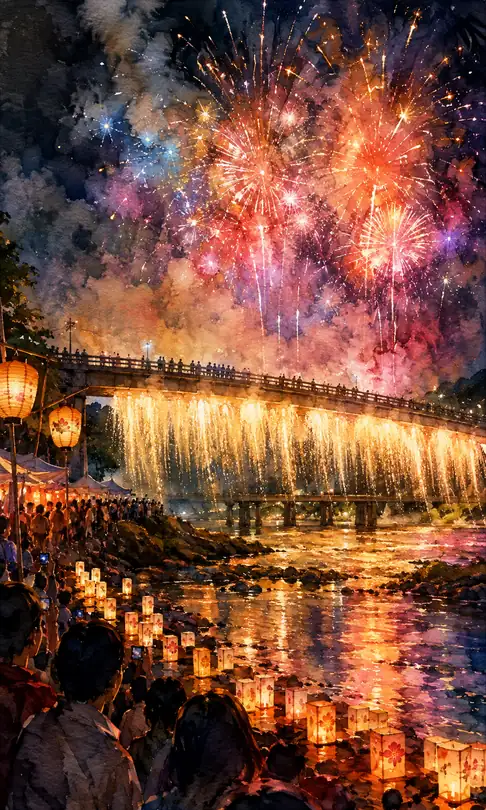 Golden Waterfall Cascading from the Bridge
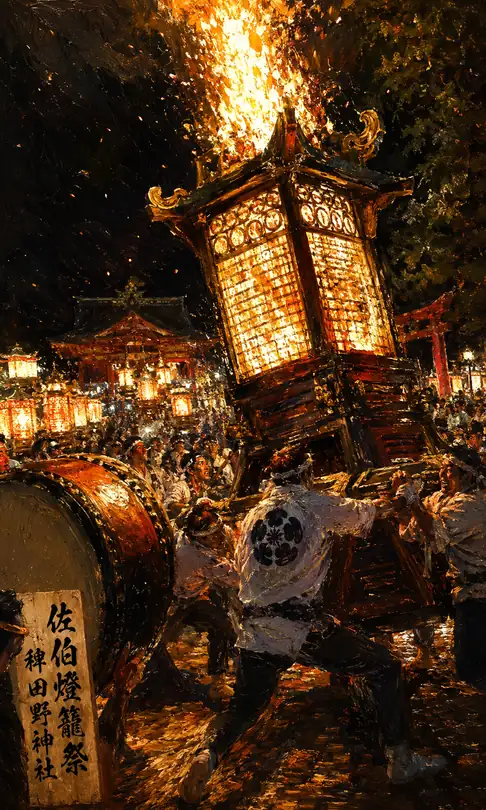 Flaming Lantern Float Reaching for the Sky
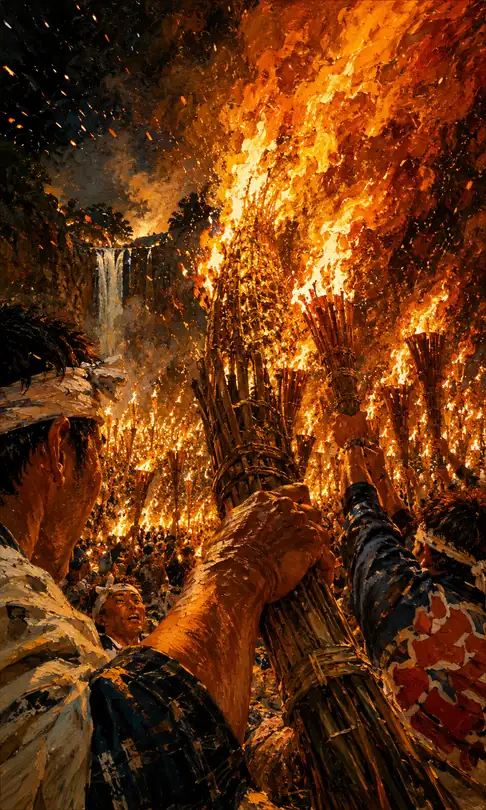 Sacred Flames Scorching the Holy Waterfall
 Sacred Tower Lights Illuminating the Shrine