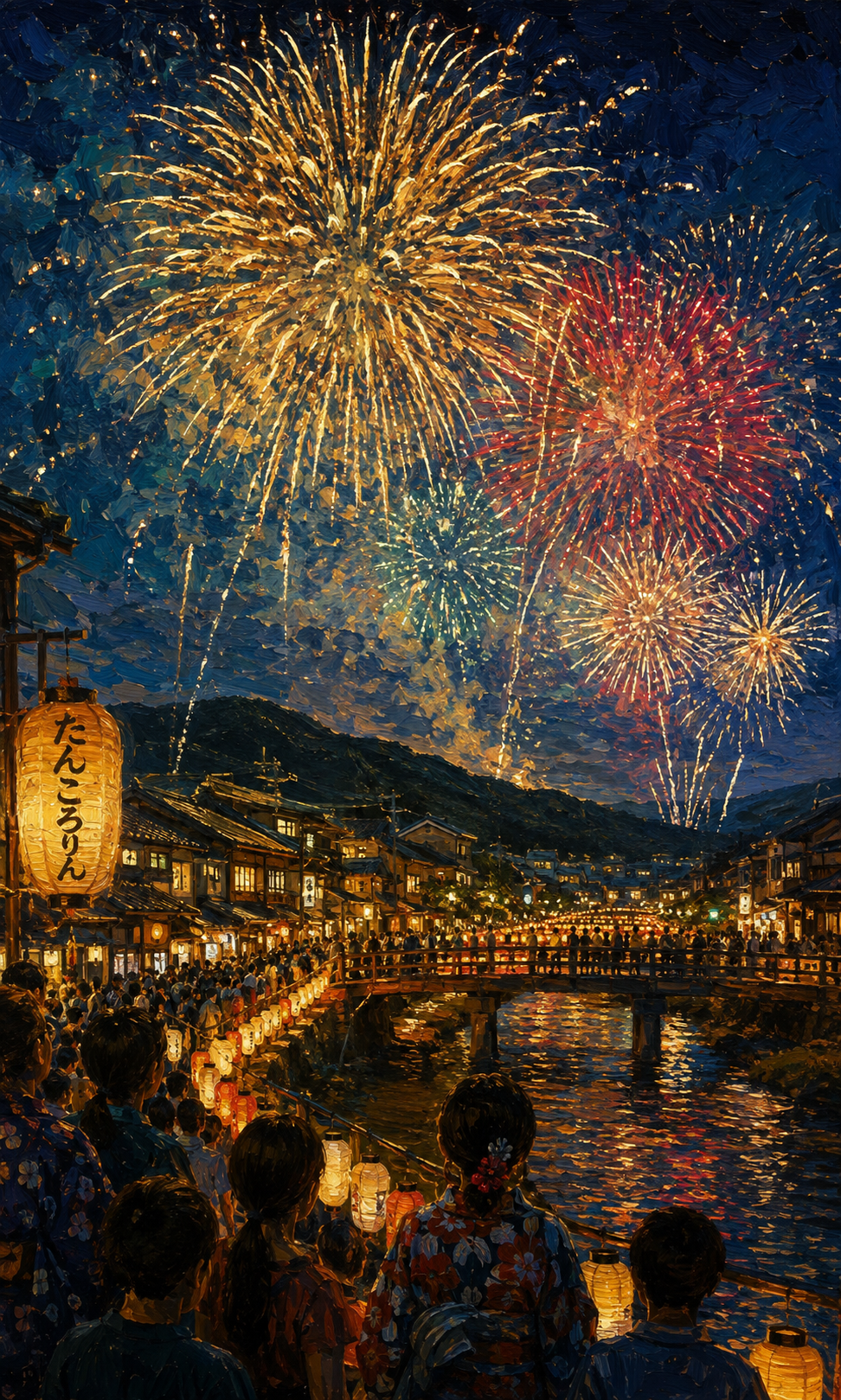
Nostalgic Summer Evening Guided by Lantern Glow
Critique
Introduction This oil-like townscape shows “tankororin” paper lights lining a riverside district as crowds watch fireworks above mountains. Foreground yukata, lamps, and reflections open toward houses and gold-red-blue bursts. Everyday illumination and spectacle are layered. Description A foreground paper lamp reads “tankororin” in black. Matching lights continue along both railings, and silhouettes pack the bridge. Adults and children wear blue, red, and orange floral yukata; a woman's tied hair carries flowers. Orange, red, blue, and white stretch across the river. Tiled roofs, wooden lattices, windows, and wires line both sides before mountains. Gold, red, turquoise, and white fireworks overlap above. Analysis The river supplies a central depth axis, while lamp rows and eaves converge beyond the bridge. Lamp, bridge, crowd, and fireworks increase upward in scale. Gold-orange recurs in paper, windows, and the largest burst; red and turquoise disperse through clothing, water, and sky. Impasto makes night a blue mass, houses short lines, water horizontal fragments, and sparks radiations. The bridge stabilizes vertical exchanges of sky and reflection. Interpretation and Evaluation Readable lettering and repeated lamps specify a town that fireworks alone could not identify. Reachable paper light mediates between domestic streets and distant sky. Including children presents viewing as intergenerational time. Houses, bridge, and wires keep heritage inhabited rather than picturesque and empty. Soft translucent paper is well distinguished from sharp sparks. Conclusion Yukata backs, lamps, river, bridge, houses, mountain, and fireworks align in central perspective. Gold and red dominate first, but lettering, hair flowers, railing, lattices, and narrow reflections sustain daily life and viewpoint. Small warm lights against vast sky are beautiful. The town's lighting culture and communal memory give the spectacle lasting emotional depth.
Same Subcategory
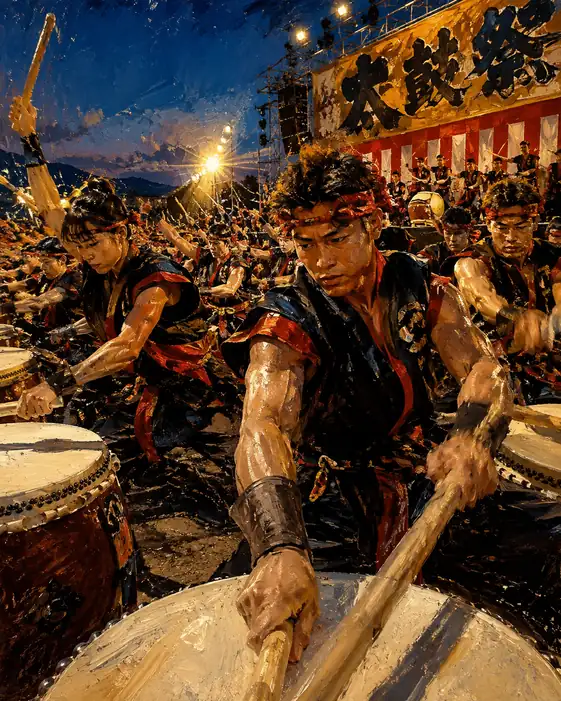 Fierce Gaze and Total Devotion to the Drum
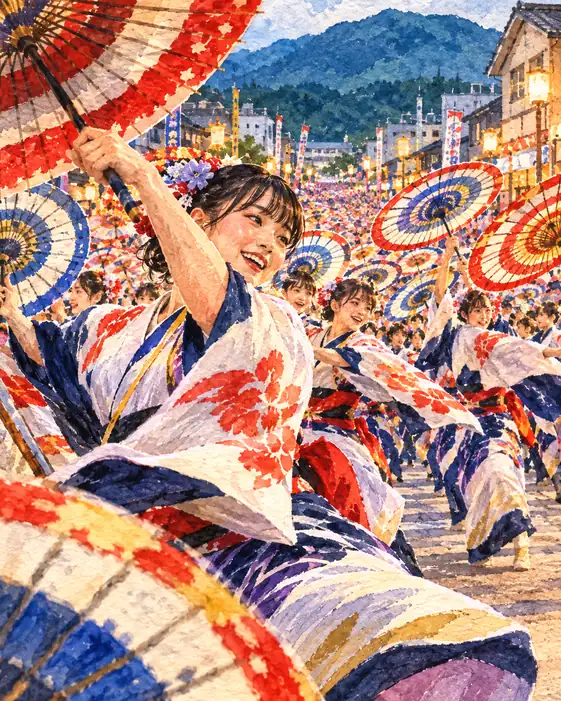 Joyful Summer Breezes Spinning Colorful Umbrellas
Similar Artworks
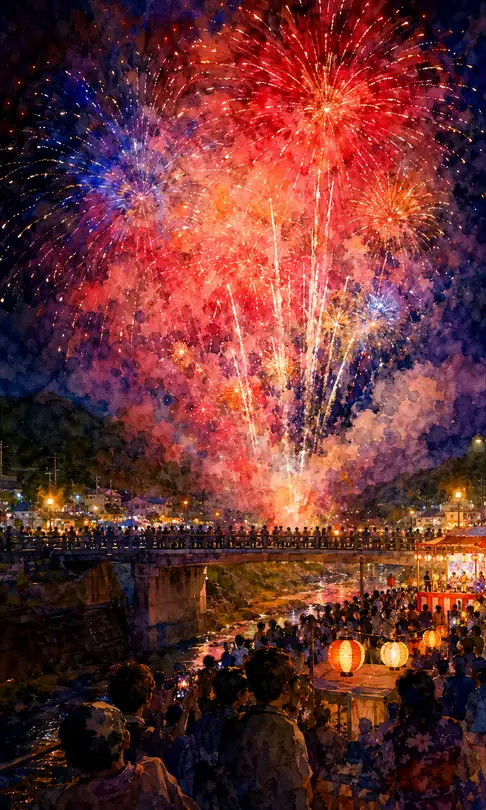 Scarlet Canopy Shrouding the Ancient Bridge
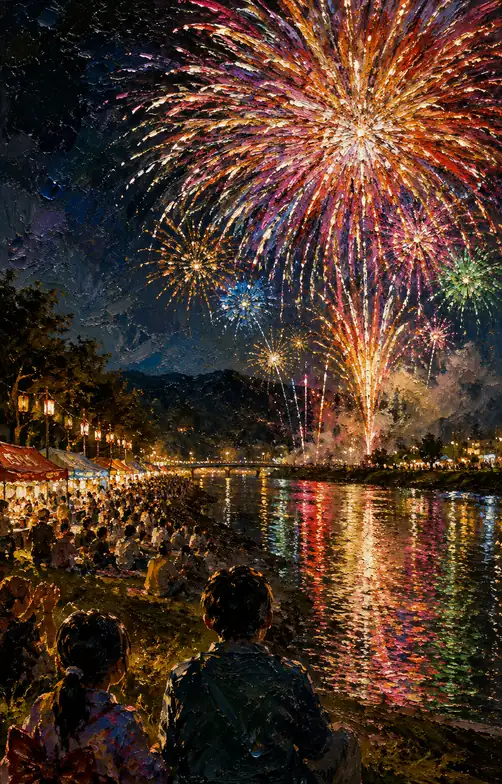 Couple Seated by the River Watching Bridge and Grand Pink-Gold Fireworks
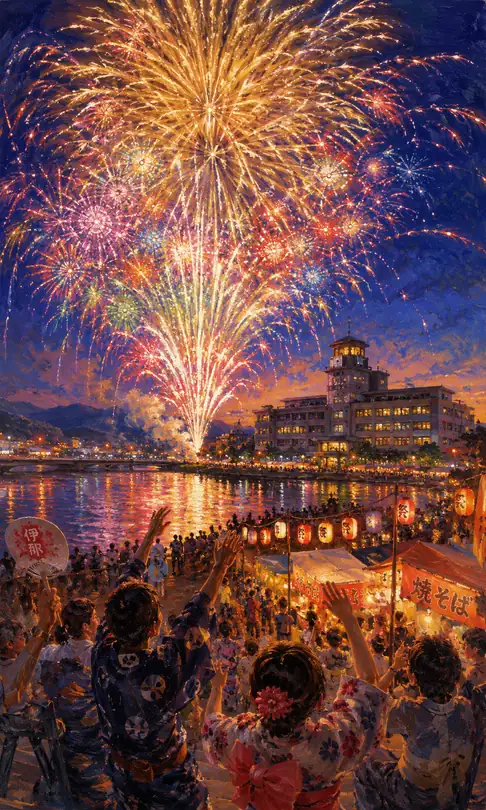 Western Building and Grand Colorful Fireworks Over the Ina Riverside
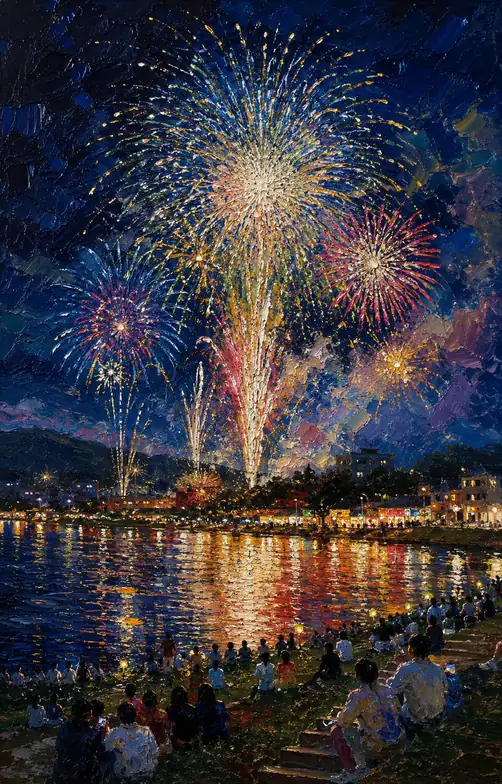 Spectators Seated on the Grassy Bank Watching River Reflections and Fireworks
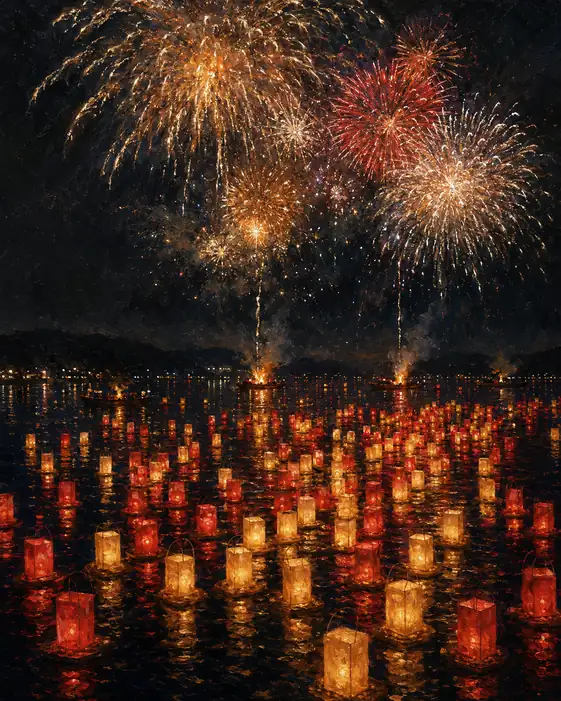 Golden Canopy Over Lake Lanterns
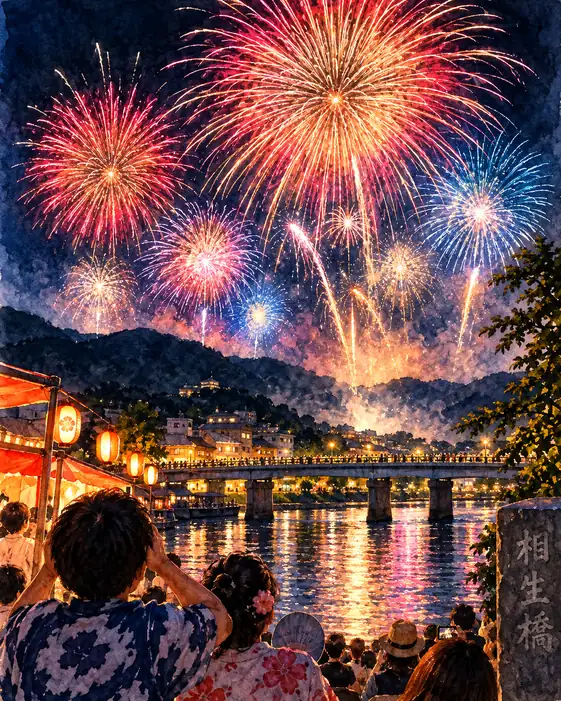 A Night of a Hundred Blooms Gazed from Aioi Bridge
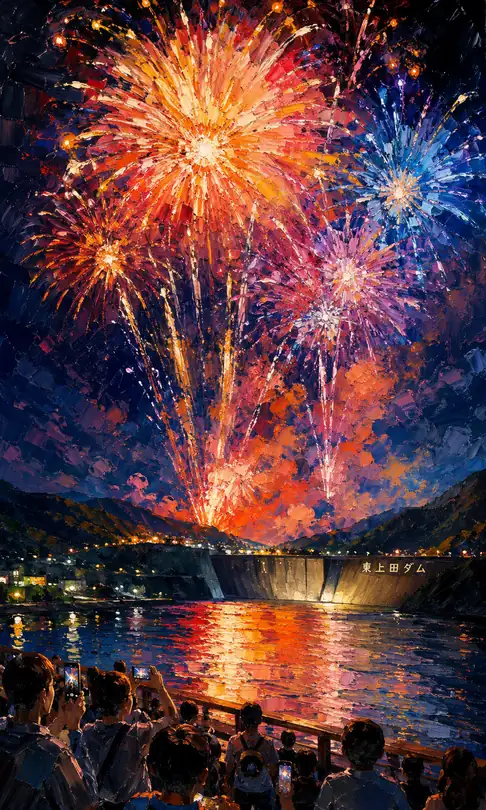 Sky Burst Reflected on the Reservoir Mirror
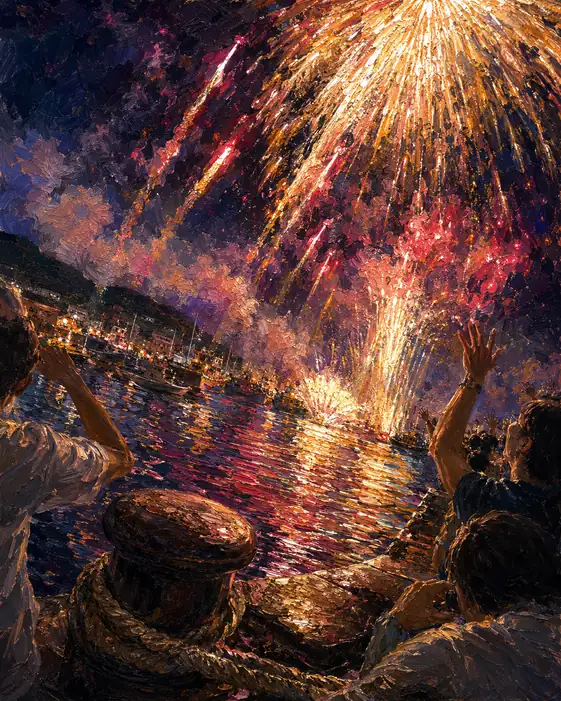 Looking Up at the Cosmic Burst over the Port
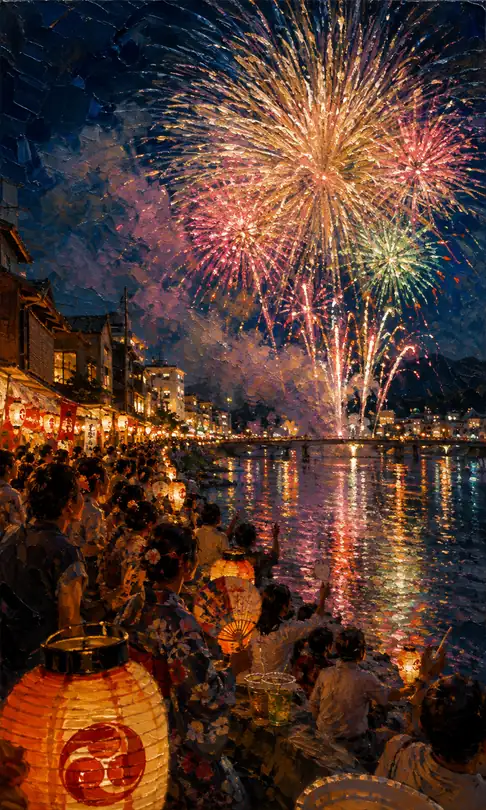 Lantern Warmth and Riverbed Sky Blossoms
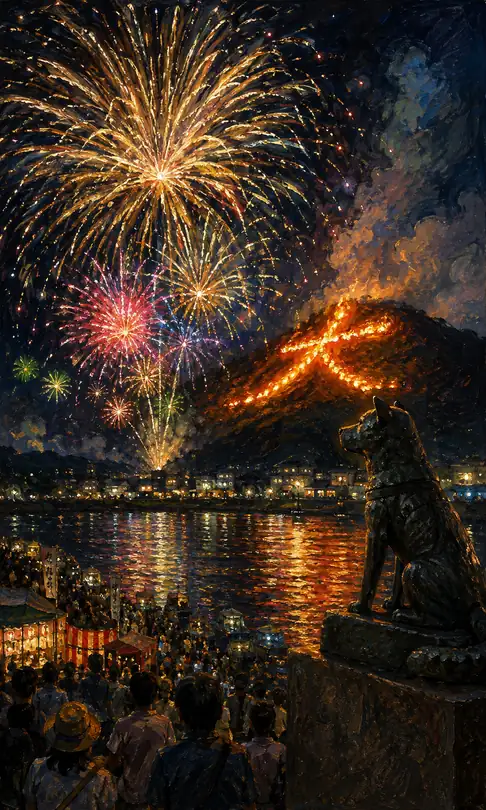 Statue of a Dog and Spectators Watching Daimonji Fire and Fireworks