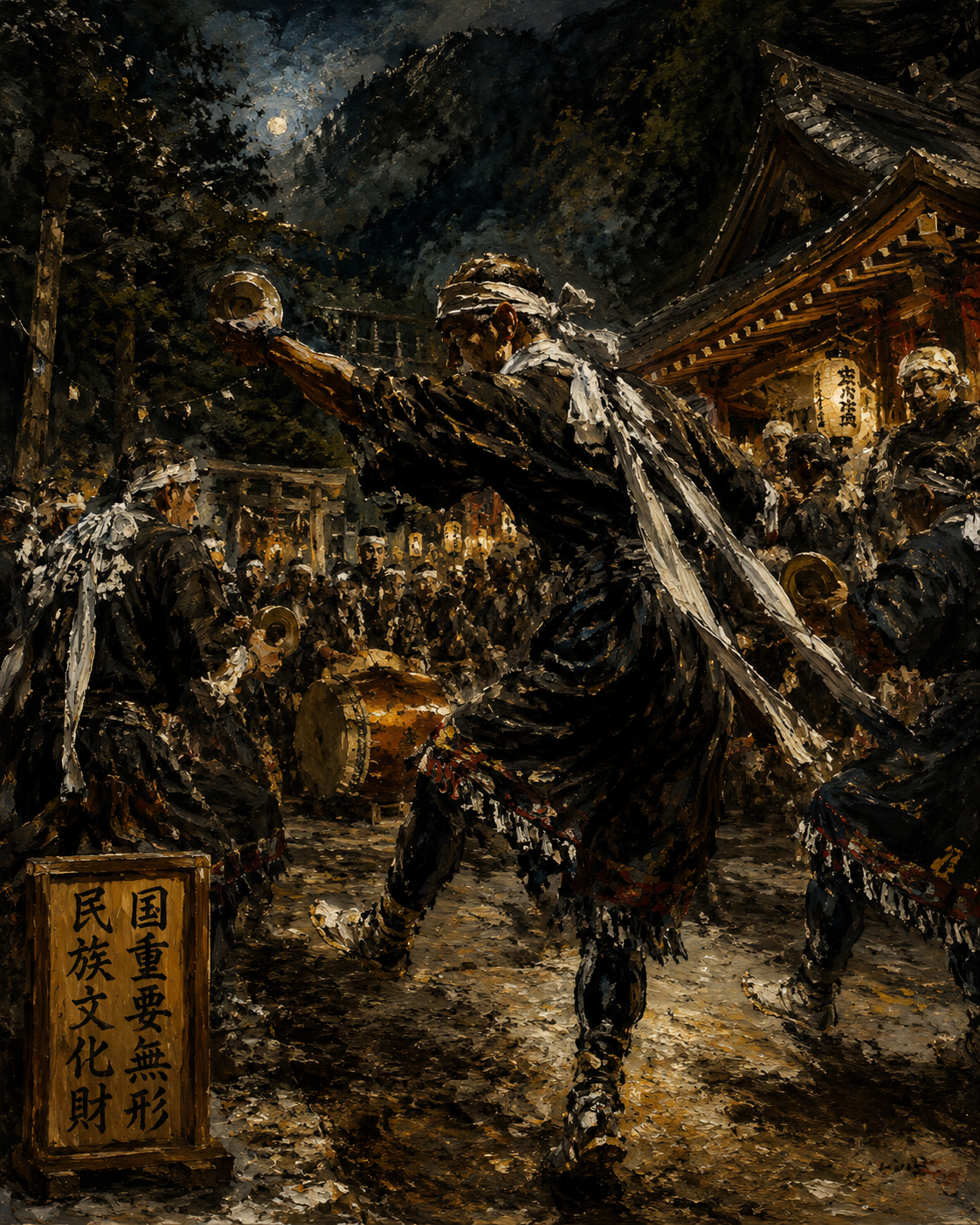
Metallic Echoes Piercing the Moonlit Silence
Critique
Introduction This painting presents a nocturnal ritual dance before a shrine in a forested mountain setting. A black-clad performer lunges across the center with one arm extended, while similarly dressed figures surround a large drum. The near-monochrome palette gives the gathering gravity and concentrates attention on disciplined movement. Description The central man wears a white headcloth with long trailing ends and raises a small circular metal object in his right hand. Other participants hold related objects around the drum, a gate, and the lantern-lit shrine at right. A wooden sign occupies the lower left, pale paper streamers punctuate dark garments, and a small moon appears between trees and mountain slopes. Analysis The extended arm, bent torso, lifted heel, and streaming cloth create a diagonal sequence from lower center to upper left. Opposing bodies form a rough circle around the drum, establishing both depth and choreographic order. Black, brown, ochre, and white dominate; thick broken strokes distinguish timber, damp ground, cloth, metal, foliage, and stone, while sparse lantern light models selected faces and hands. Interpretation and Evaluation The image treats ritual as concentrated collective practice rather than decorative spectacle. Weighted poses and carefully directed gazes demonstrate strong figure drawing, and the repeated circular instruments suggest measured sound. Its asymmetrical placement of shrine, sign, and dancer is inventive, while the restricted color scheme and tactile technique sustain solemnity without obscuring spatial relationships. Conclusion The work integrates architecture, forest, music, and coordinated bodies into a coherent ceremonial space. Limited illumination makes every white streamer and metallic highlight structurally important. What first appears dark and crowded gradually reveals a precise network of gestures organized around the drum, transforming obscurity into focused communal attention.
Same Subcategory
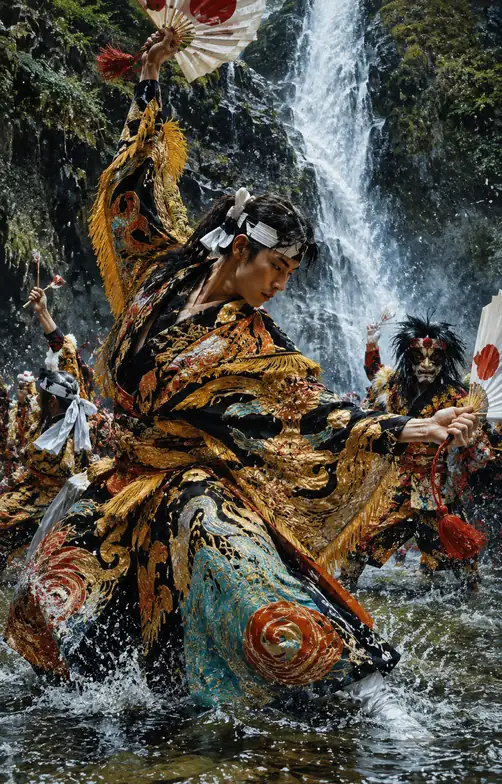 Golden Robes Dancing in Waterfall Mist
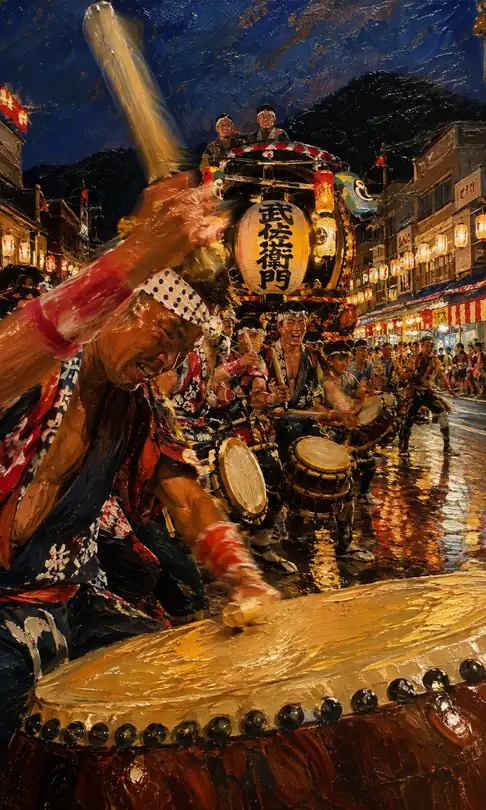 Sweating Arms and Resonating Soul Beats
Similar Artworks
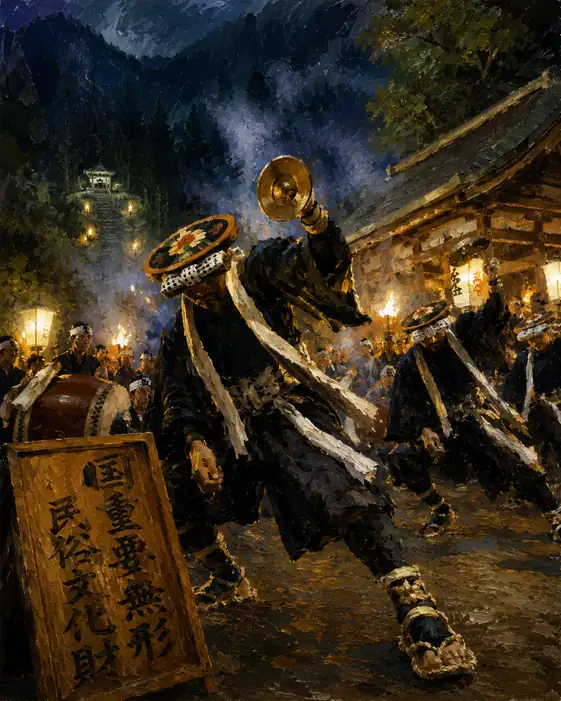 Prayers of the Mythic Masked Dancers
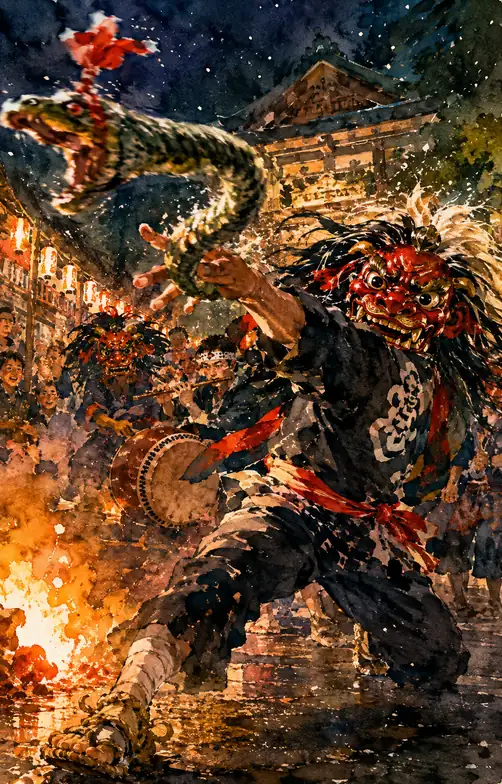 Red-Masked Lion Dancing Freely Before the Bonfire Flame
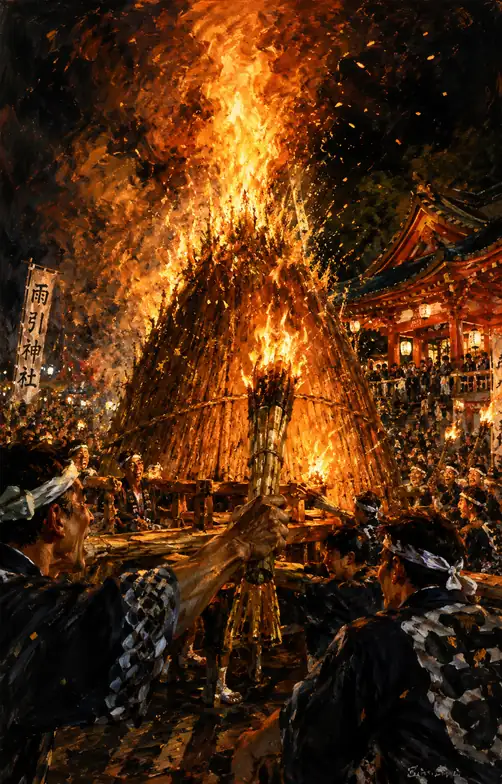 Massive Sacred Torches Purifying the Night Shrine
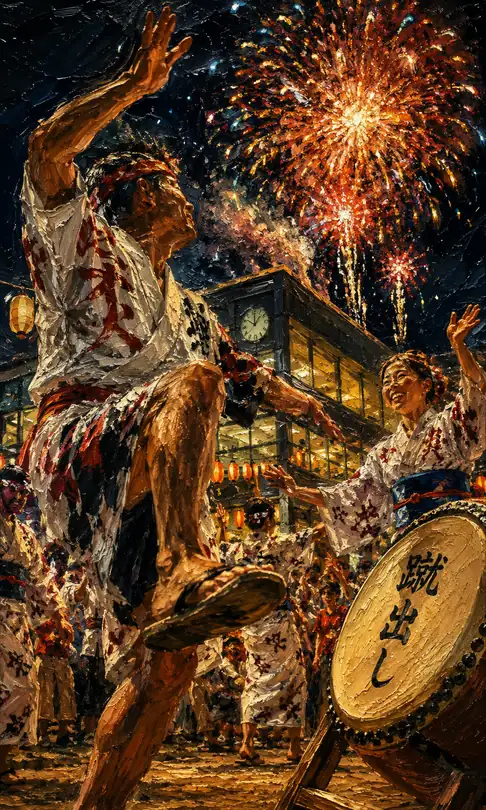 Dynamic Leap Dance by the Great Drum Under the Clock Tower Sky
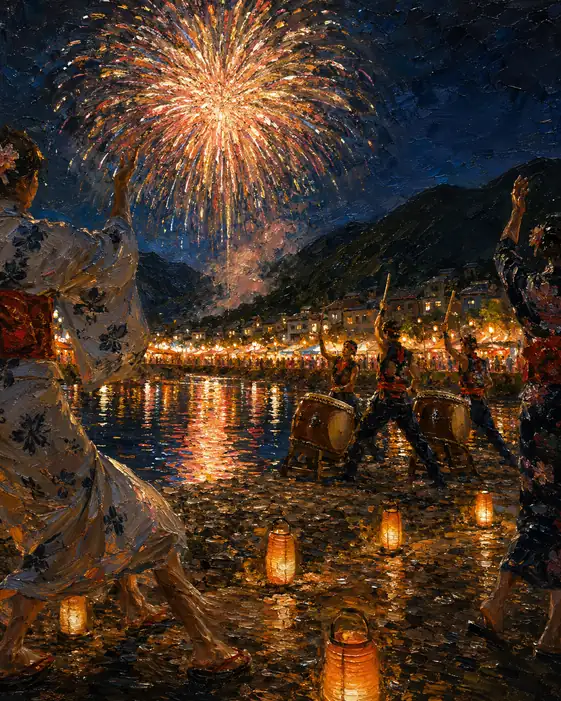 Golden Bloom Echoing River Lanterns and Taiko Beats
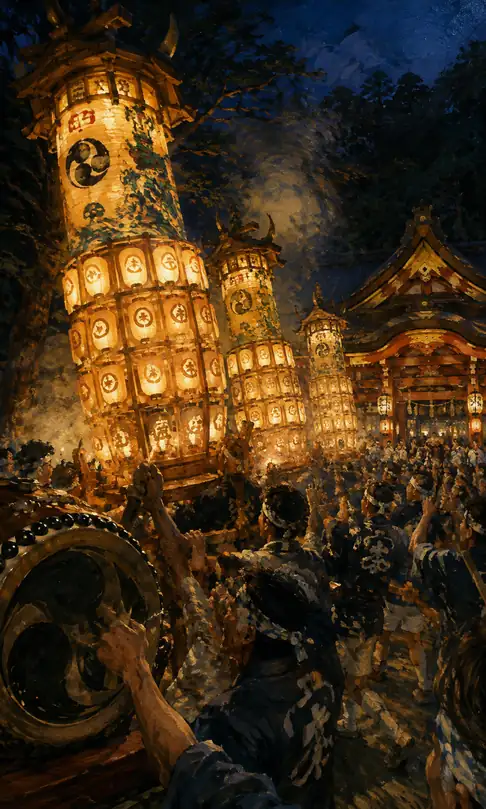 Sacred Tower Lights Illuminating the Shrine
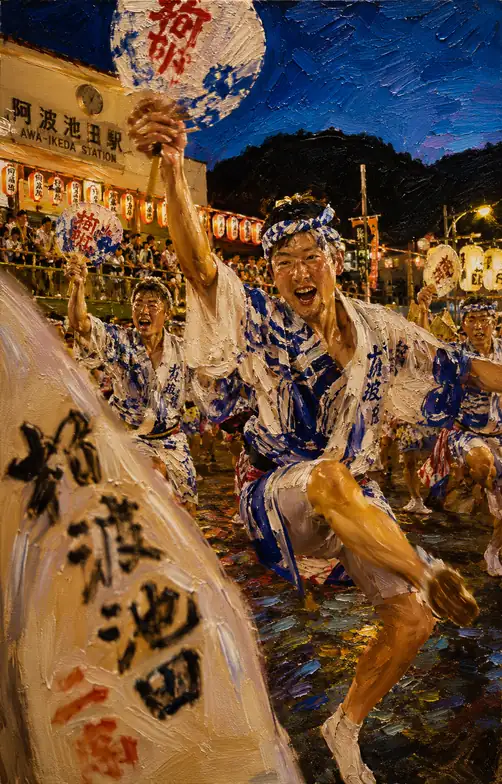 Dynamic Steps and Flying Paper Fans
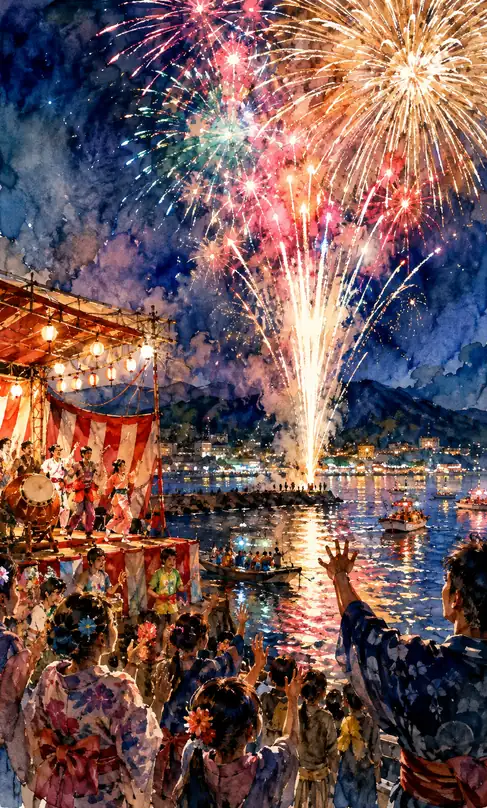 Harbor Stage and Hands of Joy Welcoming Grand Fireworks
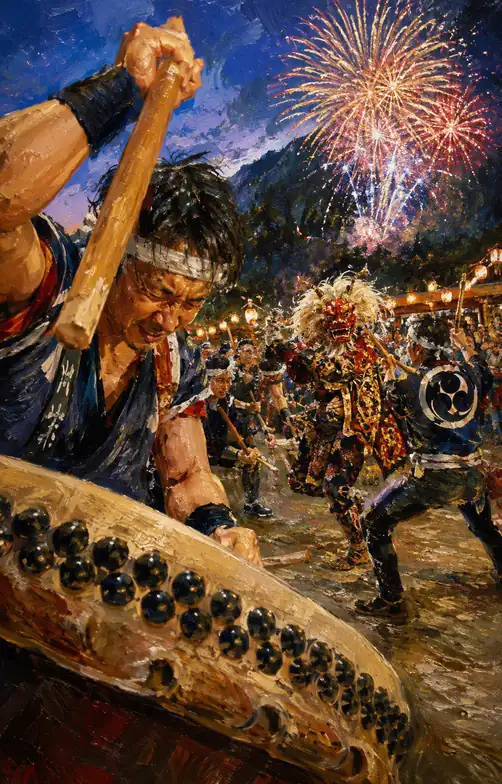 Thunderous Vow Exchanged with the Demon
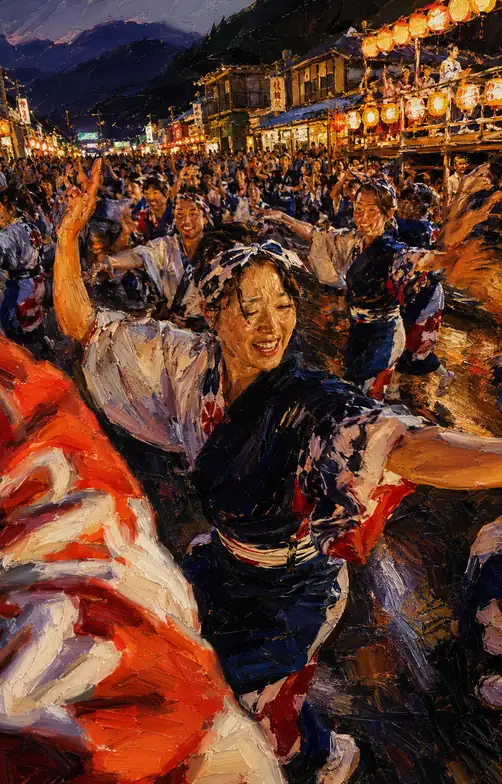 Circle of Smiles Dancing in Evening Breezes