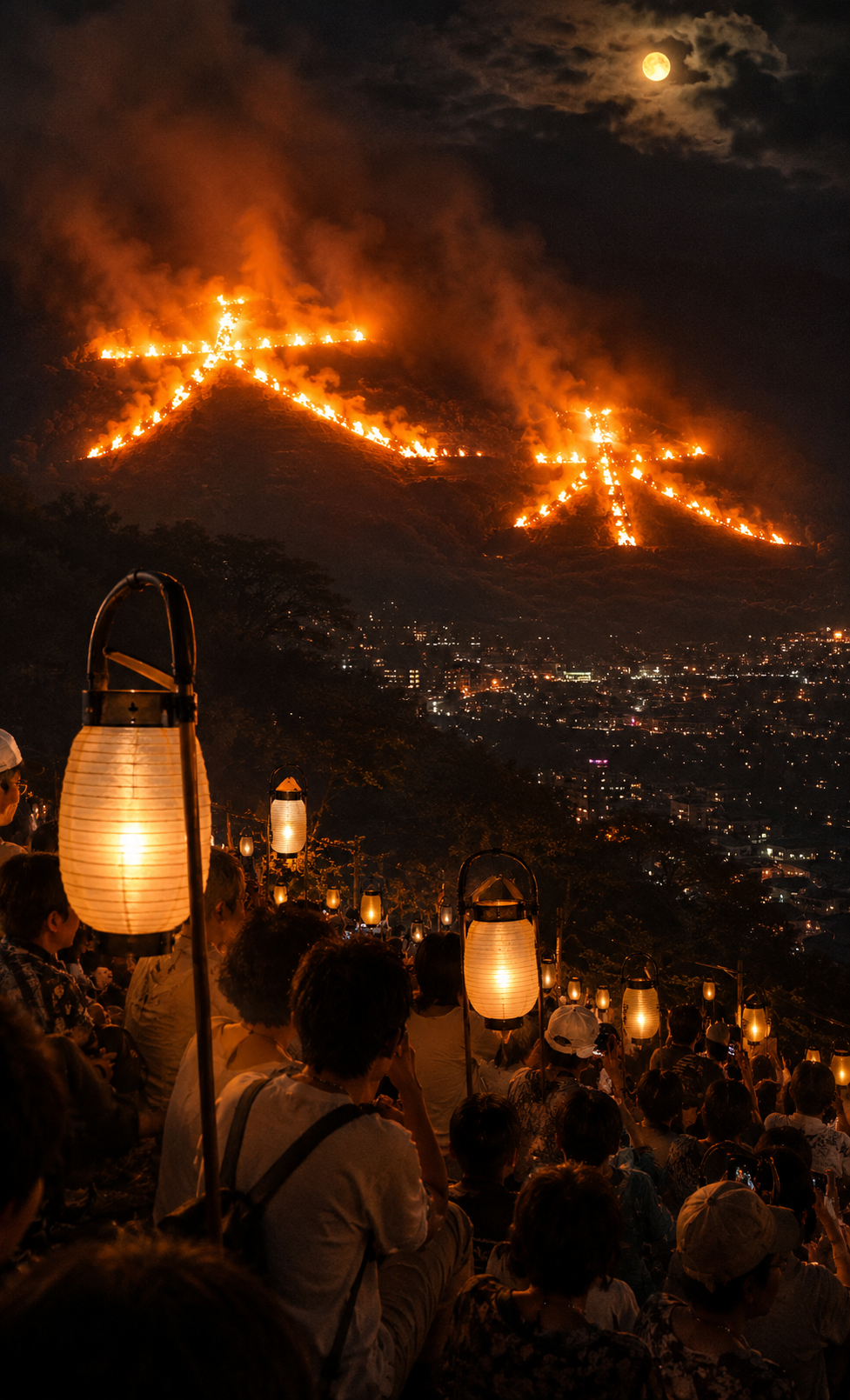
Sacred Fires Burning Across Two Peaks
Critique
Introduction This realistic night view shows spectators gathered on an elevated route, watching several immense fire figures burn across mountains beneath a clouded full moon. A large foreground lantern leads through people and city lights toward flaming ridges. Fire, metropolis, and crowd coexist within a quiet long-distance view. Description Viewers pack steps or a slope, turning their backs toward the mountains. White lanterns hang in black frames; the nearest glows larger than a head, while others diminish downhill. Windows spread across the valley. On two peaks, radiating and horizontal flames form giant signs, flickering orange-white beneath smoke. A yellow moon illuminates thin gray cloud at upper right. Analysis The lantern row recedes diagonally through spectators, crosses the city's horizontal lights, and rises toward the fires. Foreground lantern and moon echo as separated circles, while flames occupy the middle as geometry. Brown-black supports graduated orange, pale yellow, and white points. Faces remain subdued; changing detail in paper, smoke, slope, and windows indicates distance. The large metal frame fixes the viewing location. Interpretation and Evaluation Placing the fires beyond a city conveys an event watched collectively across a broad community. Hidden faces make aligned gazes more important than individual excitement. Lanterns are practical route lighting and also human-scale counterparts to mountain fire and moon. Cloud and smoke deepen stillness without excessive fantasy. Light is convincingly differentiated by distance. Conclusion Crowd, lanterns, city, burning mountains, smoke, and moon create profound recession. Fire and moon attract first, but hats, shoulders, frames, and windows establish viewpoint and population. Circles, radiations, and points remain controlled. The work gains documentary depth by including both shared attention and ordinary city life around the emblematic flames.
Same Subcategory
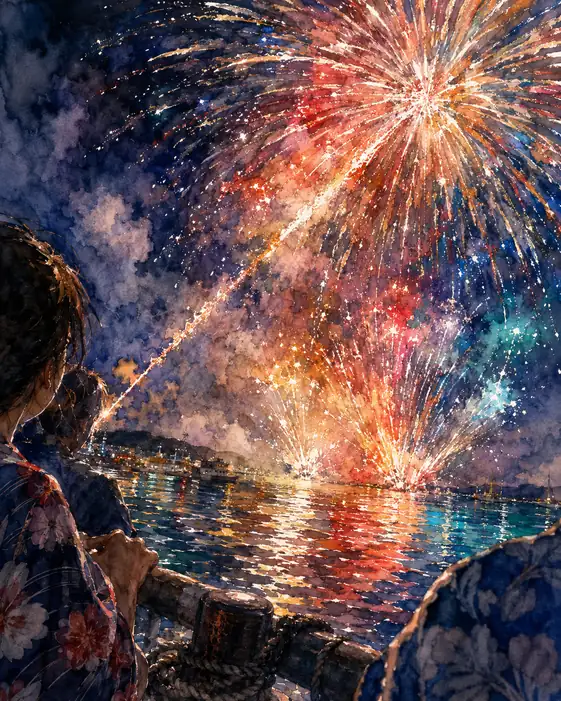 Night Sky Shared in a Gentle Embrace
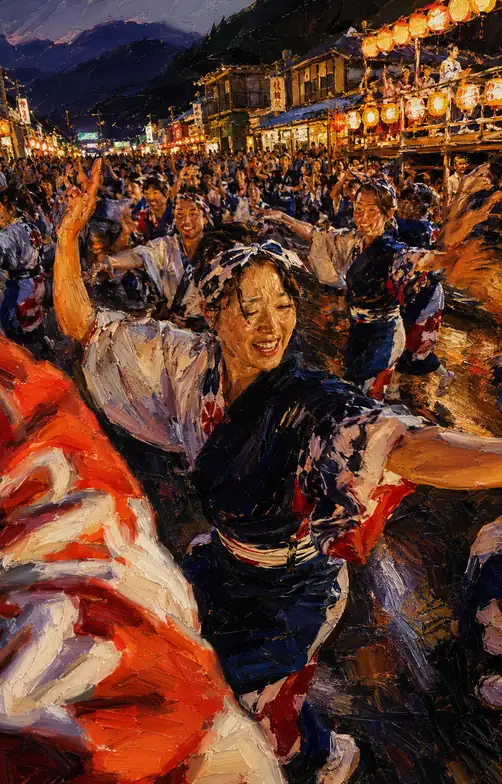 Circle of Smiles Dancing in Evening Breezes
Similar Artworks
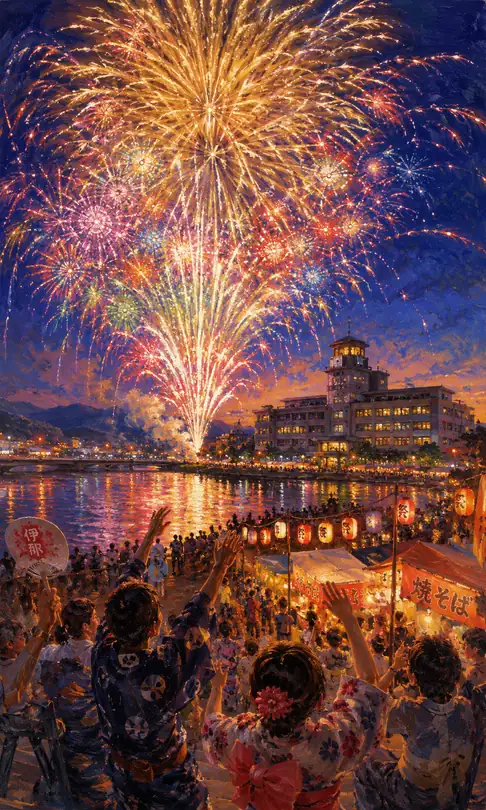 Western Building and Grand Colorful Fireworks Over the Ina Riverside
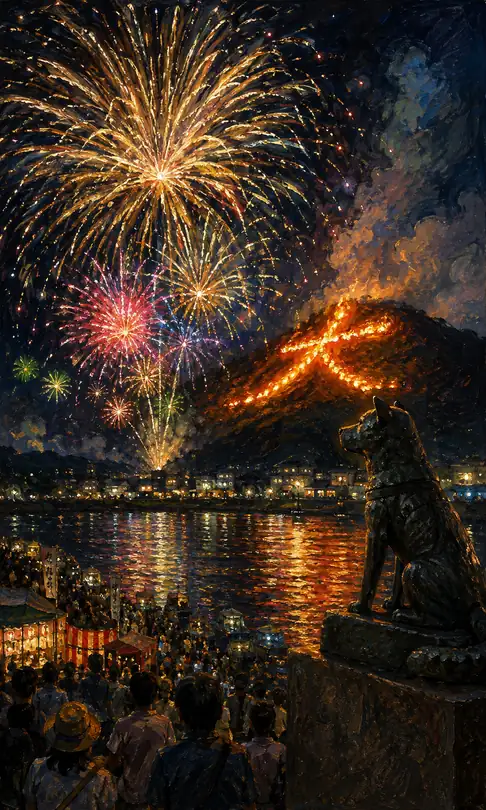 Statue of a Dog and Spectators Watching Daimonji Fire and Fireworks
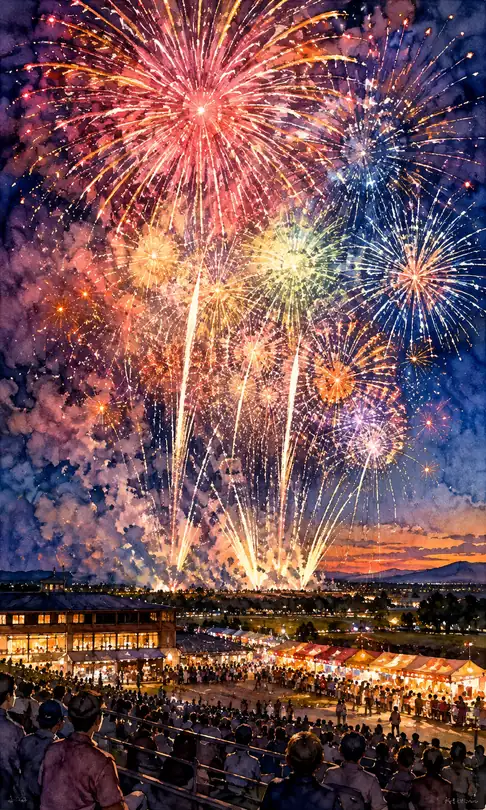 Stardust Raining Over the Horizon Festival
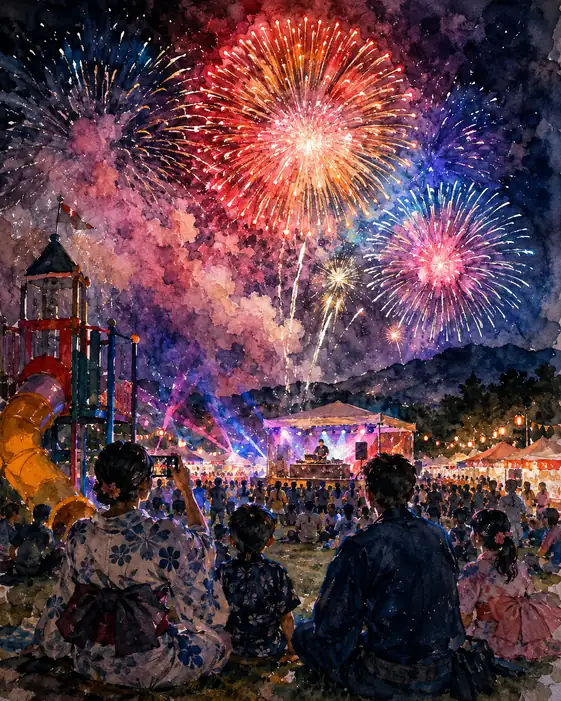 A Miracle Blossoming in the Familiar Park
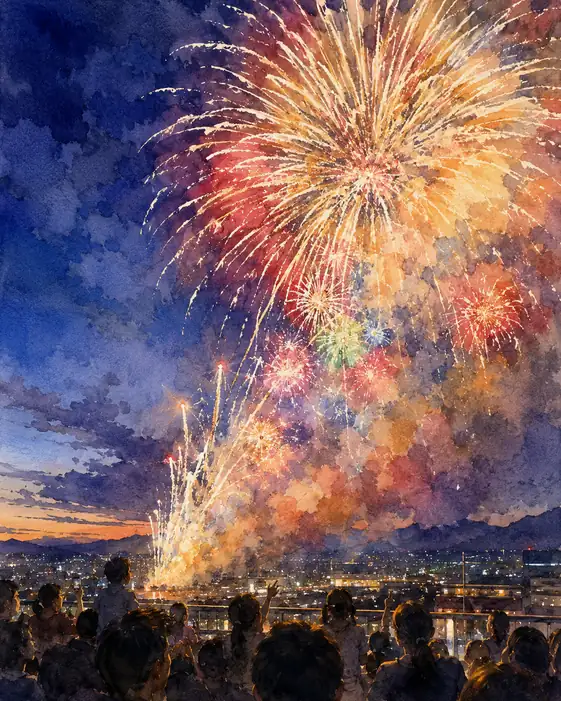 Golden Rain Coloring the Dwindling Twilight
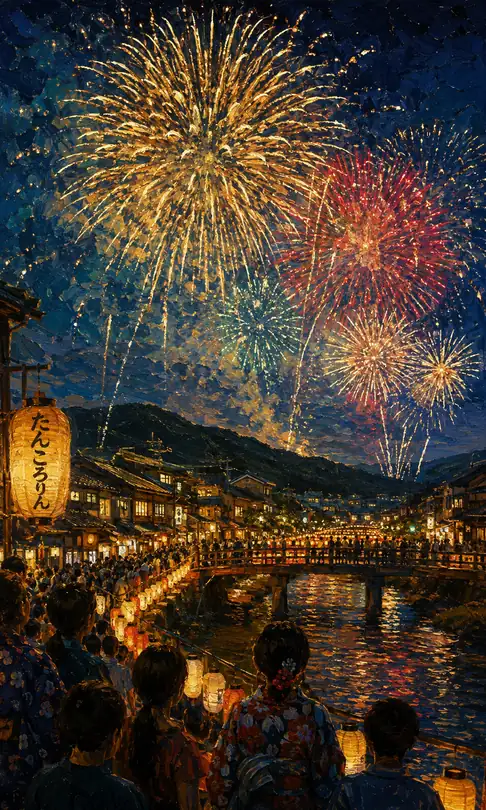 Nostalgic Summer Evening Guided by Lantern Glow
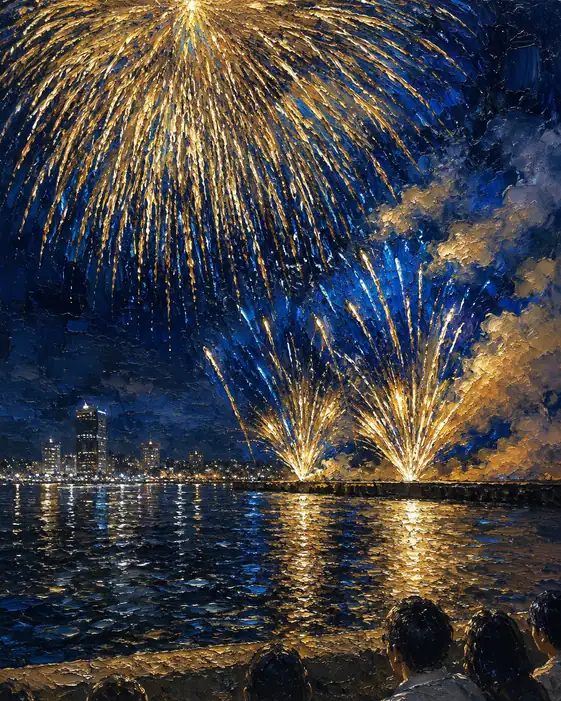 Golden Cascading Fireworks and Waterfront Spectators Facing the City Skyline
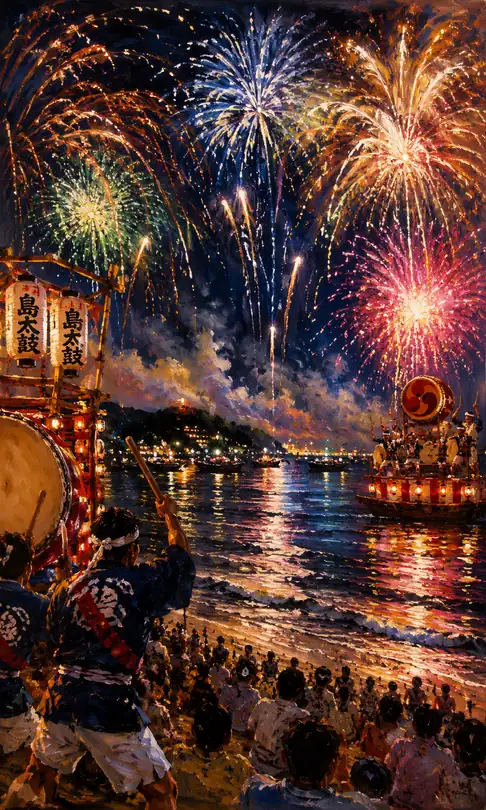 Island Taiko Drums and Festive Boat Resonating Under Fireworks
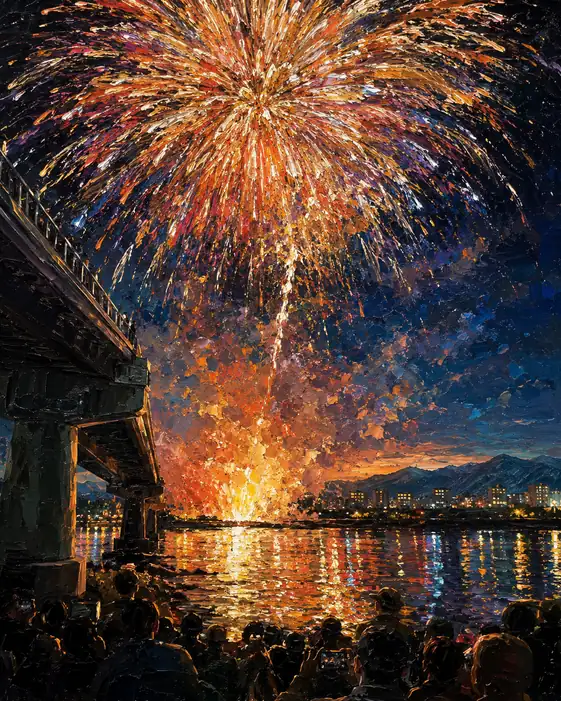 Golden Fireworks and River Reflection Viewed Beneath the Great Bridge
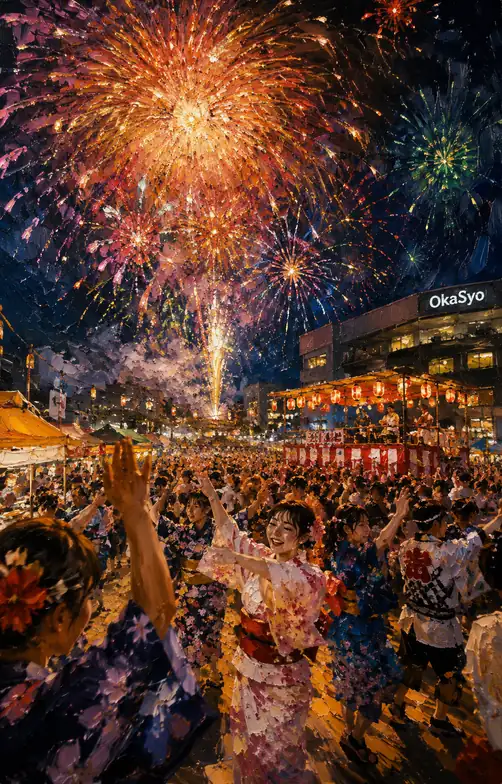 Pink Yukata Joy Dancing Under Tower Lanterns and Grand Fireworks