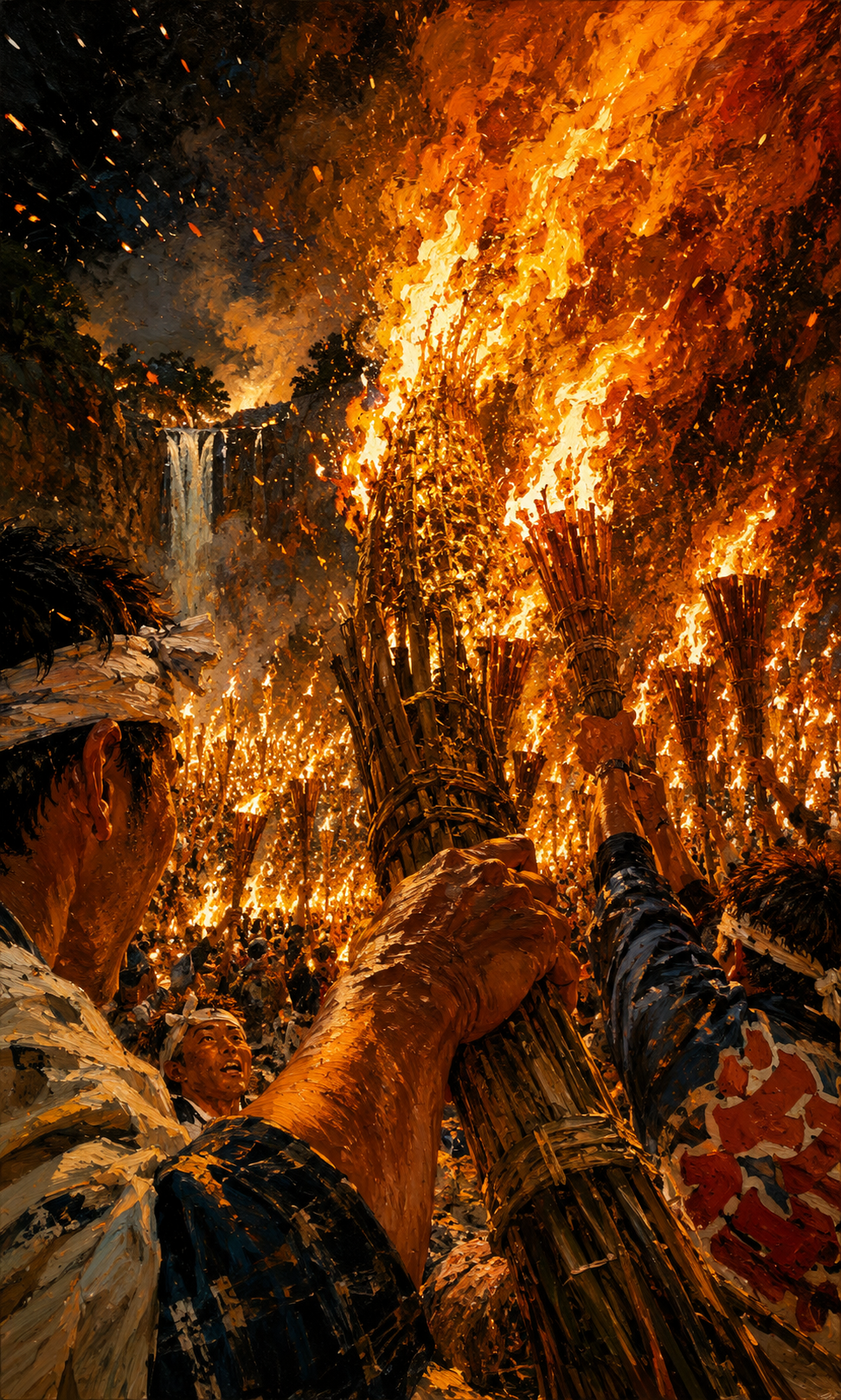
Sacred Flames Scorching the Holy Waterfall
Critique
Introduction This oil-like fire-festival painting shows headbanded participants raising bundled torches through sparks in a nocturnal gorge where a waterfall remains visible. A massive forearm and rope-bound wood cross the foreground, while central flame escapes above. White water and orange fire oppose natural cold with collective heat. Description The central torch consists of many slender sticks bound at several points, leaning diagonally as white-yellow fire and orange smoke stream rightward. A pale-clad man at left grips the bundle and looks up. Another participant in a navy coat raises a burning torch at right. Numerous smaller flames and illuminated faces crowd the distance. A white waterfall descends over dark rock beneath a line of lights and surrounding trees. Analysis Arm and torch drive from lower left to upper right, repeated by neighboring bundles. The waterfall alone falls vertically, introducing motion contrary to the flames. Orange, yellow, and white concentrate on fire and skin against navy, black, and green. Impasto treats wood and rope as hard lines, fire as torn planes, smoke as swirls, and embers as points. The enlarged hand stresses weight and proximity. Interpretation and Evaluation Water and fire establish descent against ascent, cold against heat. Yet knots and many hands remain central, showing ritual as preparation and transport. Unequal torch thicknesses and angles reveal individual burdens within a coordinated procession. Lit cheeks and coats sinking into darkness convey concentration under danger. Conclusion Hands, torches, crowd, waterfall, and gorge organize two opposing directions. Flame overwhelms first, but knots, cut wood, headbands, eyes, and thin water identify technique and location. Warm-dark and rigid-fluid contrasts are vivid. Nature becomes an active force balanced against the bodies carrying fire.
Same Subcategory
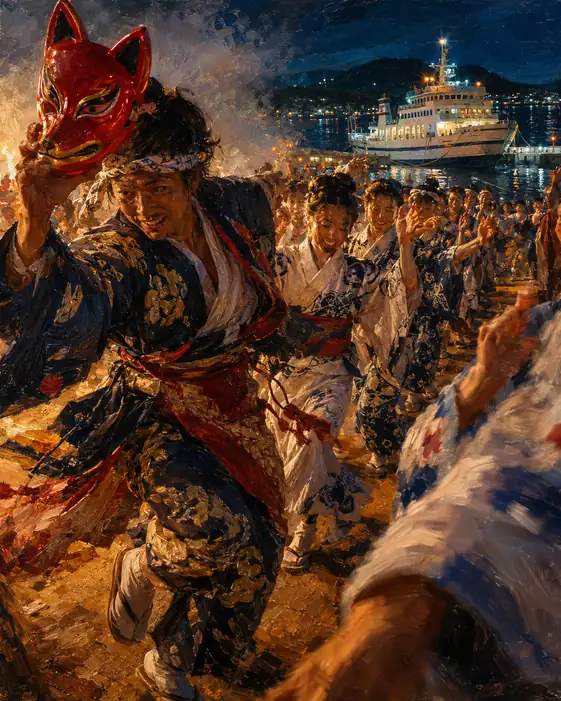 Enchanted Fox Dance on the Harbor Pier
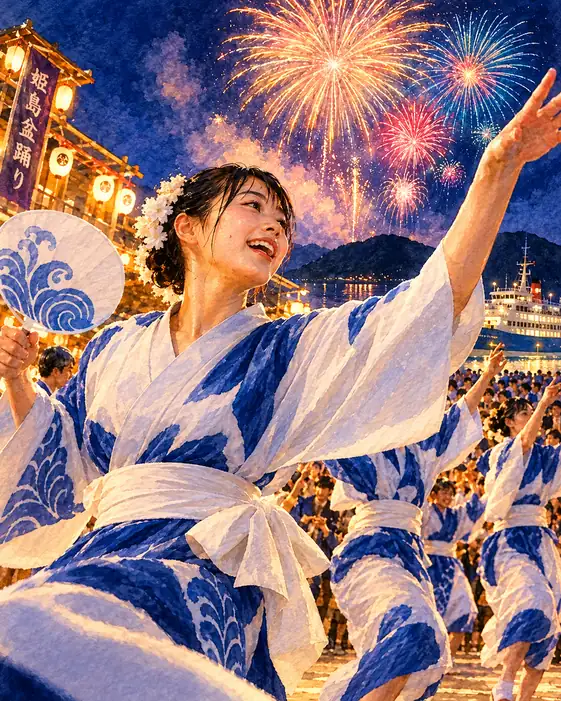 Breezy Sleeves and Radiance of Joy
Similar Artworks
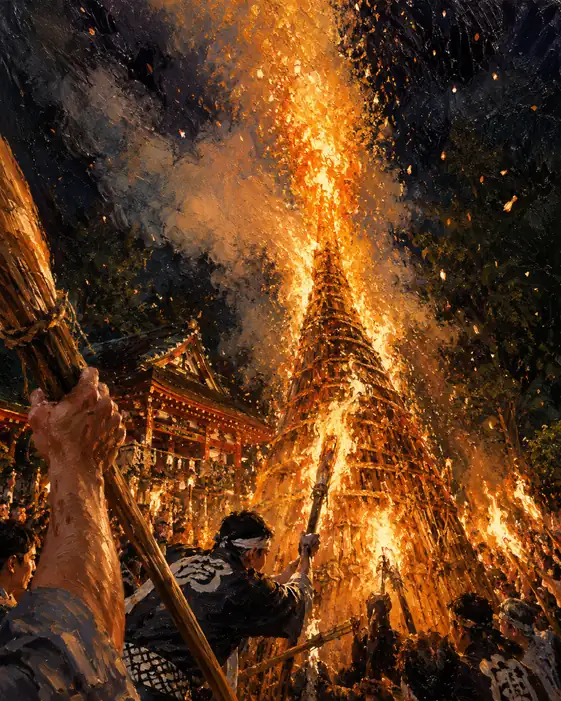 Column of Flames Piercing the Night Sky
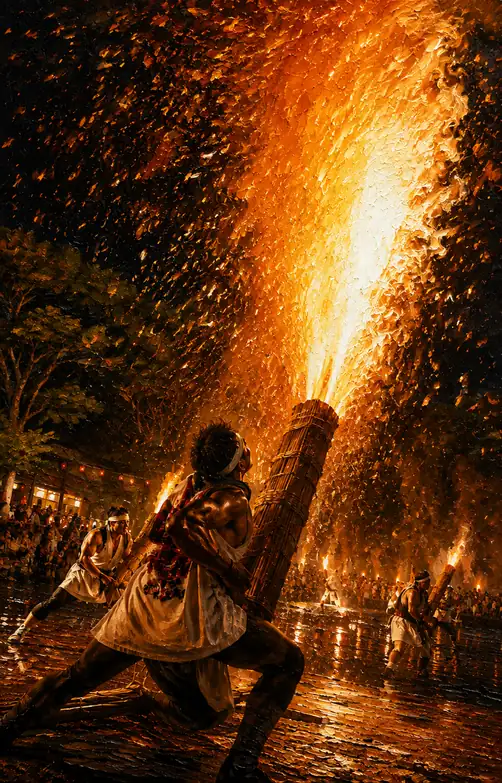 Golden Column of Fire and Men Holding Tezutsu Fireworks
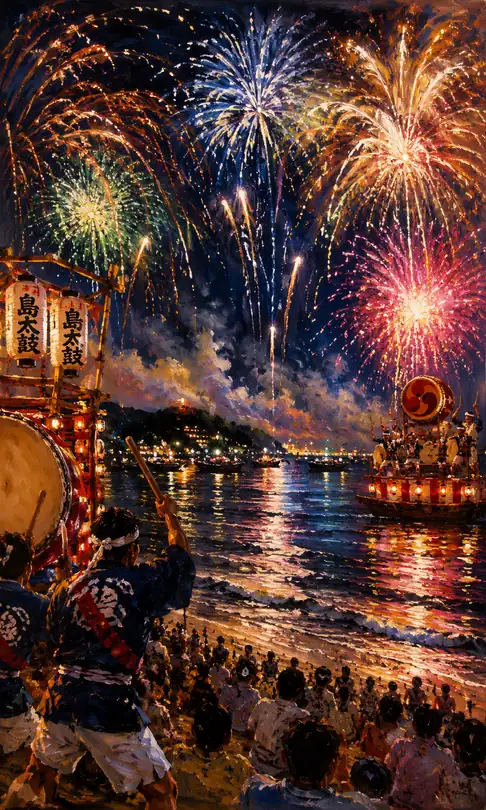 Island Taiko Drums and Festive Boat Resonating Under Fireworks
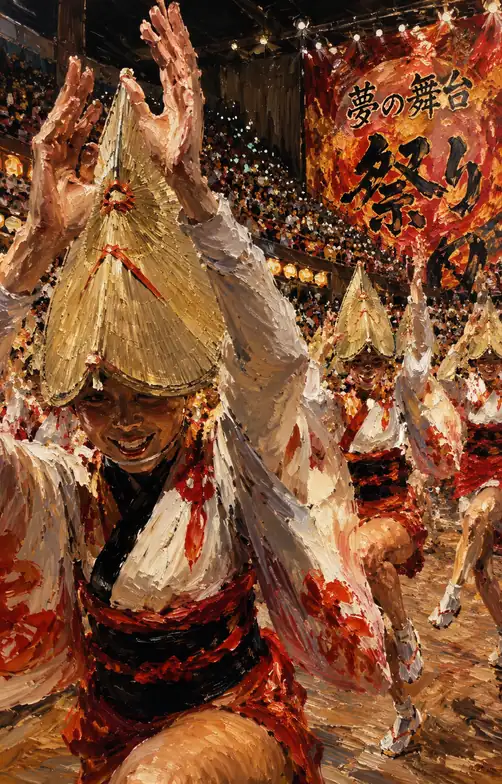 Awa Odori Dancers in Straw Hats Dancing on the Dream Stage
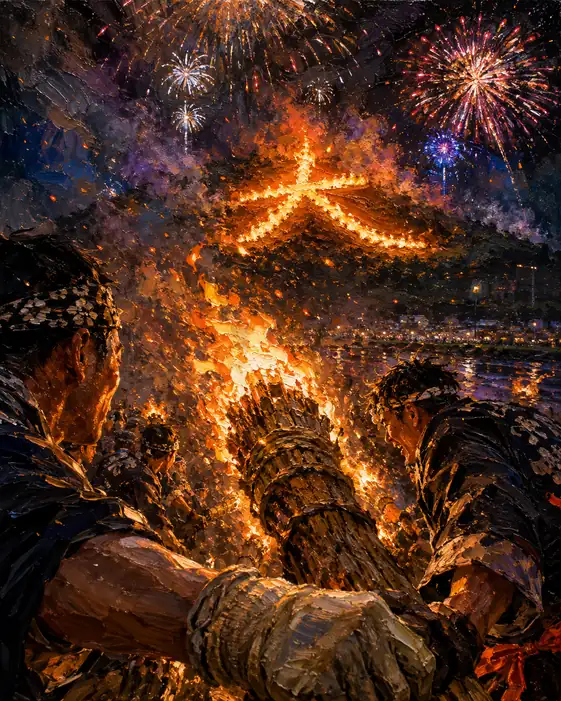 Unity of Men Holding a Torch with Daimonji and Fireworks
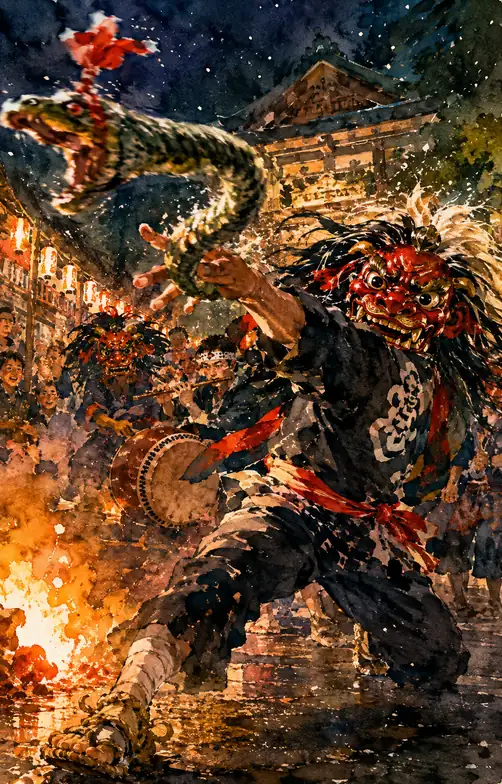 Red-Masked Lion Dancing Freely Before the Bonfire Flame
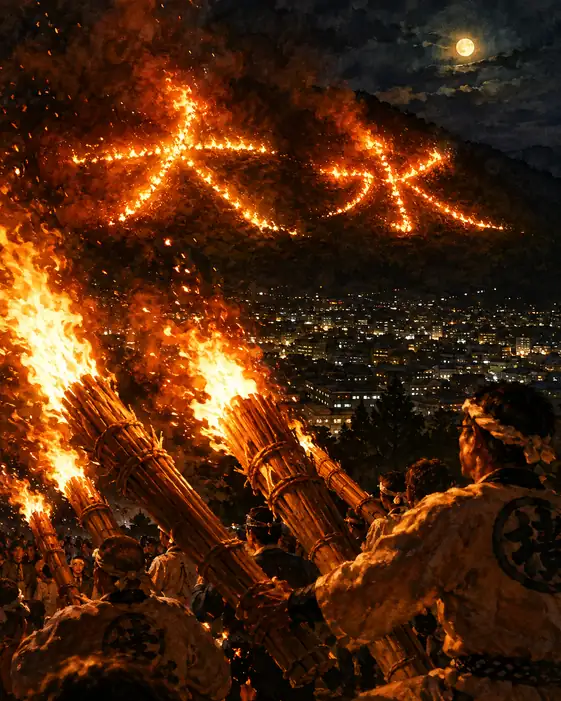 Torches of Prayer Burning the Sacred Peak
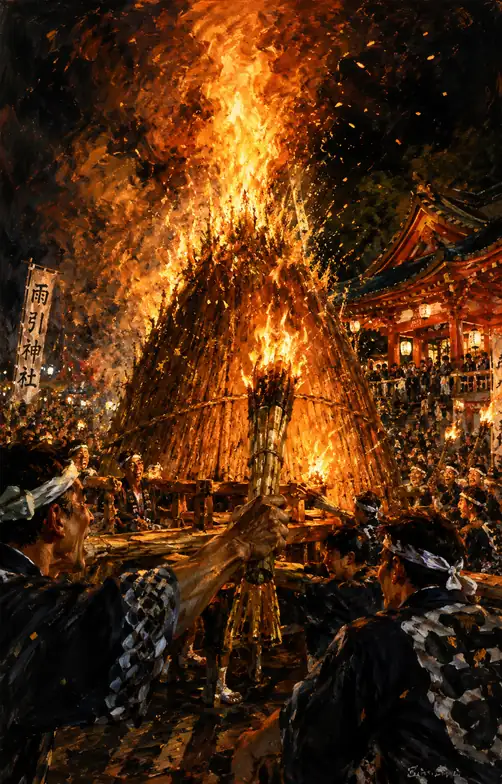 Massive Sacred Torches Purifying the Night Shrine
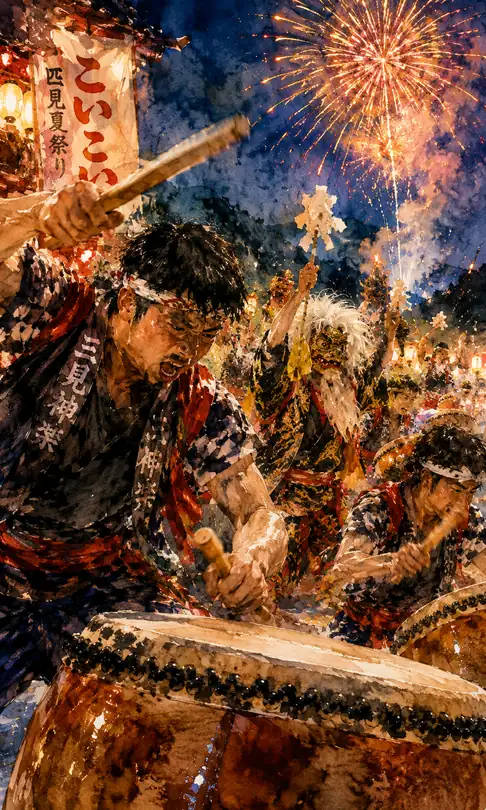 Passionate Beats and Mystical Masked Dance
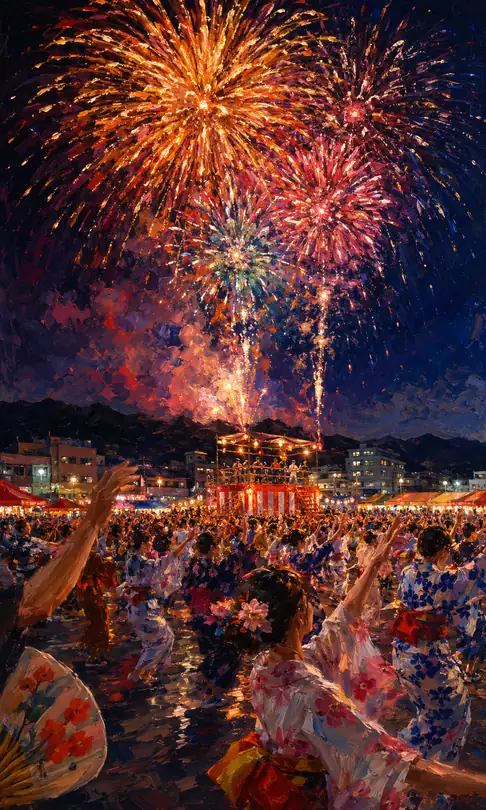 Sky Blossoms and Rhythmic Footsteps