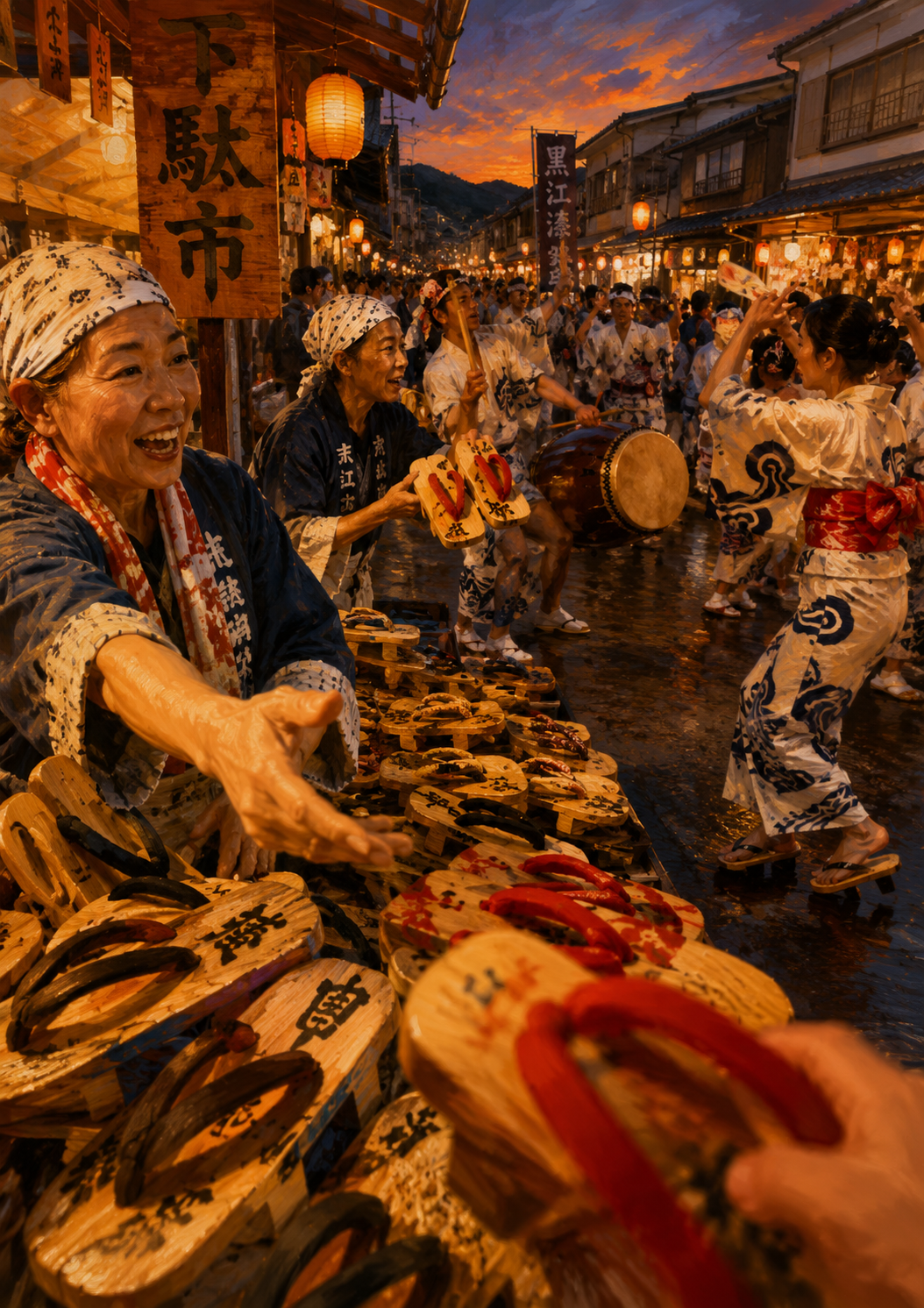
Warmth of Clogging Echoes in the Lacquer Town
Critique
Introduction This oil-like scene depicts a dusk geta market in a mountain street, joining a smiling seller with dancers and a drum. A red-strapped sandal enters enlarged from below. A “Geta Market” sign, wet pavement, and orange-violet sky dissolve the boundary between commerce and festival. Description The woman wears a patterned head cloth, navy coat, and red-white collar. Laughing, she extends her palm toward a customer. Wooden geta with varied straps cover the marked counter. A customer's hand lifts one pair close. Another seller presents yellow footwear as blue-white participants carry a drum. A dancer raises her arms. Signs identify the market and Kuroe lacquerware among wooden houses, lanterns, mountains, and sunset. Analysis Attention zigzags from near geta through palm and face to yellow footwear, drum, and distant street. Drum and lantern circles oppose oval sandals and curved straps. Orange wood and lamps meet navy-white clothing, red accents, and a blue-purple sky. Impasto renders carved grain, damp skin, and walls, then stretches lamps across pavement. Foreground blur and vertical signs deepen the narrow route. Interpretation and Evaluation Placing exchange at the center presents the festival through craft and conversation, not dance alone. Seller's palm and customer's grip answer across the frame, involving viewers in the transaction. Text, townhouses, merchandise, and drum procession specify a street where trade and performance coexist. Varied wood weight and strap softness are sensitively conveyed. Conclusion Footwear, hands, smiles, drum, dancers, signs, and houses form a lively recession. Red straps and expression dominate first, but varied pairs, wet ground, lanterns, and fading sky establish place and duration. Orange-navy and tactile-distant contrasts are rich. Choosing and handing over an object becomes a warm act of communal exchange.
Same Subcategory
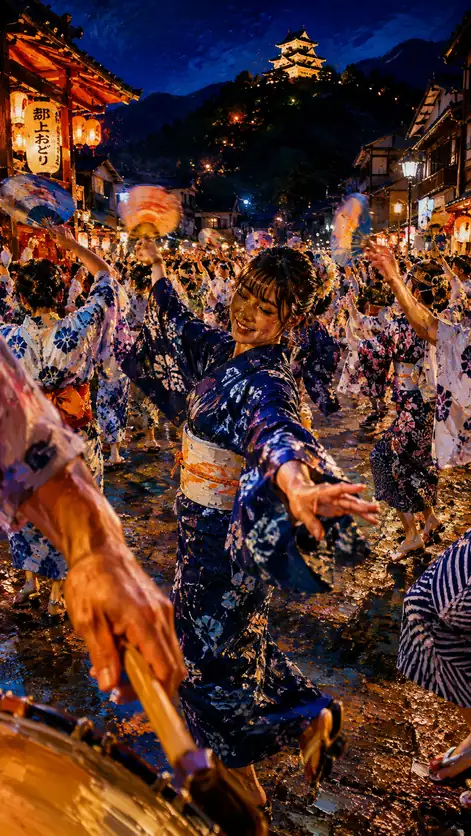 Castle Towers Guiding the All-Night Dance
Similar Artworks
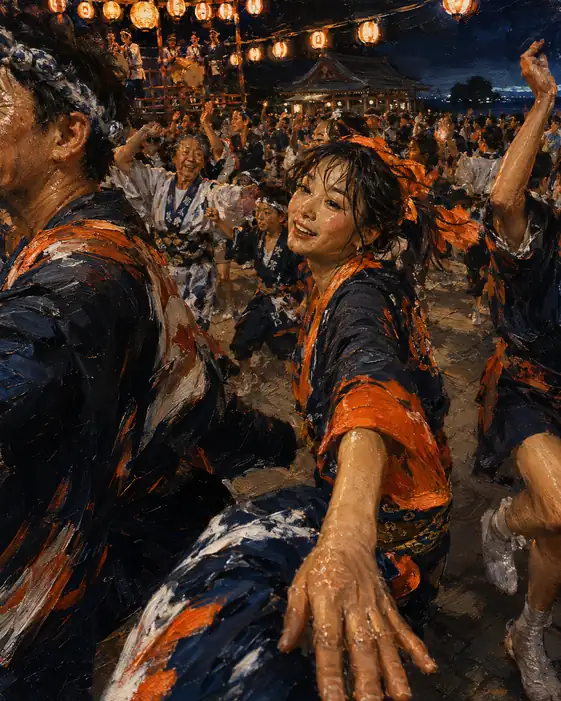 Smiles and Sweat Dancing Under the Lantern-Lit Yagura Tower
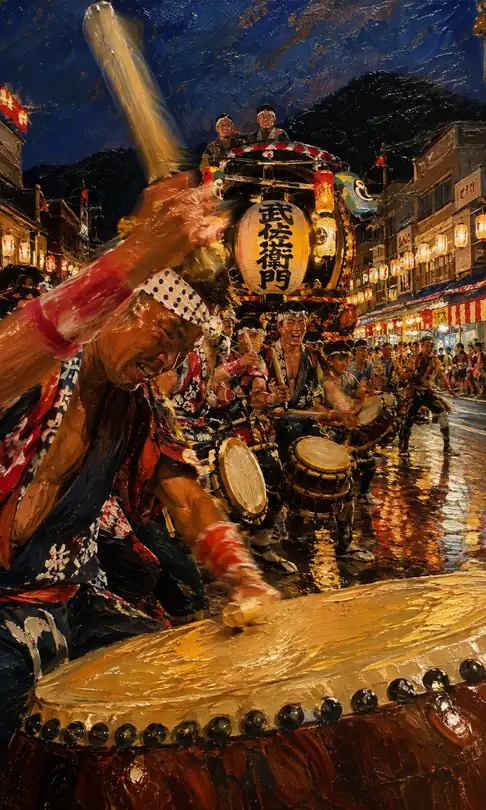 Sweating Arms and Resonating Soul Beats
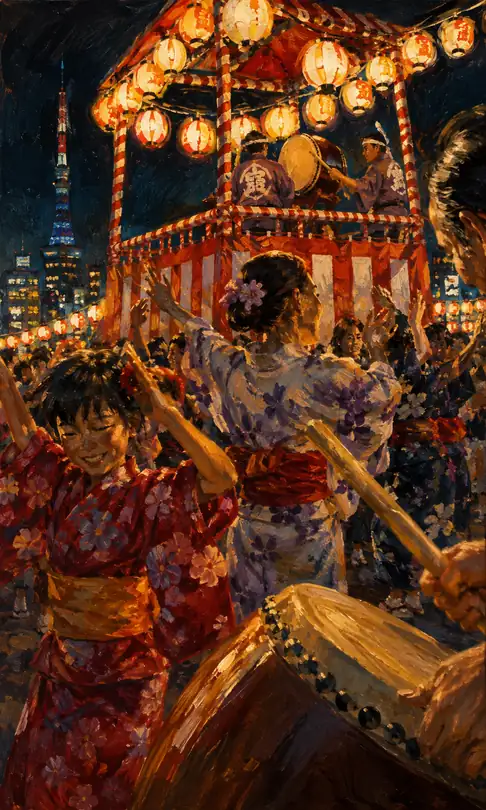 Bon Dance and Drums Resonating Under Tokyo Tower and Lantern Tower
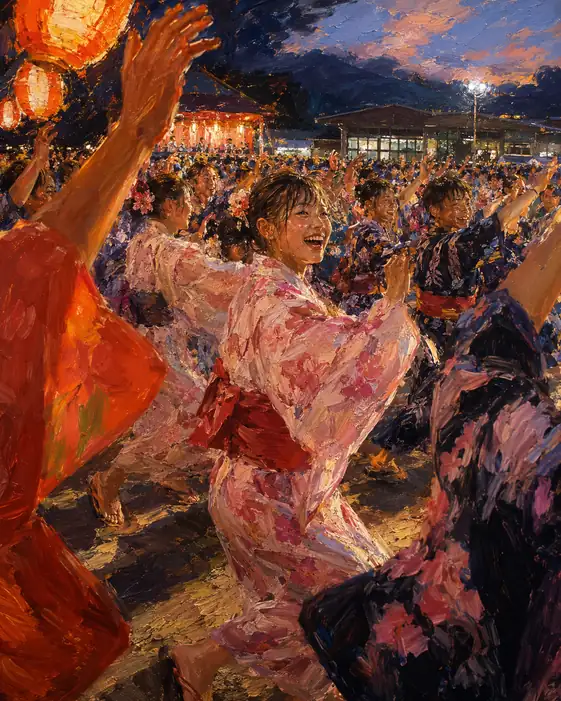 Pink Yukata Smile and Bon Dance Ring in the Twilight Square
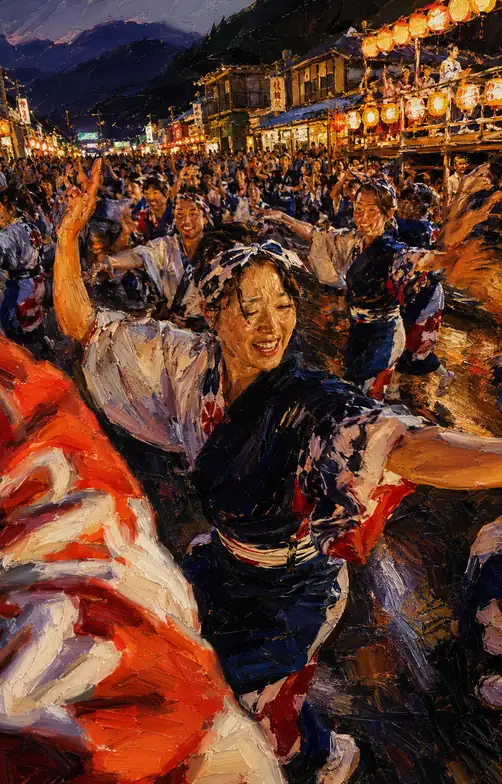 Circle of Smiles Dancing in Evening Breezes
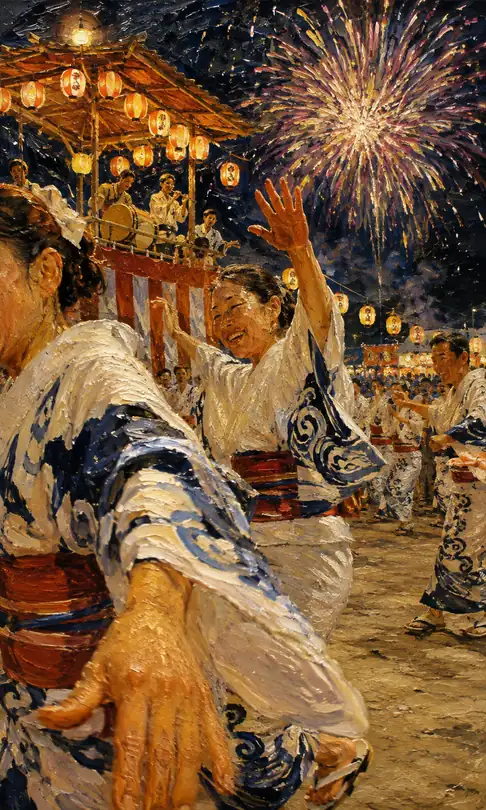 Bon Dance Dancers in Wave-Patterned Yukata Under Lanterns and Fireworks
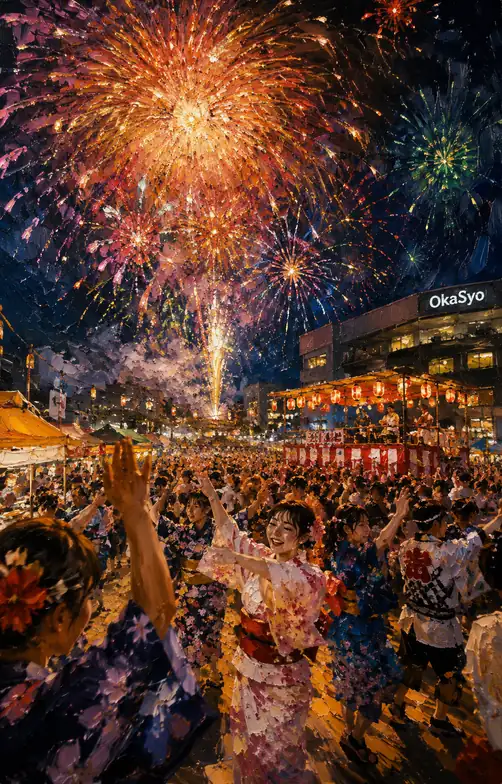 Pink Yukata Joy Dancing Under Tower Lanterns and Grand Fireworks
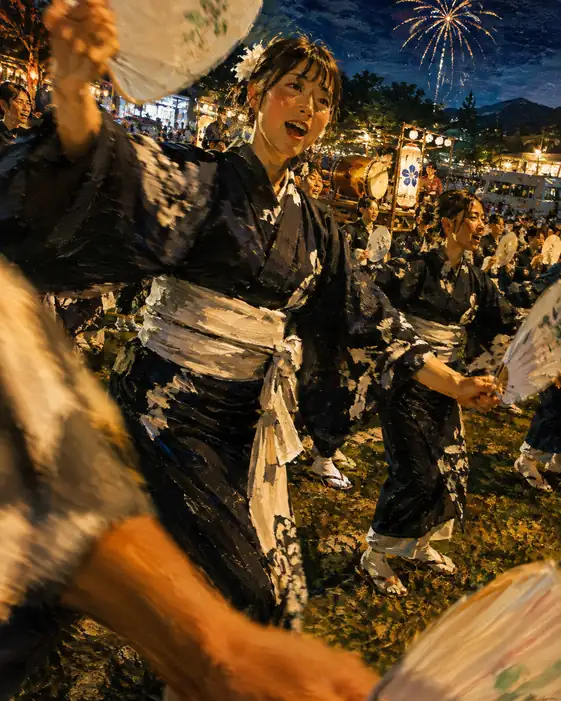 Swaying Fans and Joyful Summer Steps
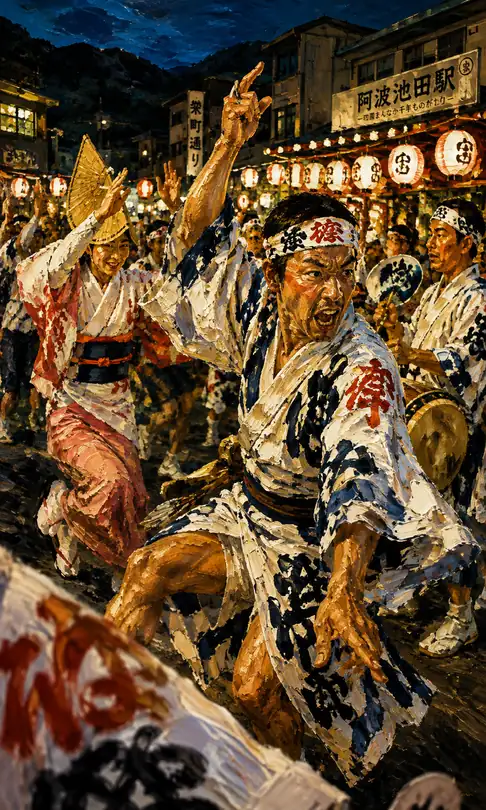 Dynamic Male Dancer and Straw-Hatted Woman Dancing Before Awa-Ikeda Station
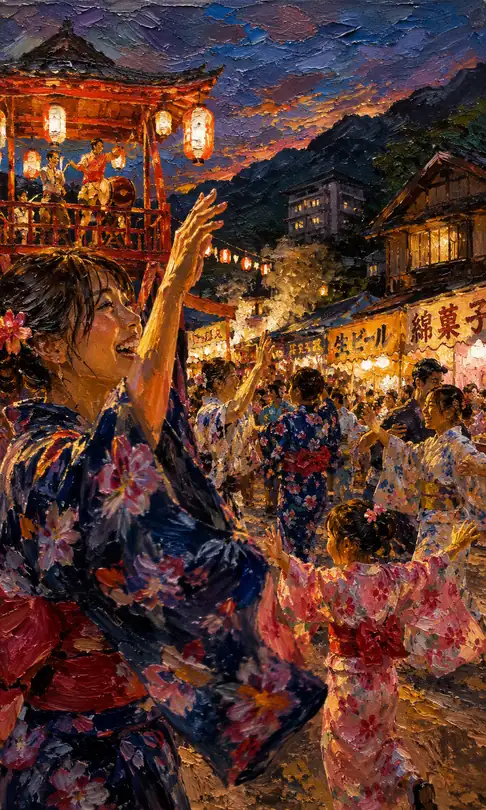 Bon Dance Energetically Dancing Under Spa Town Lanterns and Stalls