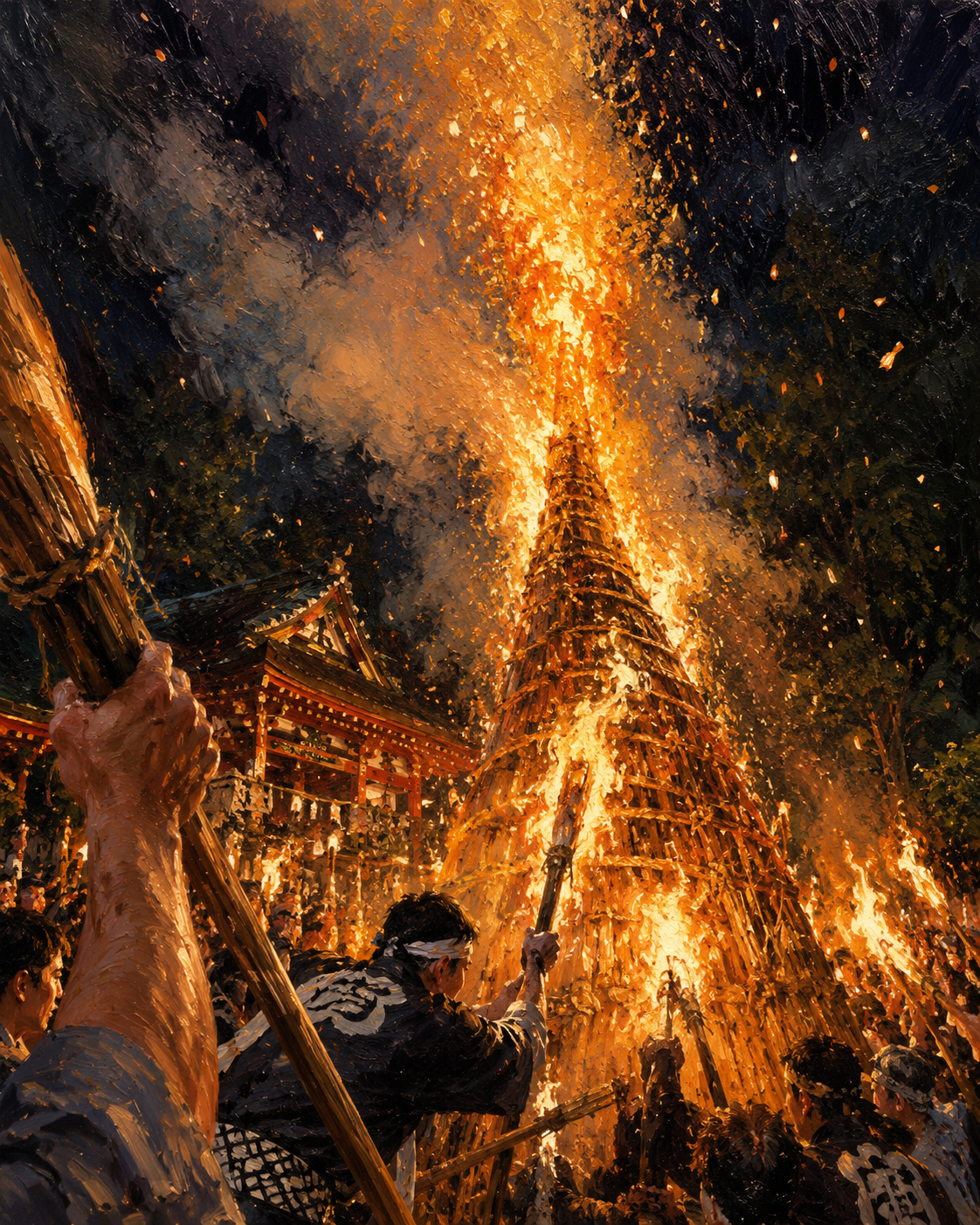
Column of Flames Piercing the Night Sky
Critique
Introduction This oil-like fire-festival scene shows a conical wooden tower burning before a shrine while attendants control it with poles. Flames exceed the frame and sparks fill the grove. A gripping hand, visible latticework, and vermilion architecture bring heat and devotion within arm's reach. Description Slender timbers cross repeatedly to form the central cone, now wrapped from base to summit in white-yellow and orange fire. A man in a white headband and navy coat faces away, directing a short pole toward the base. More marked coats gather rightward. At left, a bare forearm grips a vertical pole beside cropped bundled material. A gabled red shrine and participants remain visible through brown-gray smoke and sparks against black-green trees. Analysis The burning triangle establishes the axis, paralleled by pole and arm. A horizontal shrine roof interrupts these rising lines and structures the eruption. White, orange, and red concentrate centrally within navy, black, and green. Impasto describes lattice as brown strokes, fire as torn vertical light, smoke as scumbled gray, and embers as points. Low viewpoint and upper cropping amplify height. Interpretation and Evaluation Visible order inside the flames presents the event as a constructed ritual rather than uncontrolled disaster. Gripping hands and figures approaching the base convey skilled labor and danger. The shrine prevents the scene from becoming a generic bonfire. Orange light on skin, smoky timber, and charred sections make heat spread convincingly through space. Conclusion Fire column, timber, poles, attendants, shrine, and forest share one upward motion. The white-hot summit overwhelms first, but headbands, coat lettering, fingers, and joints disclose collective work. Vertical-horizontal and warm-dark contrasts are clear. The painting values dangerous beauty while retaining structure and bodily responsibility.
Same Subcategory
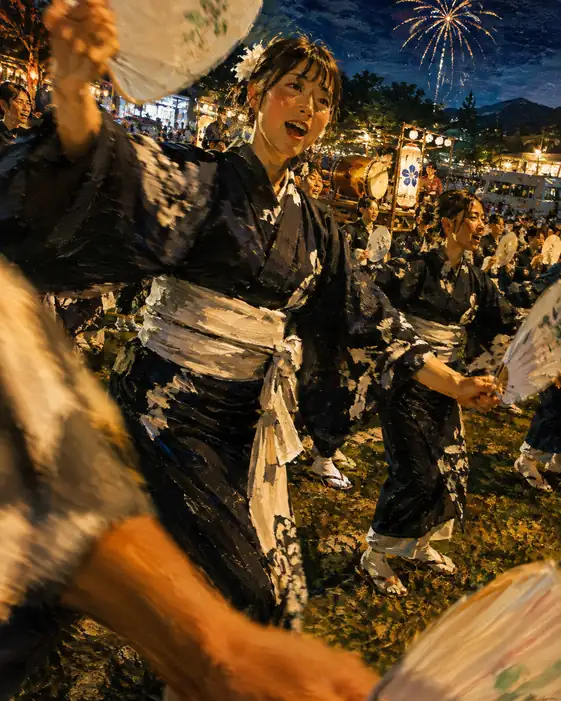 Swaying Fans and Joyful Summer Steps
Similar Artworks
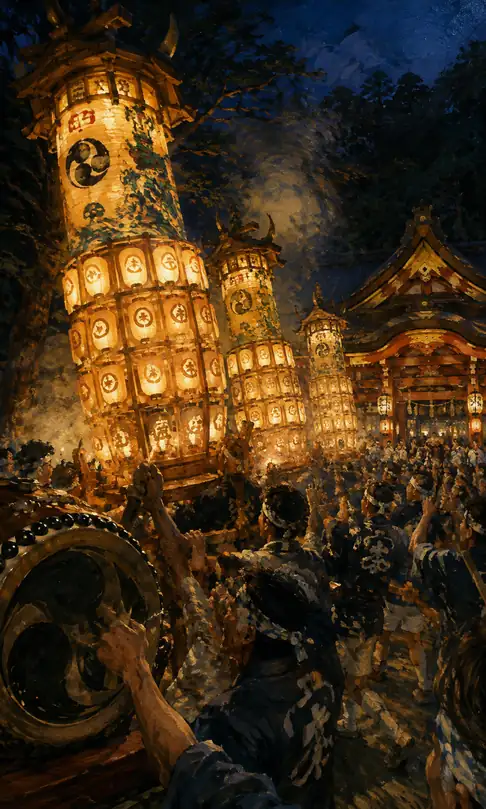 Sacred Tower Lights Illuminating the Shrine
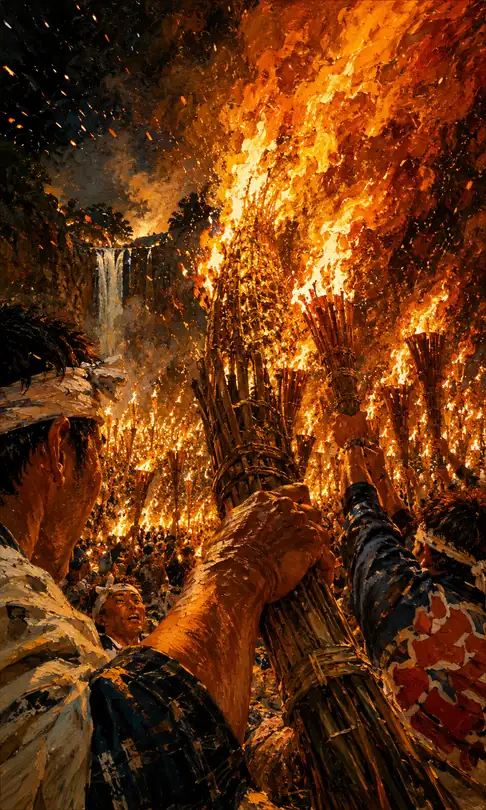 Sacred Flames Scorching the Holy Waterfall
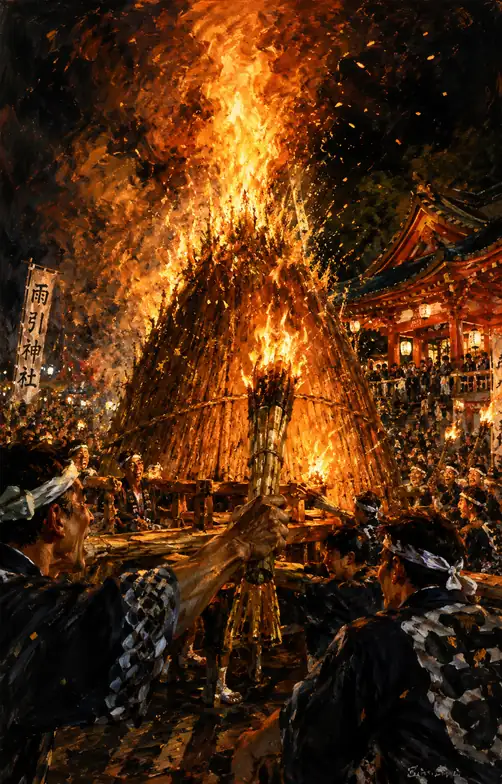 Massive Sacred Torches Purifying the Night Shrine
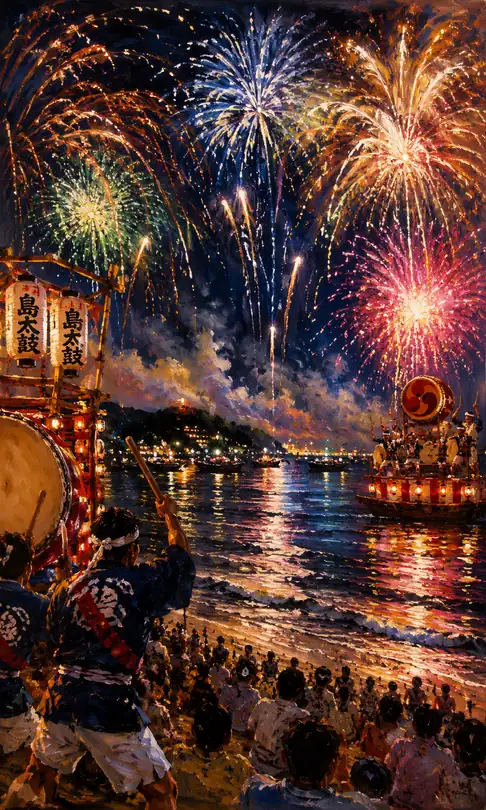 Island Taiko Drums and Festive Boat Resonating Under Fireworks
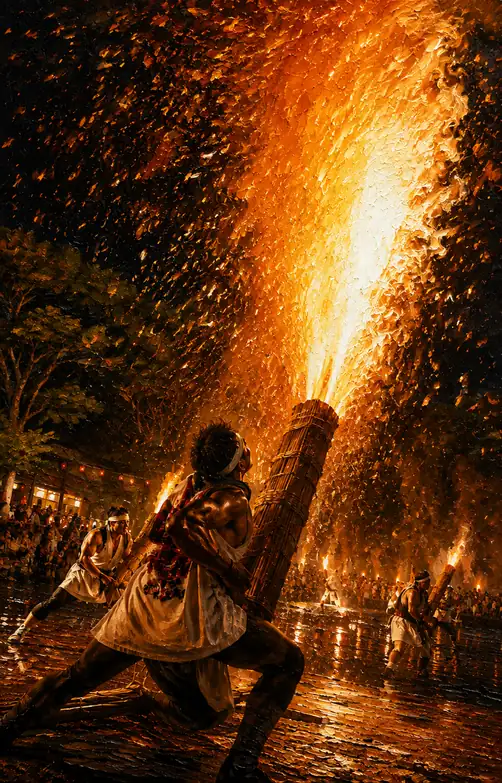 Golden Column of Fire and Men Holding Tezutsu Fireworks
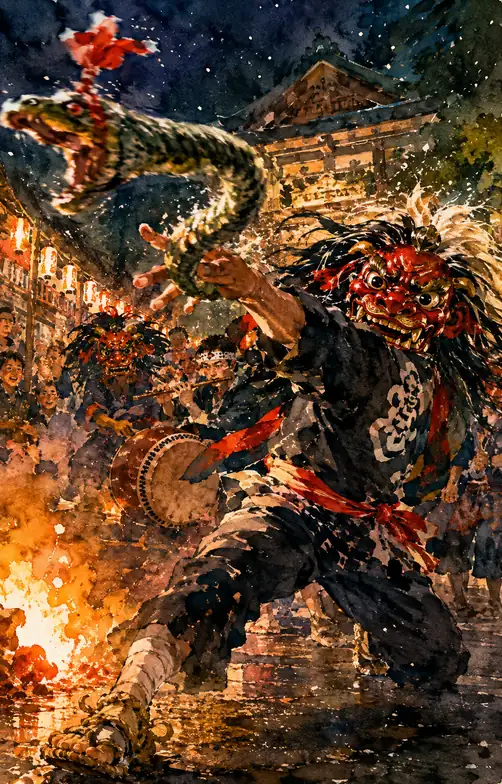 Red-Masked Lion Dancing Freely Before the Bonfire Flame
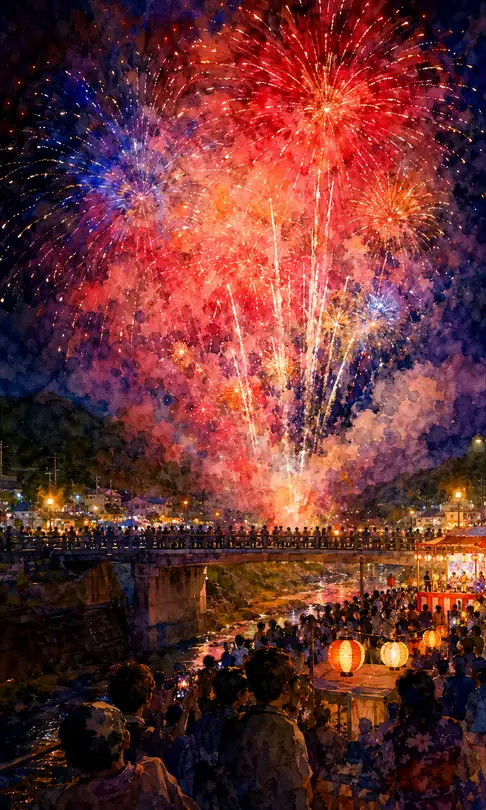 Scarlet Canopy Shrouding the Ancient Bridge
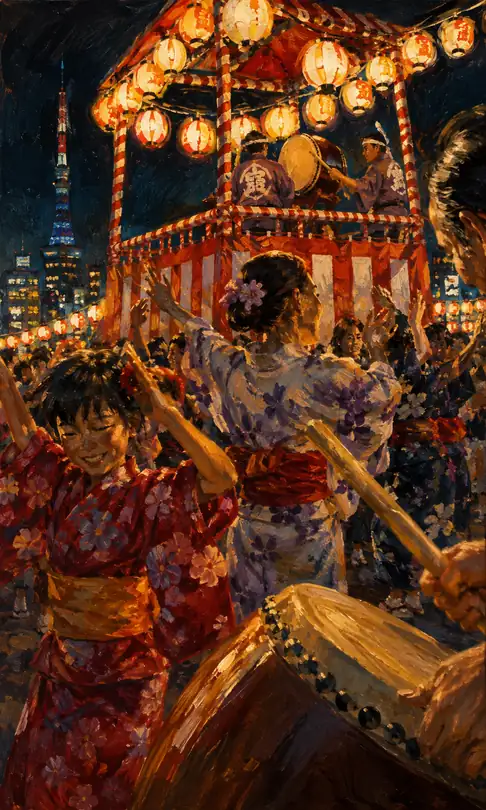 Bon Dance and Drums Resonating Under Tokyo Tower and Lantern Tower
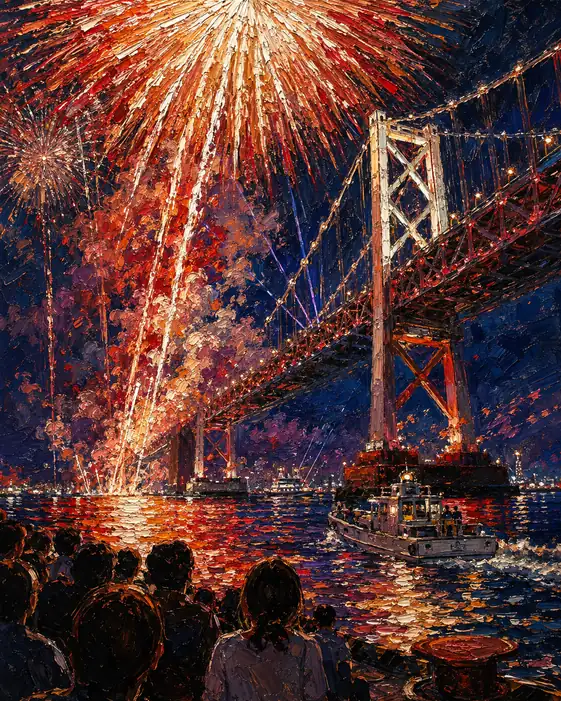 Spectators at the Harbor Looking Up at Grand Fireworks and Bay Bridge
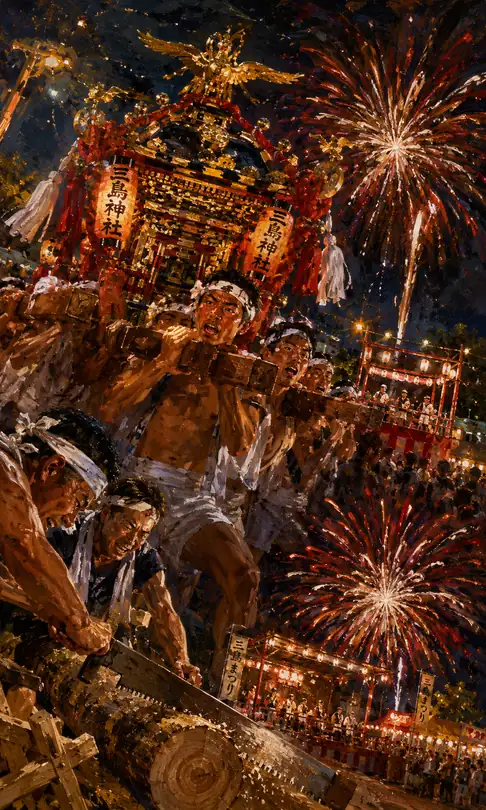 Tri-Island Shrine Phoenix Mikoshi and Men Sawing Logs in Festival Heat