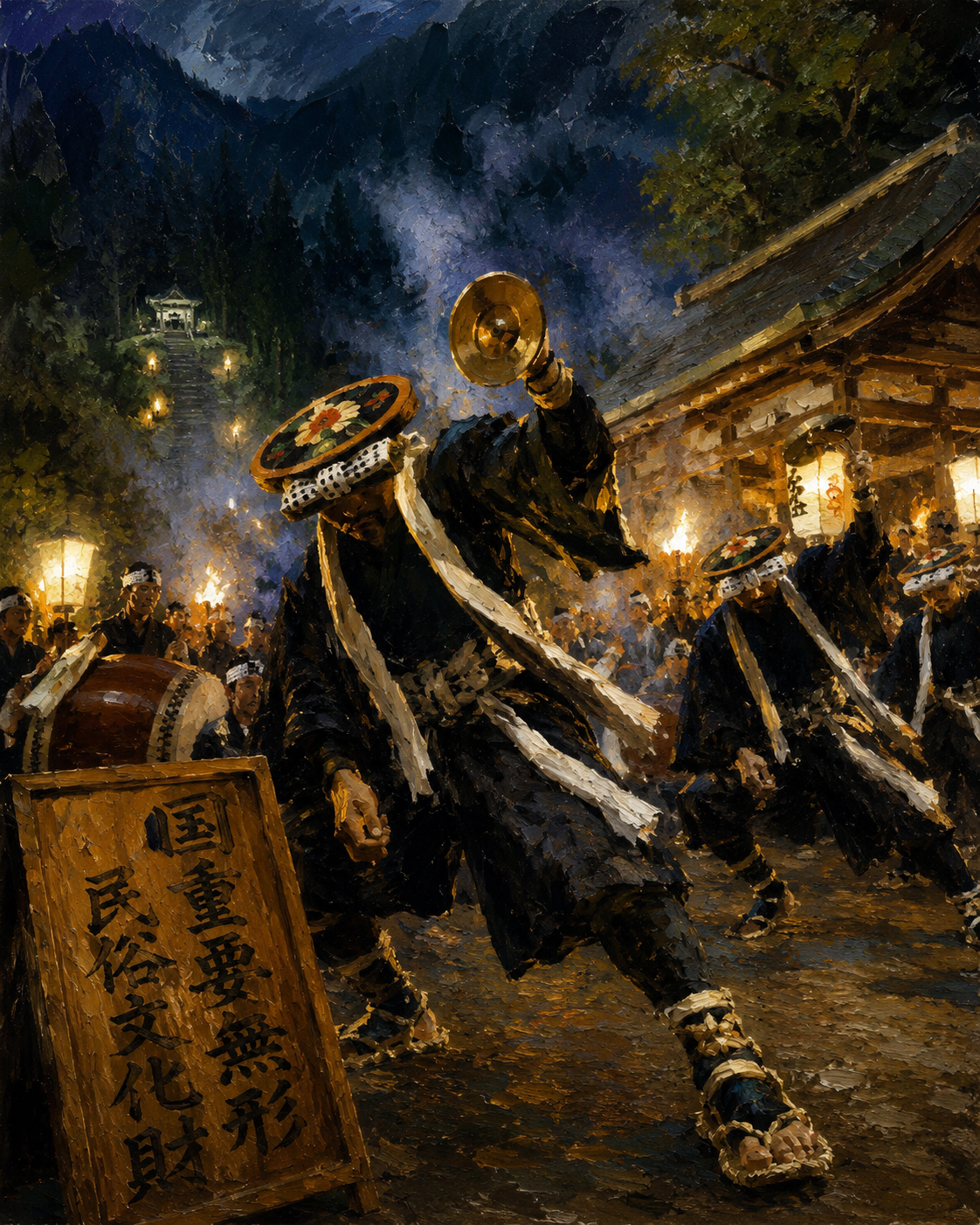
Prayers of the Mythic Masked Dancers
Critique
Introduction This oil-like scene depicts a nocturnal folk performance in a mountain sanctuary. Performers wearing flat floral headpieces step low to gong and drum rhythms. The central figure raises a brass-colored gong while lanterned stairs, smoke, wooden eaves, and a cultural-property sign combine spectacle with solemnity. Description The principal performer wears black with white streamers and a round hat painted with red-white flowers. One hand lifts a gong; the body sinks diagonally onto a rope-wrapped foot. Matching figures continue behind, while musicians strike a horizontal drum. A foreground board reads “Important Intangible Folk Cultural Property.” Lamp-edged stairs climb toward a shrine, and light escapes from a hall through smoke. Analysis The lowered torso and extended leg create a downward diagonal, opposed by gong and ascending stairs. Hat, gong, and drum repeat circles in different materials. Black and forest green support restricted white, yellow, and red accents. Impasto differentiates straw, cloth, timber, and vapor, while the gong alone receives smooth highlights. The tilted sign reinforces the low viewpoint. Interpretation and Evaluation Shadowing the face makes inherited movement more important than portraiture. Yet fingers, ankle, and bent knee reveal physical strain, presenting tradition as labor rather than symbol. The sign juxtaposes institutional preservation with live performance. Shrine, hall, stairs, smoke, and lamps establish a devotional setting without excessive mystification. Conclusion Performer, gong, drum, sign, stairs, and mountain architecture form a tense diagonal night scene. Floral hat and golden metal attract attention first, but streamers, foot bindings, headbands, and step lights reveal discipline and terrain. Repeated circles and dark tonal gradations are controlled. The work successfully joins cultural designation with a body actively striking the ground.
Same Subcategory
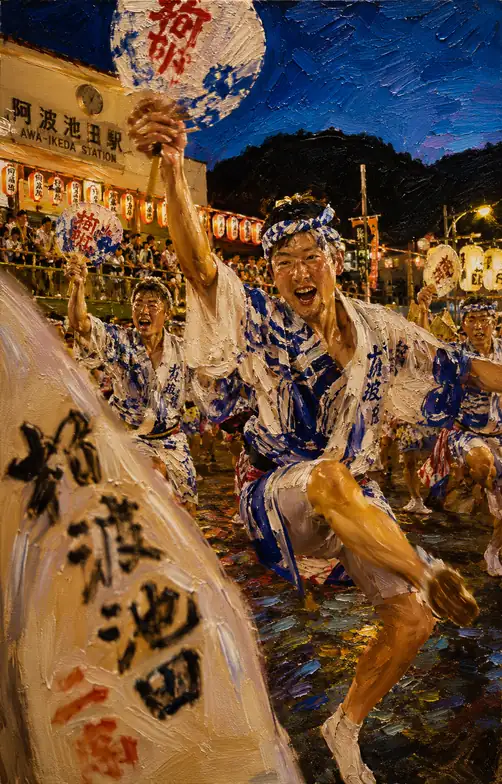 Dynamic Steps and Flying Paper Fans
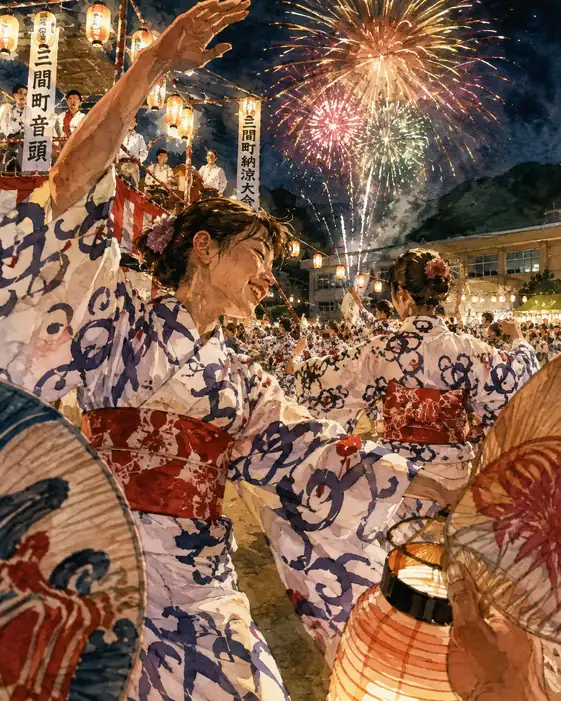 Smiling Evening Dance to Festival Melodies
Similar Artworks
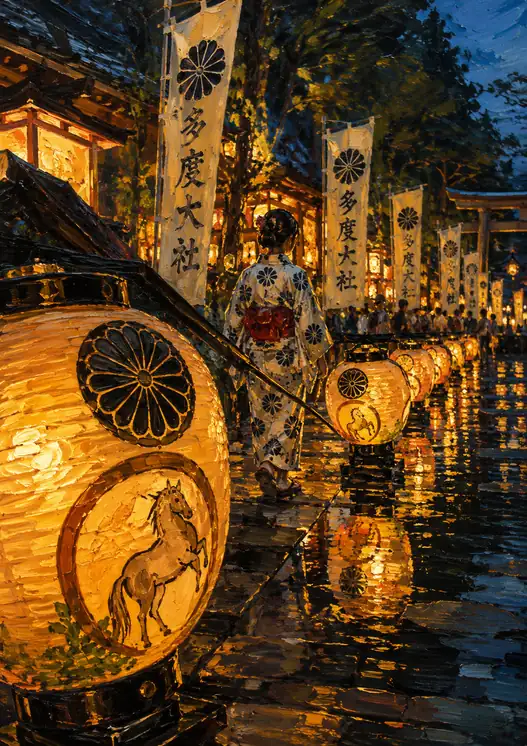 Chrysanthemum Yukata Walking the Rain-Washed Path of Tado Shrine
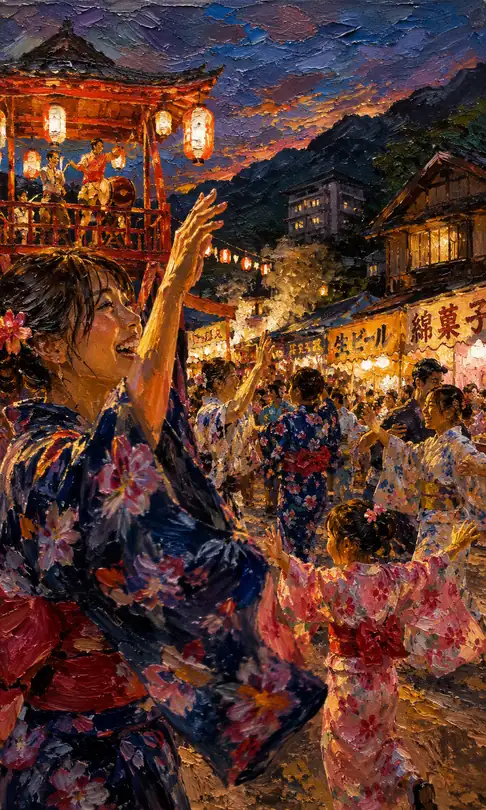 Bon Dance Energetically Dancing Under Spa Town Lanterns and Stalls
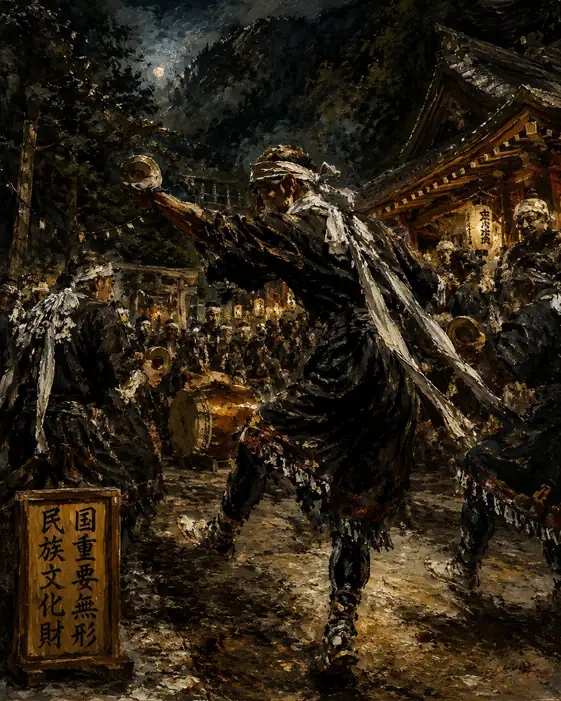 Metallic Echoes Piercing the Moonlit Silence
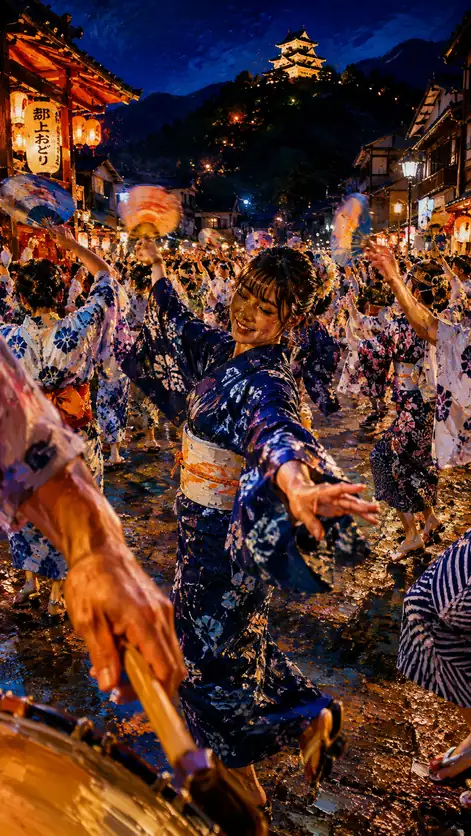 Castle Towers Guiding the All-Night Dance
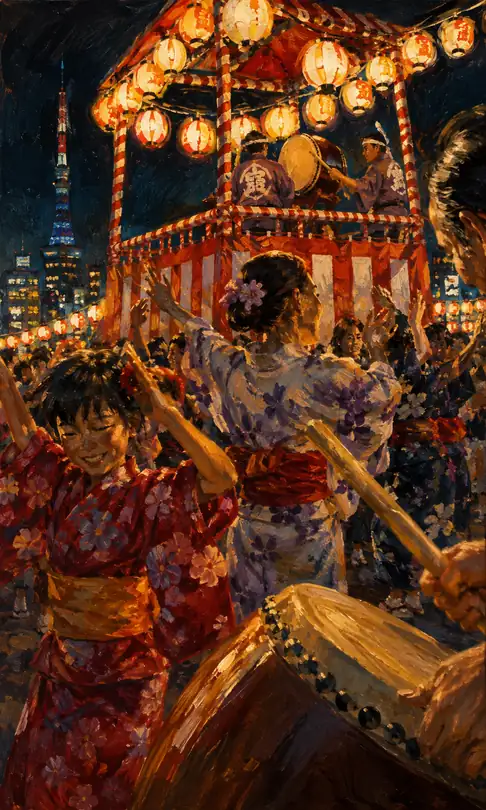 Bon Dance and Drums Resonating Under Tokyo Tower and Lantern Tower
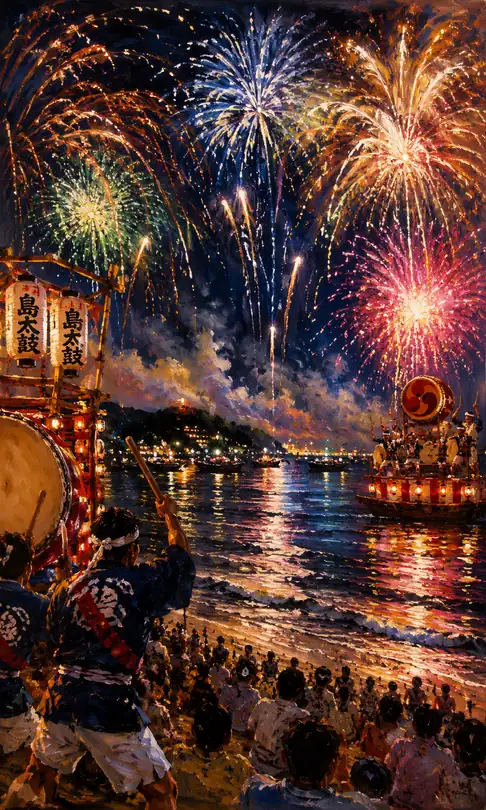 Island Taiko Drums and Festive Boat Resonating Under Fireworks
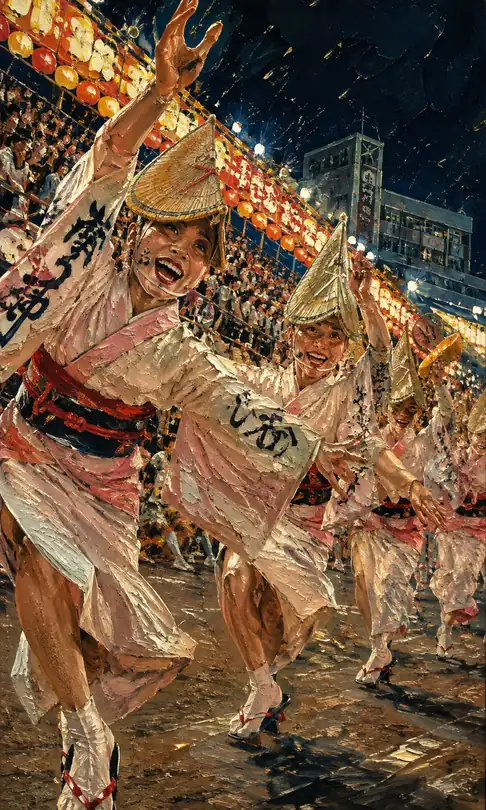 Straw-Hatted Awa Odori Dancers Advancing Through Lanterns and Cheers
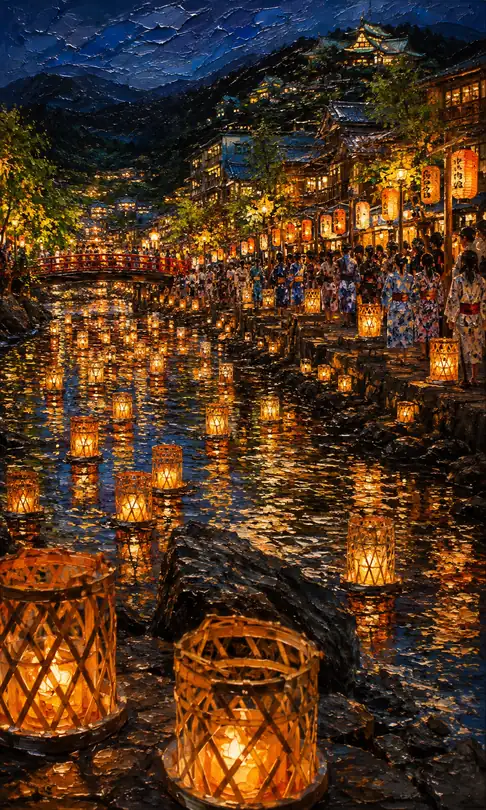 Bamboo Basket Lanterns Floating on the Hot Spring River
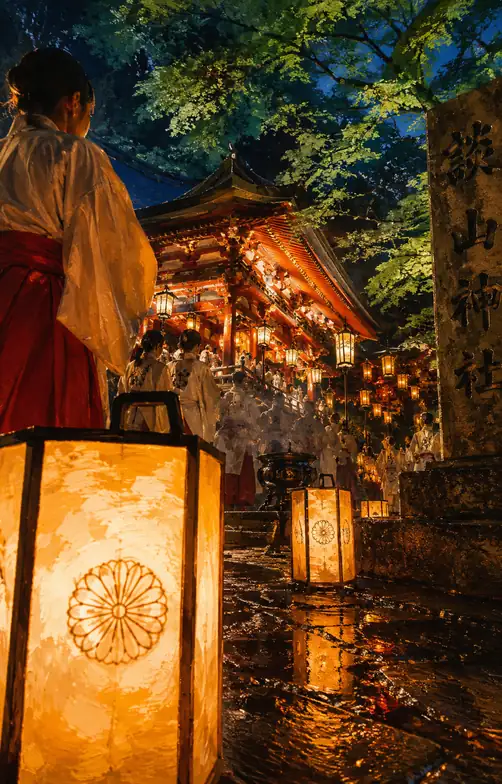 Chrysanthemum Lanterns and Maiden Procession at Tanzan Shrine
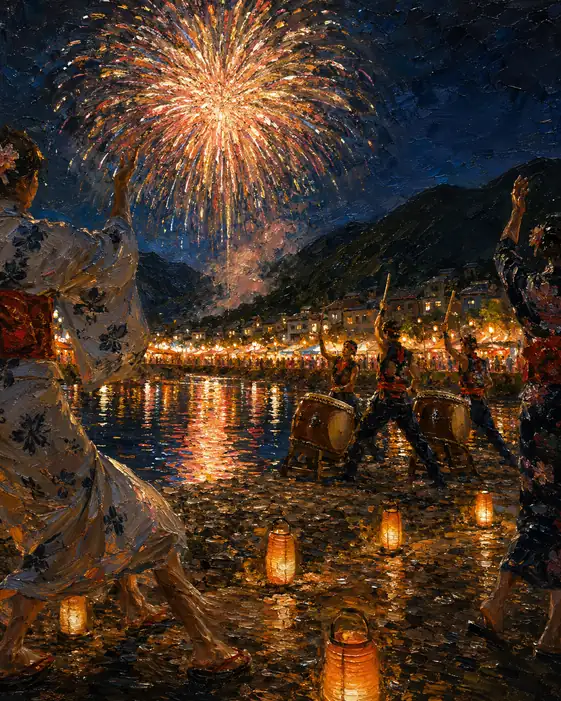 Golden Bloom Echoing River Lanterns and Taiko Beats