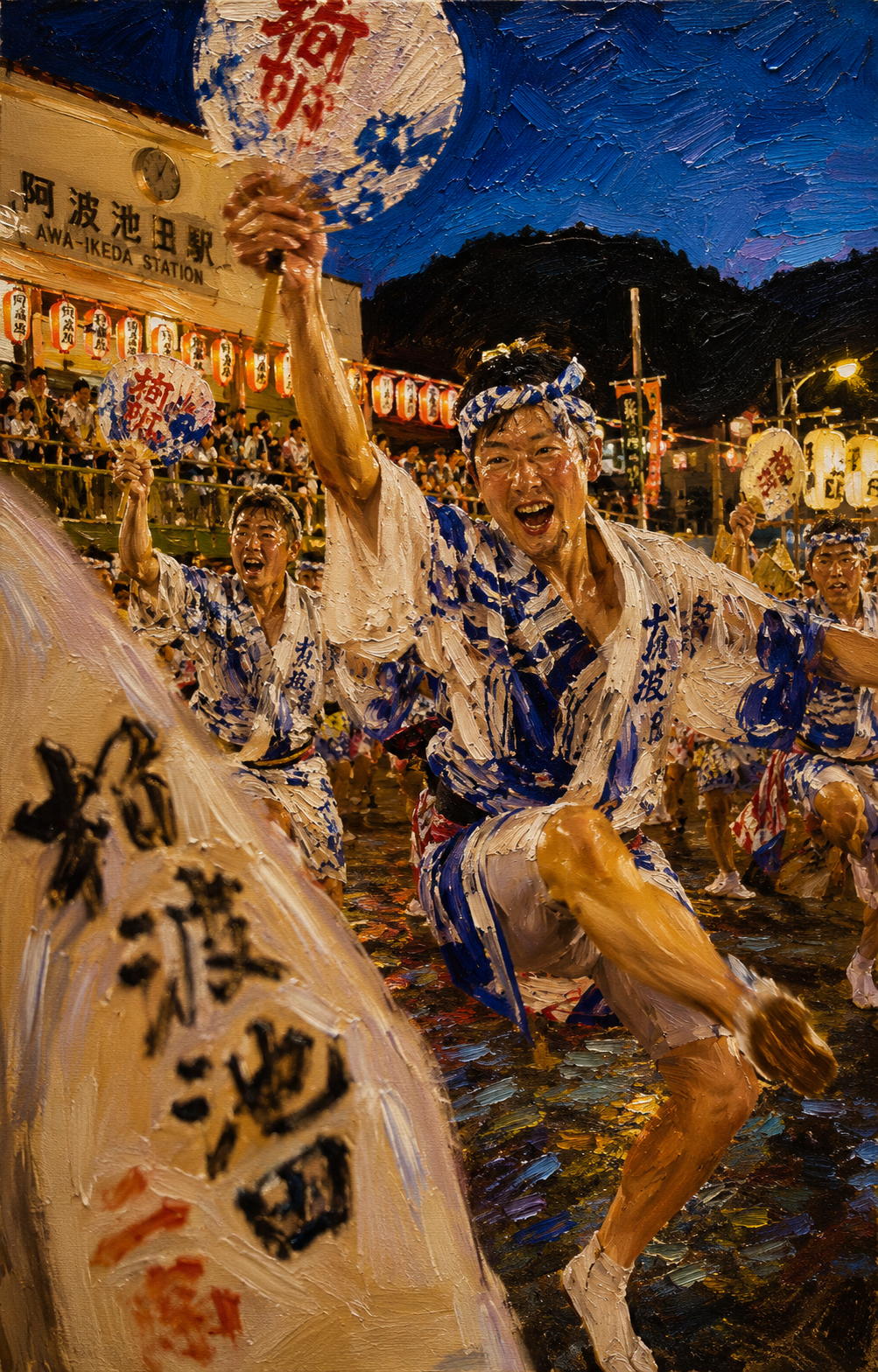
Dynamic Steps and Flying Paper Fans
Critique
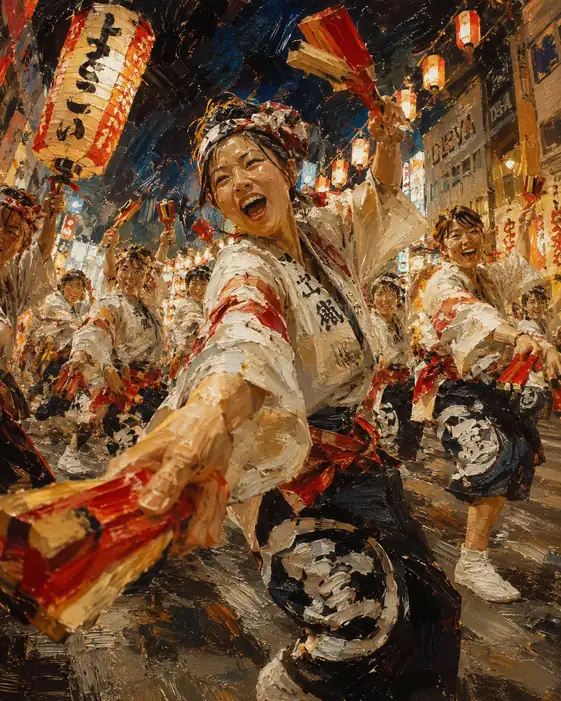
Introduction This painting presents a vigorous street dance before a railway station at night. A male dancer lunges into the foreground with one knee raised and a round fan held overhead, while fellow performers and spectators fill the station plaza. The close scale turns local celebration into an encounter with individual energy. Description The central dancer wears a blue-and-white patterned robe, headband, red waist tie, white socks, and sandals. His open mouth and extended arms form an pose. Another man lifts a fan at left, a third enters at right, and a large cropped fan blocks the lower corner. Station lettering, a clock, lantern rows, a dark hill, and wet pavement complete the setting. Analysis The high fan, spread arms, raised knee, and grounded foot create a zigzag that drives downward through the body. The oversized foreground fan counters this movement and deepens the space between viewer and dancer. Cobalt blue and white clothing stands against ochre architecture and warm lanterns, while thick impasto distinguishes sweat, cloth, paper, pavement, and the heavy night sky. Interpretation and Evaluation The man’s direct smile makes disciplined footwork appear spontaneous and inviting. Repeated fans and matching garments identify a shared form, yet differences in pose keep the dancers from becoming a pattern alone. The anatomy is persuasive, the color structure is clear, and the audacious cropping transforms an ordinary station forecourt into a theatrical civic stage. Conclusion The work joins recognizable modern surroundings to the continuity of festival dance. Station letters, clock face, fan calligraphy, knotted headband, raised sandal, and reflected lights support its descriptive precision. What first seems like a single exuberant leap gradually reveals the coordination of performer, audience, architecture, and tradition.
Same Subcategory
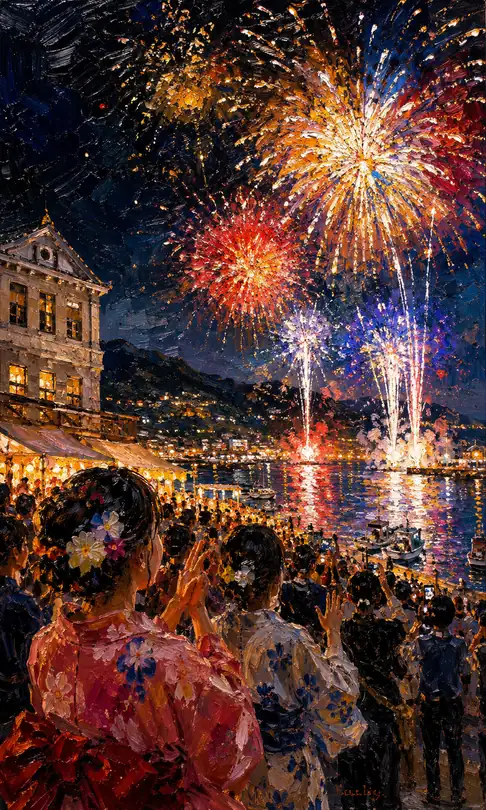 Starmine Blooms Over the Harbor Mansion
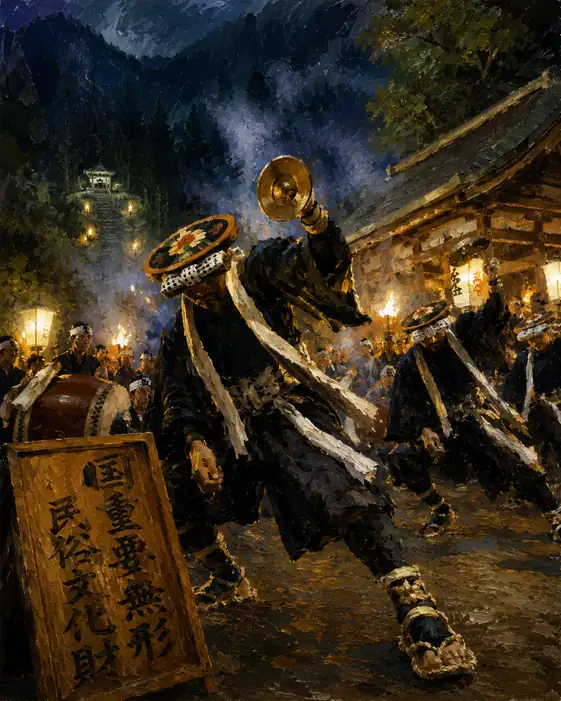 Prayers of the Mythic Masked Dancers
Similar Artworks
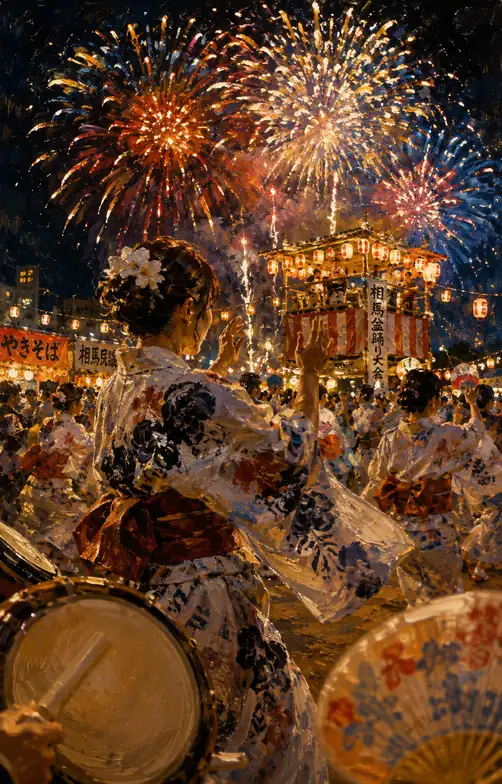 Graceful Hands Dancing Under Sky Fireworks
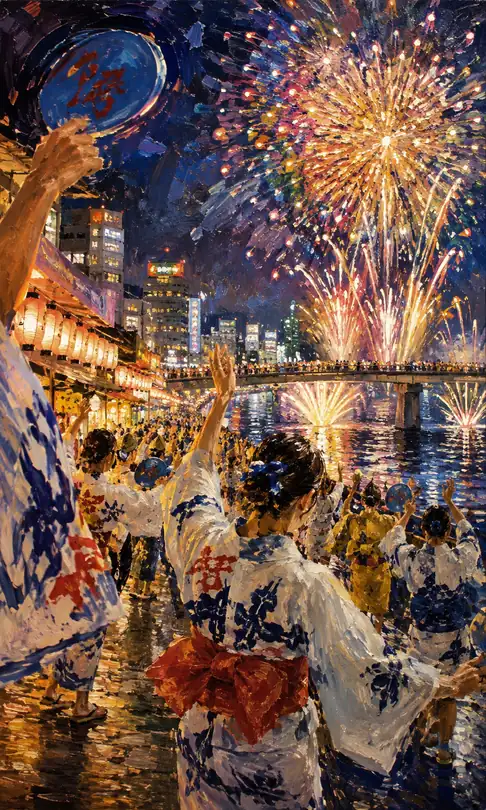 Yukata Dancers Raising Fans by the River Under Pink-Gold Fireworks
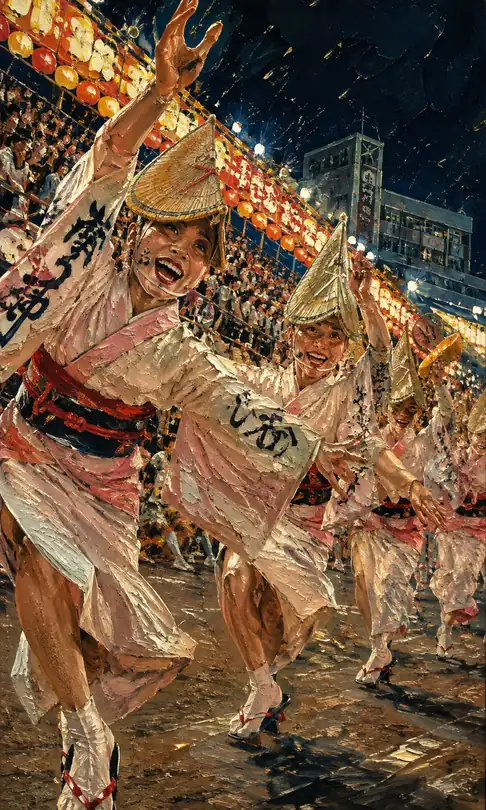 Straw-Hatted Awa Odori Dancers Advancing Through Lanterns and Cheers
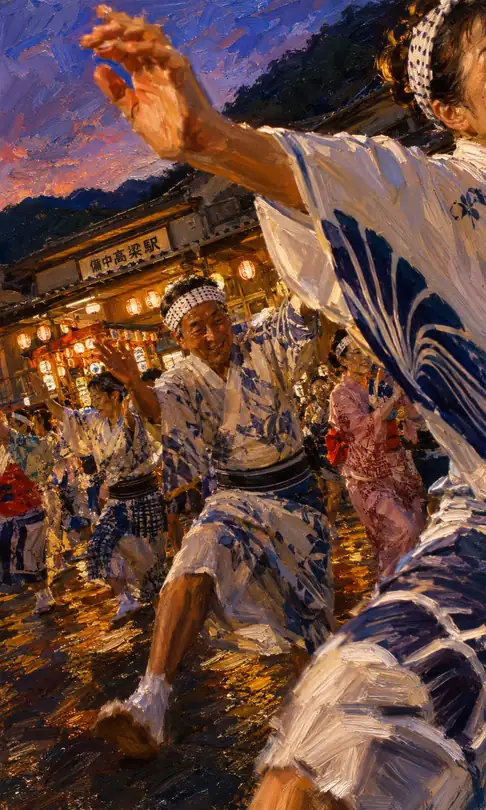 Dancing Footsteps in the Festival Dusk
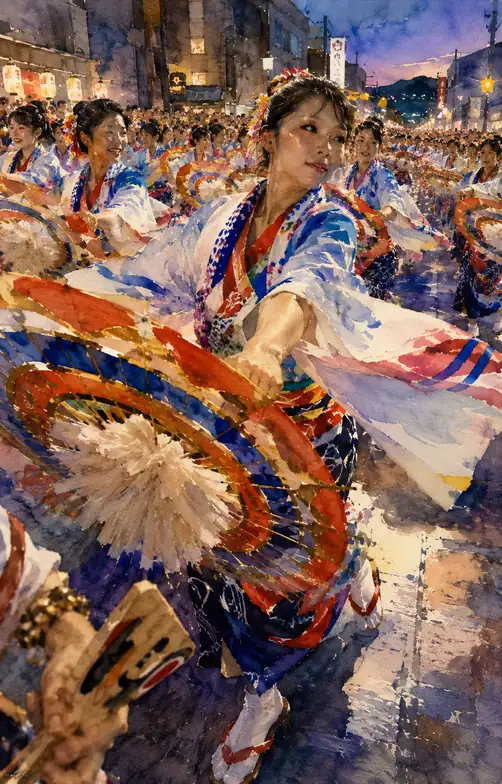 Twilight Sky Painted with Ringing Umbrella Bells
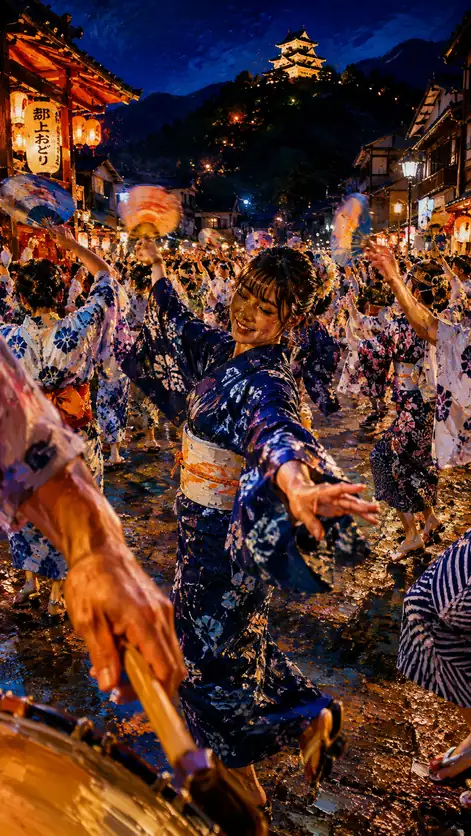 Castle Towers Guiding the All-Night Dance
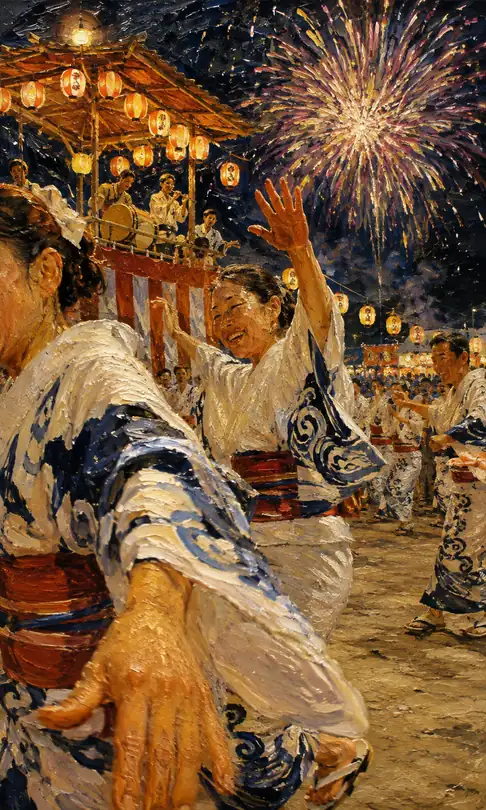 Bon Dance Dancers in Wave-Patterned Yukata Under Lanterns and Fireworks
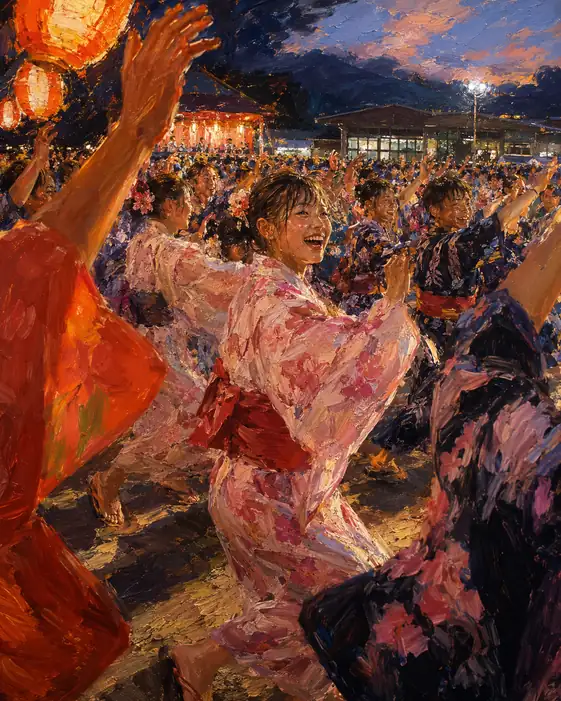 Pink Yukata Smile and Bon Dance Ring in the Twilight Square
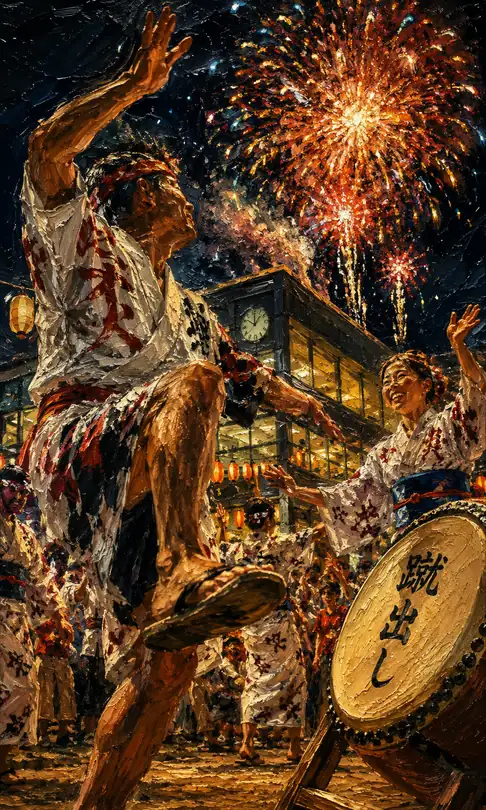 Dynamic Leap Dance by the Great Drum Under the Clock Tower Sky
 Beating Naruko and Radiant Smiles Under Street Lanterns