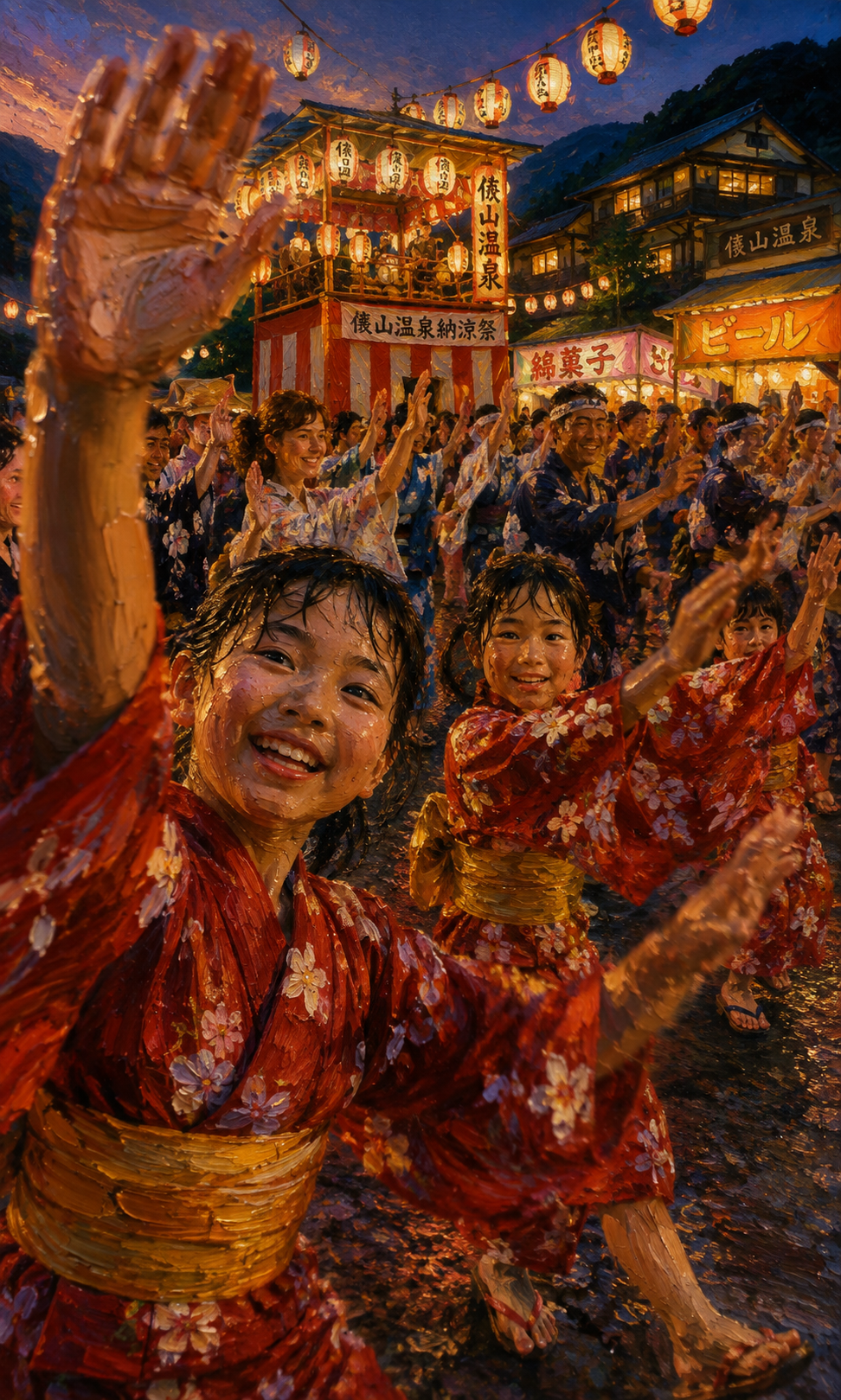
Innocent Smiles in the Hot Spring Town
Critique
Introduction This vertical painting enters a summer dance at a mountain hot-spring festival. Two girls in red floral yukata smile near the foreground while a crowd repeats their raised-hand gesture. The close angle turns communal choreography into an exchange of energy. Description The nearest girl fills the lower left, with wet hair, golden sash, and both palms enlarged by proximity. A second child steps forward at center right, her sleeve extended across her body. Behind them, adults and children dance before a lanterned tower bearing the hot-spring festival name. Candy and beer stalls glow beside wooden inns, and strings of lanterns cross the blue evening sky. Analysis The nearest hands form a wide frame around the smiling face, while the second dancer establishes a diagonal toward the crowd. Repeated palms, sleeves, and lantern circles carry rhythm deep into the square. Red garments advance against blue mountains and sky; amber lamps bridge these complementary fields. Thick strokes describe damp skin, patterned cloth, muddy ground, wood, and paper with varied weight. Interpretation and Evaluation The image presents dance as a form learned by joining others rather than observing them. The girls' direct expressions invite the viewer, while rows of adults demonstrate continuity across ages. Bold foreshortening, coherent crowd organization, saturated red-blue color, and tactile brushwork produce persuasive vitality. Readable tower and shop signs add local specificity without interrupting motion, and wet surfaces make recent weather part of the physical experience. Conclusion At first the nearest child's smile seems to carry the entire scene, but closer viewing reveals how her open hands repeat throughout the square. The painting succeeds by joining individual delight to a visible structure of communal participation.
Same Subcategory
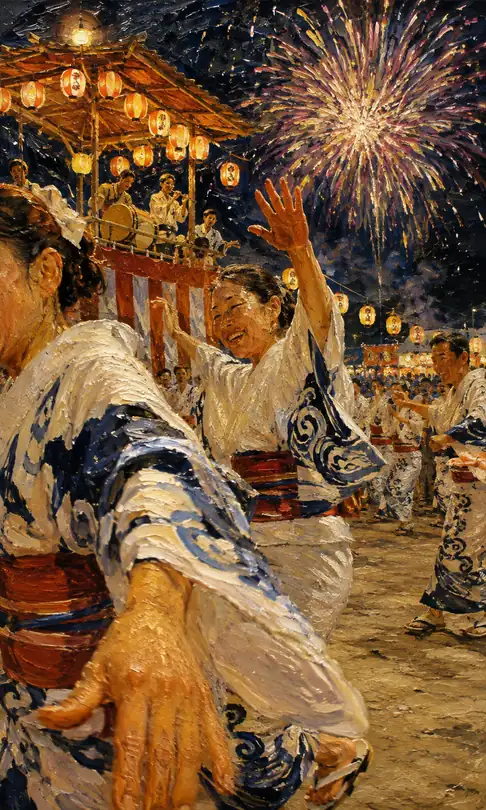 Bon Dance Dancers in Wave-Patterned Yukata Under Lanterns and Fireworks
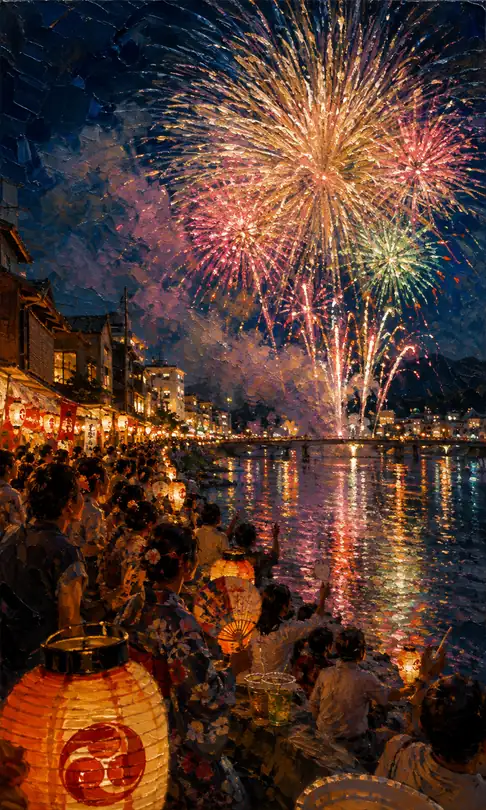 Lantern Warmth and Riverbed Sky Blossoms
Similar Artworks
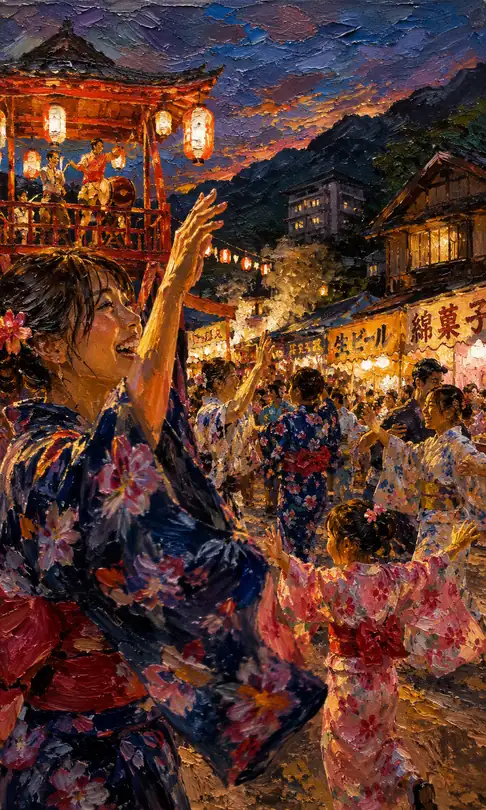 Bon Dance Energetically Dancing Under Spa Town Lanterns and Stalls
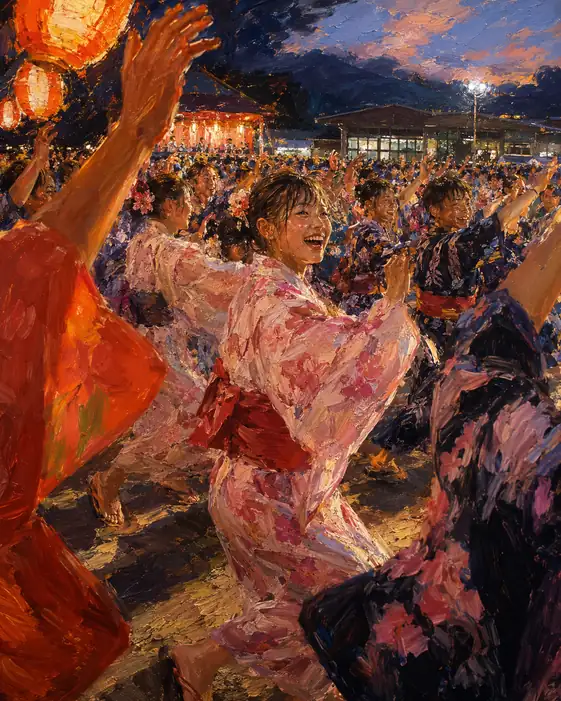 Pink Yukata Smile and Bon Dance Ring in the Twilight Square
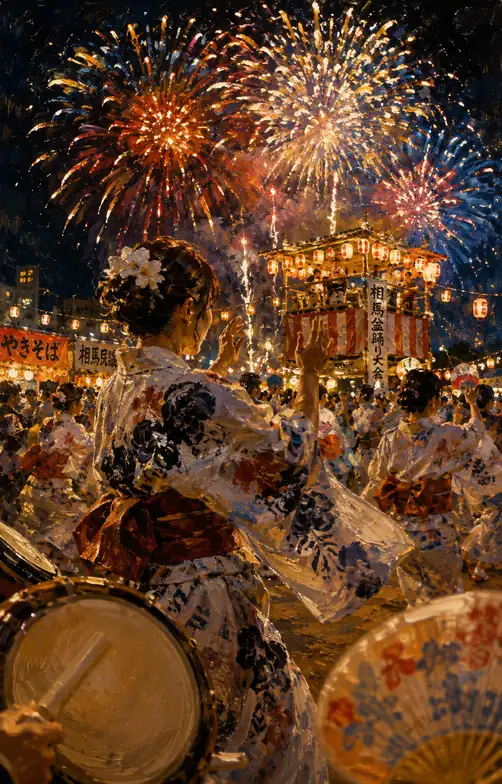 Graceful Hands Dancing Under Sky Fireworks
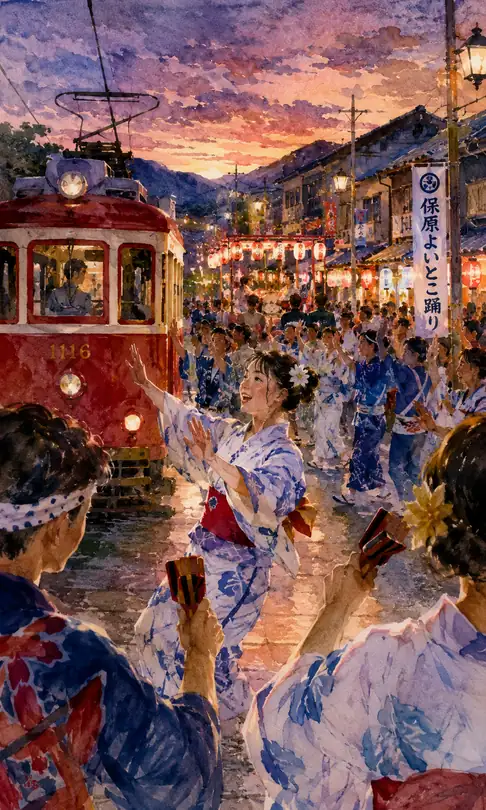 Hobara Yoitoko Dance Passing a Tram in the Sunset Street
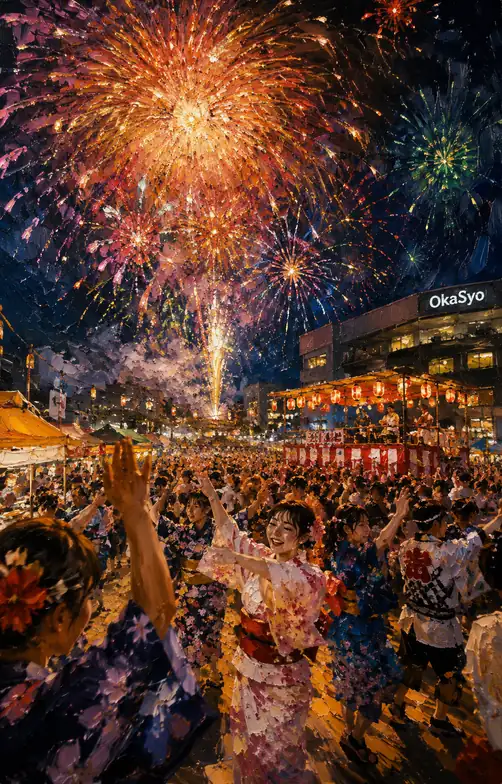 Pink Yukata Joy Dancing Under Tower Lanterns and Grand Fireworks
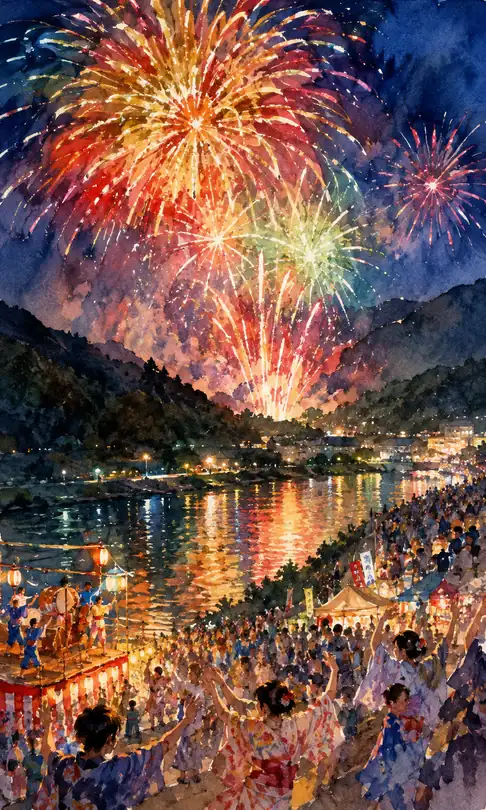 Festival Dance by the Tower and Colorful Fireworks Over the River Gorge
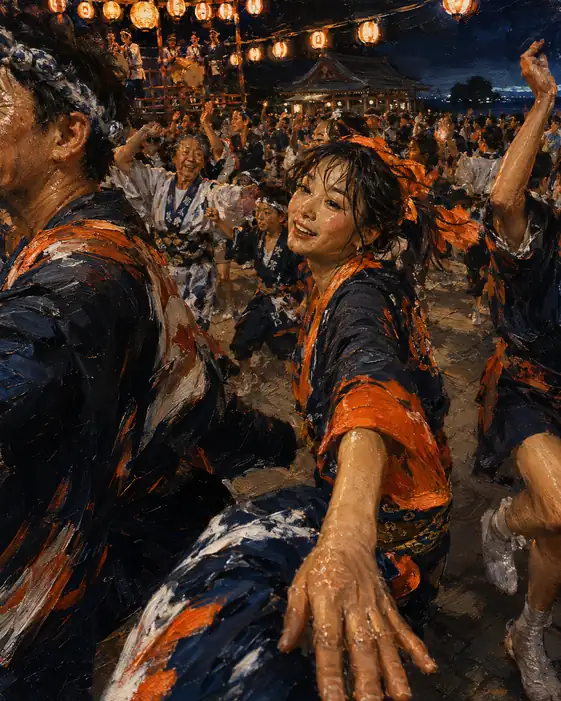 Smiles and Sweat Dancing Under the Lantern-Lit Yagura Tower
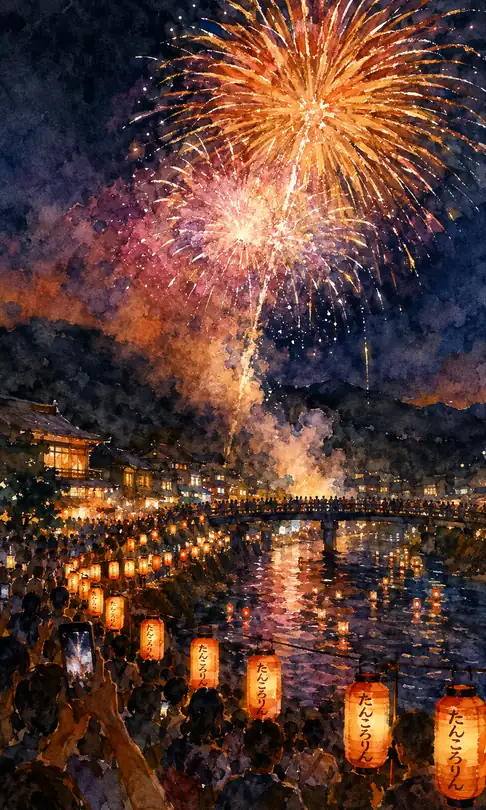 A Valley Night Spun by Floating Lanterns and Fireworks
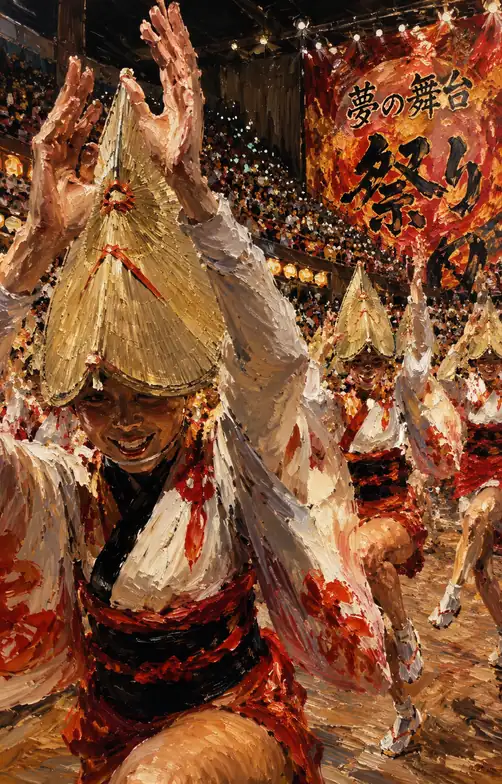 Awa Odori Dancers in Straw Hats Dancing on the Dream Stage
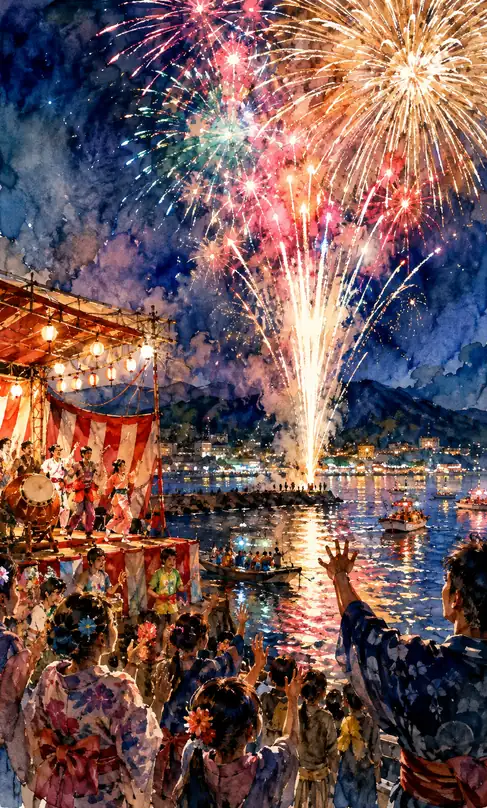 Harbor Stage and Hands of Joy Welcoming Grand Fireworks