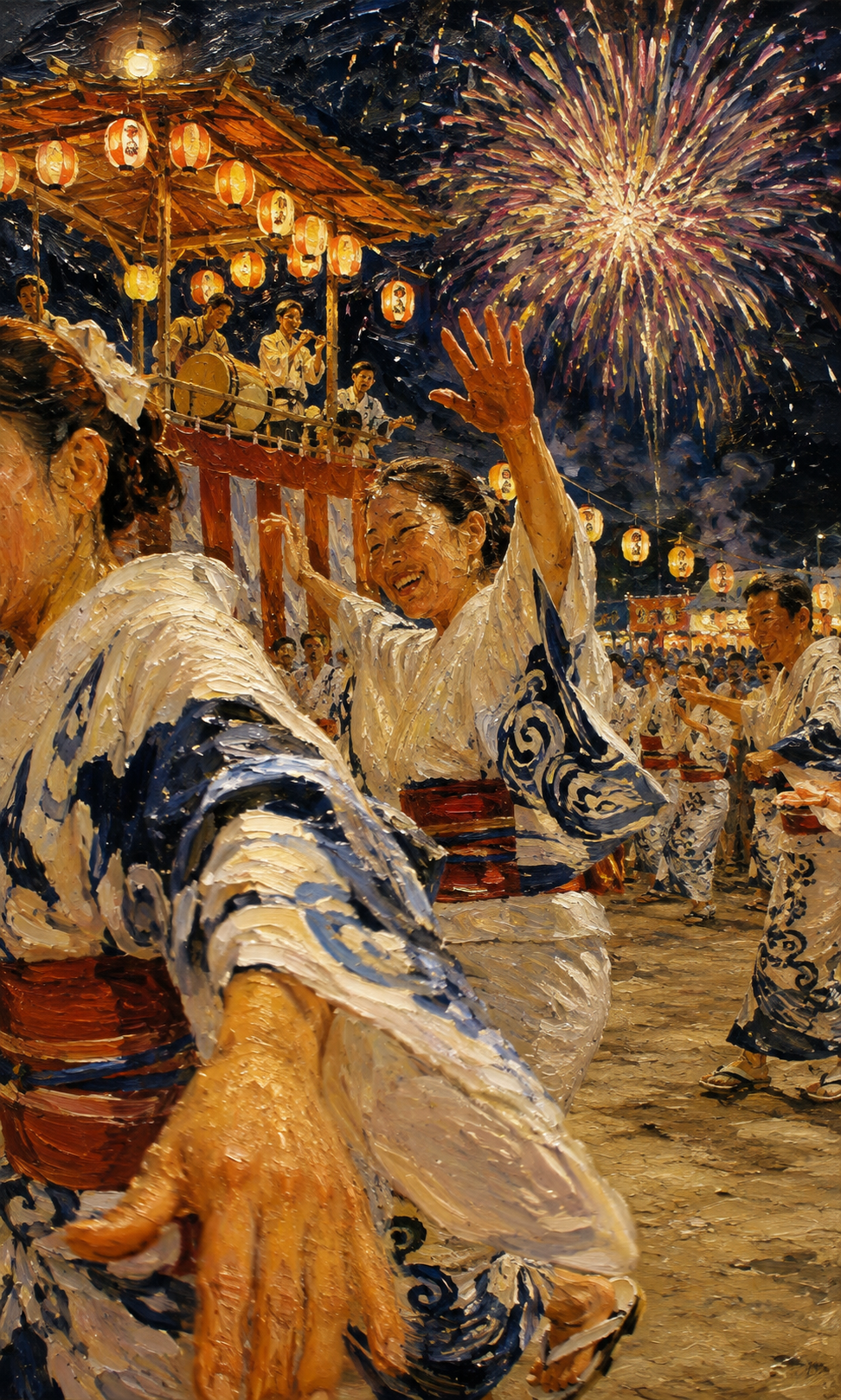
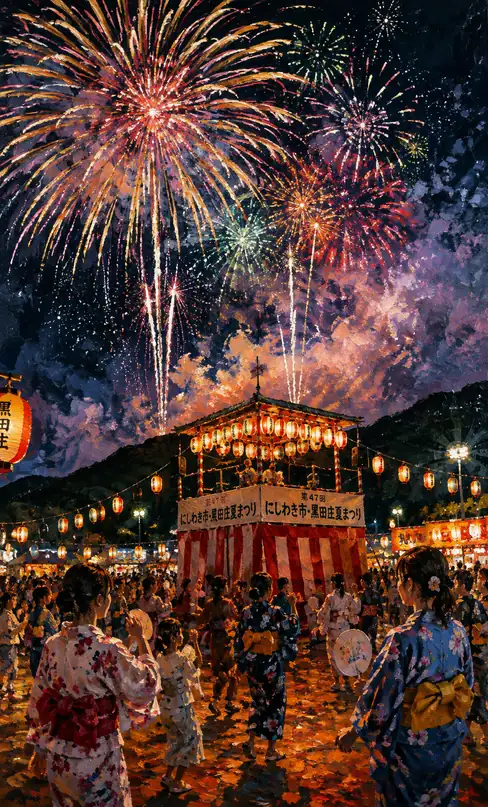
Bon Dance Dancers in Wave-Patterned Yukata Under Lanterns and Fireworks
Critique
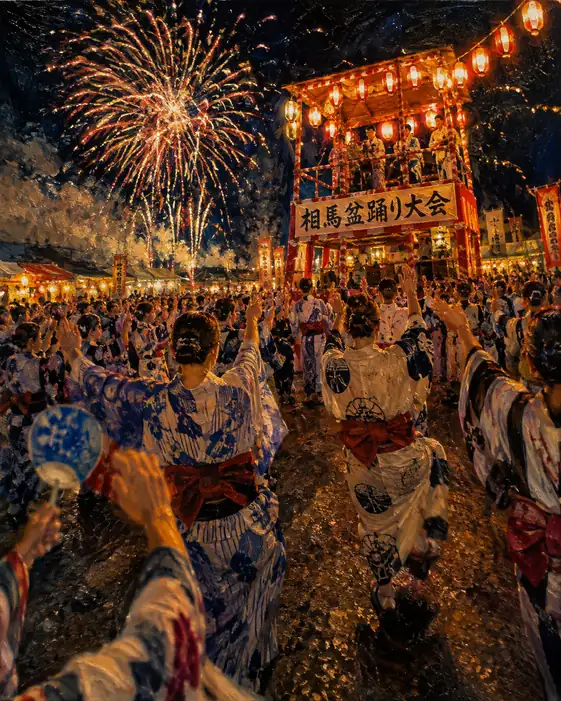
Introduction This oil-like festival painting enters the middle of a Bon dance, joining twisting white-and-indigo figures with fireworks overhead. A foreground shoulder and arm are boldly cropped, while a smiling woman raises her palm. Musicians on a lantern-lit tower, receding dancers, and gold-pink fire connect bodily proximity to the night sky. Description The central woman wears a white yukata patterned with navy spirals and a red sash. Bending her knees, she displays one palm and smiles through orange light. At left, another dancer's shoulder and extended arm leave the frame. Musicians occupy a wooden tower draped in red and white. Matching dancers continue beneath a gold, pink, and violet burst. Analysis The cropped arm leads diagonally through the raised palm toward the fireworks. The tower roof counters that direction. Repeated white and indigo unify the group; red-orange sashes, lanterns, and skin connect it to the warm sky. Heavy paint gives substance to sleeves, damp faces, timber, and sparks. Scale changes create depth within the circle. Interpretation and Evaluation Enlarging an arm beyond the main face presents dance as an encounter among bodies rather than a spectacle observed remotely. The palm marks a beat that propagates through surrounding gestures. Visible musicians give the movement an audible source, preventing the fireworks from becoming detached decoration. Light on skin, blue shadows in white cloth, and dry ground effectively convey summer heat. Conclusion Cropped foreground, smiling dancer, tower, crowd, and fireworks form one forceful diagonal sequence. The palm and burst dominate first, but sashes, bent knees, musicians, and lanterns reveal rhythm and order. Rough impasto clarifies rather than obscures motion. By refusing a distant overview, the painting makes communal rhythm palpable at arm's length.
Same Subcategory
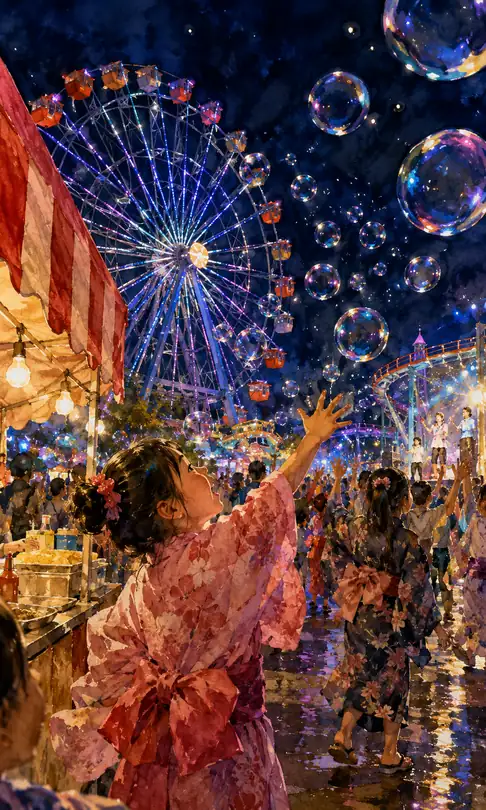 Reaching into the Mirage Night
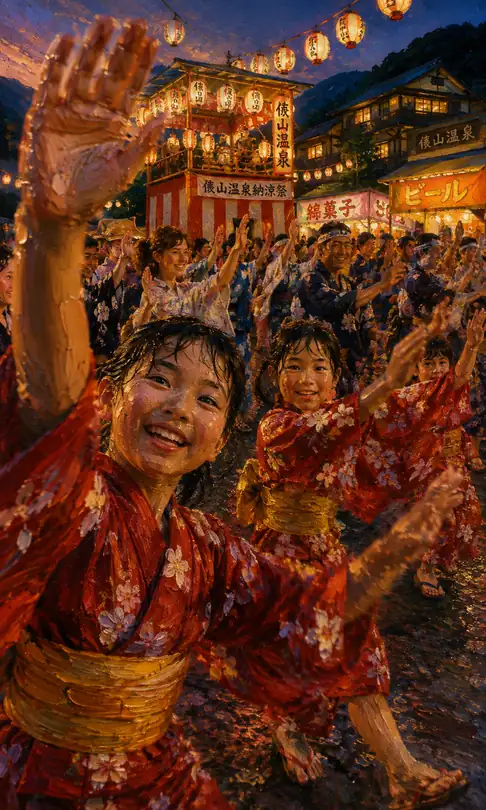 Innocent Smiles in the Hot Spring Town
Similar Artworks
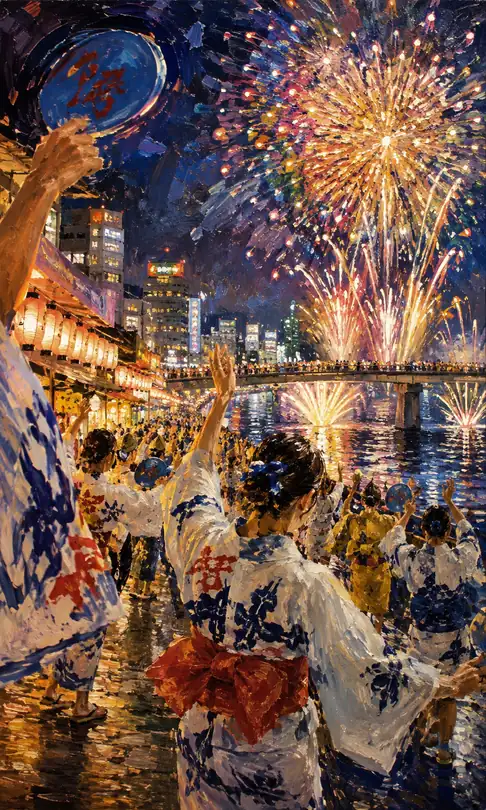 Yukata Dancers Raising Fans by the River Under Pink-Gold Fireworks
 Pink Yukata Joy Dancing Under Tower Lanterns and Grand Fireworks
 Dynamic Leap Dance by the Great Drum Under the Clock Tower Sky
 Indigo Yukata Dancing in Festive Rhythm
 Graceful Hands Dancing Under Sky Fireworks
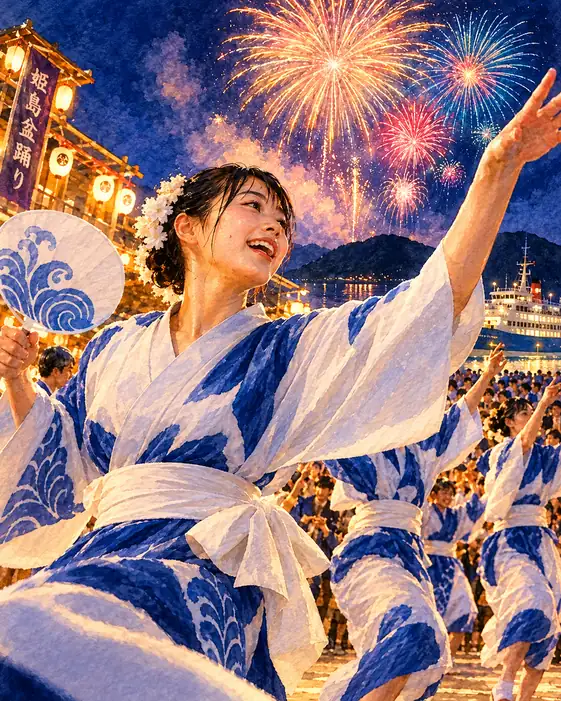 Breezy Sleeves and Radiance of Joy
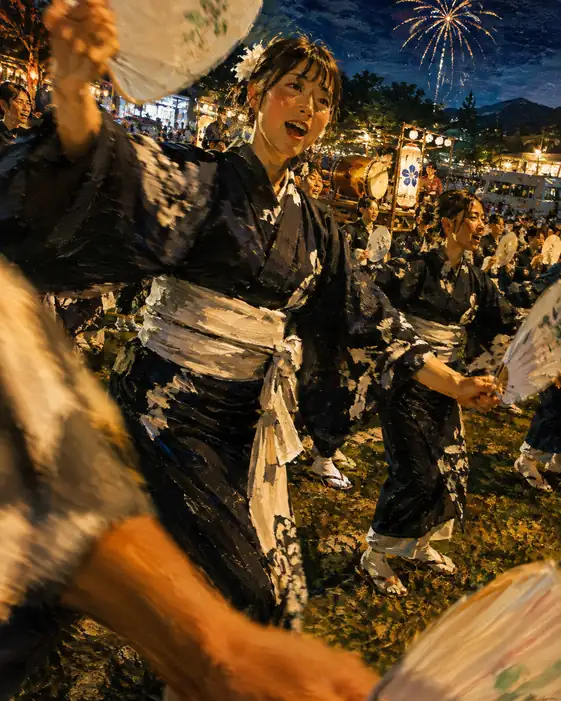 Swaying Fans and Joyful Summer Steps
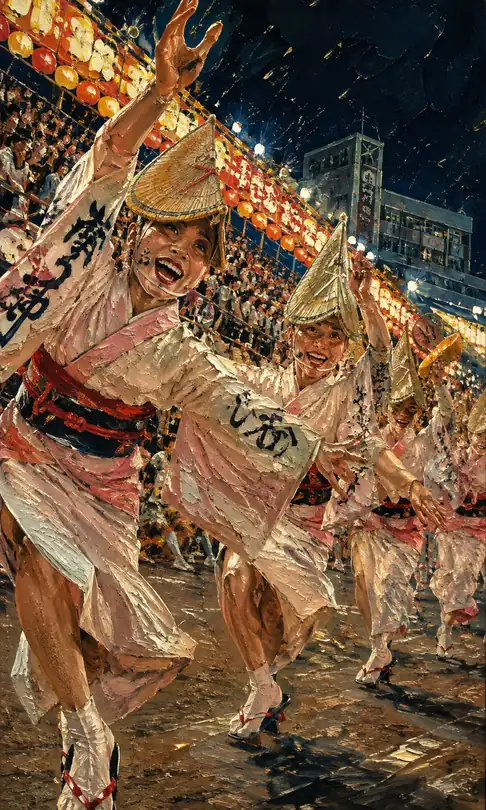 Straw-Hatted Awa Odori Dancers Advancing Through Lanterns and Cheers
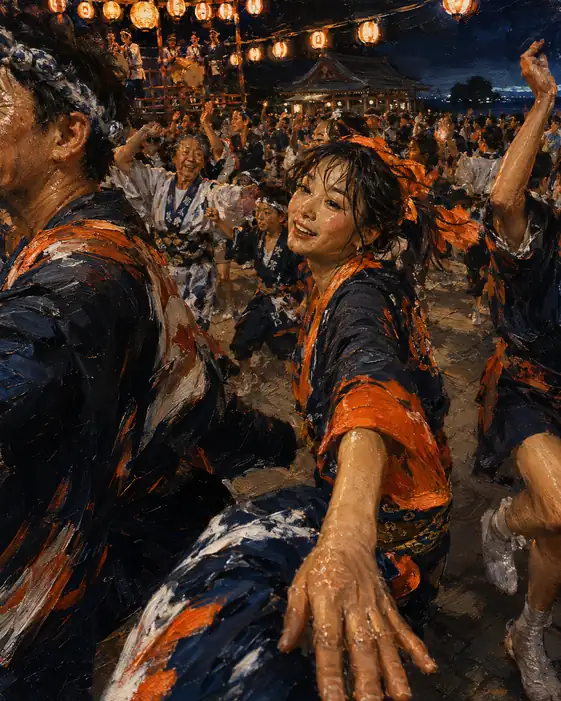 Smiles and Sweat Dancing Under the Lantern-Lit Yagura Tower
 Echoes of Hometown Summer Beats