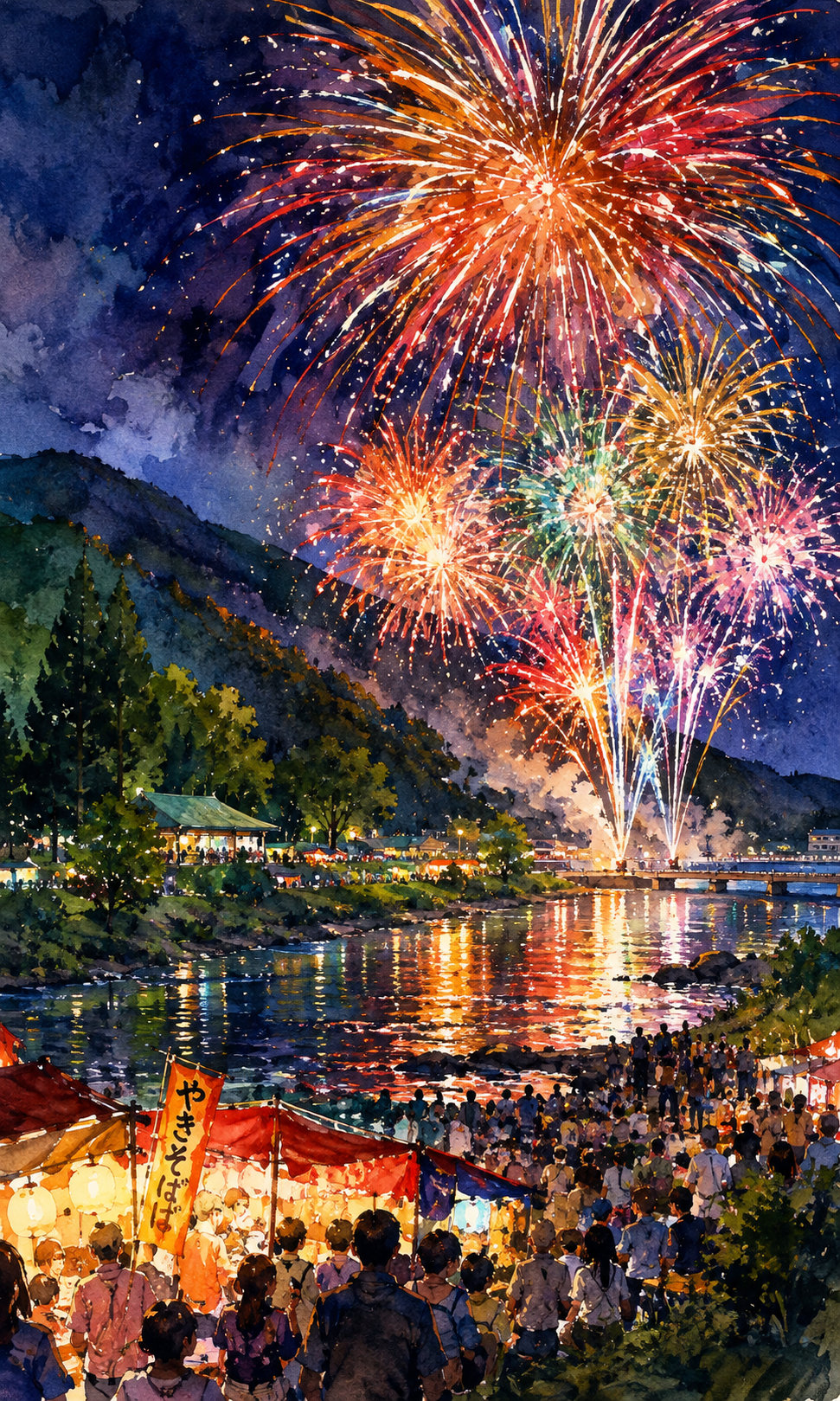
Yakisoba Stall Lights and Splendid Fireworks Over Mountain Stream
Critique
Introduction This painting depicts a fireworks festival along a river in a mountain valley. A crowded food stall and descending spectators fill the foreground, while the water carries the eye toward a bridge and launch site. The elevated view combines everyday festival activity with the expansive spectacle above. Description A red-canopied stall glows at lower left beneath lanterns and a vertical food banner. Dense groups follow the right bank toward the distance, while a pavilion sits among tall trees across the river. White launch trails support overlapping orange, red, green, pink, and gold bursts, whose reflections stretch between rocks across the dark current. Analysis The river forms a central diagonal corridor between opposing banks and joins the busy foreground to the small bridge. Its reflected lights create a second field of color below the fireworks without mechanically copying their shapes. Transparent blue washes establish sky and water; sharper warm marks define sparks, lanterns, faces, and canopies, while layered greens give trees and mountains distinct depth. Interpretation and Evaluation The work presents celebration as a progression from commerce and movement to collective viewing. Numerous small figures and receding shorelines demonstrate strong descriptive control. The placement of the stall as a bright foreground counterweight to the aerial burst is compositionally inventive, and the watercolor technique preserves atmospheric openness despite the density of people and light. Conclusion The painting balances panoramic landscape with specific observations of food service, foot traffic, rocks, and reflected illumination. Color travels from the stall through the river to the sky, unifying separate zones. What first appears to be a fireworks panorama gradually reveals a carefully organized account of how people enter, occupy, and animate a valley setting.
Same Subcategory
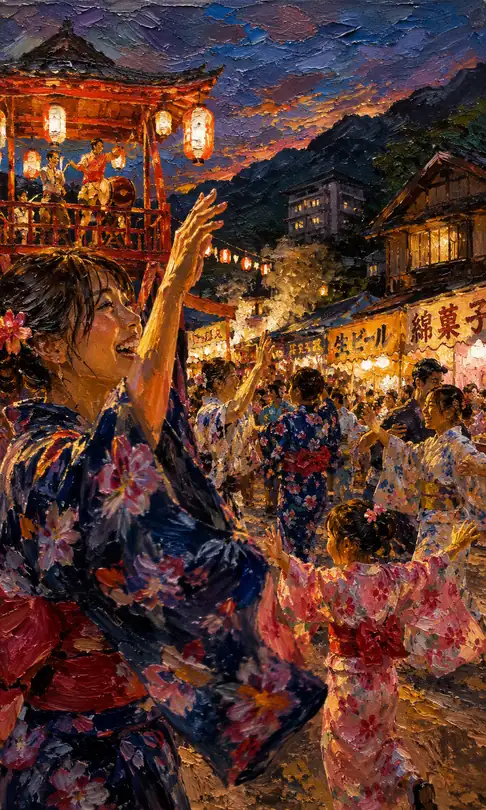 Bon Dance Energetically Dancing Under Spa Town Lanterns and Stalls
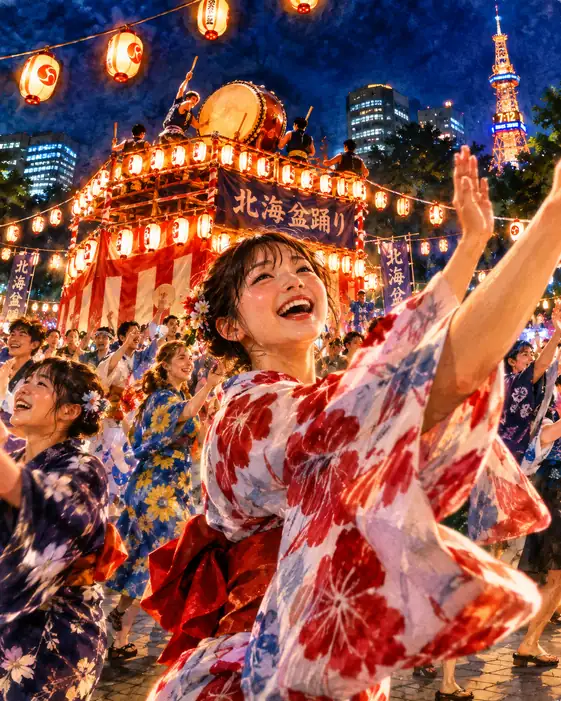 Hokkai Bon Dance Energetically Dancing Under Sapporo TV Tower
Similar Artworks
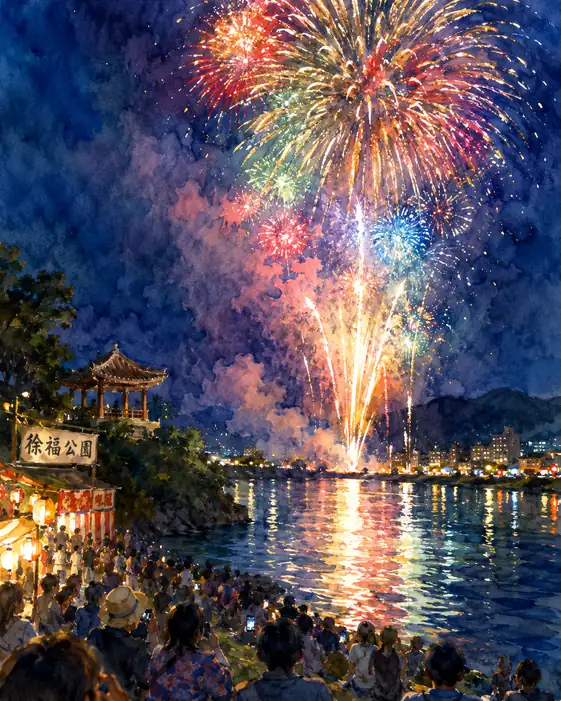 Chinese-Style Pavilion at Jofuku Park and Splendid Fireworks Over River
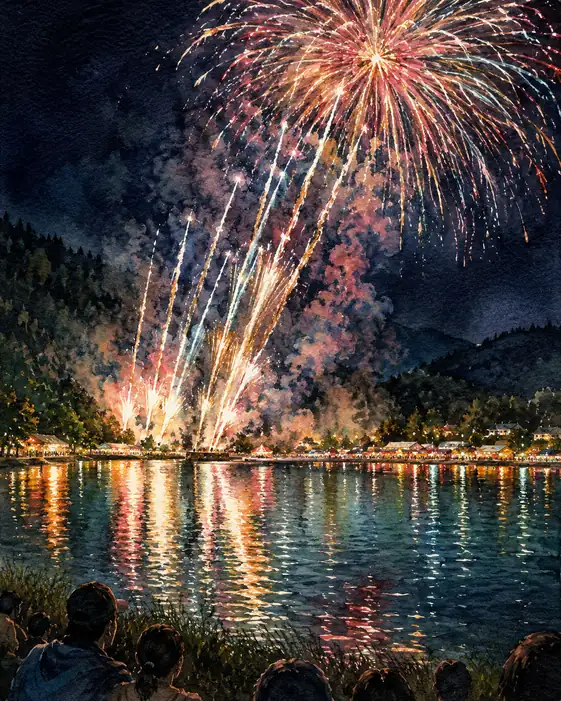 Spectators in the Lakeside Silence Watching Shore Lights and Fireworks
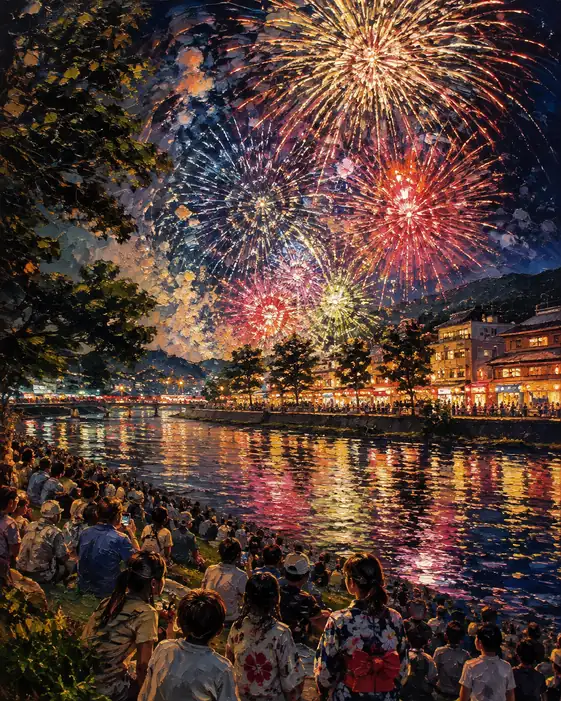 Spectators Seated on the Riverbank Watching Spa Town and Fireworks
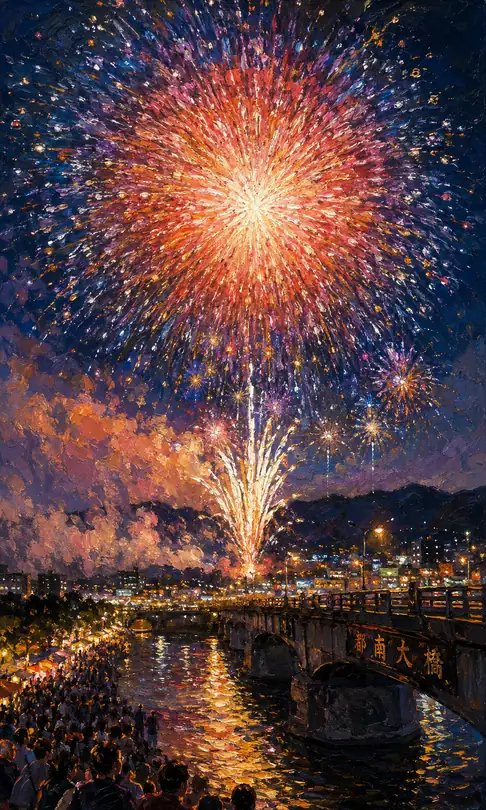 Kaleidoscope Fireworks and River Reflection by Tonan Great Bridge
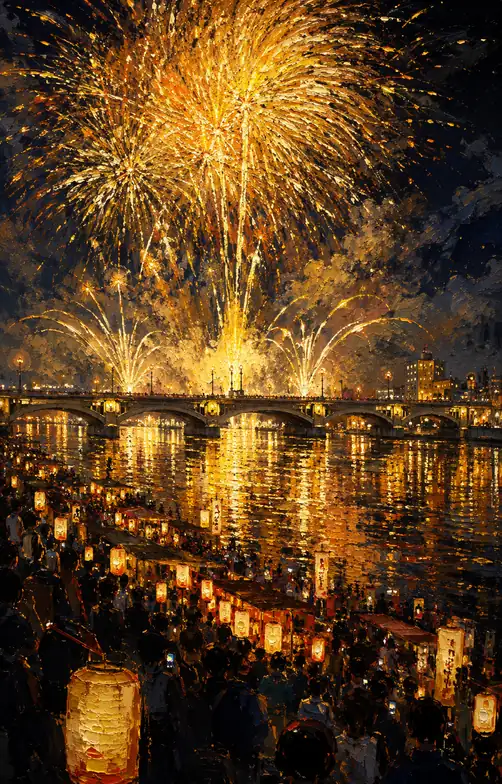 Golden Chrysanthemum Fireworks Embracing the Bridge and Stalls
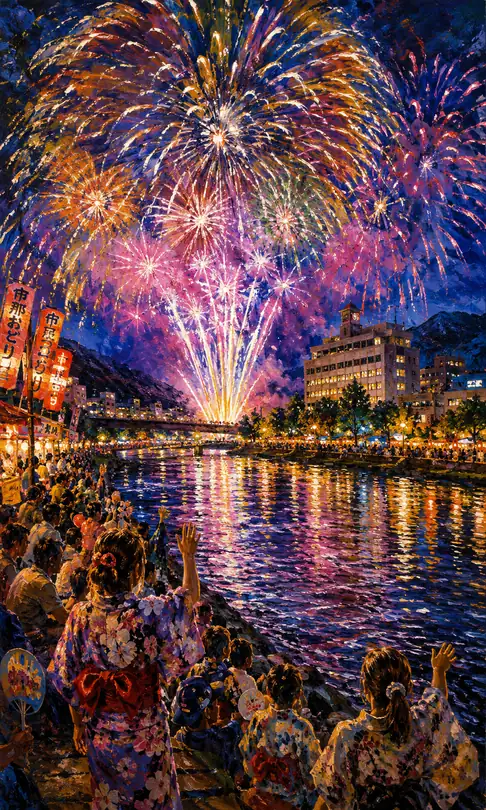 Grand Fireworks and Jubilant Spectators in Yukata by the Riverside City Hall
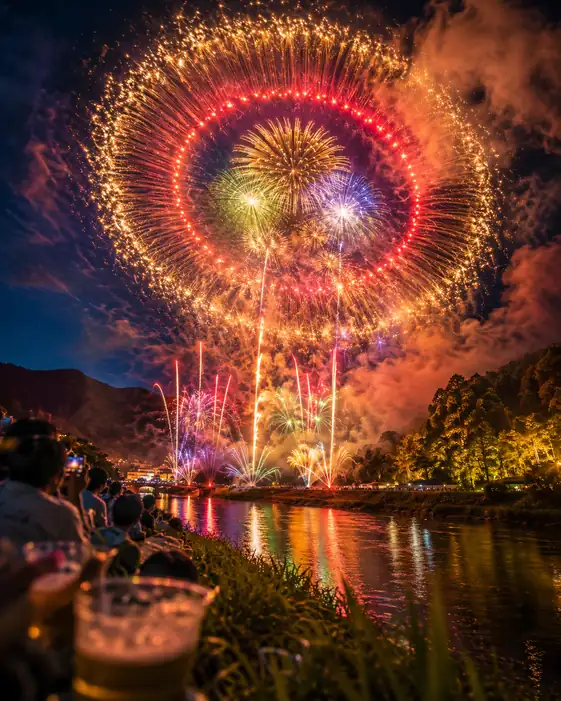 Beer Glasses by the Clear Stream and Grand Double-Ring Fireworks
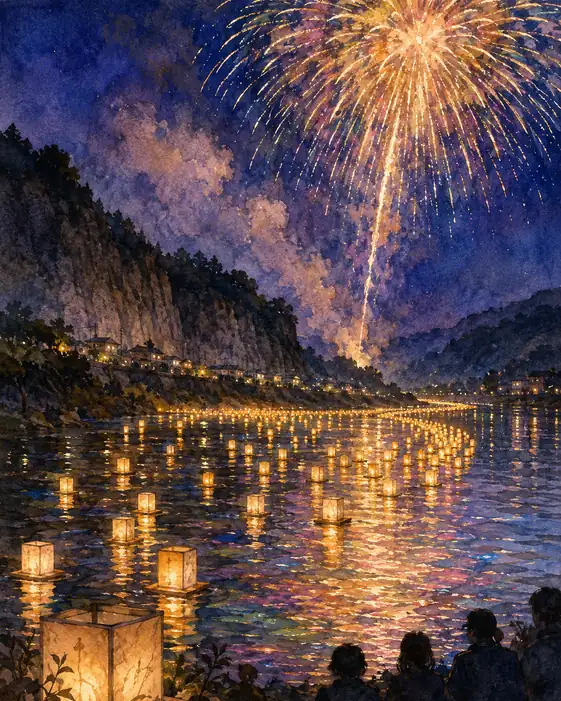 Stream of Lantern Light Floating down the Gorge and Golden Willow Fireworks
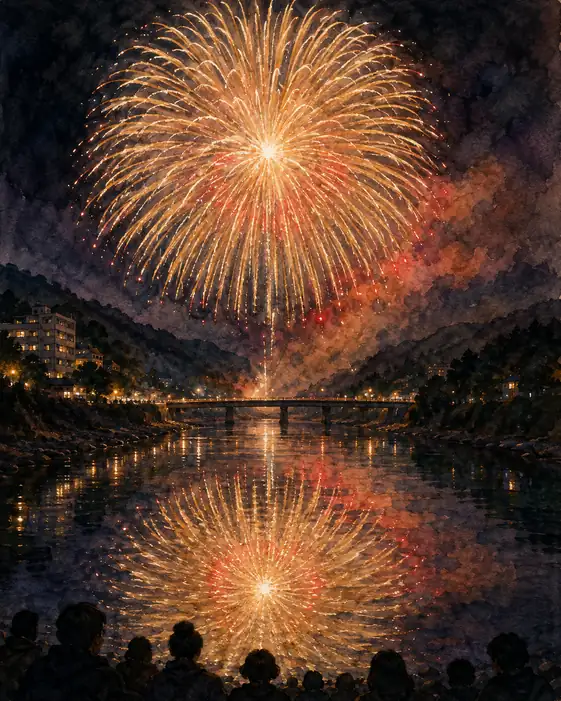 Red-Golden Bloom and Silent Crowd Reflected on the River
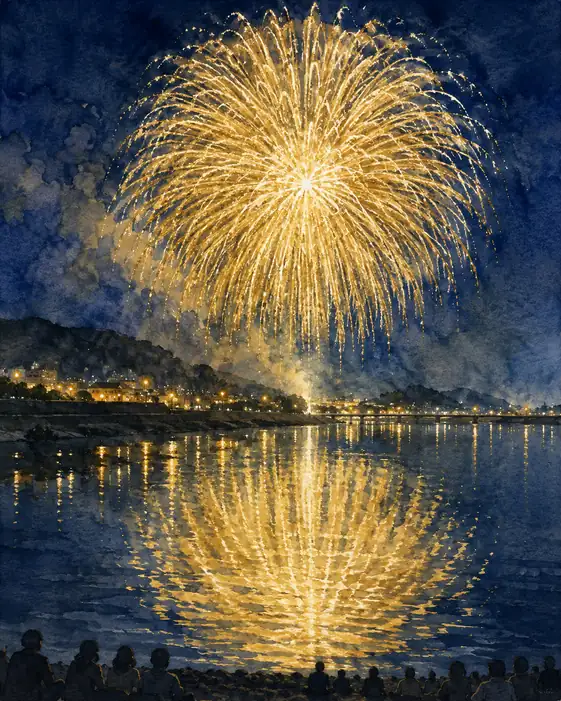 Golden Bloom Above and Reflected in the Quiet Waters